

Key Points – Russia employs a diverse and expanding array of drone platforms in its war against Ukraine, significantly impacting battlefield dynamics.
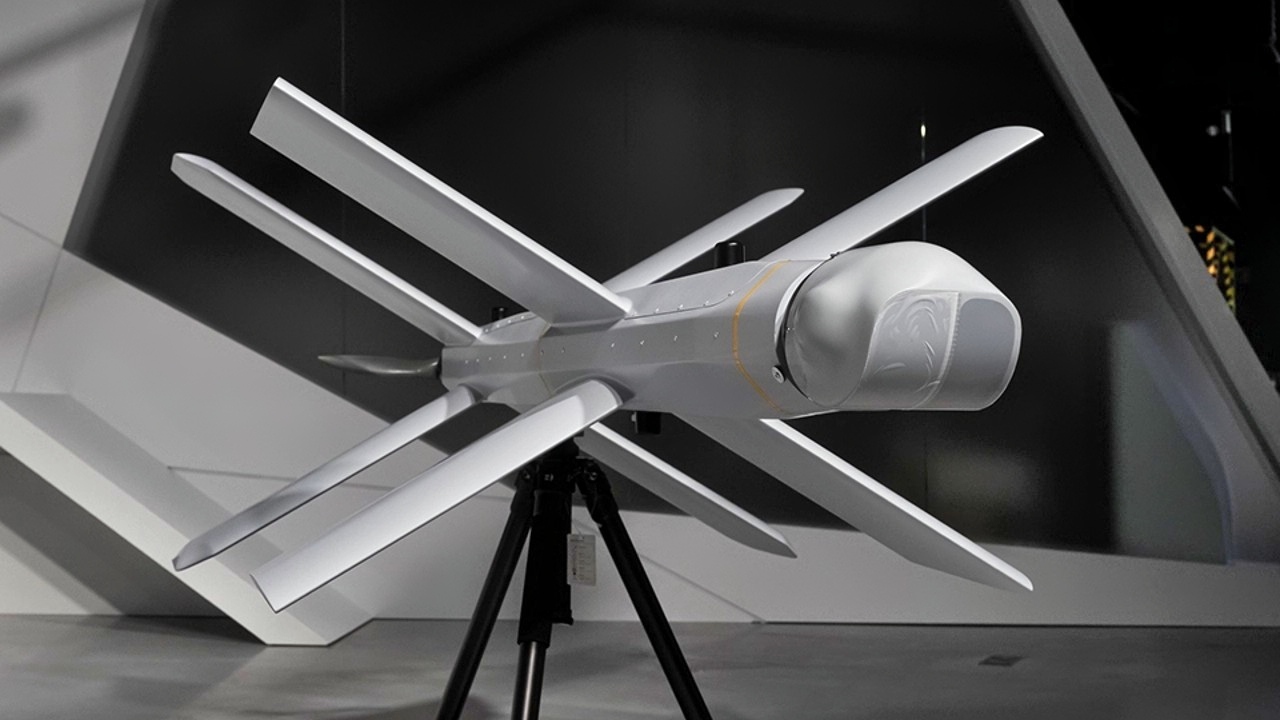
-These range from reconnaissance UAVs like the Orlan-10 and Forpost for intelligence gathering and artillery spotting, to kamikaze drones such as the Lancet and Iranian-designed Shaheds (Geran-series) for direct attacks on high-value targets.
-Russia also utilizes strike drones like the Kronshtadt Orion and Mohajer-6, and increasingly, jam-resistant fiber-optic FPV drones.
-Moscow is massively increasing domestic drone production (1.4 million in 2024) and plans a new satellite network of over 100 spacecraft to enhance drone coordination and range.
Russia’s Drone Platforms In the War In Ukraine
We watched as the Ukrainian SBU Security Service pulled off a fantastic special operation targeting the Russian long-range bombers that deployed missiles on Ukrainian civilians and civilian infrastructure with cheap drone technology on Sunday.
Ukrainians have been forced to use whatever they can; however, the Russians have used even more drones than Ukraine has since they invaded in late February 2022. Estimates suggest there have been over 100 different kinds of drones used in the war thus far. And the use of drones is only increasing.
Russia plans to launch more than 100 satellites into orbit to support drone operations, according to Dmitry Bakanov, director general of Roscosmos. The new satellite network, part of a broader national space initiative, comprises 102 spacecraft plus one additional platform aimed at controlling unmanned aerial systems (UAS).
Bakanov presented the project on Tuesday, June 3, at the Digital Industry of Industrial Russia conference in Nizhny Novgorod. He said the full plan, which will also include 886 satellites for broadband internet service under the Rassvet program and 114 for Earth observation, will be reviewed by the Strategic Development and National Projects on June 10.
Russia’s response to Ukraine’s drone advances:
Russia has bolstered its electronic warfare tools and expanded its drone fleet. The satellite network aims to boost coordination and extend the range of unmanned aerial vehicles (UAVs) as Russian forces face growing pressure from Ukraine’s surging drone production.
Russian commanders have decentralized logistics hubs, moved command posts further from the front, and ramped up the use of electronic jamming to counter Ukraine’s drone advantage, the same report said. These adaptations are part of a broader effort to survive under constant aerial surveillance and strike threats.
Moscow produced 1.4 million drones in 2024, a tenfold increase from the 2023 production level. Russia and Ukraine are engaged in an active technological race to develop and deploy drones with artificial intelligence (AI) and machine learning (ML) capabilities. Both sides are now utilizing fiber-optic drones to reduce jamming.
Here is a look at Russia’s most used drone assets.
Reconnaissance and Surveillance:
Russian reconnaissance and surveillance drones are impressively diverse, with a focus on small, portable platforms, such as the Orlan-10 and ZALA-421-08, for close-range intelligence, surveillance, and reconnaissance (ISR), and larger, more capable platforms, like the Orion, for medium-range reconnaissance and strike missions.
These drones are used for various purposes, including gathering intelligence, monitoring enemy positions, adjusting artillery fire, and even electronic warfare.
–Orlan-10: A widely used, mass-produced fixed-wing drone primarily for reconnaissance, artillery spotting, and electronic warfare. The Orlan-10 drone reportedly costs between $87,000 and $120,000 per unit. The components of the drone originate from many Western countries, despite sanctions, including the US.
–Forpost: A licensed copy of the Israeli IAI Searcher, used for surveillance and laser guidance of glide bombs. According to the Urals Civil Aircraft Plant, which builds the systems, the Forpost has a flight endurance of 17.5 hours, a maximum takeoff weight of 1,000 pounds, and a maximum payload of 130 pounds. The air vehicle has a top speed of 130 mph and a ceiling of 11,800 ft.
–SuperCam S350: A larger fixed-wing drone with a 3.5-meter wingspan designed for better resistance to electronic warfare.
–ZALA 421-16: A smaller fixed-wing drone with a range of 50-70 km, adopted after the Orlan-10 became increasingly vulnerable.
Kamikaze/Loitering Munitions:
Ukraine’s government and Western intelligence agencies say Russia has been using Iranian-made Shahed-136 drones in the conflict since the fall of 2022. Also known as the Geranium-2 by Russia, it features an explosive warhead on its nose and is designed to loiter over a target until instructed to attack.
–Shahed-131 and -136 (Geran-series): Iranian-designed strategic kamikaze drones used for long-range attacks on infrastructure and to overwhelm air defenses.
–ZALA Lancet: A tactical kamikaze drone with advanced capabilities, including machine vision for target locking. It is found to be full of foreign parts.
–Garpiya-A1: A newer, similar drone to the Shahed/Geran, using Chinese engines and spare parts.
–Gerbers: Inexpensive “dummy drones” resembling Shaheds, used for radar and anti-aircraft fire distraction.
Combat and Strike Drones:
Russia uses drones as strike weapons against Ukraine. They are also used to disrupt Ukrainian logistics and supply lines and to harass troops, often in conjunction with traditional military tactics. Russia has also begun to integrate drone technology with other weapons systems, such as using drones to guide artillery and missile strikes.
–Kronshtadt Orion: Russia’s attempt at a medium-altitude, long-endurance (MALE) drone capable of carrying guided missiles and bombs.
–Mohajer-6: An Iranian-produced drone capable of carrying two small guided bombs or missiles used in southern Ukraine.
Other Types of Drones Used by Russia:
Russia has been using other types of drones as the technology advances in the war. Due to advances in jamming and various kinds of electronic warfare (EW), the Russians are utilizing the following methods.
–Fiber-optic drones: Russian fiber optic drones utilize fiber optic cables instead of radio waves to connect the drone to its operator, making them immune to electronic jamming. These drones, often referred to as first-person view (FPV) drones, carry a reel of thin fiber optic cable that unspools as they fly, providing a secure and stable connection for control and video feed. Russia’s use of these drones has been particularly effective in Ukraine, allowing them to operate in areas where radio signals are being jammed.
–Swarm drones: Russian swarm drones, particularly Shahed drones, have been used extensively in the war in Ukraine. These drones are often used in large numbers to overwhelm air defenses and cause damage to infrastructure and targets.
Russia’s use of drones is increasing and will only continue to increase, especially after the devastating drone attack by Ukraine on Sunday. And it serves as a warning to the US that, although oceans separate us, our adversaries can still attack us in the same way.
About the Author:
Steve Balestrieri is a National Security Columnist. He served as a US Army Special Forces NCO and Warrant Officer. In addition to writing on defense, he covers the NFL for PatsFans.com and is a member of the Pro Football Writers of America (PFWA). His work was regularly featured in many military publications.
Russia’s Bomber Forces


Pingback: Forget the Bombers: Russia Has a 'Drone Problem' It Can't Easily Solve Now - National Security Journal
Pingback: Russia Has Won the Ukraine War and 'Defeated' NATO - National Security Journal
Pingback: Russian Drones Hitting Ukraine Might Have Chinese 'DNA' - National Security Journal
Pingback: Ukraine Under Attack: Putin 'Hits' Kyiv for 5 Hours with Drones in 'Massive Assault' - National Security Journal