

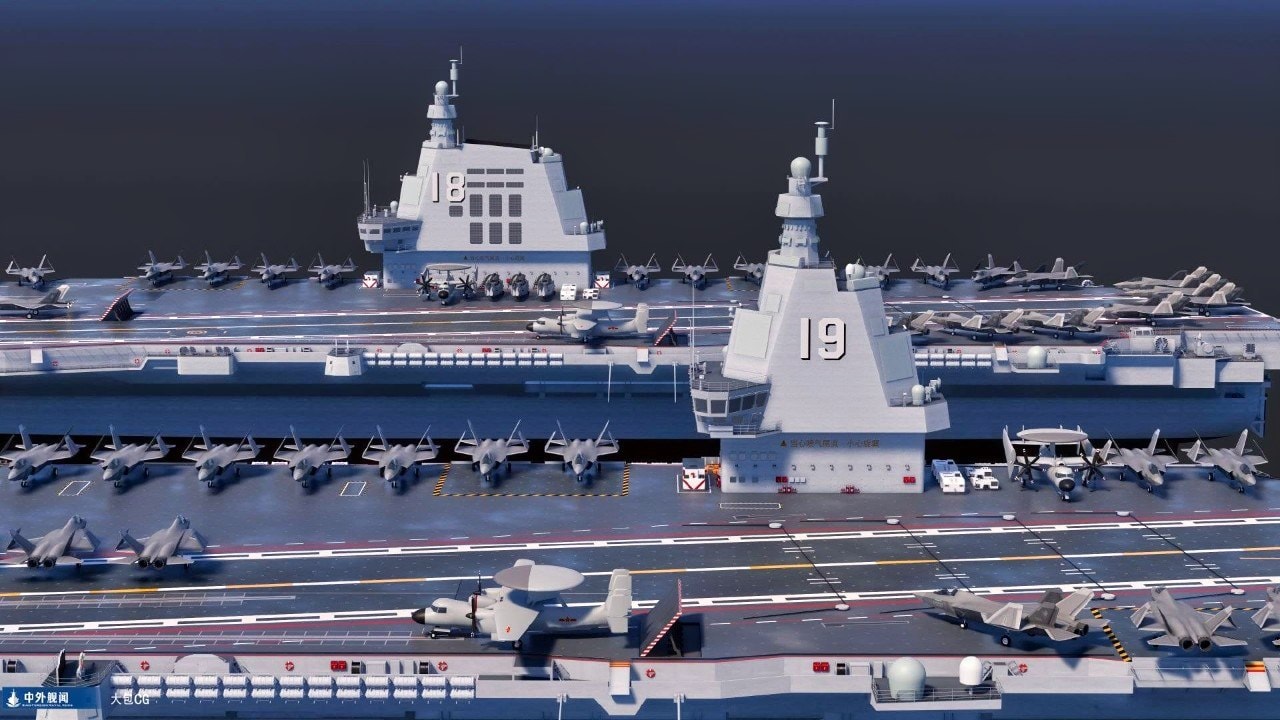
Here’s a fact that does not exactly inspire confidence, at least until we really dig into what this may or may not mean: China’s navy is now larger than the U.S. Navy.
That point is repeated so often that it has begun to stand in for analysis.
It shouldn’t.
Fleet size, taken on its own, tells us very little about the question that actually matters: whether the United States can bring effective naval power to bear in the Western Pacific when it needs to.
That is the issue on which any serious contingency in the region would turn. It is also one that cannot be answered simply by counting ships.
The Real Question About China and the U.S. Navy
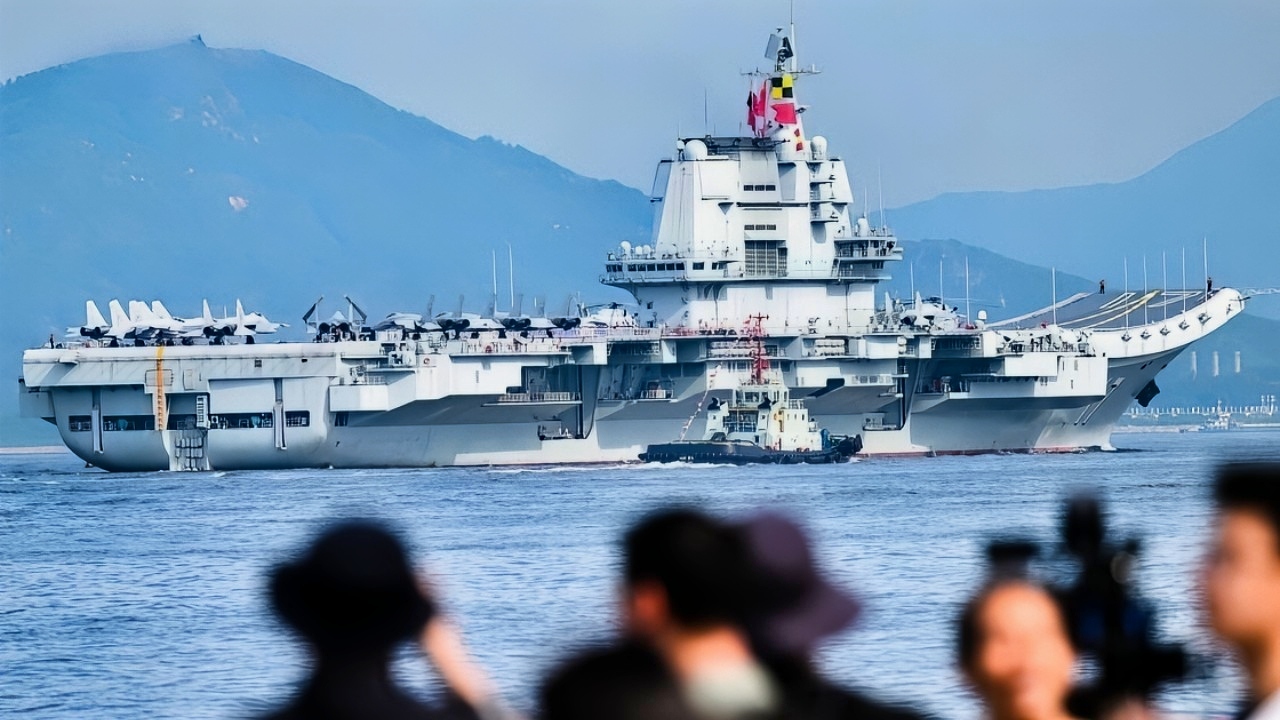
China Aircraft Carrier in Port. Image Credit: Chinese Navy.
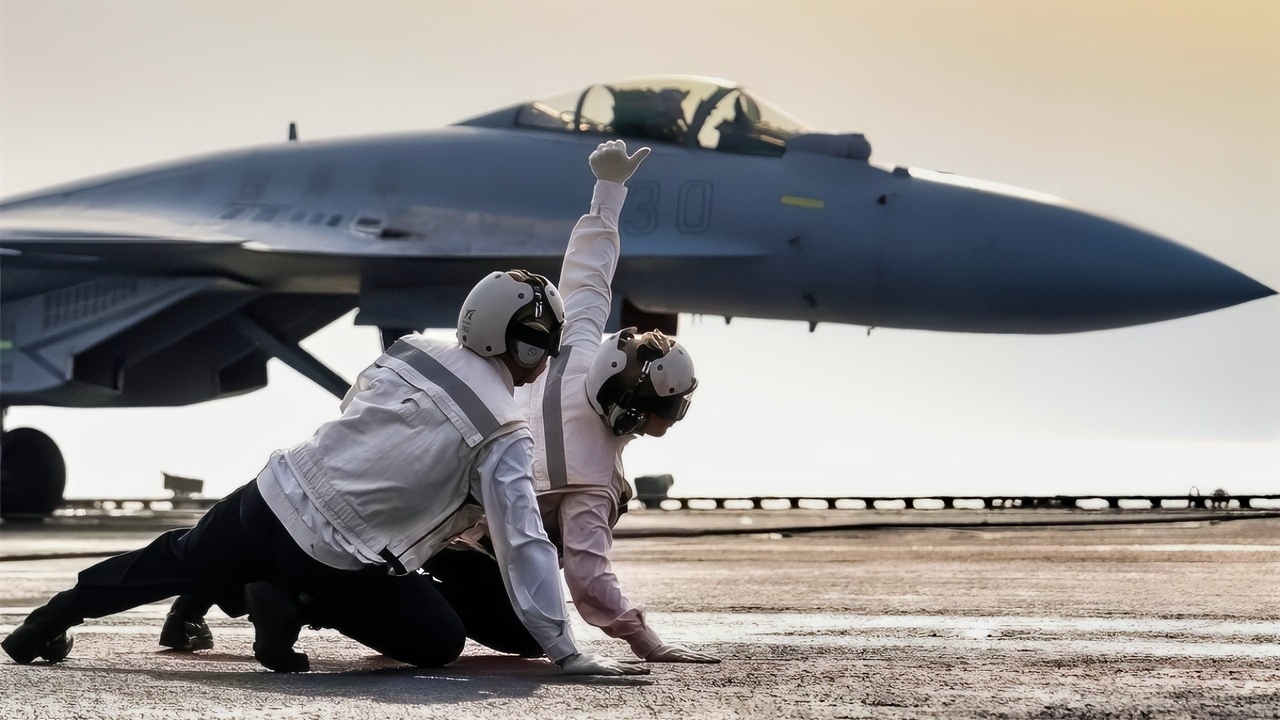
China Aircraft Carrier Operations. Image Credit: Chinese Navy.
The problem is better understood as the interaction between two efforts that have been developing for some time.
On one side is China’s attempt to build a layered anti-access and area-denial (A2/AD) system capable of holding U.S. forces at risk as they approach the theater.
On the other hand, the United States seeks to degrade, disrupt, or work around that system to preserve freedom of action under contested conditions.
The balance between those efforts—not the number of hulls in each fleet—will determine whether American naval power can be applied in ways that matter.
From Beijing’s perspective, the logic is straightforward. The objective is not to defeat the U.S. Navy in a decisive battle of the sort envisioned by the classical naval strategist Alfred Thayer Mahan. Rather, it is to make effective intervention difficult, and to do so early.
If U.S. forces are slow getting into position, or get there but can’t operate at full effect, the political outcome of a crisis may already be set before American naval power can be brought to bear in any meaningful way.
The strategic goal, in other words, is Corbettian sea denial rather than Mahanian sea command.
China’s naval expansion has to be read in that light. It is not just a matter of adding ships. Long-range anti-ship ballistic and cruise missiles push the threat envelope outward from the mainland.

J-35A Fighter at Le Bourget Air Show. Image Credit: Author/National Security Journal.

J-35A Stealth Fighter from China. Image Credit: Chinese Military.
Surveillance and targeting systems work to track U.S. forces as they move into the region, sometimes with more persistence than is comfortable to assume away. The PLAN’s growing presence inside the contested zone adds weight to that system and makes maneuvering more difficult once forces are in range.
None of this is decisive on its own. Taken together, it is meant to slow, disrupt, and complicate U.S. operations at the point where timing matters most.
The U.S. Response
The United States has been adapting to this problem for years. It is evident it in the move toward distributed maritime operations, in the heavier reliance on submarines and long-range aviation, in the push toward stand-off strike, and in the effort to go after Chinese sensing and targeting.
The aim is straightforward enough: make U.S. forces harder to find and hit without giving up their ability to generate real effects. That is a significant shift in how the Navy expects to fight.
The question is whether it will be enough.
That question turns less on the existence of these capabilities than on how they function under pressure.
Concepts that appear coherent in planning documents have to work in an environment defined by persistent surveillance, contested logistics, and the risk of rapid escalation. The U.S. Navy must not only penetrate a defended theater.
It has to remain there, generate effects, and sustain operations long enough to shape events.
What Actually Decides This
This is where the discussion often drifts. Arguments about missile inventories, shipbuilding output, or platform comparisons capture parts of the problem. They do not resolve it. The issue is whether U.S. forces can operate effectively within a contested zone during the period when outcomes are decided.
That can be put more directly. Can the United States disrupt the sensor networks that enable long-range targeting?
Can China maintain those networks when under pressure? At what distance are U.S. carriers pushed, and what does that do to sortie generation and strike reach?
Can logistics – fuel, munitions, maintenance – be sustained once both sides begin to interfere with them?
These are operational questions. They are also the ones that matter.
If U.S. forces are delayed, displaced, or forced to operate at reduced effectiveness in the opening phase of a crisis, the political outcome may be shaped before American advantages can be fully applied.
That does not require Chinese naval dominance in any traditional sense. It requires only that the United States be unable to fight on terms that influence the early trajectory of the conflict.
The Bottom Line
There is no clean answer. The United States retains real advantages in experience, integration, and undersea warfare. China’s system is still evolving and carries its own vulnerabilities. It is unclear whether Beijing could sustain a denial effort over an extended period.
But that is not the standard that matters.
What matters is whether China can make U.S. access difficult enough, for long enough, to shape the early phase of a crisis. That is a lower bar than outright superiority. It may also be the one that counts.
So how much of a problem is China’s larger navy?
It matters. It adds mass to a system designed to complicate U.S. intervention and increase the risks of operating inside the Western Pacific. But it does not decide the issue.
The real question is whether that system, taken as a whole, can prevent the United States from bringing effective naval power to bear when it matters most.
If it can, then fleet size will no longer be just a statistic. It will be part of the reason the United States fails to shape events because it cannot bring that power to bear on terms that matter.
About the Author: Dr. Andrew Latham
Andrew Latham is a professor of international relations and political theory at Macalester College in Saint Paul, MN. You can follow him on X: @aakatham.


