

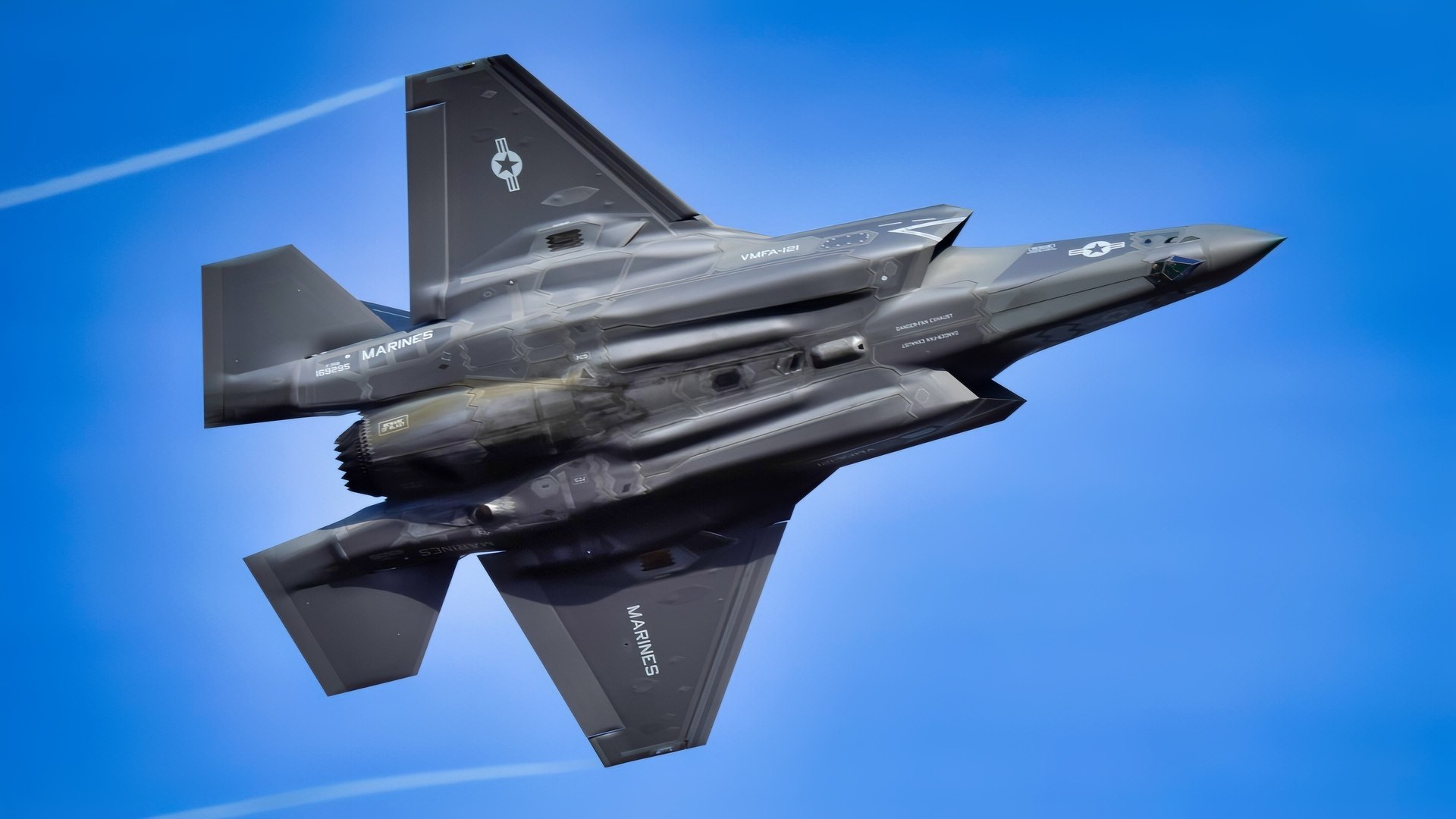
Key Points and Summary – The F-35 Lightning II is a “revolutionary” stealth fighter and a massive global success, with 19 nations ordering it. Its strength lies in advanced sensor fusion, which allows it to act as an “airborne quarterback.”
-However, the program is “the most expensive in history” (projected to be as much as $2 trillion) and is plagued by “disastrous” cost overruns.
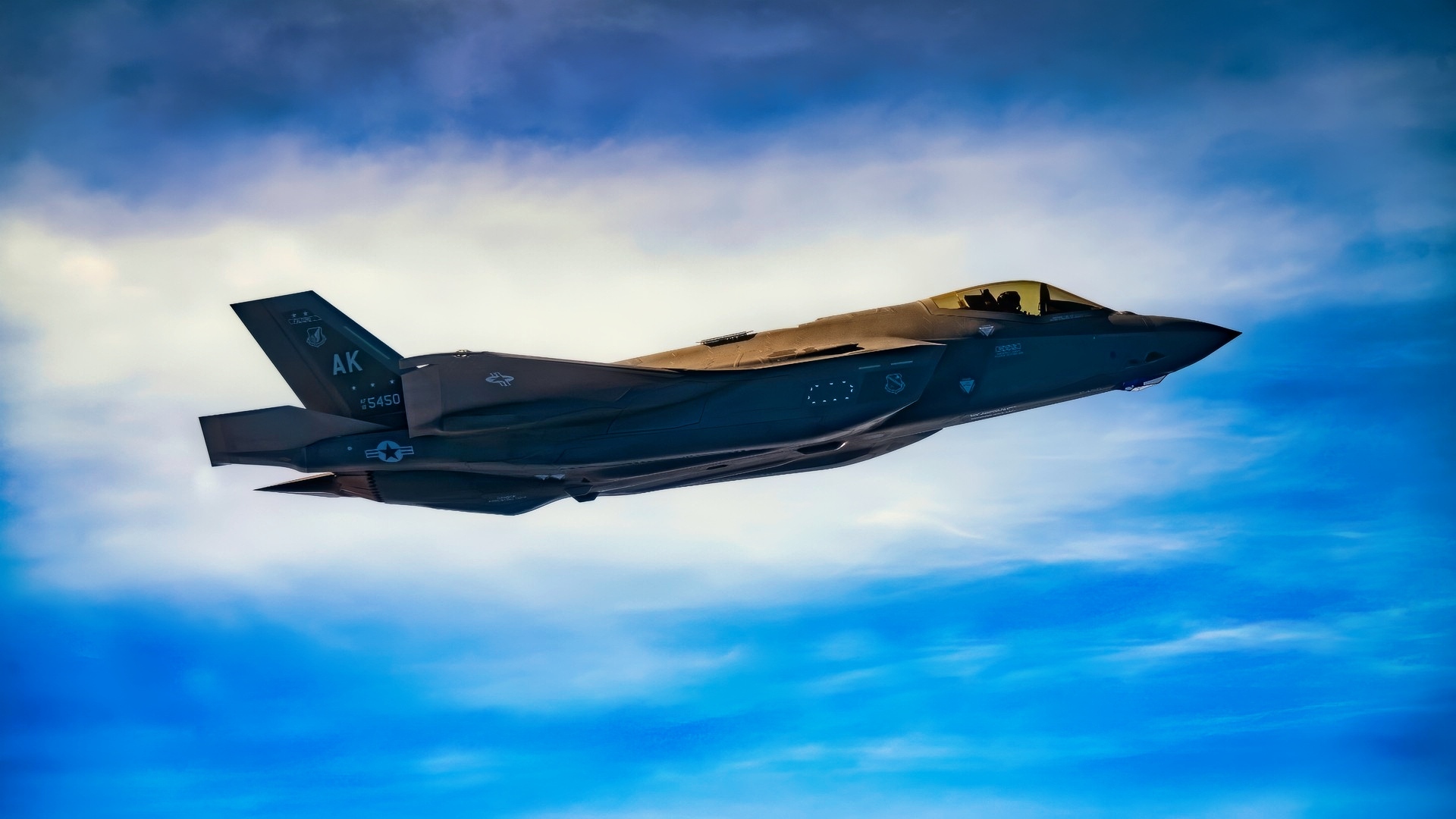
A U.S. Air Force F-35A Lightning assigned to the 356th Fighter Squadron, Eielson Air Force Base, Alaska, flies alongside of a U.S. Air Force KC-46A Pegasus assigned to the 77th Aerial Refueling Squadron, Seymour Johnson AFB, North Carolina, over the Pacific Ocean while enroute to the Singapore Airshow 2022, Feb. 11, 2022. The Singapore Airshow is the largest defense exhibition and biennial international tradeshow in the Pacific attracting thousands of participants from 50 countries. The U.S. Military is participating in Singapore Airshow 2022 by providing aerial demonstrations and static aircraft to demonstrate commitment and build upon partnerships with Singapore. (U.S. Air Force photo by Master Sgt. Richard P. Ebensberger)
-A 2024 GAO report found that F-35 readiness rates are “shockingly” low at 51%—far below the Pentagon’s goal—due to critical software delays (like Block 4), parts backlogs, and Lockheed Martin’s “monopoly” on sustainment.
F-35 Fighter: A Giant Mistake?
The F-35 Lightning II is currently the most widely produced and commercially successful fifth-generation fighter jet in the world.
Its stealth features and advanced sensor-fusion capabilities have earned it a strong reputation worldwide. However, the F-35 has also attracted significant criticism over the years.
From cost overruns to performance issues, critics have argued that the aircraft was more of a waste of funds than anything else.
Despite these complaints, the F-35 continues to gather orders as nations around the world line up to buy this elite 5th-generation fighter.
The F-35
The program envisioned three primary variants: the F-35A for conventional takeoff and landing operations, the F-35B for short takeoff and vertical landing missions, and the F-35C for carrier-based operations.

Capt. Kristin “Beo” Wolfe, F-35A Lightning II Demonstration Team pilot and commander, banks hard left making vapor trails over and behind the wings during a practice demonstration at Hill Air Force Base, Utah, Mar. 23, 2021. The demonstration team is part of Air Combat Command and is assigned to the 388th Fighter Wing at Hill AFB. Capt. Wolfe grew up a military child as the daughter of retired Col. Jon Wolfe and has flown the T-6 Texan II, T-38 Talon, F-22 Raptor and now the F-35A Lightning II. (U.S. Air Force photo by Alex R. Lloyd)
This unified approach was designed to reduce costs through commonality and streamline logistics. However, the reality has proven far more complex, sparking decades of debate over whether the F-35 is a revolutionary achievement or a costly misstep.
The stealth design dramatically reduces radar visibility, making it difficult for adversaries to detect. Advanced sensor fusion integrates radar, infrared, and electronic warfare systems into a single picture, giving pilots unparalleled situational awareness.
The F-35 also excels in networking, acting as a “quarterback” for modern air combat by sharing data with other platforms and enabling joint operations. Its multirole flexibility allows it to perform air-to-air combat, precision strike, and electronic warfare in a single mission.
These features have made the F-35 attractive to 19 allied nations, with more than a thousand units delivered globally.
Yet, despite these strengths, the program has faced persistent criticism across several dimensions.

U.S. Air Force Maj. Melanie “Mach” Kluesner, pilot of the F-35A Demonstration Team, performs aerial maneuvers at the Sun ‘n Fun Airshow in Lakeland, Florida, April 4, 2025. The demonstration team showcases the skill and precision U.S. Air Force pilots and aircraft are capable of. (U.S. Air Force photo by Senior Airman Nicholas Rupiper)
Why the F-35 Gets Criticized
One of the most frequent criticisms concerns cost. The F-35 program is the most expensive weapons system in history, with lifetime costs projected to exceed $1.7 to $2 trillion when factoring in procurement, operations, and sustainment through 2070.
Early estimates were around $200 billion, but cost overruns ballooned due to concurrency, building jets while still testing them, which led to expensive retrofits, along with the complexity of advanced stealth coatings, software, and integrated systems.
Sustainment alone is expected to cost over $1.3 trillion. Critics argue that these funds could have been better spent on specialized aircraft or emerging technologies such as drones and hypersonic weapons.
Another major concern is readiness and reliability. Despite massive investment, the F-35 struggles with mission-capable rates. In 2023, the fleet averaged only 51 percent availability, far below the Pentagon’s 65 percent goal.
The Government Accountability Office reported that even after spending $12 billion to improve readiness between 2018 and 2023, rates rose by only 2.6 percent.
Maintenance delays are common, with over 10,000 components awaiting repair in 2023 due to depot backlogs. The Pentagon also lacks the technical data to perform many maintenance tasks independently, leaving Lockheed Martin with a monopoly on sustainment.
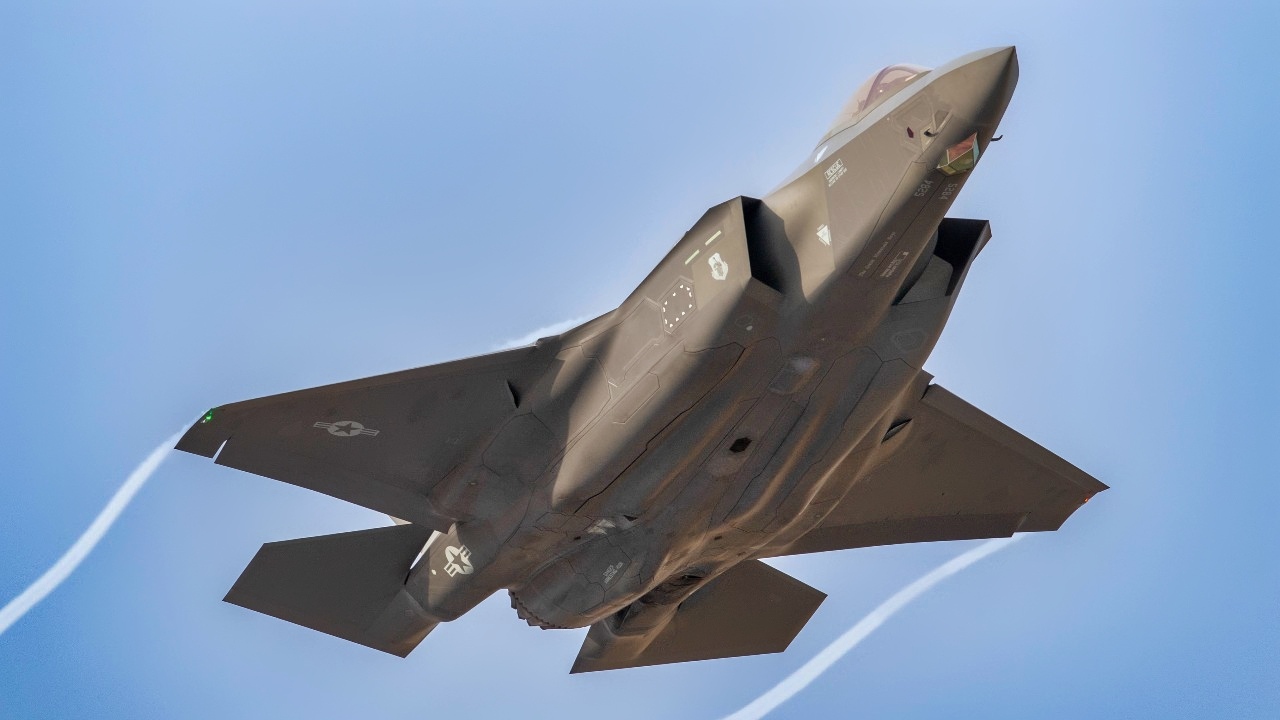
A F-35A Lightning II assigned to the 134th Fighter Squadron of the Vermont Air National Guard’s 158th Fighter Wing takes off for a training mission during January drill from the Vermont Air National Guard Base, South Burlington, Vermont, Jan. 6, 2022. The pilots fly regularly to hone their skills and maintain the U.S. Air Force and Major Command requirements and proficiencies. (U.S. Air National Guard photo by Staff Sgt. Jana Somero)
Prognostic health systems generate excessive alerts, complicating maintenance and delaying missions.
Software complexity adds another layer of difficulty. The F-35’s cutting-edge capabilities rely on millions of lines of code, making it one of the most software-intensive aircraft ever built. This complexity has led to frequent bugs, such as pilots needing to reboot the radar mid-flight due to glitches.
Critical upgrades like Technology Refresh 3 and Block 4 modernization, essential for new weapons and sensors, are years behind schedule and billions over budget. Cybersecurity concerns have also been flagged, raising questions about resilience in a digital battlefield.
The Downsides of the F-35
Performance trade-offs are another point of contention. The F-35 was designed to do everything, but critics argue this made it a jack-of-all-trades and master of none. Its maximum speed of Mach 1.6 is slower than the F-22’s Mach 2.25, and its agility is adequate but inferior to dedicated air-superiority fighters like the F-22 or even some advanced fourth-generation jets.
Range limitations are problematic for Indo-Pacific operations, where its unrefueled combat radius of about 590 to 670 nautical miles requires vulnerable tanker support. Internal weapons bays, necessary for stealth, restrict payload compared to non-stealth fighters.
Political and industrial criticism further complicates the picture.
The program has been accused of fostering a Lockheed Martin monopoly, as the lack of intellectual property transfer means the Pentagon is locked into costly sustainment contracts.
Observers also point to a “too big to fail” mentality, noting that full-rate production was approved despite unresolved deficiencies, suggesting political inertia rather than operational readiness.
The F-35 in 1 Word: Problems?
Despite all these criticisms, the F-35 is not going anywhere anytime soon. The jet has proved itself numerous times.
Its stealth systems and avionics far surpass anything else currently on the market or fielded by the U.S.’ adversaries. Its closest competitor, the J-35, falls short in numerous areas.
In terms of production and exports, the F-35 is also unparalleled. Over 1,200 airframes have been produced, with future orders likely. The aircraft has been exported to 12 countries, with eight more export orders on the way, and other countries, such as India and Chile, are considering the fighter for their own air forces.
Despite some countries now souring on the aircraft thanks to the Trump administration, the aircraft has undoubtedly been a massive success on the market.
While the F-35 is an imperfect platform with its fair share of flaws, its advantages far outweigh its drawbacks.
About the Author: Isaac Seitz
Isaac Seitz, a Defense Columnist, graduated from Patrick Henry College’s Strategic Intelligence and National Security program. He has also studied Russian at Middlebury Language Schools and has worked as an intelligence Analyst in the private sector.
More Military
Northrop Grumman Is Likely Winner of F/A-XX, But Big Questions Remain
USS United States: The Aircraft Carrier Designed to Launch Bombers
The U.S. Air Force’s B-21 Raider Bomber Nightmare Has Just Begun
How Long Can a Nuclear U.S. Navy Aircraft Carrier Stay in Service?
The Air Force’s B-52 Stratofortress Bomber ‘Nightmare’ Is Real


Krystal cane
November 7, 2025 at 2:44 pm
Crap?
Sheikh Anvakh
November 8, 2025 at 8:07 am
Being actively updated and tested in real combat by the IAF, proving its worth. Oh the irony to the haters