

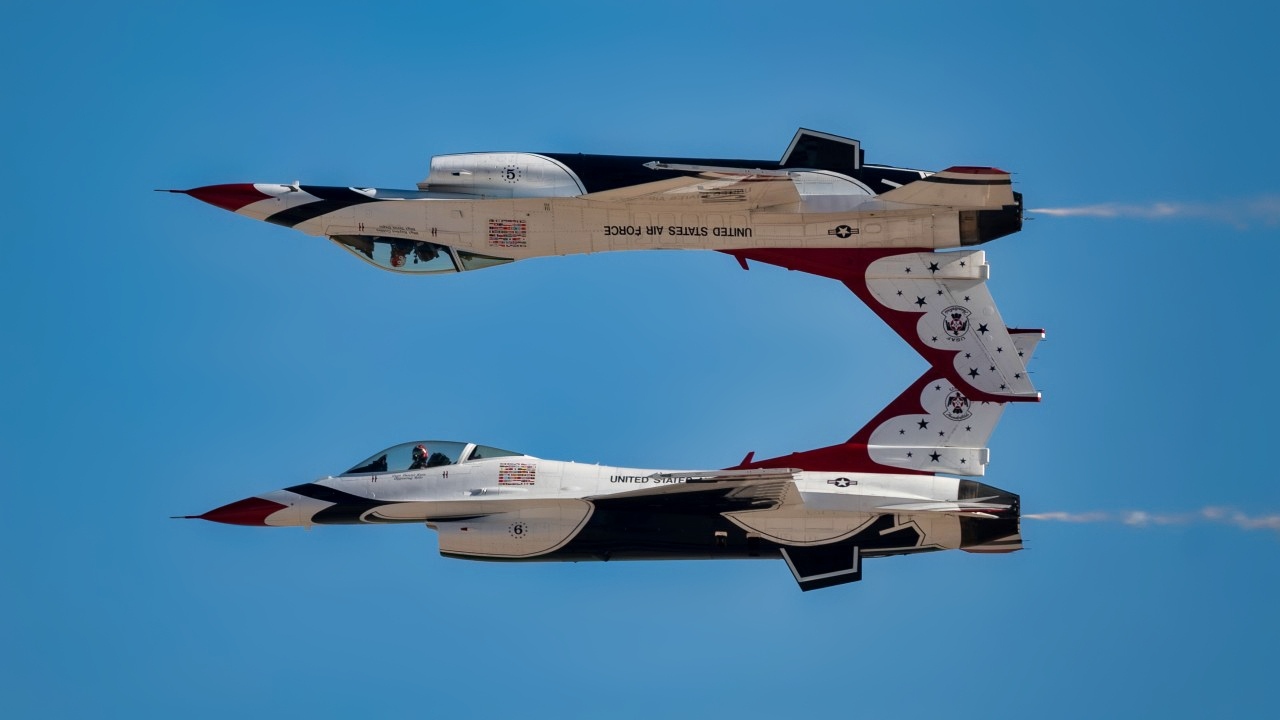
Key Points – The F-16 Fighting Falcon fighter jet’s performance in Ukraine has been mixed, proving to be a capable air defense asset but not a strategic “game changer.”
-Ukrainian pilots have successfully used the F-16 to intercept numerous cruise missiles and have even downed a Russian Su-35 in an ambush.
-However, the aircraft’s effectiveness is severely limited by the small number delivered, its vulnerability to advanced Russian S-400 air defenses, and uncertain long-term US support for critical software and system updates.
-A Ukrainian Air Force spokesman recently stated that the F-16s are ultimately outmatched by Russia’s overall aerial capabilities.
The F-16 in Ukraine Is No Game Changer
The F-16 Fighting Falcon is a fourth-generation multi-role aircraft developed by General Dynamics for the United States Air Force. With over 4,000 units built, the fighter has been one of the mainstays of the US and many other air forces worldwide.
Today, the F-16 flies for Ukraine to boost its air power in its fight against Russia. The aircraft has shown many of its strengths, being able to intercept multiple Russian drones, cruise missiles, and even a Su-35. However, the conflict has also revealed the F-16’s weaknesses, being prone to advanced enemy anti-air systems.
Assessing the F-16’s Performance
The F-16 debuted in Ukraine with admittedly mixed results. However, one of its first feats occurred in December 2024, when a Ukrainian F-16 reportedly shot down six Russian cruise missiles during a single sortie. This unprecedented feat in the aircraft’s operational history highlighted the F-16’s advanced radar systems, agility, and weapons capabilities.
The aircraft employed a combination of AIM-120 AMRAAM and AIM-9 Sidewinder missiles, along with its internal M61A1 20mm cannon, to intercept the incoming threats.
This engagement underscored the F-16’s value in air defense roles, particularly in intercepting cruise missiles and deterring Russian aircraft from operating freely in contested airspace. While the fighter is also capable of ground-attack missions, Ukraine has so far prioritized its use in defensive operations due to the persistent threat of Russian missile and drone attacks. While the fighter has been used offensively, it is limited in this capacity due to the saturation of Russian AD systems.
For Russia, the presence of fighters presented a complicated, but not insurmountable challenge. Because of the F-16’s advanced specs, the Russian Air Force was forced to fly a bit more cautiously around Ukraine’s borders.
However, the strategic impact of the F-16s is currently limited by the relatively small number of aircraft in service. As of early 2025, Ukraine had received approximately ten F-16s, with additional deliveries expected from European donors such as the Netherlands. This limited fleet restricts the scope of operations and makes each aircraft a high-value asset that must be carefully preserved and maintained.
Ukraine (and Russia) Adapt to the F-16
As of June 2025, Ukraine has received more deliveries from various NATO countries. The Netherlands has delivered some of the 24 F-16s it promised to Ukraine, and Denmark has pledged 19 F-16s, with some initial deliveries made in 2024. Norway has committed between 6 and 22 F-16s, and Belgium has also announced its intention to supply F-16s, though the exact numbers remain undisclosed. This effort goes a long way to modernize Ukraine’s dwindling Air Force.
However, dwindling support from the U.S. complicates things, as the F-16’s internal electronics are reliant on updates from the U.S. This restriction has affected Ukraine’s ability to fully utilize the F-16’s potential, especially in maintaining and updating critical systems such as the AN/ALQ-131 electronic countermeasures pods. These systems are essential for protecting the jets from Russian surface-to-air missiles and radar-guided threats.
France’s delivery of Mirage 2000 jets equipped with their own jamming systems may help fill this gap, but the lack of a unified support infrastructure for multiple aircraft types could strain Ukraine’s logistics and maintenance capabilities.
Ukraine’s air force has also had to rapidly adapt its tactical doctrine to incorporate the fighter. Unlike the Soviet-era aircraft that made up Ukraine’s pre-war fleet, the F-16 operates with Western avionics and was designed to operate around Western tactics.
This shift requires not only pilot retraining but also changes in command-and-control structures, mission planning, and coordination with ground forces. Initial reports suggest that Ukraine is using the
The decision to supply Ukraine with F-16s also carried symbolic meaning. It signaled a long-term Western commitment to Ukraine’s defense and a move toward modernizing its military along NATO lines. To some, this was a sign that Ukraine may be preparing for NATO membership when the war ends. However, the U.S. decision to pause direct military aid and intelligence sharing in early 2025 complicated things and seemed to signal a changing commitment.
While European nations continue to support Ukraine, the lack of unified Western backing could limit the strategic leverage that F-16s provide.
A Great Addition, But Ultimately Not Enough
Despite their strengths, fighters are not invincible.
There are a couple of factors that limit the jet’s overall effectiveness. The limited number of aircraft currently in service means that Ukraine cannot provide comprehensive air coverage across the entire front. The jets are also vulnerable to advanced Russian air defense systems, such as the S-400 and Russian interceptors, especially in the absence of robust electronic warfare support.
Additionally, the high operational costs and the need for specialized parts and maintenance personnel can reduce sortie rates and overall readiness. Political constraints, particularly shifts in Western political will, have also threatened to halt software updates for the fighter or restrict the transfer of spare parts.
As of now, there are three confirmed F-16 losses, with the Russians claiming several more, but these claims have yet to be confirmed. The first loss was a potential friendly fire incident. A Russian S-400 or an R-37 air-to-air missile downed the second. The third confirmed loss was during an incident while an F-16 was reportedly trying to intercept Russian drones.
While the F-16 has shown its strengths during this war, it is far from the game changer many hoped it would be.
On 3 June 2025, the spokesman of the Ukrainian Air Force, Yuri Ignat, went so far as to say that Ukraine’s F-16s are outmatched by Russian jets, missiles and air defenses.
While this is true on paper, the fighter still has its uses and if used cleverly, can even best a Su-35.
About the Author:
Isaac Seitz, a Defense Columnist, graduated from Patrick Henry College’s Strategic Intelligence and National Security program. He has also studied Russian at Middlebury Language Schools and has worked as an intelligence Analyst in the private sector.
More Fighters
Russia’s Su-57 Felon Stealth Fighter Failed


Pingback: Russia Is Winning the Ukraine War and NATO Can't Stop It - National Security Journal