


Key Points and Summary – The NGAD F-47 isn’t just a new fighter; it’s a flying command node with its own arsenal and drone entourage.
-Boeing’s sixth-generation jet will quarterback swarms of collaborative combat aircraft that scout, jam, soak up enemy fire, and act as extra missile magazines.
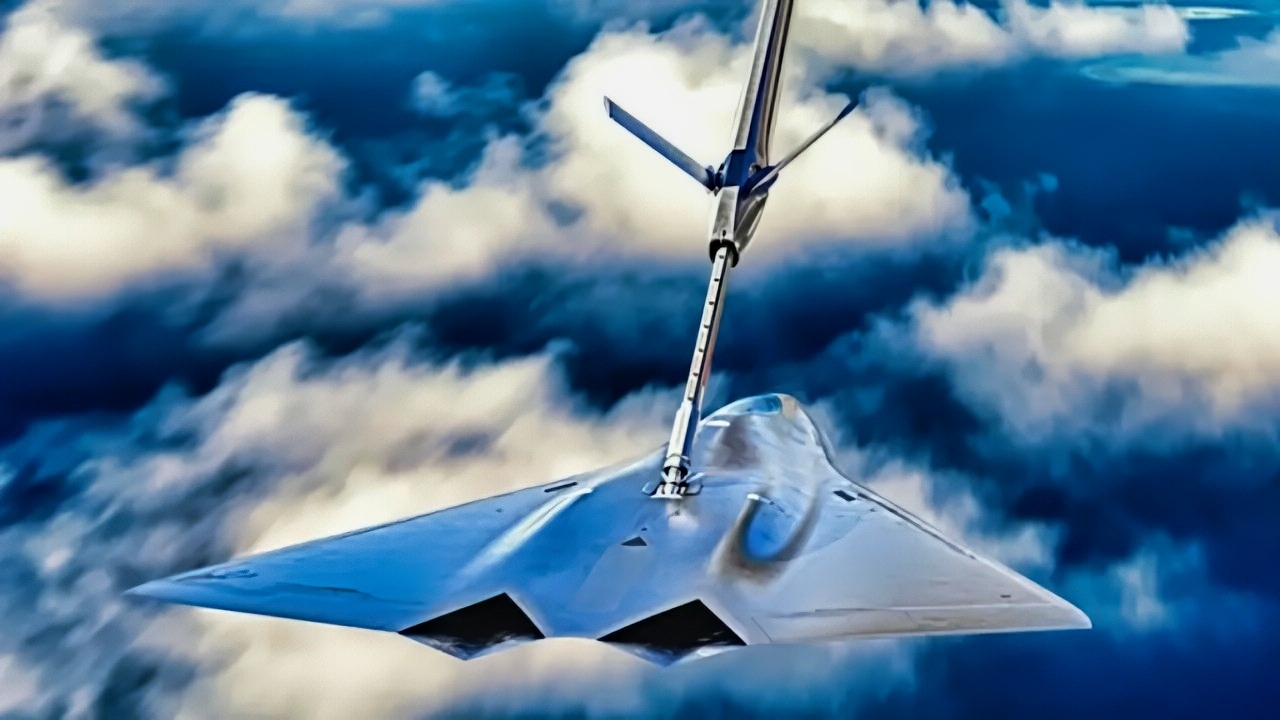
F-47 Lockheed Photo. Image Credit: Lockheed Handout.
-Inside its bays, the F-47 will carry standoff weapons like the AGM-158D JASSM-XR and low-cost miniature cruise missiles, plus next-gen air-to-air killers like the AIM-260 JATM and AIM-174B.
-Wrapped in “Stealth++” shaping and signatures even smaller than the F-22, the F-47 is built to survive inside dense air defenses while unleashing massed, networked fires.
What Weapons Will Make The NGAD F-47 More Of A Game Changer?
The Air Force’s new NGAD (Next Generation Air Dominance) F-47 stealth fighter will be the world’s first sixth-generation fighter aircraft.
Boeing believes the F-47 will become a game-changer that will have no peer.
“From my perspective, the F-47 is transformational for Boeing, as the first sixth-generation fighter that will ever be produced,” said Steve Parker, interim president and chief executive at Boeing’s Defense, Space & Security.
“What defines it for me is the investment we’ve made over a long period of time, over a decade-plus, in advanced materials, material sciences, advanced manufacturing, survivability, and lethality.”
So confident was Boeing about the F-47 that in 2024, it also made the risky decision to invest approximately $2 billion in a classified combat aircraft production facility before the outcome of the NGAD competition was announced.
What weapons will the F-47 utilize to make it an unstoppable force?
F-47’s Key Weapons Systems:
The F-47’s game-changing weapons are its integration with unmanned collaborative combat aircraft (CCAs), which act as missile carriers and force multipliers, and its own next-generation air-to-air and long-range strike missiles.
By launching CCAs and a new family of weapons with a larger payload capacity and greater range than previous fighters, the F-47 will operate as a central node in a networked system, expanding its lethal reach and situational awareness.
Collaborative Combat Aircraft (CCAs)
The F-47 will act as a “command and control” platform for swarms of AI-driven drones. The F-47 will control a swarm of AI-driven drones, CCAs, from its cockpit. This “quarterback” role allows the manned F-47 to operate at a safe distance.
At the same time, the CCAs perform tasks such as penetrating high-threat areas, conducting reconnaissance, jamming enemy systems, or acting as decoys.
The drones have autonomous maneuvering capabilities, and the F-47 receives data and provides command and control through a secure, jam-resistant link.
The F-47, the quarterback of several drone wingmen, with initial assessments suggesting that each new fighter would be paired with at least two, and possibly as many as five, AI-enabled drone wingmen.
However, more recent tests by Lockheed Martin have shown that the final figure could be significantly higher, demonstrating the ability to control up to eight drones from a single F-35.
That means each of the 185 new F-47s should be thought of as a fighter formation unto itself, rather than as a single jet.
They can also carry their own missiles, effectively creating a “missile magazine” for the F-47 and increasing the number of weapons it can launch per mission.
This makes the F-47 more lethal and complicates the battlefield for adversaries, as they face a more complex threat environment.
Next-Generation Long-Range and Air-to-Air Missiles
The F-47 will be able to carry more internal and external weapons than its predecessors, including longer-range missiles.
This increases the F-47’s strike range and allows it to engage targets from greater distances.
The AGM-158D JASSM-XR is an advanced, stealthy, long-range cruise missile that extends the JASSM family, designed to destroy high-value targets from a standoff range.
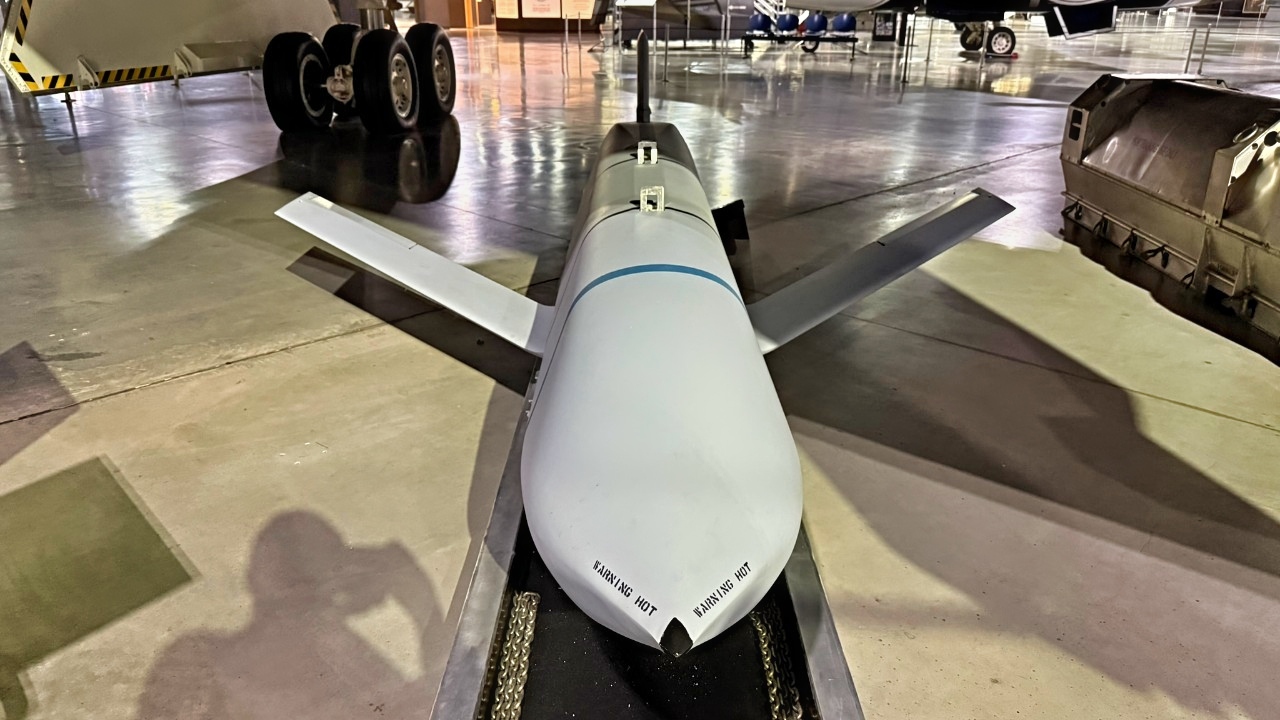
JASSM Missile National Security Journal Original Photo. All Rights Reserved.
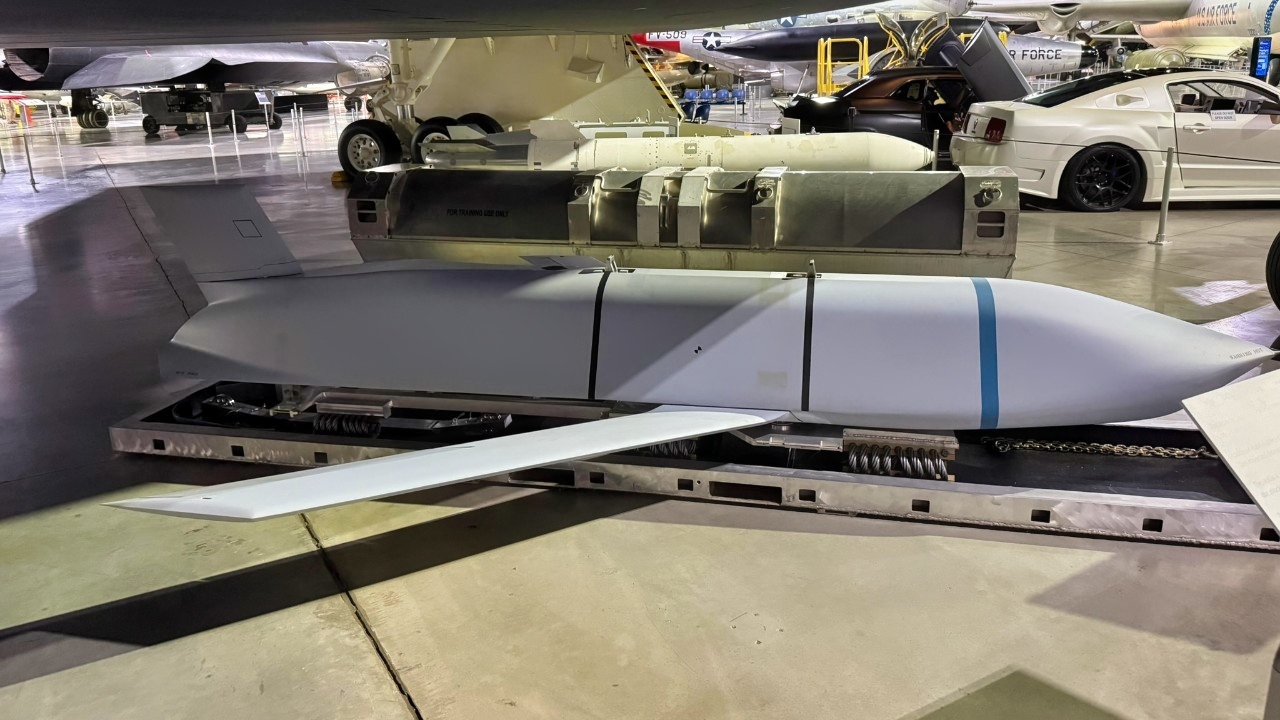
JASSM ‘Stealth’ Cruise Missile. Image Taken by National Security Journal at the U.S. Air Force Museum on 7/19/2025.
Its main features include a significantly extended range, estimated to be over 1,000 nautical miles, and an increased unit cost compared to the previous AGM-158B JASSM-ER variant.
Like other JASSM models, it is a precision, autonomous missile that uses GPS and internal navigation systems for guidance, intended to keep aircrews out of danger from enemy air defenses.
Its purpose is to destroy high-value, well-defended, fixed, and re-locatable targets from a significant standoff distance. Its range is expected to exceed 1,000 nautical miles, which is roughly double the range of the AGM-158B variant (around 500 nautical miles).
Features low observability (stealth) to reduce its signature, making it harder to detect and enabling it to penetrate dense air defense networks.
It is an autonomous, precision missile that uses GPS guidance and an internal navigation system to fly a preplanned route to the target.Cost: The unit cost for the AGM-158D is approximately $1.5 million, which is higher than the $1.04 million for the AGM-158B variant.
The U.S. Air Force has a program called the Low Cost Miniature Cruise Missile (LCMCM) to develop a small, affordable cruise missile that can fit inside the internal weapons bays of the F-22, F-35, and soon will be loaded on the F-47.
This program aims to provide a lower-cost, more deployable option compared to larger, more expensive missiles like the AGM-158 JASSM, which has an upgraded variant that costs about $1.5 million per unit, notes Air & Space Forces Magazine.
Next Generation Air-to-Air Missiles
AIM-260 JATM: The AIM-260 JATM is a long-range, beyond-visual-range (BVR) air-to-air missile designed to replace the AIM-120 AMRAAM.
It will offer a greater range than the AMRAAM and feature a multimodal seeker (combining active radar and infrared) for improved performance against countermeasures.
A joint Air Force/Navy program, with development disclosed to the public in 2019.
AIM-174B: The AIM-174B “Gunslinger” is an air-launched version of the Navy’s Standard Missile-6 (SM-6), designed for long-range engagements against large targets.
The range is classified but is expected to be far in excess of the AIM-120D.
CAMP Missile: The new Counter-Air Missile Program is in the early conceptual stages and will look to develop next-generation air-to-air missiles.
The Air Force is seeking input from industry to develop this new weapon and may procure thousands of them.
Stealth Capabilities
While the F-35 was described as a “stealth” aircraft, as were the CCAs, the F-22 was described as a “Stealth +” type. The F-47’s enhanced stealth makes it a weapon in itself.
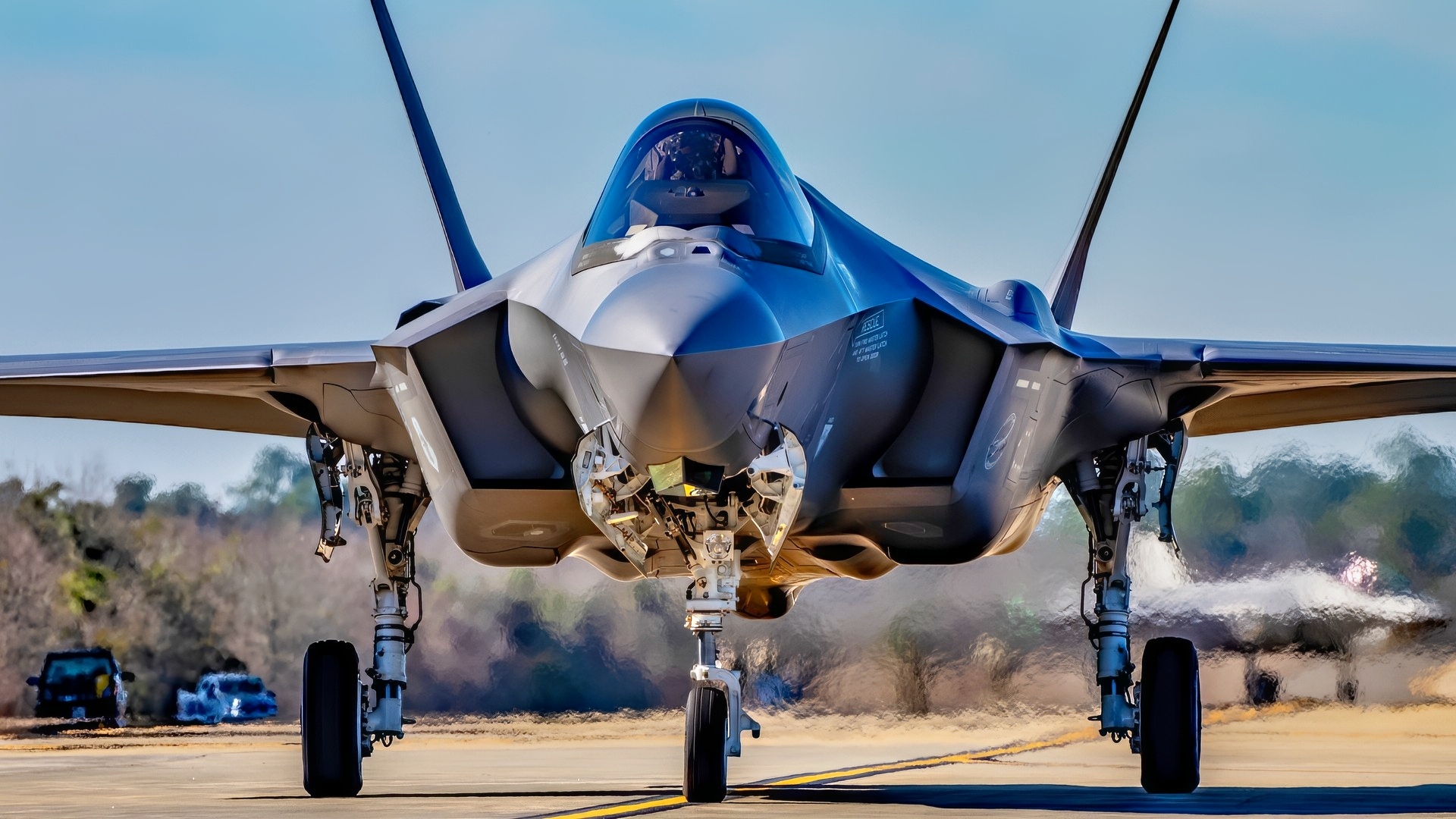
An F-35 Lightning II taxis on the runway during the “Maple Thunder” exercise, at North Auxiliary Airfield, Joint Base Charleston, North, South Carolina, January 30, 2024. Airman with the 158th FW are participating in Maple Thunder to implement the Agile Combat Employment concept. (U.S. Air Force photo by Dr. Sandeep Mulgund)
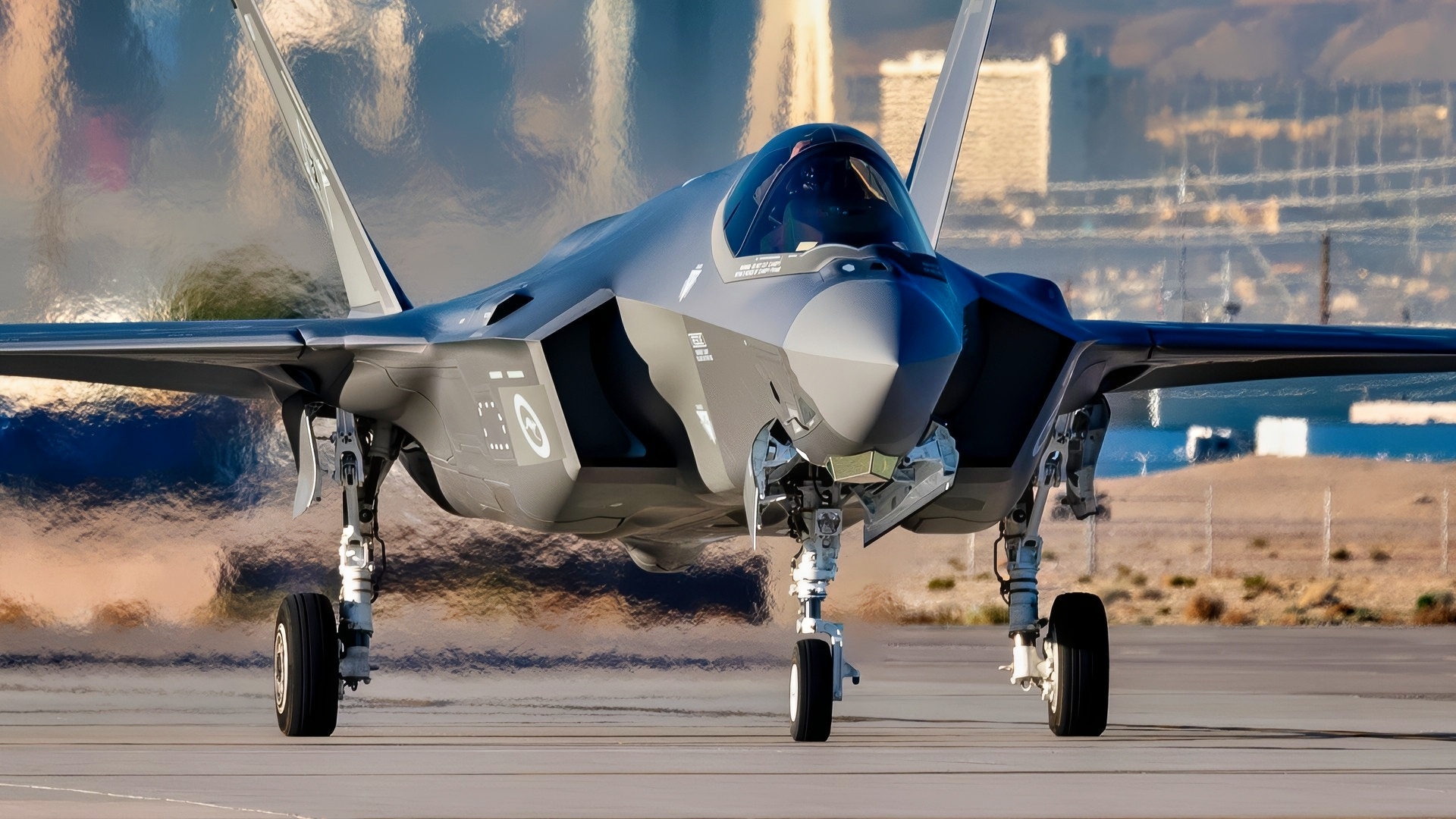
A Royal Australian Air Force F-35 Lightning II taxis out for a morning mission at Nellis Air Force Base, Nevada, Jan. 31, 2024. Approximately 150 Royal Australian aviators participated in Bamboo Eagle 24-1 with Royal Air Force and U.S. Air Force assets. These exercises build partnerships and is an opportunity to enhance the readiness and training necessary to respond as a joint force to any potential crisis or challenge across the globe. (U.S. Air Force photo by William R. Lewis)
In contrast, the F-47 was described as “Stealth ++,” consistent with service comments that it would have to be substantially stealthier than the F-22 to survive anticipated adversary air defenses.
Alex Hollings of Airpower and Sandboxx provides a detailed explanation of the complex calculations involved in radar cross sections and stealth.
“Radar cross sections are notoriously difficult to calculate and vary depending on radar frequency and angle of observation, but speaking in general terms, the F-35’s radar cross section is estimated to be .005 square meters – nearly half the size of the F-117 Nighthawk on radar scopes.
“But the larger and stealthier F-22 Raptor is said to have a frontal radar cross section of an incredible .0001 square meters – an astonishing 50 times smaller than the very stealthy F-35.
“If that difference is encapsulated in the distinction between ‘Stealth’ and ‘Stealth+’ on this graphic, then it suggests the F-47 that is designated as ‘Stealth++’ may be the stealthiest fighter ever designed by a wide margin.”
The NGAD F-47 sixth-generation stealth fighter will be a fast, stealth++ aircraft with cutting-edge weapons, making it the most lethal aircraft in the sky.
About the Author: Steve Balestrieri
Steve Balestrieri is a National Security Columnist. He served as a US Army Special Forces NCO and Warrant Officer. In addition to writing on defense, he covers the NFL for PatsFans.com and is a member of the Pro Football Writers of America (PFWA). His work was regularly featured in many military publications.
More Military
The U.S. Navy’s Constellation-Class Frigate Crisis Keeps Getting Worse
China’s New H-20 Stealth Bomber Might Have a 10,000 km Range
Even Mach 3 Speeds Could Not Save the Titanium SR-71 Blackbird
The U.S. Navy’s New DDG(X) Destroyer Is Sailing Into Stormy Waters


