

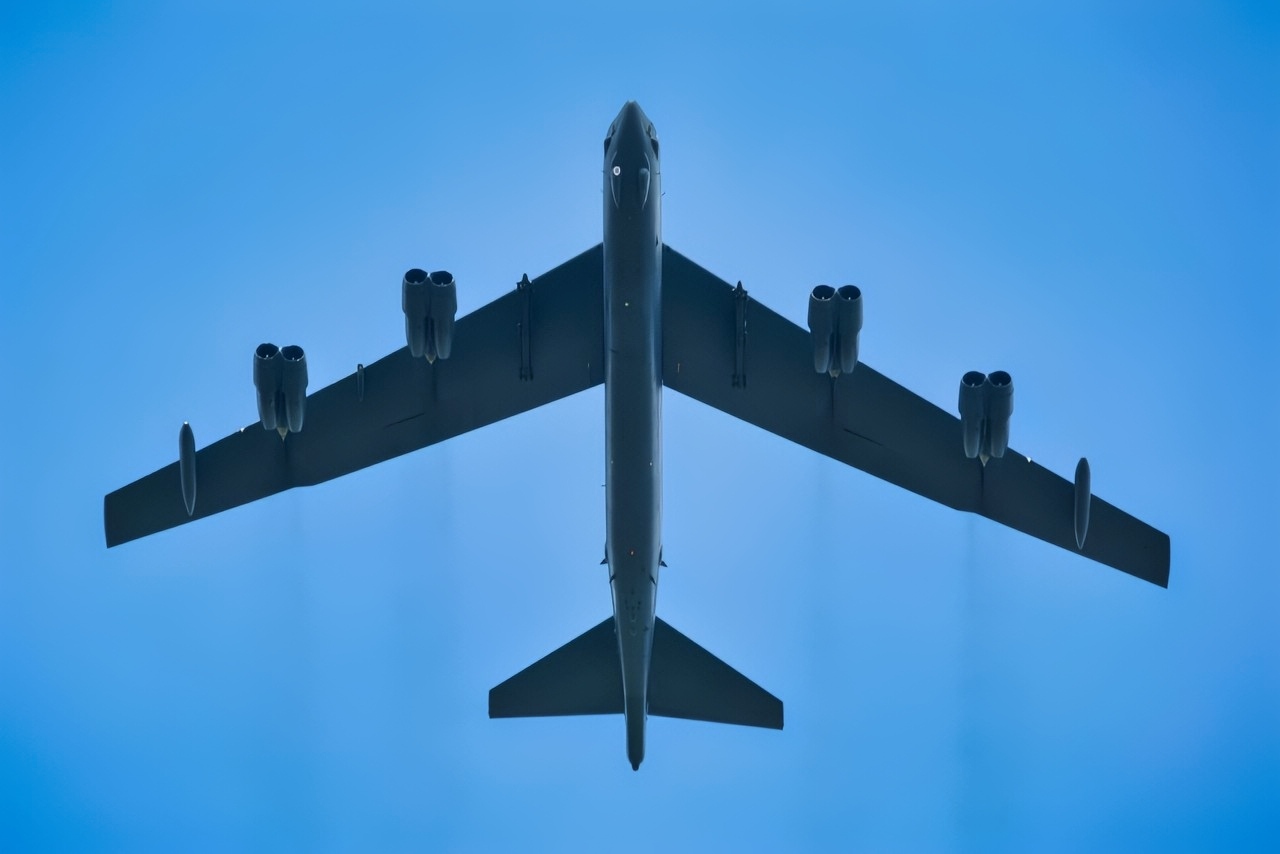
Key Points and Summary – Born as a high-altitude nuclear bomber, the B-52 evolved into a flexible long-range strike platform with a combat record from Vietnam to Desert Storm and beyond. The B-52J upgrade adds F130 commercial-derivative engines, a new AN/APQ-188 AESA radar derived from APG-79/82, cockpit/crew changes to a four-person concept, and modern pylons, comms, and weapons—including LRSO and future hypersonic cruise missiles.
-Oversight reports cite delays and cost growth, with IOC sliding to 2033 and full fleet completion in the mid-2030s. There is now a fierce debate if this planned upgrade is worth the costs and problems.
-If executed, the J-model gives the Air Force a durable, high-capacity standoff magazine that complements stealth bombers in a great-power war.
– Back in July, I went for two days to the U.S. Air Force Museum and spent a lot of time examining the B-52 bomber on display there. Almost all of the images and videos in this article are from that visit. And I must admit, I was pretty impressed.
The B-52J Bomber: Will It Happen? A History of the B-52 and What Might Happen Next
The Improbable Beginning
The Strategic Air Command wanted a long-range hammer that could fly fast, high, and far enough to threaten any target on Earth.
Boeing’s answer in the 1950s was a swept-wing, eight-engine giant that married jet-age speed to intercontinental reach.
The B-52 looked ungainly even then—bicycle landing gear, drooping wings, a forest of engines—but the formula was right: huge internal volume for fuel and weapons, room to keep adding new boxes and wiring, and a rugged structure that could take punishment and keep flying.
The final production version, the B-52H, rolled off the line in 1962. No one seriously imagined those airframes would be working jobs in the 2050s.
Yet here we are.
Vietnam: from Arc Light to Christmas
The bomber’s public reputation was forged over Southeast Asia. First came “Arc Light” missions—high-altitude, high-tonnage raids that were as much psychological warfare as firepower. The B-52’s endurance let it loiter and arrive when ground commanders needed weight on a grid square.
By the war’s end it would fly the most contentious campaign of all—Linebacker II in December 1972—eleven days of concentrated strikes against targets in and around Hanoi and Haiphong. The losses to Soviet-built SAMs were painful; so was the lesson that tactics, routes, and deception mattered as much as raw payload.
Crews adapted, routes were varied, and the aircraft demonstrated the brutal utility of a platform that can haul tens of thousands of pounds of ordnance night after night and still come back for more.
After Vietnam: a platform in search of missions—and it found many
The end of the big Southeast Asian air war didn’t sideline the BUFF (the affectionate “Big Ugly… Fella”). As Soviet defenses improved, the B-52 shifted into low-level penetration profiles, then back to higher altitudes as precision weapons, standoff missiles, and better electronic-warfare suites came online.
The aircraft quietly kept its nuclear day job in the triad while picking up maritime roles (Harpoon and mining), long-range reconnaissance tasks, and conventional strike.
In Desert Storm, the B-52 delivered again—this time with precision timing and industrial volume. It launched the opening-night conventional cruise-missile shots from the continental U.S., then settled into a grinding rhythm of strikes from Indian Ocean bases.
Over the course of the campaign, B-52 crews flew well over a thousand sorties and dropped a massive share of the air war’s total tonnage—shaping how the Air Force thought about long-range conventional bombardment in the GPS era.
The Balkans, Afghanistan, Iraq, and later operations extended that pattern: the B-52 became less a Cold War single-purpose machine and more a multi-mission truck—CALCM one night, JDAM the next, show-of-force on Friday, armed overwatch on Saturday.
The “why” was simple: capacity, persistence, and flexibility. A squadron of B-52s can sit on the edge of a theater, plug into tankers, and cover huge swaths of airspace with sensors and weapons for days on end.
B-52 Bomber: Why It’s Still Here
Longevity isn’t an accident. Three structural choices made in the 1950s set the aircraft up for a second century:
Volume and access. The airframe has space and wiring routes to swallow new electronics without ripping the airplane apart.
Wing and gear margins. The structure tolerates new pylons, pods, and loads.
Eight engines in four pods. That architecture simplifies engine swaps compared with bespoke buried installations.
Layer on a steady cadence of avionics refreshes—targeting pods, data links, communications suites—and the B-52 stayed useful while newer bombers struggled with small fleets or heavy maintenance demands.
The B-52J Vision Explained
The modernization concept is straightforward: take the durable H-model, give it new commercial-derivative engines, bolt on a modern AESA radar derived from front-line fighters, re-architect the cockpit and mission systems, and streamline the crew from five to four.
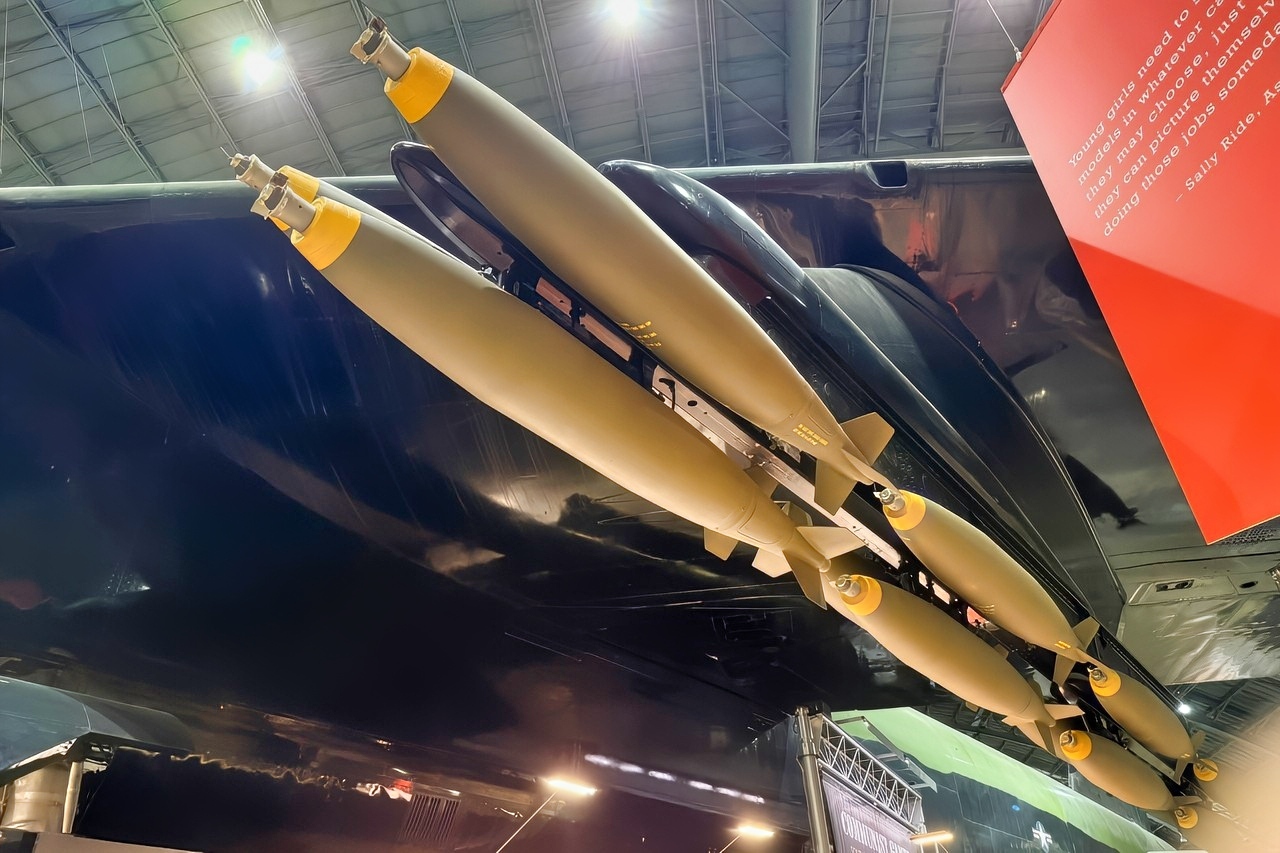
B-52 Bomber Bombs Ready to Go. Image Credit: National Security Journal.
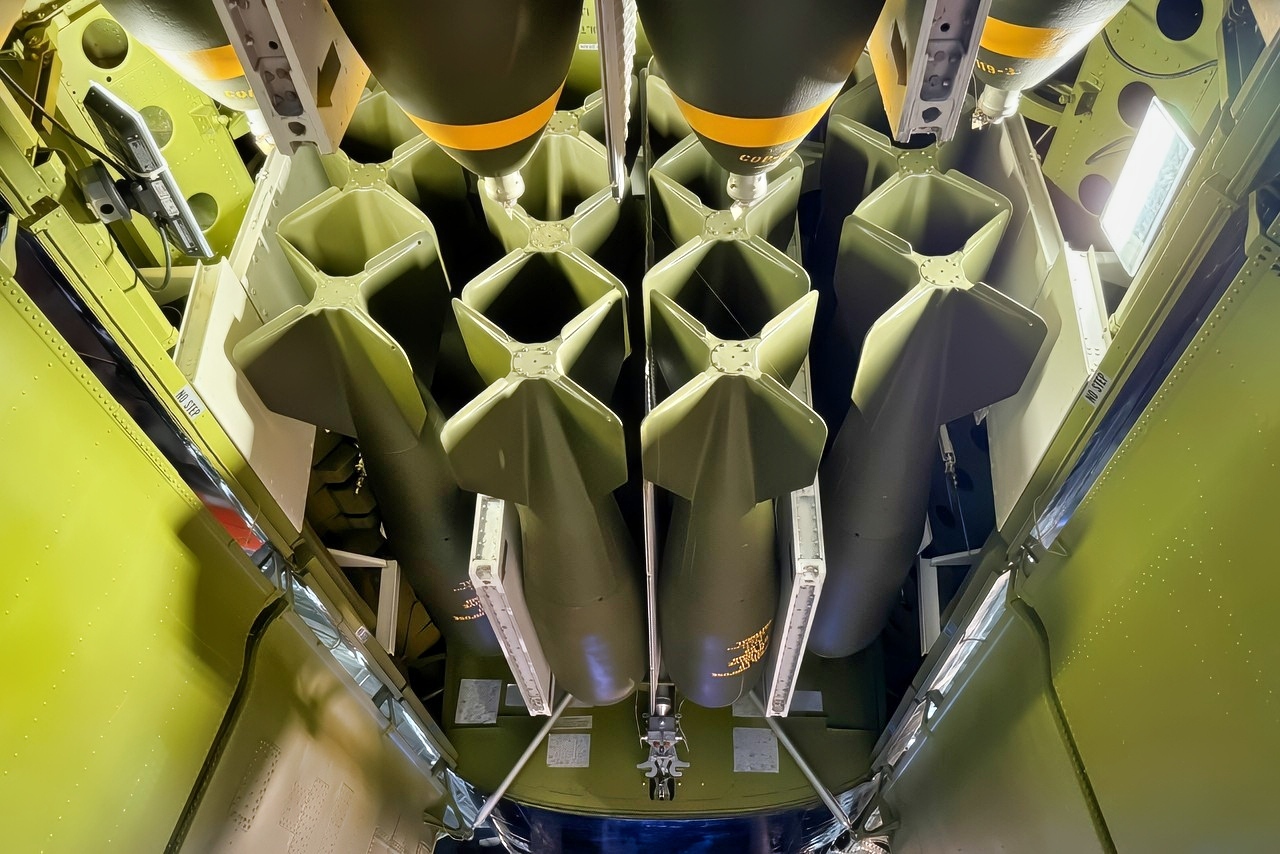
Bombs Inside the B-52 Bomber. Photo taken by Harry J. Kazianis/National Security Journal.

B-52D Bomber at USAF Museum. Image Credit: National Security Journal.
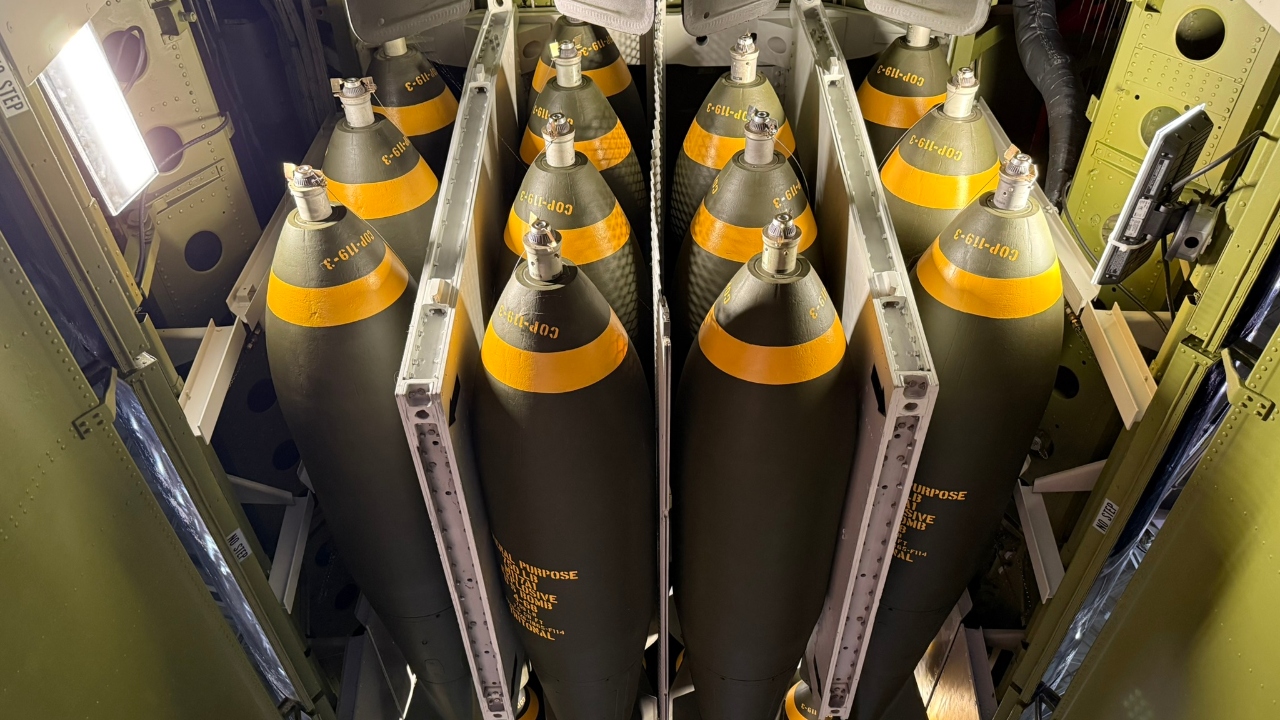
B-52 Bomber Bombs. Image Credit: National Security Journal.
Add stronger electrical power, new pylons, updated comms/navigation, and weapon integrations for the 2030s—including the Long-Range Standoff (LRSO) missile—and you’ve created a bomber that can fly into the 2050s with lower sustainment pain and a far better picture of the fight. That’s the point at which the B-52H becomes the B-52J.
Engines: The Heart of the Case for B-52J
The Commercial Engine Replacement Program swaps eight aging TF33s for eight Rolls-Royce F130s per aircraft. On paper, that yields big reliability gains, improved fuel burn, and more electrical power for the modern sensors and defensive systems the bomber now needs.
In practice, integrating new engines on a 1960s airframe is non-trivial: inlets, nacelles, controls, instrumentation, and structural loads all have to be re-worked.
Design reviews and dual-pod engine tests have moved the ball, but integration challenges—especially around inlet and nacelle work—have pushed the schedule to the right and nudged costs up.
The result: an initial operational capability that has drifted well into the next decade and a higher up-front bill than early estimates.
None of that negates the long-term sustainment savings; it does mean the fleet waits longer—and pays more up front—to get them.
Radar: From Analog to AESA (And Into a Headwind)
If engines are the B-52J’s muscles, the new radar is the fresh set of eyes. The legacy set dates to the Cold War. The replacement, a Raytheon-built AESA derived from the APG-79/APG-82 family, promises reliable, multi-mode performance: long-range air and surface search, faster updates, better mapping, weather penetration, and more credible electronic protection. It’s also the enabler for cutting a crew position and moving to a more modern “glass” cockpit and mission workflow.
Here, too, reality intruded. Lab and integration issues—radome compatibility, installation choreography, and software maturation—slowed progress. Flight testing is ramping, but fielding looks to land late in the decade. Capability is coming; it’s just arriving later and at a higher cost than planned.
Crew and Cockpit: Consolidating the Workflow
The B-52H flies today with two pilots, two navigators (radar/nav and nav), and an electronic-warfare officer. The J-model modernization collapses those duties into a four-crew concept with reworked stations, large multifunction displays, and updated systems management.
For operators, the upside is workload management and better human-machine teaming; for maintainers, it’s fewer unique legacy boxes and wiring harnesses to coax through another decade. The tradeoff is between training and transition: a new crew concept requires new simulation time, new syllabi, and a careful handoff to prevent units from losing combat power during the transition.
Weapons: Standoff Returns to Center Stage
A modernized B-52 is not supposed to joust with modern air defenses; it’s supposed to reach out. The jet already carries JASSM/ER, JDAM, naval mines, and more. Two weapon families dominate the 2030s plan:
LRSO (AGM-181). The stealthy nuclear cruise missile that replaces the venerable ALCM. The B-52J will be a primary carrier, giving U.S. Strategic Command a survivable, flexible nuclear option that complicates any adversary’s defense planning.
Hypersonic cruise and other advanced standoff rounds. Schedules remain fluid, but the B-52’s payload and pylons make it an obvious magazine for long-range, high-speed conventional shots once those weapons mature.
The Cost Question for the B-52J
All of this carries a real bill—and it’s moving. And this is where the controversy starts.
The re-engining effort’s top-line has grown from early estimates; the radar program likewise has seen cost growth and schedule churn. Watchers now expect B-52J capability to arrive later than originally promised, with full fleet completion sliding toward the mid-2030s. And to make matters worse: those costs could mean the program never happens.
Put bluntly: the Air Force is paying more than advertised to turn 1960s airframes into 2030s bombers, and the benefit line (fuel savings, reliability, combat capability) arrives later than planned.
None of that makes the choice wrong; it means you only get the payoff if you finish—and if the industrial base can hold the line on execution for years, not months.
What the J-Model Buys in a Fight
Imagine a Pacific crisis. The B-52J isn’t charging into layered SAM belts. It’s orbiting at range, off tanker tracks and inside a joint network, with a radar that can build coherent pictures and sort moving targets, and with enough electrical power to run defensive systems that matter in a drone- and jammer-saturated battlespace.
It carries standoff magazines that can reach deep without exposing the platform, and it does so with the kind of persistence only a big bomber offers: long endurance, multiple weapons loads per day, and the ability to flex from maritime interdiction to land attack without re-basing.
That’s the strategic logic. The B-21 is the stealthy door-opener. The B-52J is the repeatable pressure that follows—firing from sanctuary, deterring by presence, and surging the nightly effects a campaign needs.
Risks That Could Still Bite
Three stand out:
Integration complexity. Engines + radar + cockpit + pylons is not one program; it’s many, stitched together while the fleet flies daily training and deterrence missions. Sequencing matters.
Industrial base wobble. The bomber line relies on subcontractors who also feed fighter, missile, and commercial spares. Late parts and skilled-labor churn don’t care that a schedule slide is politically inconvenient.
Doctrine drift. The B-52 can do a lot, which tempts planners to do too much with it. The J-model is still a non-stealth bomber. It lives when it leverages standoff, deception, EW, and joint fires—not when it wanders into modern IADS neighborhoods.
Combat Record in One Breath
From massive grid-square bombing in Vietnam, to ocean mining and ship killing, to precision cruise-missile strikes on opening nights, to persistent close-air support and armed overwatch in twenty-first-century wars, the B-52’s résumé is two lines long: it shows up, and it carries more than anything else that flies.
That’s why it has outlasted younger airframes, and why the Air Force is investing real money to keep it around while the stealth bomber fleet scales up.
The Bottom Line on the B-52J and the B-52s Future
If you were designing a clean-sheet bomber for the 2030s, you wouldn’t sketch an eight-engine, non-stealth jet from the Kennedy administration.
But you also wouldn’t throw away a paid-for, structurally sound fleet with unique payload and endurance when you can refit it to fire tomorrow’s weapons from outside the worst threat rings.
That’s the B-52J wager: spend now, live with schedule pain, and get a bomber that complements the B-21 by multiplying nightly effects at campaign scale.
It’s an expensive bet—but losing the capacity would be more expensive the first time the President asks, “How many long-range standoff shots can we make tonight?” and the answer is “not enough.”
After spending several hours with a retired B-52 bomber at the U.S. Air Force museum back in July, I can honestly say I hope the ‘J’ bomber gets done. But we can’t break the bank either with the B-21 Raider stealth bomber just around the corner.
Stay tuned, as we like to say.
About the Author: Harry J. Kazianis
Harry J. Kazianis (@Grecianformula) is Editor-In-Chief and President of National Security Journal. He was the former Senior Director of National Security Affairs at the Center for the National Interest (CFTNI), a foreign policy think tank founded by Richard Nixon based in Washington, DC. Harry has over a decade of experience in think tanks and national security publishing. His ideas have been published in the NY Times, The Washington Post, The Wall Street Journal, CNN, and many other outlets worldwide. He has held positions at CSIS, the Heritage Foundation, the University of Nottingham, and several other institutions related to national security research and studies. He is the former Executive Editor of the National Interest and the Diplomat. He holds a Master’s degree focusing on international affairs from Harvard University.
More Military
K3: The New Tank That Looks Like the B-21 Raider Stealth Bomber
Boeing X-32 Stealth Fighter Will Never Leave the Museum
China’s White Emperor NGAD 6th Generation Fighter Is Fake


Kenneth Johnson
September 8, 2025 at 5:26 am
For true BUF pilots – from the day (Nam) it was not “fellow” but the other “F” word.
It will be deployed – because!