

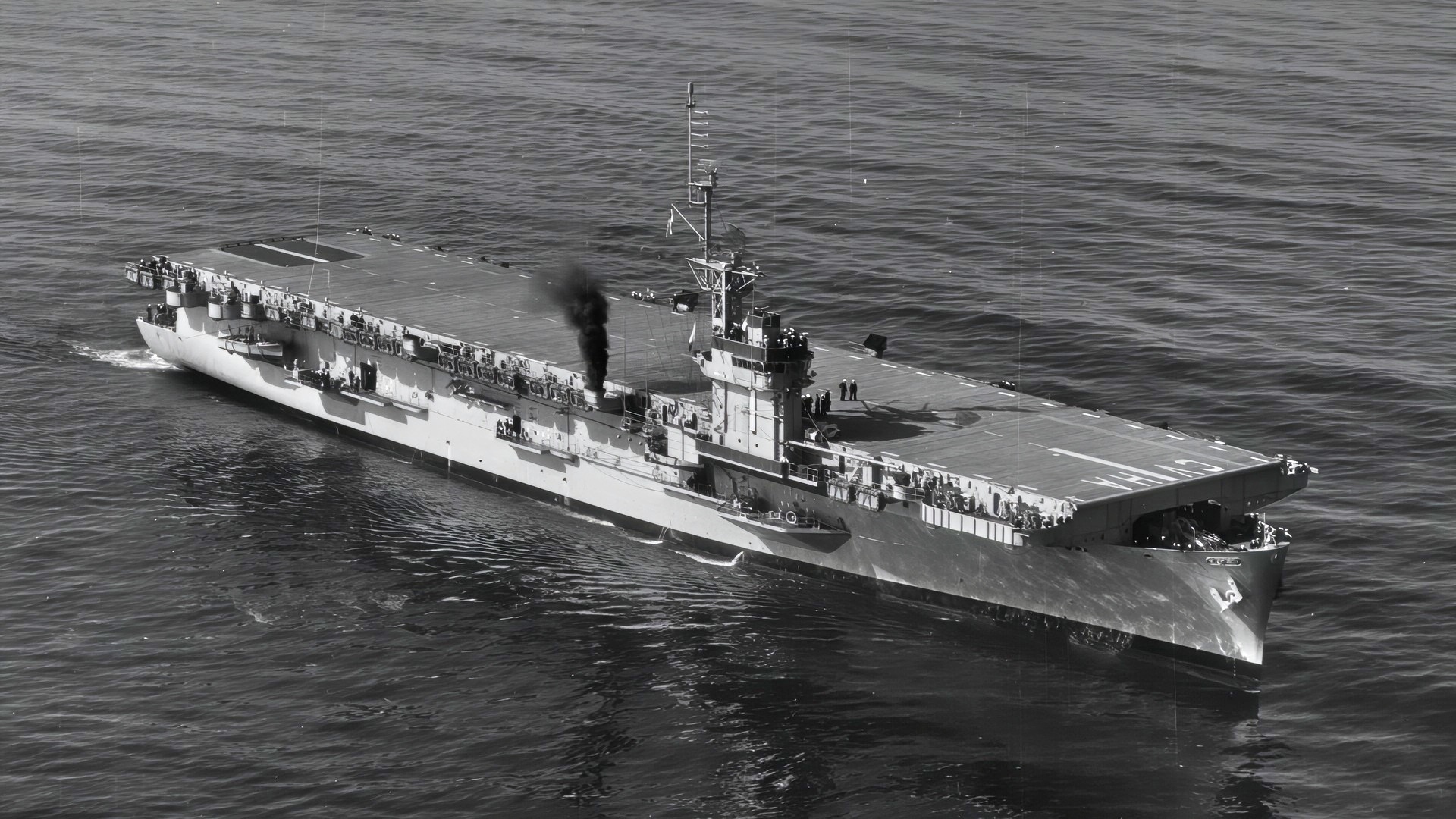
Summary and Key Points: The Casablanca-class escort carriers embodied the “Arsenal of Democracy” at sea: smaller, cheaper flattops built fast to put aircraft where they were urgently needed.
-Nicknamed “Jeep carriers,” they traded speed, armor, and heavy armament for mass production and mission utility.

Casablanca-Class Aircraft Carrier WWII. Image Credit: Creative Commons.
-Their greatest value came in anti-submarine warfare and convoy defense, where carrier-based aircraft could hunt U-boats and protect vital shipping lanes.
-They also supported amphibious operations by providing reconnaissance and close air support ahead of major landings.
-Built in large numbers on tight timelines, the Casablanca-class helped turn industrial scale into battlefield advantage.
The Escort Carrier That Helped Win WWII: Casablanca-Class, Explained
One of the ideas behind the “Arsenal of Democracy” during World War Two was to use U.S. industrial might to win the war decisively with military hardware built quickly and cheaply to overwhelm Nazi Germany and Imperial Japan. This often came down to which side could produce the most ships efficiently and get them into the water to dominate naval combat.
One such warship built at a breakneck pace was the Casablanca-class aircraft carriers. These were smaller escort carriers that could still place airplanes in harm’s way but were not the most dominant flat-tops in the fleet. These were nicknamed “Jeep” carriers and were lightly armored but slower than their larger brethren.
Did You Say 50 Casablanca-Class Were Built in One Year?
Sometimes, Jeeps were converted carriers built on existing maritime hulls. The Americans produced 50 Jeep carriers between 1943 and 1944, and this had an outsized effect on the war by demonstrating strength in numbers at a time when U.S. shipbuilding was the best in the world.
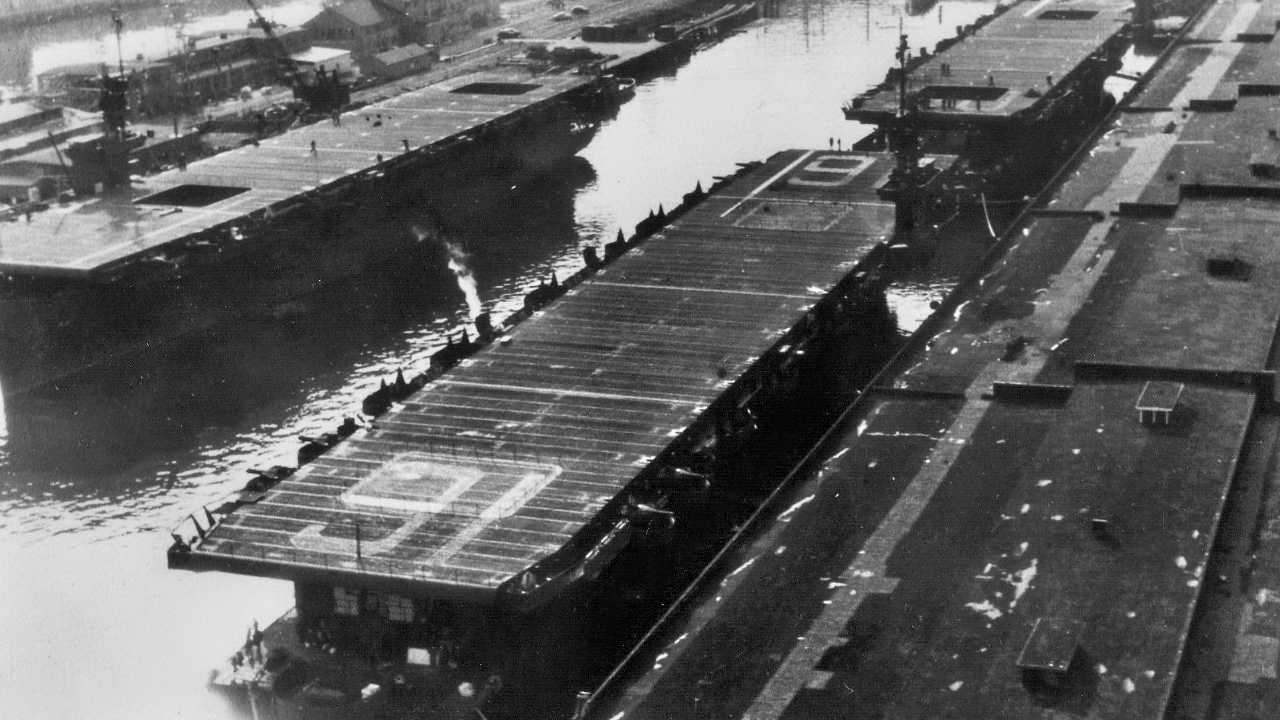
Casablanca-Class.
Expertise in Undersea Warfare and Amphibious Attack Support
The Casablanca-class grew strong in one aspect of combat – anti-submarine warfare. This was a good way to protect a flotilla from pesky subs that could endanger the entire strike group with destructive torpedoes. They were also a means of delivering more aircraft to attack the landing zone to prepare for amphibious attacks and to keep the enemy’s heads down while Marines swarmed ashore. This provided a good one-two punch of effective close air support with battleships while invading forces achieved breakthroughs in enemy lines.
These Carriers Were Not That Big
The Casablanca-class vessels were usually about half as long as the standard carrier. This allowed for only a limited number of fighter planes. They displaced only a third as much as larger flat-tops. However, the smaller size benefited the shipyards, and the Jeep carriers were produced quickly and efficiently. They each took three to eight months to build.
Flank Assets for Reconnaissance Patrols
Other navies had escort carriers, including the Japanese and the British Royal Navy. The concept was sound. The Jeep vessels could provide flank protection and lead the vanguard of a fleet carrier strike group. Their aircraft could fly ahead in reconnaissance mode and keep the bigger group of ships from encountering a surprise attack.

Casablanca-Class. Image Credit: Creative Commons.
The Entire Force Was Large and Inexpensive
The Casablanca-class also cost less per hull than the fleet carriers, and this stretched a limited budget far with strength in numbers. The conversion of commercial vessels into carriers was a good idea, although these Jeep ships were less mobile and slower than traditional flat-tops.
The Answer to Enemy Submarines
In the Atlantic theater, they were able to hunt down Nazi U-boats by concentrating mass above wolfpacks of German subs. The Casablanca-class could use their aircraft to overwhelm enemy boats, and they sent many to the bottom or scared marauding subs away from larger convoys of merchant ships.
The Casablanca-class had more carriers built than the Bogue-class. The Navy produced 45 of these compact carriers. Eventually, the Navy would have over 100 escort and light carriers.
The F4F Wildcats On Board
The Jeep carriers, due to their shorter flight decks, depended on smaller F4F Wildcat fighters. These were still effective against Japanese Zeros. The Wildcat experience against the Japanese taught Americans lessons about aerial combat, and, based on this data, the United States developed a more powerful, faster fighter, the F6F Hellcat, which would launch from conventional fleet carriers.
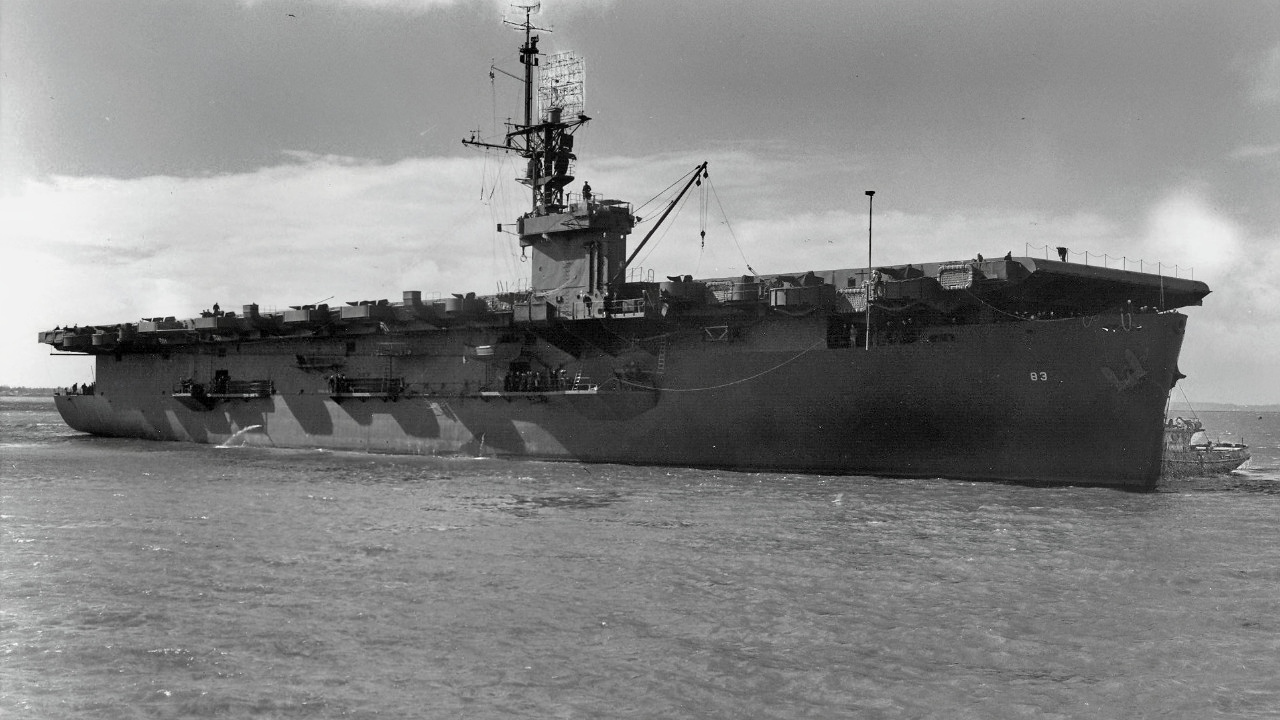
Casablanca-Class Aircraft Carrier. Image Credit: Creative Commons.
A Toast to the Awesome American Shipbuilding Record
The production run of the Casablanca-class was a marvel in shipbuilding prowess. From 1943 to 1944, the Kaiser Shipbuilding Corporation built all 50. They used prototypes to determine the most optimal way to produce them in large quantities, without delays or cost overruns. Indeed, the Casablanca-class carriers cost less than the fleet’s regular-sized carriers. Workers were able to use their elbow-grease and go to town on the Jeep carriers, pumping them out regularly. Fifty carriers built in one year is something the United States could only dream of these days of labor shortages and supply chain disruptions.
However, these cheaper quick-builds came with a tradeoff. The armor was thinner, and they were lightly armed. The ships were covered with thinner, weaker splinter plating. They could be vulnerable to enemy dive bombers and Japanese kamikaze aircraft.
An Example of the Arsenal of Democracy
At one point, the Americans, in a demonstration of how the Arsenal of Democracy had evolved, sought to grant 25 escort carriers to Great Britain. However, the Navy firmly resisted this idea, and all Casablanca-class vessels remained in American hands.
After the Casablanca-class run was complete, the Navy concentrated on the Bogue-class flat-tops, and some of these were transferred to the United Kingdom. This showed that the U.S. defense industrial complex was as strong as ever.
They Still Had Post-war Jobs
After the war, the Casablanca-class ships were used to ferry aircraft to other countries and served as training vessels. They excelled at these jobs, enabling the Navy to replenish its warplanes on other conventional carriers.
Some of the Jeeps were converted to helicopter carriers. This was also a good use of the smaller flat-tops and paved the way for the new “air mobile” concept of helicopter warfare.
The Casablanca-class was finally scrapped entirely, which was a disappointing end for such a useful ship. We could never imagine building 50 aircraft carriers in one year, but workers did not have to contend with technological advancements in modern aircraft, such as new electromagnetic catapults and heavily armored flight decks capable of launching and recovering a wide range of aircraft.
The Casablanca-class had a decent wartime record and will be known for their large numbers and ability to root out enemy submarines and hold the line during amphibious attacks – both important jobs to help win World War Two.
About the Author: Brent M. Eastwood
Author of now over 3,000 articles on defense issues, Brent M. Eastwood, PhD is the author of Don’t Turn Your Back On the World: a Conservative Foreign Policy and Humans, Machines, and Data: Future Trends in Warfare plus two other books. Brent was the founder and CEO of a tech firm that predicted world events using artificial intelligence. He served as a legislative fellow for US Senator Tim Scott and advised the senator on defense and foreign policy issues. He has taught at American University, George Washington University, and George Mason University. Brent is a former US Army Infantry officer. He can be followed on X @BMEastwood.


