


In 1957, the U.S. Air Force began Project Pluto — a nuclear-powered cruise missile program. The result was the Supersonic Low Altitude Missile (SLAM). It was designed to fly at Mach 3 at a few hundred feet above the ground. Its propulsion came from an unshielded nuclear reactor that superheated incoming air. The reactor, called Tory, was actually built and tested.
Enter Project Pluto
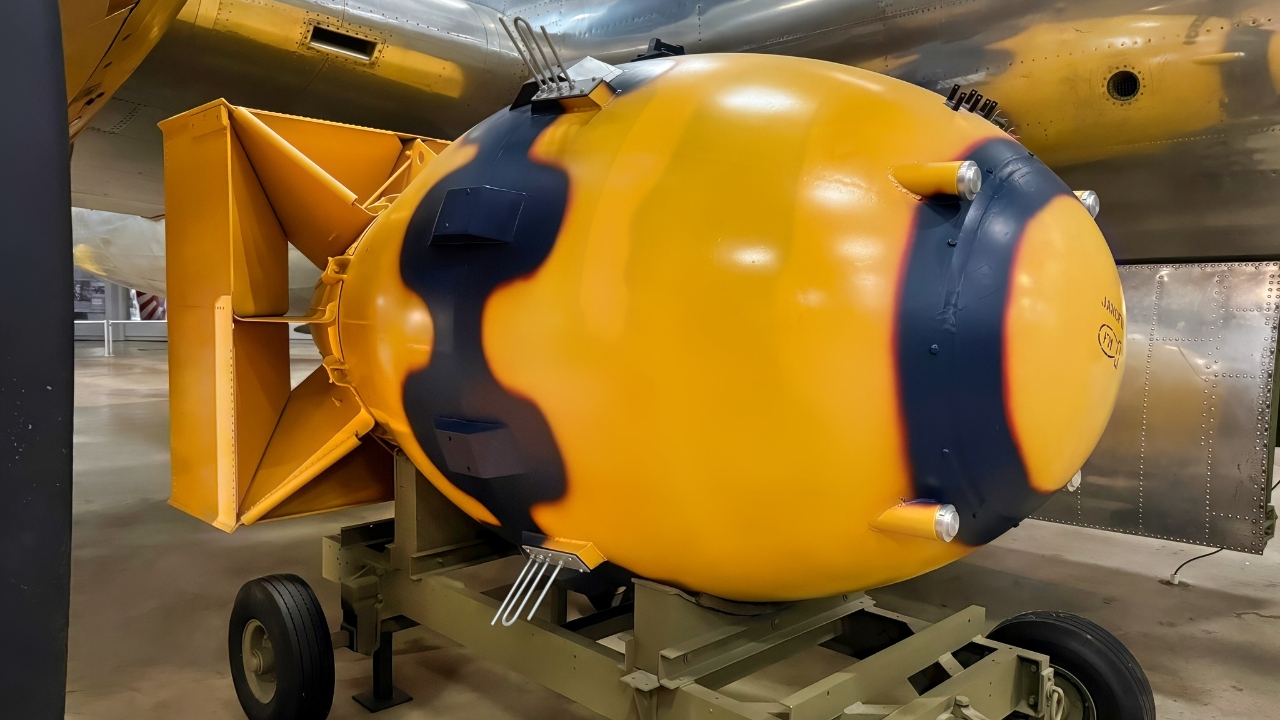
Fat Boy Nuclear Bomb At U.S. Air Force Museum. Photo Credit: Harry J. Kazianis/National Security Journal Original Photo.
In the early 1950s, nuclear technology was still relatively new, and the full effects of radiation were not yet understood. During this period, the USAF viewed nuclear power like any other conventional technology and sought to harness it to the fullest. The U.S. Atomic Energy Commission (AEC) was already studying the viability of using a nuclear thermal rocket as part of an intercontinental ballistic missile (ICBM) at the test facility in New Mexico. The USAF and AEC agreed to a joint study of the viability of a nuclear-powered ramjet, which led to the creation of Project Pluto and the SLAM missile.
A Nuclear-Powered Ramjet
One of Project Pluto’s primary objectives was to develop a nuclear-powered ramjet system. Conventional jet engines use chemical fuel burned with compressed air to produce thrust. The Pluto concept replaced chemical combustion entirely with nuclear fission.
Incoming air would be forced into the missile at high speed, pass through an unshielded nuclear reactor core, and be heated to extremely high temperatures.
This superheated air would then be expelled out the rear of the missile, generating thrust. Because the process did not depend on conventional fuel, the missile could theoretically remain airborne for an extremely long time, limited primarily by mechanical wear rather than fuel supply.
This reactor, known as the Tory reactor, was a remarkable engineering achievement. It was built to operate at temperatures far beyond those encountered in traditional nuclear reactors, while also remaining compact and lightweight enough to be carried by a missile.
The reactor’s core contained ceramic fuel elements designed to withstand intense heat and high-speed airflow. Two major versions of the reactor were developed and tested in the Nevada desert. The first, Tory-IIA, demonstrated that the concept of an air-breathing nuclear ramjet was feasible. The later Tory-IIC improved upon this design, achieving higher power and more stable operation, and it ran successfully at full power during controlled tests in 1964.
SLAM: One of the Most Terrifying Weapons Developed By the U.S.
The missile that would carry this engine, SLAM, was envisioned as a weapon unlike anything that had existed before. It would fly at speeds of around Mach 3 while maintaining extremely low altitudes, sometimes only a few hundred feet above the ground.
This combination of speed and low flight path would allow it to evade most radar systems, which were less effective at detecting objects flying beneath their coverage horizon. Its trajectory could be programmed to weave through terrain and bypass defenses, making interception exceedingly difficult with the technology available at the time.
A major goal of Project Pluto was to expand the explosive yield of nuclear weapons. It was designed to carry multiple thermonuclear warheads, potentially more than a dozen, which it could release sequentially over different targets, rather than being limited to a single strike. A single SLAM missile could devastate several cities or strategic sites in one mission. This multipurpose capability made it particularly attractive from a military planning perspective, as it could significantly amplify the destructive potential of a single launch.
Why Nuclear-Powered Cruise Missiles are a Bad Idea
As scientists deepened their understanding of radiation, it soon became evident that the SLAM’s design was inherently unsafe. The nuclear reactor that powered the missile was unshielded, meaning that as air passed through it, radioactive particles would be expelled into the atmosphere.
The missile would effectively leave a trail of radiation in its wake, contaminating the areas it flew over. In addition, its supersonic speed at low altitude would generate powerful shockwaves, potentially damaging structures, shattering windows, and causing widespread disruption below. The heat from its exhaust could also contribute to fires or further environmental damage.
Once the environmental impacts became known, Project Pluto faced serious public and congressional pushback. From launch to impact, it would inflict harm on anything beneath its path.
This raised serious ethical concerns about the weapon, especially if it had to be used from American soil, where it could harm or deafen American citizens. The indiscriminate nature of the radiation it would release, combined with the difficulty of controlling its full effects, made it problematic from both humanitarian and environmental perspectives.
Project Termination
These environmental concerns were one of several reasons the Pluto Project was eventually discontinued. While the technology had demonstrated satisfactory results, SLAM was rendered obsolete by the rapidly advancing ICBM technology.
ICBMs could travel further and faster than SLAM. The explosive yield requirement of the Pluto Project, one of the biggest talking points in favor of the project, was also surpassed by ICBMs, which could deliver more nuclear warheads, each with higher yields.
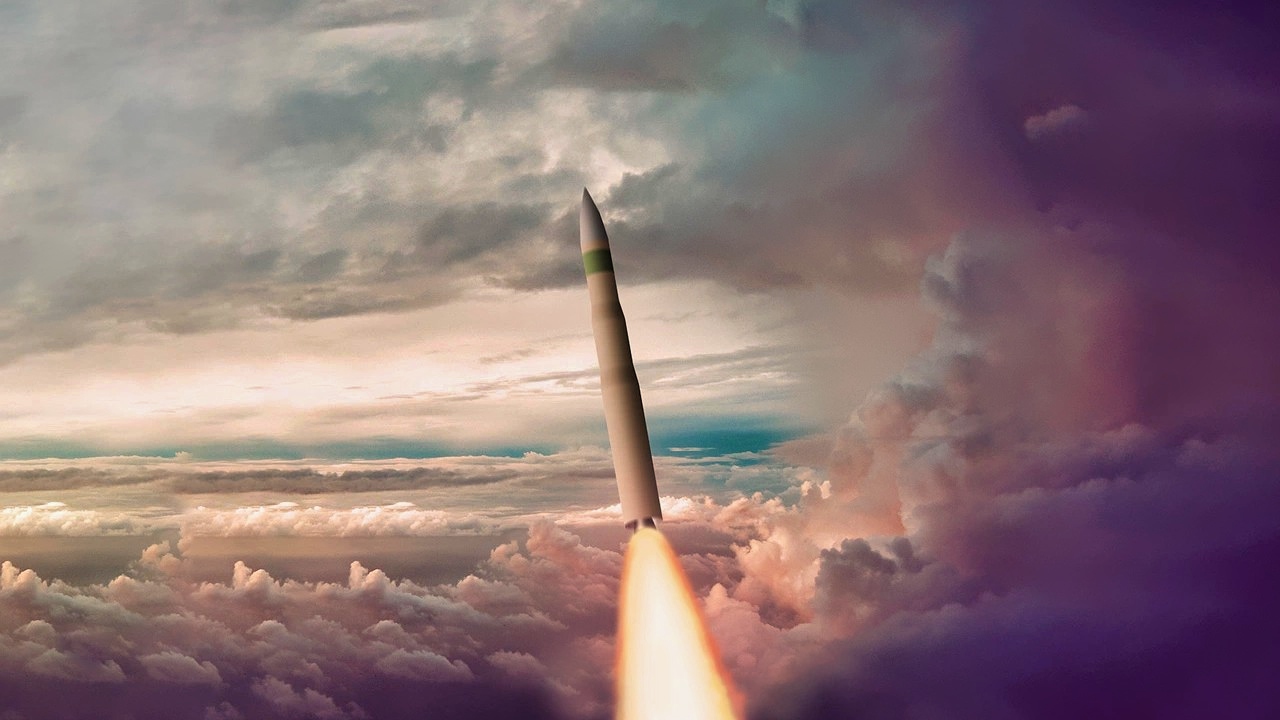
Sentinel ICBM U.S. Air Force. Image Credit: Creative Commons.
Additionally, there were concerns about the SLAM’s vulnerability in an environment of rapidly advancing Soviet SAMs. The USAF was concerned that a missile as large and noisy as SLAM would be an easy target for Soviet missile systems.
Ballistic missiles, on the other hand, were virtually impossible for existing defense systems to intercept due to their insanely high speeds at their terminal phase. The rapidly advancing ICBMs rendered SLAM and the Pluto Project irrelevant, leading to the project’s cancellation in July 1964, seven years after it had started.
About the Author: Isaac Seitz
Isaac Seitz, a Defense Columnist, graduated from Patrick Henry College’s Strategic Intelligence and National Security program. He has also studied Russian at Middlebury Language Schools and has worked as an intelligence Analyst in the private sector.


