
Ukraine Reclaims Territory Amid Russian Donbas Offensive – Ukraine appears to be clawing back some of its territory in the eastern Donbas region, complicating Russia’s efforts to capture the remaining Ukrainian-held cities throughout Donetsk. It raises new questions about Moscow’s ability to achieve its objectives on the battlefield, with President Vladimir Putin setting a deadline for Russian forces to capture the remainder of Donetsk Oblast by the end of 2026.
The gains, a product of an operation known as “Vivaldi,” come after months of fighting in which Russian forces have made little progress.

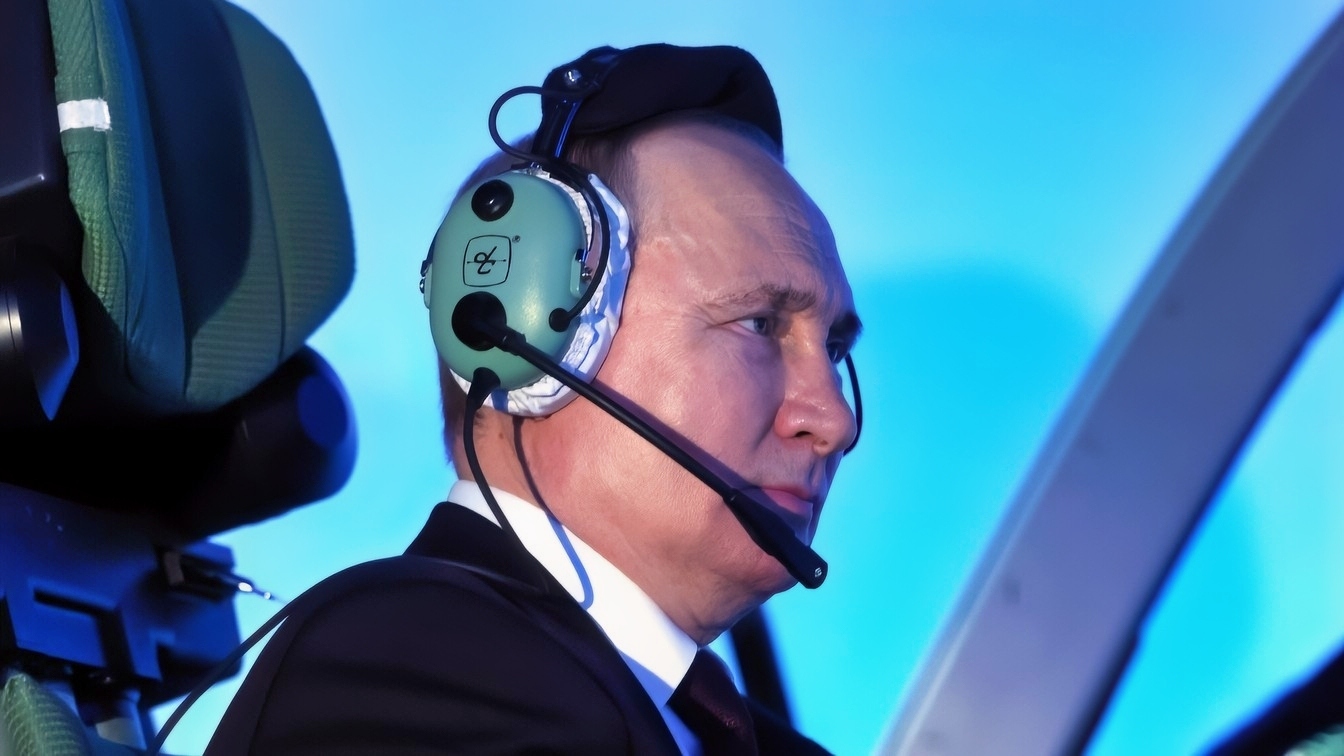
Russian President Putin. Image Credit: Creative Commons.

Putin in 2021. Image Credit: Creative Commons.
Operation Vivaldi has so far pushed Russian troops back in the northern Donbas, preventing Moscow from completing an encirclement of two cities, Sloviansk and Kramatorsk. The latest analyst assessments suggest Russia’s offensive is struggling well beyond that stretch of the front line.
Russia Suffers Major Territorial Setback
The Finnish open-source intelligence group Black Bird Group reports that Russia’s net territorial loss in September totaled 190 square kilometers, or 73 square miles. Those figures, which include territory recovered in several areas of the front, would make September Russia’s worst month since June 2023.
Other organizations tracking the conflict have produced different figures, but they largely agree that the Russian military has struggled to make meaningful gains throughout the year.
Those assessments come even as the Russian Ministry of Defense tells a different story, claiming on September 19 to have captured more than 2,000 square miles of Ukrainian territory this year.
In September, the Institute for the Study of War (ISW) assessed that Ukrainian counterattacks had successfully disrupted Russian attempts to reach the northern approaches to the fortress cities in the Donbas.
Operation Vivaldi Delivers
Ukraine’s recent gains result from a months-long counteroffensive in the northern Donbas region known as Operation Vivaldi, a campaign intended to push Russian forces away from the fortress cities of Sloviansk and Kramatorsk.
The operation was named after Italian composer Antonio Vivaldi’s “The Four Seasons” and divided into four phases.
Ukrainian President Volodymyr Zelenskyy visited the command post of the Third Army Corps on September 30, whose troops have led the operation, and received a briefing from commander Brigadier General Andrii Biletskyi on the results of their work.
In a public statement, the Ukrainian president described how the operation has persisted for three seasons so far and delivered results, with over 5,000 Russian soldiers killed and a further 250 captured.
“At the command post of the Third Army Corps, I met with the warriors carrying out Operation Vivaldi. It is a serious operation, important in many ways for our defense overall and for the Donbas in particular. Over its three seasons, Ukraine’s Defense Forces have thwarted Russia’s plans to break through to the rear of the Slovyansk-Kramatorsk urban agglomeration and stabilized the situation in this section of the front. Russia has lost more than 5,000 killed and wounded, and another 250 occupiers have been added to our exchange fund. Since the start of the offensive, Ukraine has regained control of 176 square kilometers of territory. Today, we discussed plans for the fourth season of active operations,” he wrote on X on September 30.
Zelenskyy also said the operation has relied on robotic systems and promised to “scale” it up.
“One particularly promising area now is replacing our warriors with ground robotic systems wherever possible. During Vivaldi, this capability allowed us to accomplish many things. We will scale it up so that, more and more often, a drone rather than a warrior carries out the most dangerous tasks at the front,” he said.
So far, the gains have largely occurred around Lyman, east of Sloviansk, where Russian troops have been trying to advance toward Ukraine’s heavily fortified defensive positions.
By pushing the Russian forces back, Ukrainian forces have complicated Moscow’s plans to approach Sloviansk and Kramatorsk from the northeast and surround the Ukrainian-held cities in Donetsk.
How Ukraine Broke Through
The operation is significant because it proves that Ukrainian forces can still conduct mechanized assaults despite the proliferation of drone warfare.
A New York Times piece describes how Ukrainian commanders spent months preparing the battlefield before the offensive was launched, targeting Russian logistics networks and destroying an oil pipeline that was used to supply fuel. Ukrainian troops systematically eliminated experienced Russian drone operators, too.
Ground-based robots were also used to clear mines and open routes for armored vehicles, and drones were used to plant Ukrainian mines along Russian supply lines.
Once those preparations were complete, Ukrainian armored vehicles advanced against Russia’s defensive positions. The tanks moved in with the support of unmanned ground vehicles that were equipped with machine guns and explosives.
George Barros, a senior analyst at the Institute for the Study of War, told the Times that the operation proved how mechanized assaults are still possible despite extensive drone surveillance.
About the Author: Jack Buckby
Jack Buckby is a British researcher and analyst specializing in defense and national security, based in New York. His work focuses on military capability, procurement, and strategic competition, and he produces and edits analysis for policy and defense audiences. He brings extensive editorial experience, with a career output spanning over 1,000 articles at National Security Journal, and has previously authored books and papers on extremism and deradicalization.


