


For the first time, all 22 National Guard generals who command America’s Air National Guard fighter squadrons put their names on a single letter to Congress, and their message was blunt. The United States Air Force, they wrote, is the oldest, the smallest, and the least ready it has been in its 78-year history. The independent data largely backs them up. The fighter force has shrunk by more than half since the Cold War ended, the jets that remain are decades old, and readiness has fallen to its lowest level in a generation. Yet the Air Force is buying fewer new fighters right now, not more, because the aircraft meant to replace the aging fleet, the F-35, is years behind schedule and billions over budget, and the service has decided it would rather wait for a fully capable jet than keep buying ones it would have to upgrade later.
The Warning From 22 Generals

An F-15EX Eagle II Fighter Jet assigned to the 85th Test and Evaluation Squadron, Eglin Air Force Base, Florida, taxis out from Nellis Air Force Base, Nevada, Oct. 21, 2021. The new F-15EX aircrafts are at Nellis AFB to test how effective and suitable the aircraft is for future use in our Air Force. (U.S. Air Force photo by William R. Lewis)

A U.S. Air Force F-15EX Eagle II flies over the Gulf of America, September 16, 2025. The F-15EX, from the 40th Flight Test Squadron at Eglin Air Force Base, Florida, is one of the first F-15EXs in the Air Force, and is going through developmental and operational test series at Eglin to confirm its operational capabilities before it is delivered to the combat Air Force. (U.S. Air Force photo by Staff Sgt. Blake Wiles)
The letter, dated April 1 and first reported by Air & Space Forces Magazine, went to the leaders of the House and Senate Appropriations committees and their defense subcommittees.
It was signed by all 22 adjutants general from the states that operate Air National Guard fighter units, the first time the group had unified all those signatures behind a single document. The generals called for Congress to fund multiyear procurement of 72 to more than 100 new fighters a year, with a floor of 48 F-35As and 24 F-15EXs and a desired end state of 72 F-35As and 36 F-15EXs, totaling 108 aircraft annually. “We must build a fighting force that will win,” the letter states.
The number matters because current buying falls far below it. The last time the Air Force purchased as many as 72 fighters in a single year was 1998, before the post-9/11 wars. According to budget documents, the fiscal 2027 request totals 62 fighters combined, still 10 below the threshold the Air Force has long said it needs just to keep the fleet from shrinking. Brig. Gen. Shannon Smith of the Idaho Air National Guard put the stakes in plain terms, warning that buying fewer than 72 a year means the force is not even sustaining its current size.
The generals framed the appeal as something more than a budget wish. As Maj. Gen. Mark Morrell of South Dakota put it this way: when all 22 commanders with fighter missions speak with one voice, it reads less like advocacy and more like operational feedback from the field. The pressure on the Guard is concrete: by the generals’ own account, 13 of the 24 Air National Guard fighter squadrons have no firm schedule for replacing their aging aircraft, and Guard units have long received hand-me-down jets as active-duty squadrons move to newer designs.
How Old And How Small The Fleet Has Become
The scale of the decline is stark. At the end of the Cold War, the Air Force fielded well over 4,000 fighters; by the count cited in a Mitchell Institute study, the force has fallen to roughly 2,000, with combat-coded fighter numbers lower still. A deputy chief of staff captured the shift in a line the Guard generals are effectively echoing, noting that the service now has not 4,000 fighters but 2,000, averaging not 8 years old but 28, with pilots flying six to eight hours a month rather than the 18 to 20 hours once considered standard.
The legacy backbone is older than that average suggests. The A-10, F-15C, and F-16, all designed in the 1970s, now range from roughly 40 to 32 years old, according to a Mitchell Institute analysis, long past their planned service lives.
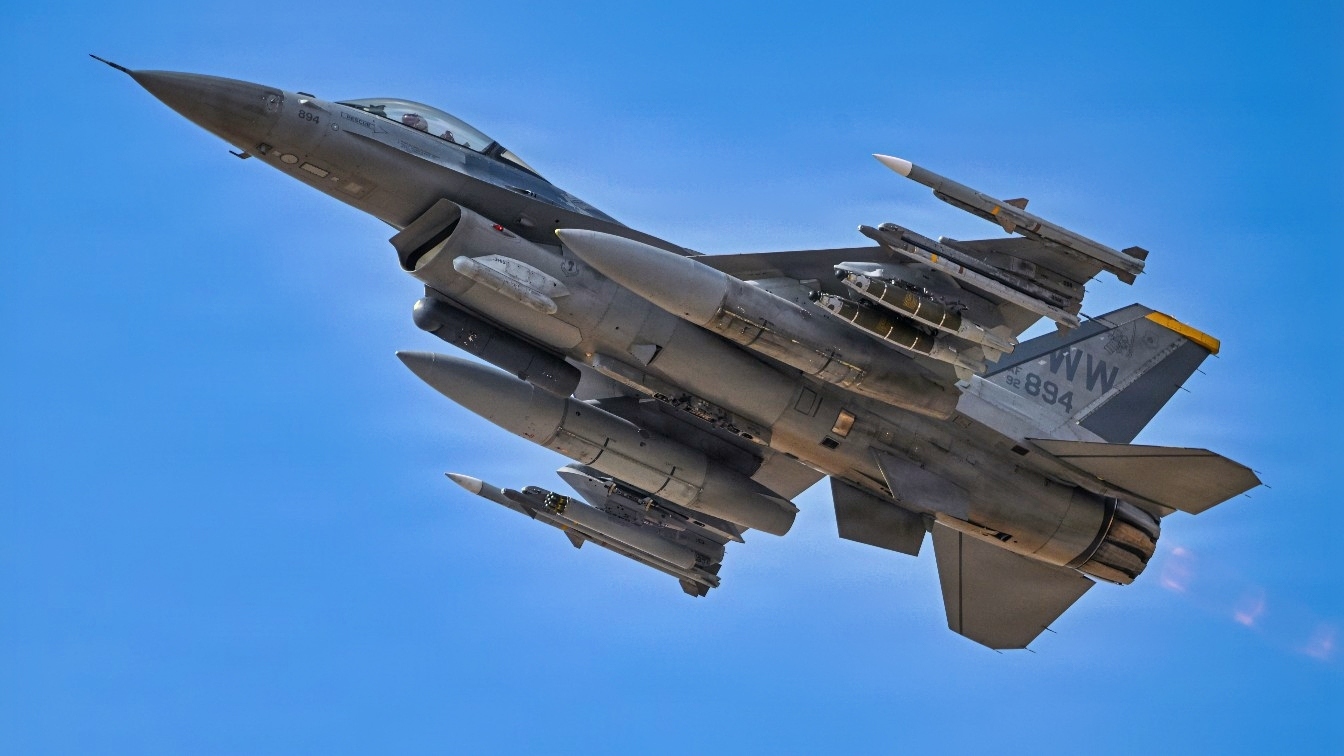
A U.S. Air Force F-16 Fighting Falcon takes off from a base in the U.S. Central Command area of responsibility May 21, 2026. (U.S. Air Force photo by Staff Sgt. Justin W. Moore)
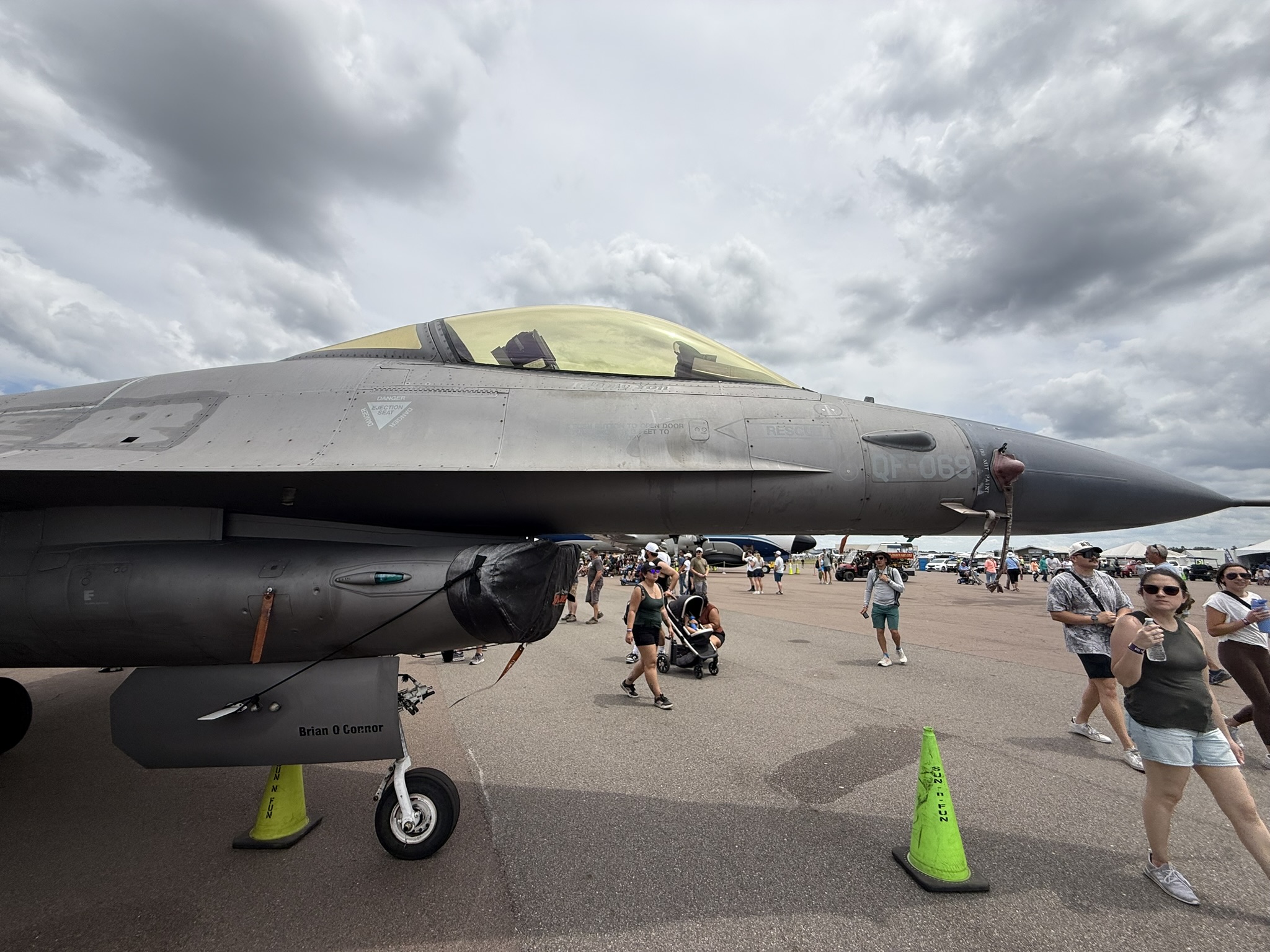
F-16 fighter from Lakeland, Florida Air Show. National Security Journal Original Photo.
The Air Force has not hidden the problem from Congress. In its own report to lawmakers, the service said its fighter fleet has atrophied due to underinvestment and is now twice as old as the Navy’s and three times older than Australia’s, while setting a goal of growing the combat fleet to 1,558 jets by 2035 from around 1,271 today. The fiscal 2026 budget request would leave the service with 1,706 fighters at an average age of 21.7 years, the Heritage Foundation found, an improvement driven entirely by retiring the oldest A-10s and F-15Cs rather than by buying enough new jets.
Retired Lt. Gen. David Deptula of the Mitchell Institute has argued that the underinvestment is structural, with the Army receiving some $1.3 trillion more than the Air Force over the past three decades and the Navy roughly $900 billion more, and he has noted that for the first time, China’s fighter pilots are now logging more flying hours than their American counterparts.
A Readiness Crisis the Air Force Admits
Old jets are hard to keep flying, and the readiness numbers show it. Mission-capable rates across the Air Force fell to about 67 percent in fiscal 2024, the lowest in at least a decade and by some measures two, down from roughly 78 percent in 2012.
A Defense News weighted analysis put the figure closer to 62 percent, meaning around 1,900 aircraft were unavailable on an average day. The fighter-specific picture is worse. By Air & Space Forces Magazine’s fiscal 2024 data, the F-35A managed only about 51.5 percent, the F-22 around 40 percent, and the aging F-15C roughly 52 percent, while the brand-new F-15EX, with just a handful of jets, hit 83 percent.
The causes are exactly what the generals describe: aircraft kept in service far past their intended lives, parts cannibalized from one jet to fly another, and a shrinking base of vendors still making components for Cold War-era airframes.
Air Force leaders have said as much themselves. Chief of Staff Gen. David Allvin told an industry audience that the service remains the most dominant on the planet, then added that he did not want to be standing there a year later, or have his successor say it no longer was, so the problem had to be fixed. That is roughly the same warning the Guard generals delivered, coming from the top of the active-duty force.
The F-35 Paradox
The aircraft meant to solve all of this has become part of the problem. The F-35A is the jet the generals want most and the centerpiece of the Air Force’s modernization plans, but the program has slipped badly.
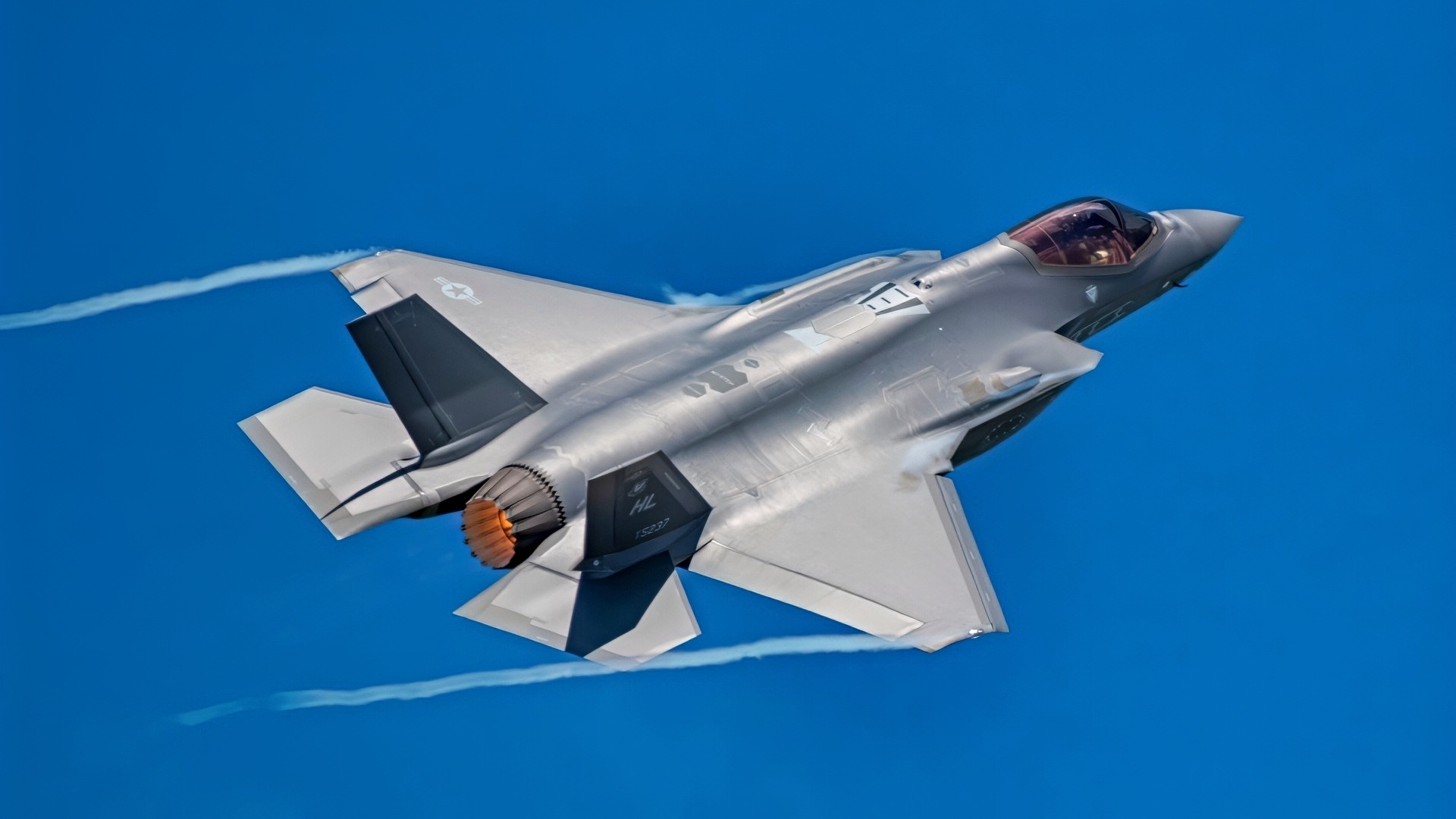
An F-35A Lightning II assigned to the 419th Fighter Wing, Hill Air Force Base, Utah takes off from the Air Dominance Center during Sentry Savannah on May 11, 2022. Sentry Savannah is the Air National Guard’s largest air-to-air, joint aerial combat exercise for fourth- and fifth- generation fighters, which tests the capabilities of our warfighters in a simulated environment and trains the next generation of fighter pilots for tomorrow’s fight. (U.S. Air Force photo by Senior Airman Erica Webster)
The Technology Refresh 3 hardware and software that underpins the jet’s Block 4 upgrade is running about three years late, and the full Block 4 capability has slipped to the early-to-mid 2030s, at least six years behind the original plan. The program’s acquisition cost has exceeded $485 billion, with a lifetime cost exceeding $2 trillion, and the Government Accountability Office found that every F-35 delivered in 2024 arrived late.
That track record produced the central paradox of this whole debate. Rather than buy more F-35s while the generals plead for them, the Air Force cut its own fiscal 2026 F-35A order to just 24 jets, down from a planned 48, redirecting the money toward sustainment and toward its next fighter. Allvin framed it as a deliberate choice, telling Defense One that the service would ramp up procurement once it could buy F-35s most relevant to the fight, rather than take jets that would later need expensive retrofits to reach full capability. The cut reflects a judgment that buying incomplete jets now is a poor use of scarce money, which is defensible, and is also directly at odds with the Guard commanders’ request that the fleet grow faster.
The Bet On The F-47 And Drones
Much of the money pulled from the F-35 is flowing to the future. Boeing won the contract for the F-47, the Air Force’s sixth-generation Next Generation Air Dominance fighter, in early 2025, and Allvin has confirmed a prototype flight in 2028. The F-47 is expected to cost more than four times as much as an F-35 and competes with it directly for funding, which is part of why the older jet’s numbers came down. The B-21 Raider bomber, by contrast, is progressing relatively smoothly and stands out as a rare bright spot in the modernization effort.
The bigger wildcard runs counter to the generals’ core ask. The Air Force is developing Collaborative Combat Aircraft, the uncrewed “loyal wingman” drones meant to fly alongside crewed fighters, and it treats them as additive, not even counted in the fighter tallies.
If those drones mature quickly, a single F-35 paired with several CCAs could deliver more firepower than buying six crewed jets, which is the strongest argument against simply purchasing more manned fighters.
Ukraine’s drone campaign against Russia has shown how much cheap, mass-produced unmanned systems can accomplish, and that lesson hangs over the question of whether the answer to an aging fighter fleet is 100 new crewed jets a year or a different mix entirely. The Guard’s letter does not dismiss the drones, but it insists that today’s force structure still depends on manned fighters.
Why It Matters
The reason any of this is urgent is China. The People’s Liberation Army Air Force is expanding fast, modernizing its fleet, fielding its own new stealth designs, and investing heavily in unmanned systems, exactly as American fighter numbers shrink and age. The 2026 National Defense Strategy that the generals cite is built around that pacing threat, and their argument is that a smaller, older, less ready force is the wrong one to deter it.
The case is not airtight, and the counterpoints are real. Old airframes still do useful work and keep getting upgraded, from the F-15EX to the re-engined B-52J now in development, and the commenters who point out that the F-15, F-16, and B-52 endure because they work are not wrong.
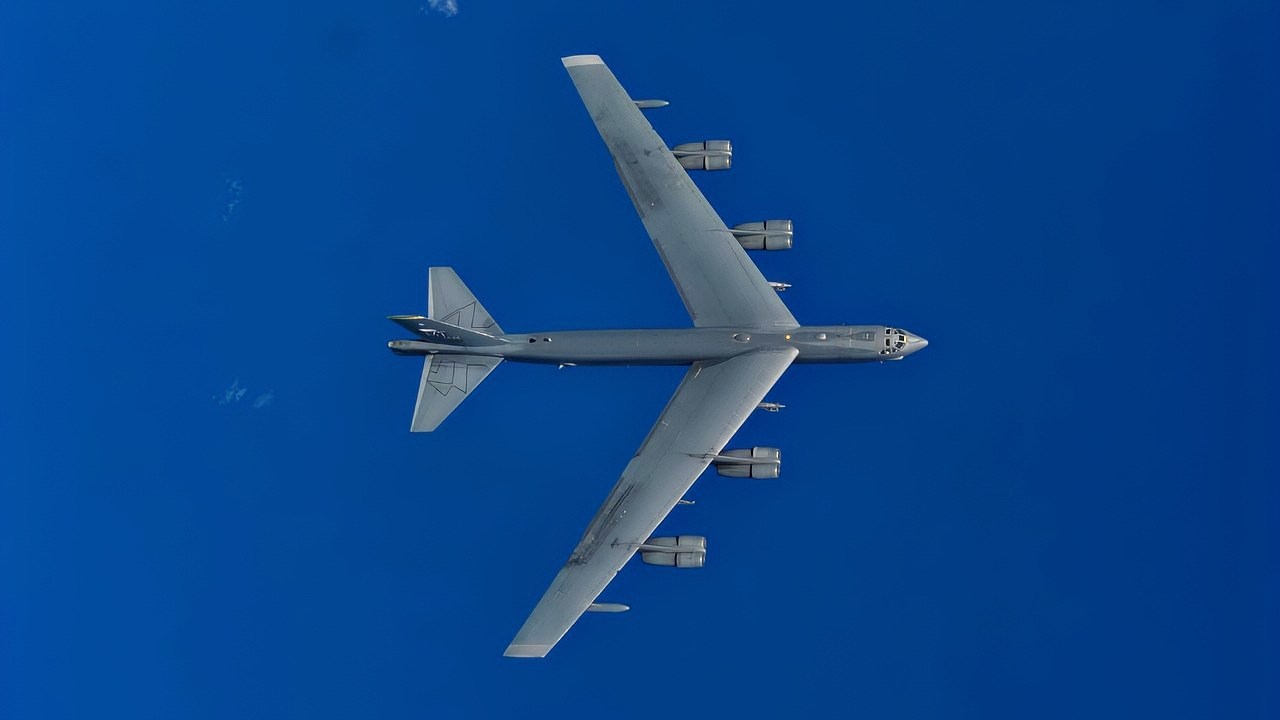
A B-52H Stratofortress from the 69th Bomb Squadron, Minot Air Force Base, N.D., flies over the Pacific Ocean during an international sinking exercise for Rim of the Pacific 2016 near Joint Base Pearl Harbor-Hickam, July 14, 2016. Twenty-six nations, more than 40 ships and submarines, more than 200 aircraft, and 25,000 personnel are participating in RIMPAC from June 30 to Aug. 4 in and around the Hawaiian Islands and Southern California. The world’s largest international maritime exercise, RIMPAC, provides a unique training opportunity that helps participants foster and sustain the cooperative relationships that are critical to ensuring the safety of sea lanes and security on the world’s oceans. RIMPAC 2016 is the 25th exercise in the series that began in 1971. (U.S. Air Force photo by Tech. Sgt. Aaron Oelrich/Released)
Even if Congress funded the full ask tomorrow, production capacity is stretched, and the Air National Guard itself projects it could take 10 to 15 years to re-equip the units flying the oldest jets. There is a longstanding debate over whether the Air Force or the Navy should get the larger share of a finite budget, and a genuine open question about whether drones will offset the need for so many crewed fighters.
What the 22 generals have done is turn a slow, decades-long decline, documented in earlier coverage of the fleet’s numbers, into a unified demand that Congress cannot easily ignore.
The gap between the 72 to 100 fighters a year they say the country needs and the 62 in the latest budget request is the whole argument, and with China’s air force growing every year, the generals are betting that lawmakers will decide the math of decline is no longer affordable.
About the Author: Harry J. Kazianis
Harry J. Kazianis (@Grecianformula) was the former Senior Director of National Security Affairs at the Center for the National Interest (CFTNI), a foreign policy think tank founded by Richard Nixon based in Washington, DC. Harry has over a decade of experience in think tanks and national security publishing. His ideas have been published in the NY Times, The Washington Post, The Wall Street Journal, CNN, and many other outlets worldwide. He has held positions at CSIS, the Heritage Foundation, the University of Nottingham, and several other institutions focused on national security research and analysis. He is the former Executive Editor of the National Interest and the Diplomat. He holds a Master’s degree focusing on international affairs from Harvard University.


C. Burk
June 27, 2026 at 4:18 pm
In whose best interest is it to announce any military weakness we may or may not have to the world? I find this concerning and irresponsible and definitely a concern to the citizens of the U.S.
Donald Forcash
June 27, 2026 at 5:23 pm
Makes one wonder if America is this far behind in its military capability, how bad off is Europe both in funding levels and over-reliance on older weapons?
Bruce Allen Lubbering
June 27, 2026 at 9:31 pm
The shortfall is now due to the F-35 crisis. The core friction in the F-35 program centers on Technology Refresh 3 (TR-3), the vital hardware and software “computing backbone” required to run the multi-billion-dollar Block 4 modernization suite. While Lockheed Martin cleared its year-long physical delivery bottleneck by rolling out a stripped-down, “truncated” software patch, these jets remain restricted to training flights only due to ongoing software instability. Operational fleets are consequently suffering from “negative training,” as pilots are forced to alternate between vastly different TR-2 and TR-3 interfaces and software startup behaviors. Beyond the immediate software bugs, the program is battling a cascade of industrial delays that have pushed full Block 4 operational capabilities out to 2031 at the earliest. Most notably, production delays with the next-generation AN/APG-85 AESA radar have forced the military to accept new F-35s completely devoid of an active radar. These airframes are currently flying with dead-weight nose ballasts to maintain proper center-of-gravity balance. Compounding these setbacks, a recent GAO audit revealed that fleet-wide Full Mission Capable rates have plummeted to 25% due to parts shortages, prompting the Pentagon to slash its immediate F-35 procurement orders by nearly half. Once all of the issues are in hand, they will buy a lot more each year.