

Summary and Key Points: Georgia Gilholy, an international politics journalist, evaluates the Royal Canadian Air Force (RCAF) fighter jet crisis as Prime Minister Mark Carney reviews the 88-aircraft F-35 purchase.
-Despite US President Donald Trump’s recent rhetoric on tariffs and annexation, Ottawa has authorized “long-lead” payments to Lockheed Martin to preserve its production slot.

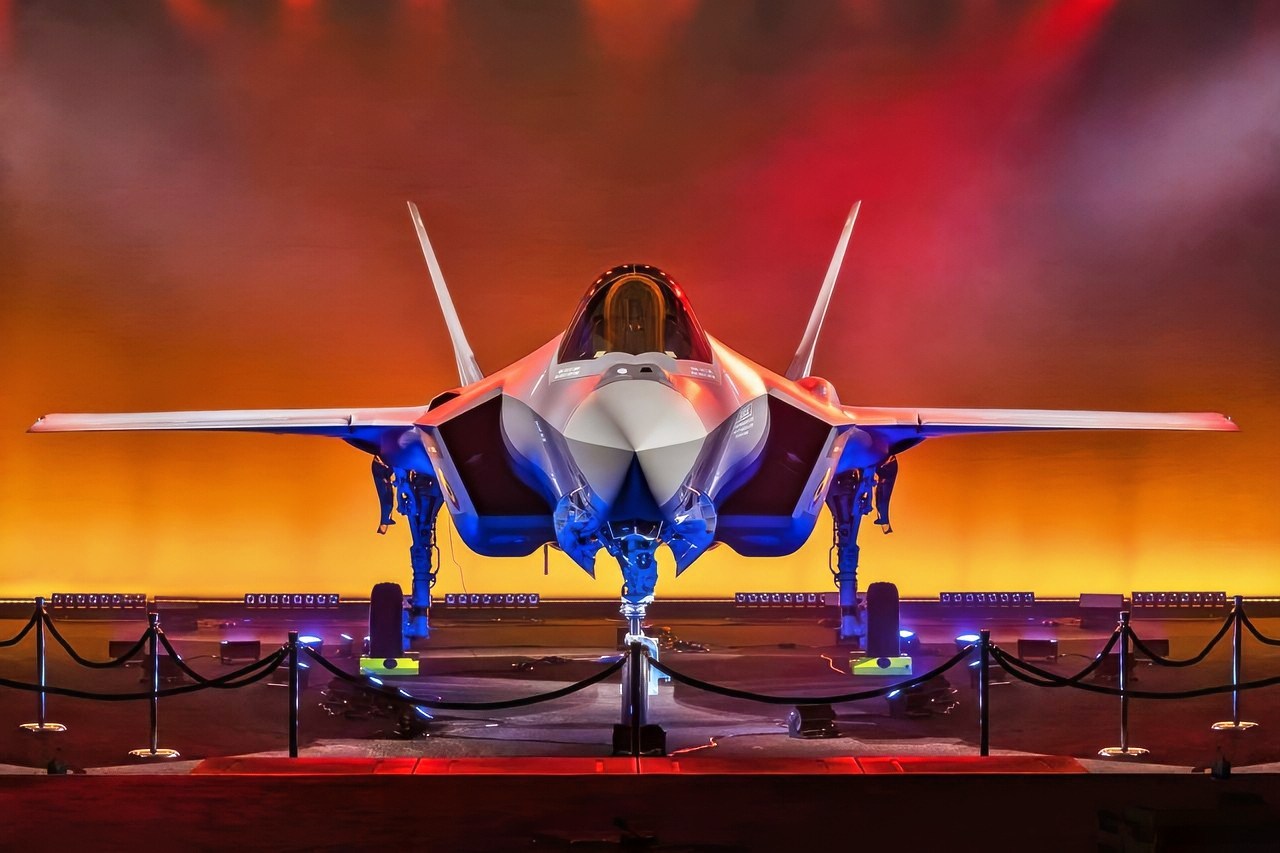
F-35 Stealth Fighter in Red. Image Credit: Lockheed Martin.
-This 19FortyFive report analyzes the Saab JAS 39 Gripen E counter-offer, including GlobalEye integration and a Bombardier partnership, while weighing GAO reports on F-35 Block 4 delays against the operational necessity of maintaining the 60-year NORAD partnership.
The Carney Dilemma: Why Canada is Making “Advance Payments” for the F-35 Amid a Strategic Review
Canada’s fighter jet debate now risks becoming a referendum on sovereignty, rather than a responsible assessment of military and economic priorities.
Toronto Sun columnist Brian Lilley has urged his country to “get serious” about the matter, which could have a huge impact on Canada’s standing in the world.
Prime Minister Mark Carney has confirmed Ottawa is making advance payments for “long-lead items” tied to 14 additional F-35A Lightning II aircraft, even while formally reviewing the broader 88-jet purchase. CBC News claims the payments are designed to preserve Canada’s place in the production queue.
As it stands, sixteen F-35s have already been purchased and are set to be delivered to Canada this year onwards. But what happens beyond this is now anyone’s guess.
The review was triggered after US President Donald Trump made brash remarks about tariffs and even the annexation of Canada.
US Ambassador Pete Hoekstra has since warned that Canada could disrupt the binational North American Aerospace Defense Command framework if it were to ditch the F-35.
Reports from the US Government Accountability Office and Pentagon inspector general have highlighted delays to the F-35’s Block 4 upgrade package, software limitations on recently delivered aircraft, incomplete testing of RTX’s upgraded EO-DAS sensor, and mission-capable rates below threshold targets.
F-35s delivered since 2023 reportedly have software restricted to training use, while news on further updates remains unclear.
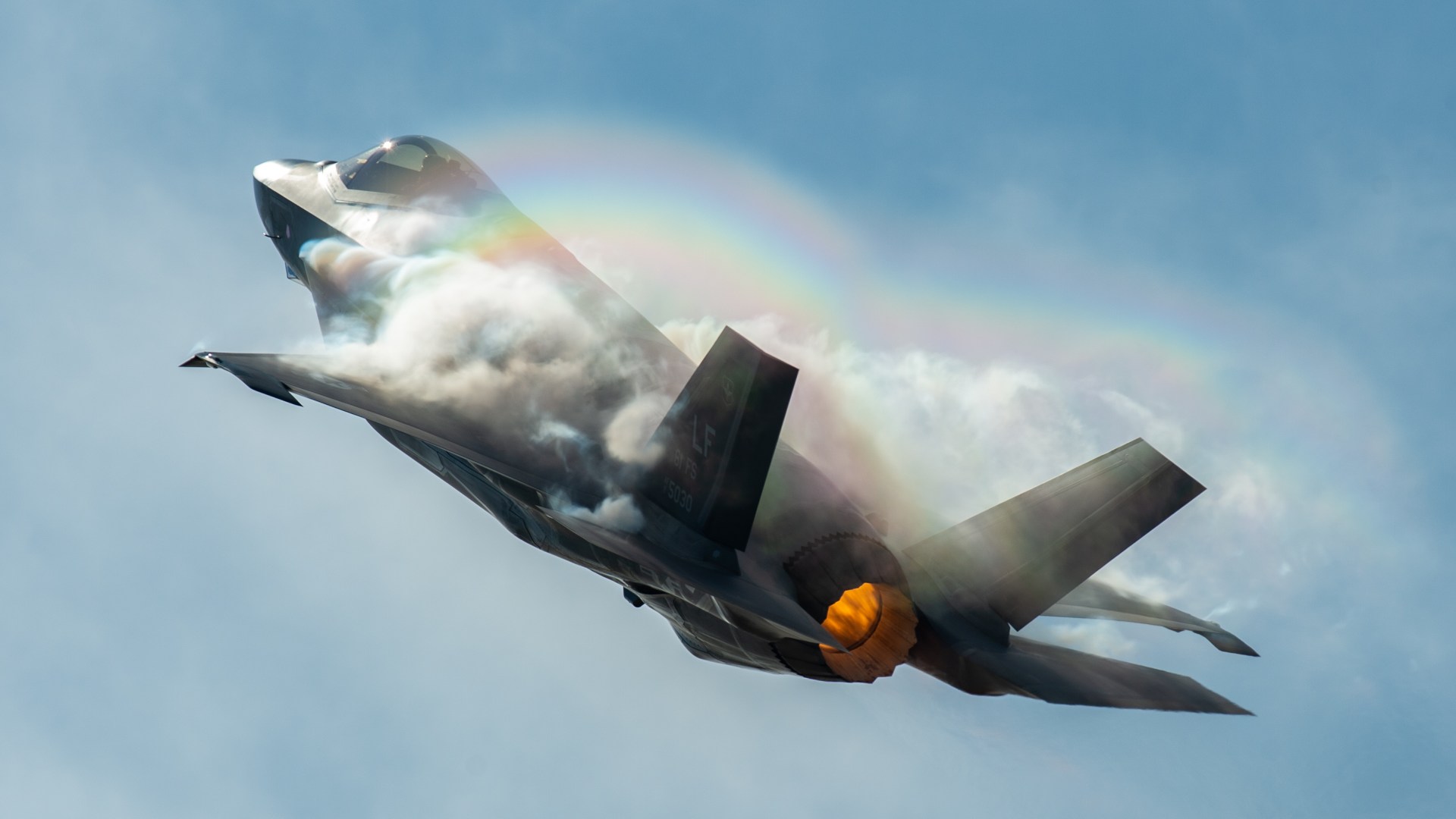
Capt. Andrew “Dojo” Olson, F-35 Heritage Flight Team pilot and commander performs a vertical climb in an F-35A Lightning II during the Bell Fort Worth Alliance Air Show Oct. 14, 2018, in Fort Worth, Texas. The F-35A Lightning II’s F-135 single-engine contains 43,000 pounds of thrust. (U.S. Air Force photo by Senior Airman Alexander Cook)
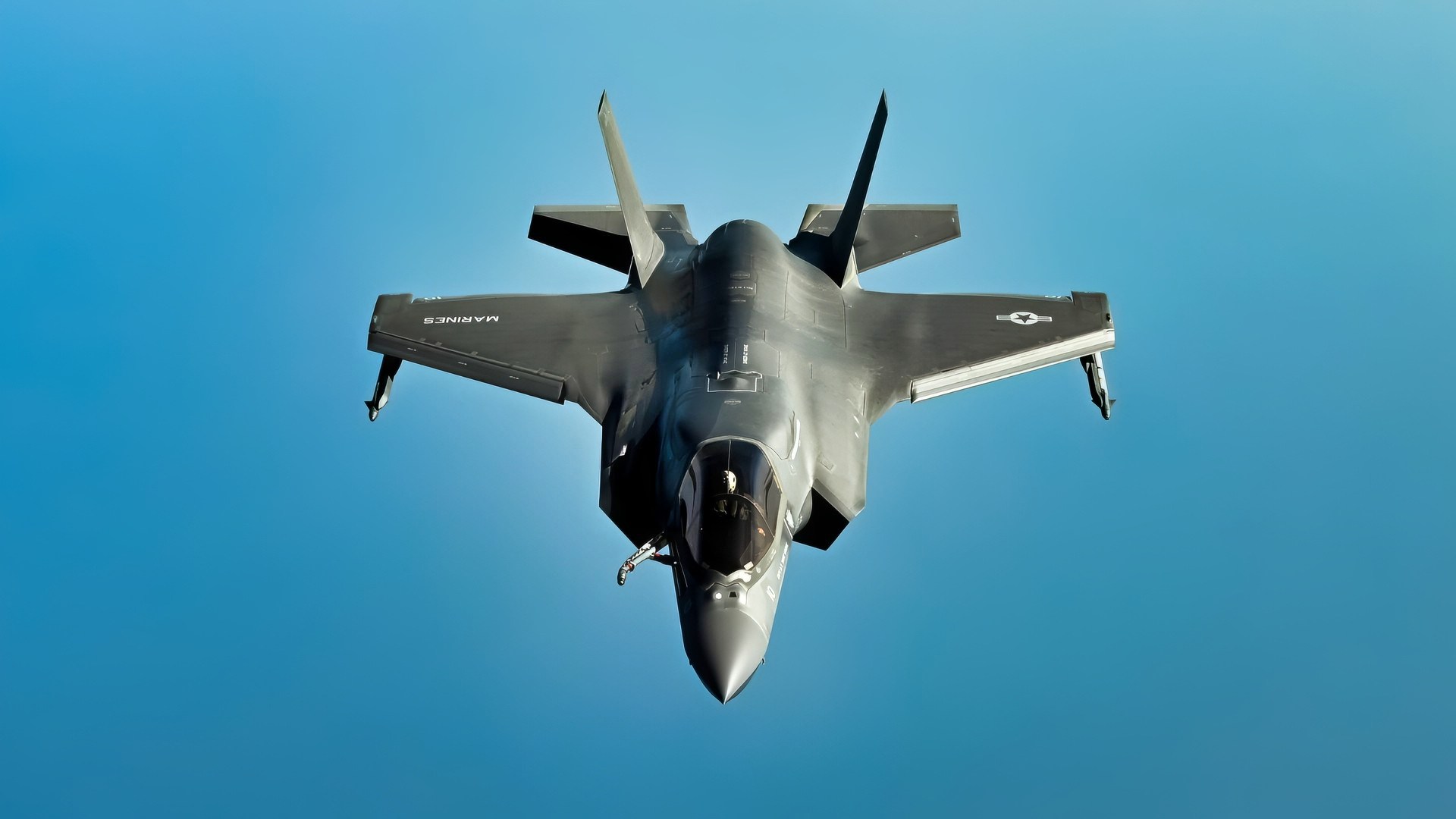
A U.S. Marine Corps F-35B Lightning II resumes a combat air patrol after aerial refueling with a U.S. Air Force KC-135 Stratotanker over the U.S. Central Command area of responsibility, Sept. 19, 2025. More than a fighter jet, the F-35’s ability to collect, analyze and share data, is a powerful force multiplier that enhances all airborne, surface and ground-based assets in the battlespace. (U.S. Air Force photo by Senior Airman Keegan Putman)
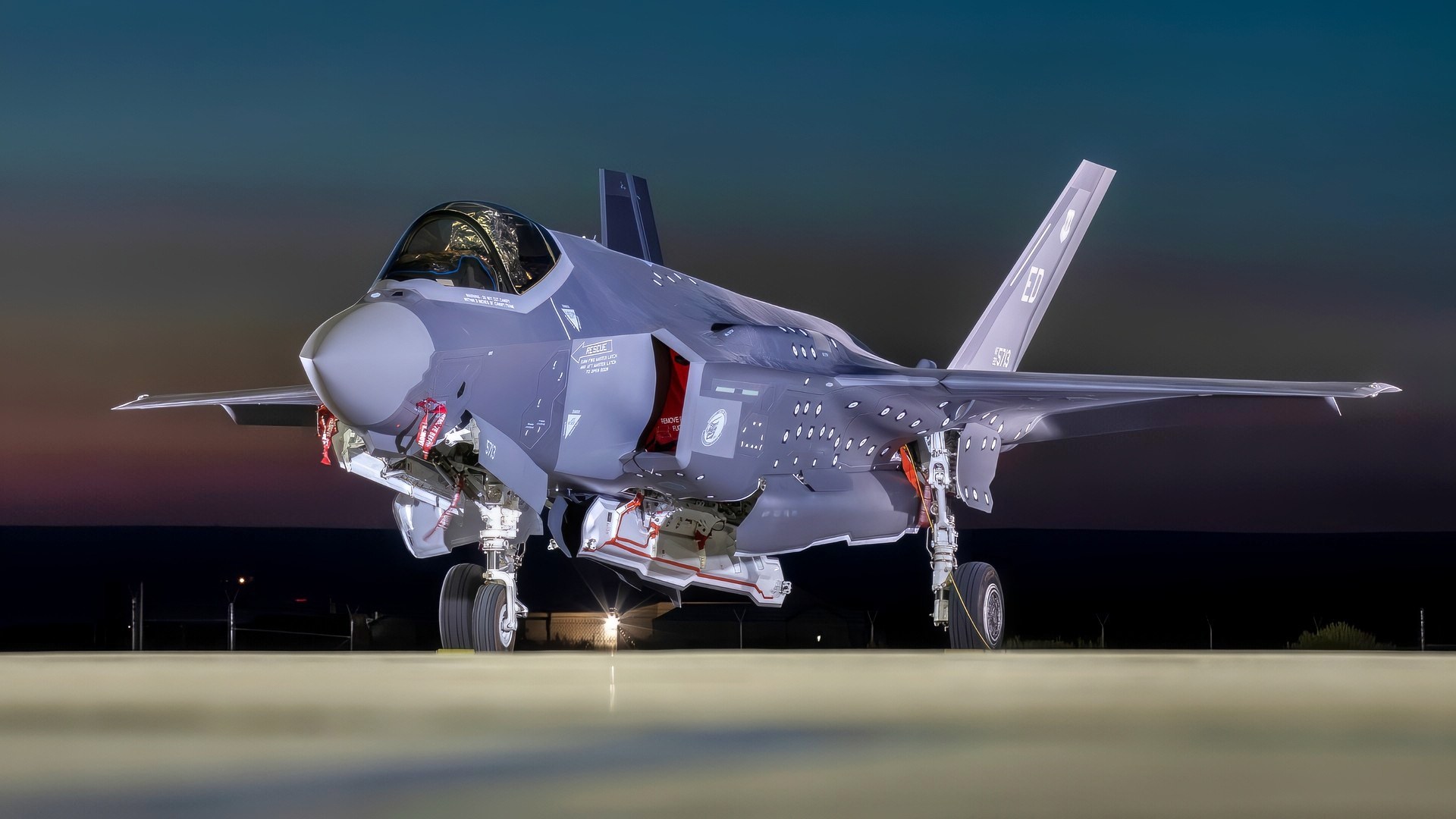
The 461st FLTS, F-35 Integrated Test Force, at Edwards Air Force Base in California received a newly instrumented F-35A aircraft. The unique airframe will boost flight and mission sciences testing for the warfighter at a critical time during developmental test. “This new aircraft arrives at a crucial time, supporting intensive testing of TR-3 software upgrades and next-generation weapons integration.” says Lt. Col. Daniel Prudhomme, F-35 ITF director. “As the world’s only F-35A capable of evaluating both mission systems and flight sciences, this new asset is key for rapidly fielding advanced capabilities to the warfighter.” (Courtesy photo)
Whether these issues are tolerable within a maturing fifth-generation program really depends on whom you ask.
Retired Royal Canadian Air Force leaders have come down firmly on one side. A dozen former commanders signed a letter urging Carney not to pivot to Sweden’s Saab JAS 39 Gripen E.
Former chief of defence staff Tom Lawson was quoted as arguing that any savings from adopting a second fleet would be lost because such a fleet would be “close to useless in a wartime situation.” Former RCAF deputy commander Colin Kiever described the potential cancellation as self-sabotage.
The RCAF has operated closely with the US Air Force for more than six decades and has not purchased a non-US fighter since the 1950s. Some of the same leaders defending the F-35 were involved in earlier procurement stages, including mandatory requirements that reportedly favoured the F-35’s infrared all-around vision system while not taking into account metrics such as transonic acceleration.
Meanwhile, across the Atlantic, Sweden has joined NATO and is mounting a coordinated pitch.
Saab is offering not only Gripen E fighters but also GlobalEye airborne early warning aircraft, alongside a domestic assembly line and industrial partnership with Bombardier. A November visit by Sweden’s king and queen to Canada was seen as part of this ongoing effort.
There are also economic anxieties at stake. Canada has been part of the U.S. Joint Strike Fighter program since 2002, and over 110 Canadian firms are part of the supply chain. Saab, for its part, promises full industrial offsets and thousands of domestic positions if Ottawa switches course.
Whatever decision is made, it stands to shape Canada’s global relationships for decades to come.
About the Author: Georgia Gilholy
Georgia Gilholy is a journalist based in the United Kingdom who has been published in Newsweek, The Times of Israel, and The Spectator. Gilholy writes about international politics, culture, and education. You can follow her on X: @llggeorgia.


Swamplaw Yankee
March 3, 2026 at 8:31 am
Wow. Another in the long series of op-ed for Yankees that refuses to address the problem of being contiguous to the POTUS office holders.
So, the royalty of Europe refuse to visit Mexico, Denmark, Iceland + Ireland! One can see the POTUS logic of US tariff technique applied to these F-35 scofflaws asap!!!! How dare wealthy and populated Mexico be discriminated against by these op-ed deviants refusing to even mention the Mexican F-35 acquisition programme.
The well known desire of every Mexican to have hundreds of thousands of F-35 air frame variants protecting Mexico is viciously denied by these Op-ed deviants who always push tiny populated Canada in front of the popular desires of hundreds of millions of Mexicans. How dare they?
The penetration of Mexican space by submarines and UAV’s is well known and written about. The F-35 production schedule needs to reflect the Mexican desire for the ability of the F-35 to be evident and applied promptly on their southern border and eastern borders.
Tiny Canada has hardly the population to fund a few federal employees to even chart its north. Who knows how much massive lithium, indium and copper resources Greenland has over the paltry tonnages available in Nunavut CANADA.
The Mexican desire to fund + equip Iceland, Ireland and Svalbald with surplus F-35 air frames should not be obstructed.
Canada of 2026 has hardly enough cash to fund mapping its North. The federal government has only now mapped Fury and Hecla geoscience islands. Maybe a few bucks can be found to hire another person to trek out into those desolute islands. Mapping that was needed in 1939 is only funded now.
Meanwhile, every mountain in wealthy Mexico is mapped in full + the Xi regime full well knows how many gold, copper and rare earth nuggets each mining claim contains. We all remember Humphrey Bogart as the rugged Yankee miner down there with his mining amigos sending copper tonnage to Japan.
OK op-ed. Start pushing for F-35 air-frames to Mexico and Mexican air-frame donations to poverty stricken Iceland and Ireland. The inner beltway brains demand that tiny, small service of you.