

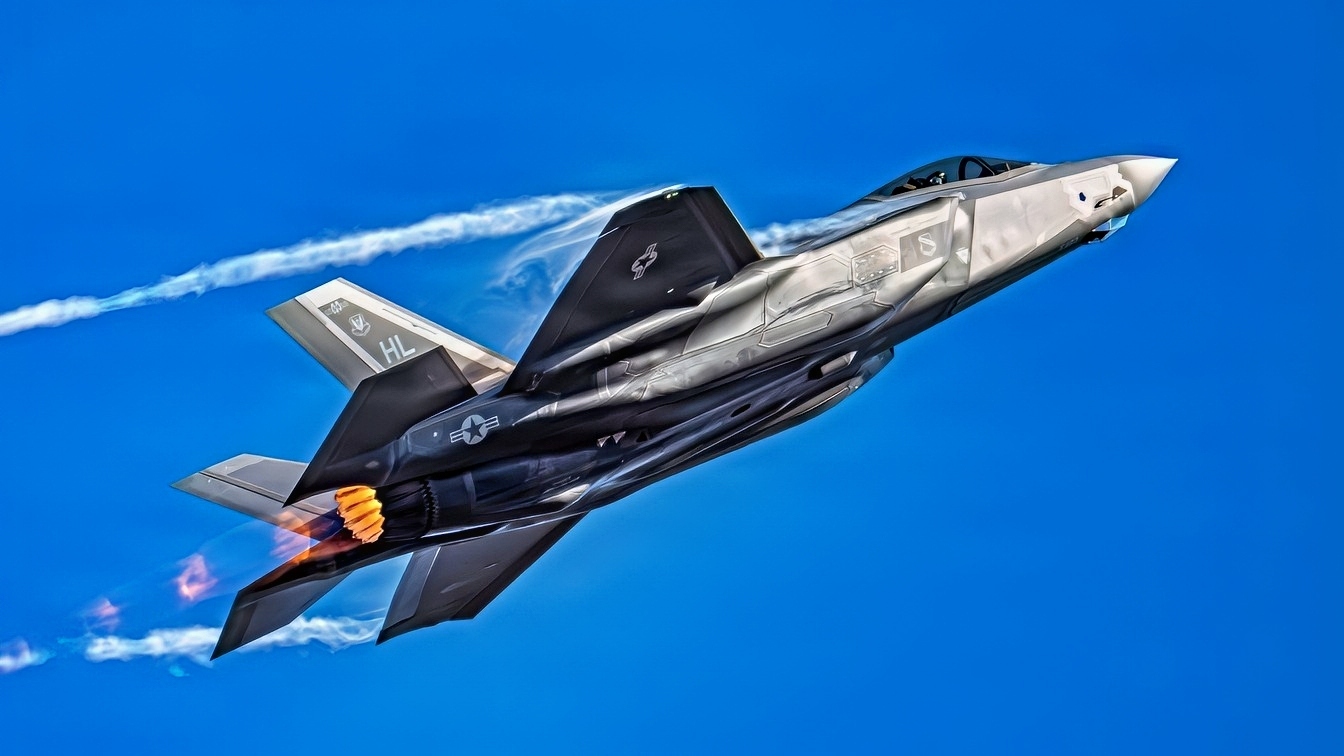
Lockheed Martin CEO Jim Taiclet pitched the F-55 Ferrari concept — a supercharged F-35 incorporating technology from the company’s failed sixth-generation fighter demonstrator — after losing the Next Generation Air Dominance program to Boeing’s F-47 in 2025. The F-35 took more than 20 years and over $1 trillion to develop, and its current readiness rating sits at barely 50%. The Technology Refresh-3 upgrade required for the full Block 4 modernization is years behind schedule. Senior National Security Editor Brandon Weichert argues the F-55 — which would add a second engine to the F-35 — would not be an upgrade but an entirely new airplane, and America cannot stabilize the F-35 it already has.
The F-55 Fighter Makes No Sense
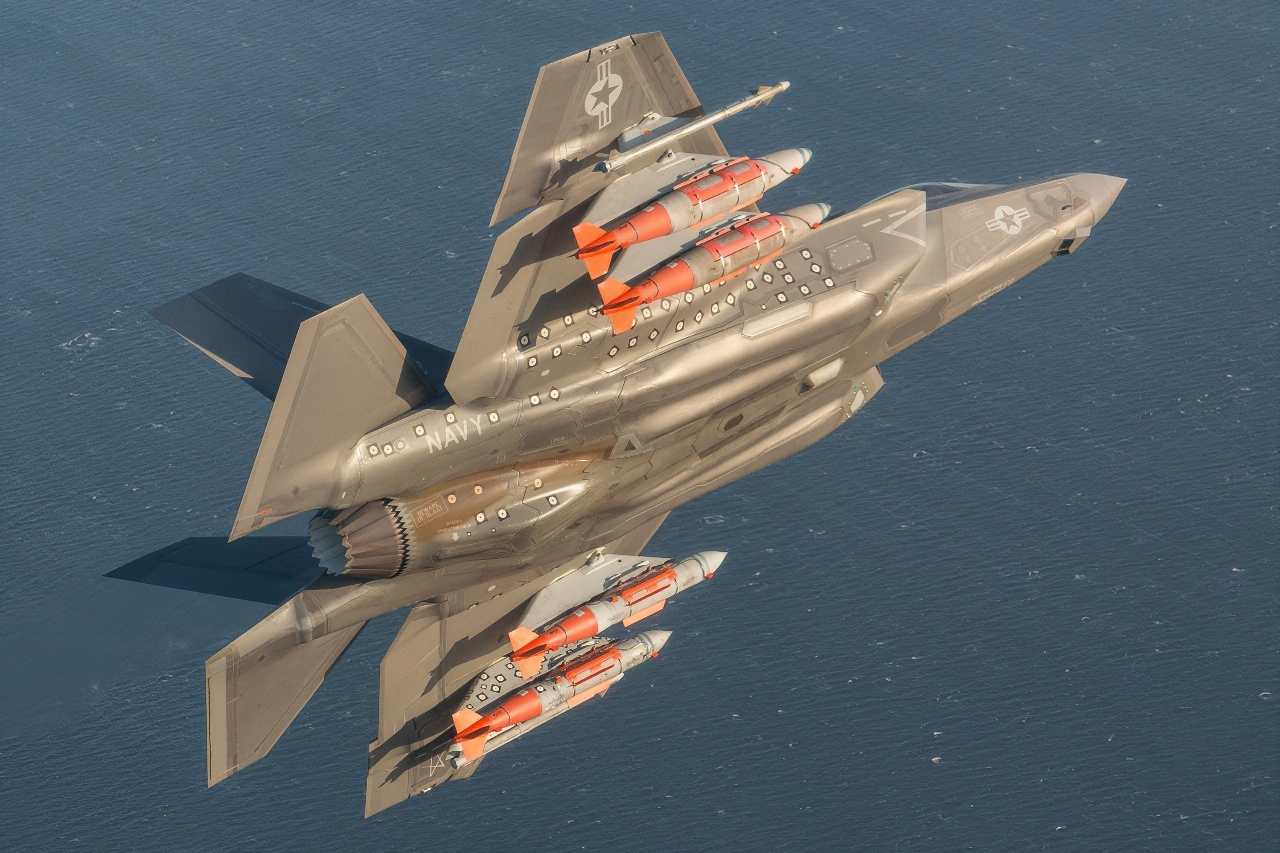
Billie Flynn, F-35 Pax River ITF, conducts an external GBU-31 and AIM-9x buffet and flutter test flight (Flt 592) from Naval Air Station Patuxent River, Maryland, April 4, 2018, in an F-35C test aircraft, CF-2. Photo courtesy of Lockheed Martin.
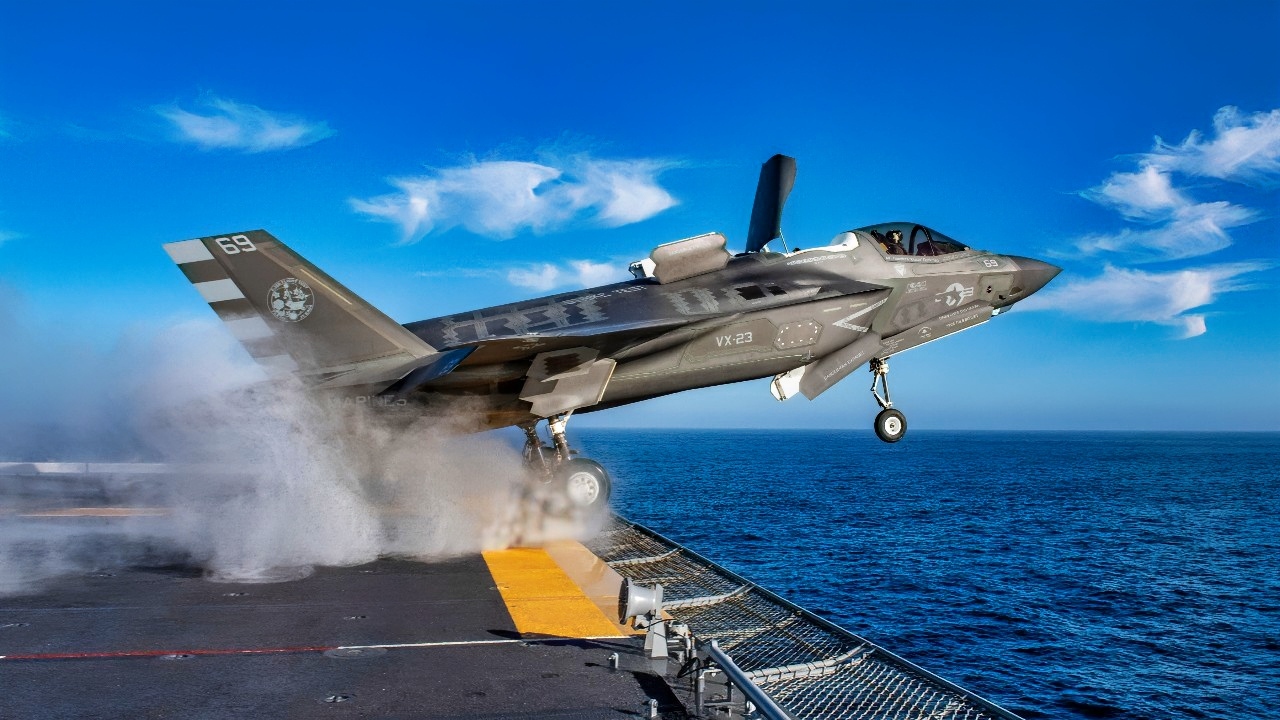
A joint team consisting of F-35 Patuxent River Integrated Test Force flight test members, U.S. Sailors and Marines, and the crew of the Japan Maritime Self-Defense Force Izumo-class multi-functional destroyer JS Kaga (DDH-184) are executing developmental sea trials in the eastern Pacific Ocean to gather the necessary data to certify F-35B Lightning II short takeoff and vertical landing aircraft operations. While aboard the MSDF’s largest ship, the Pax ITF flight test team has been gathering compatibility data for analysis in order to make recommendations for future F-35B operational envelopes, further enhancing the Japanese navy’s capabilities. The results of the testing will contribute to improved interoperability between Japan and the United States, strengthening the deterrence and response capabilities of the Japan-U.S. alliance and contributing to peace and stability in the Indo-Pacific region. Japan is an F-35 Joint Program Office foreign military sales customer planning to purchase 42 F-35Bs. The F-35 Joint Program Office continues to develop, produce, and sustain the F-35 Air System to fulfill its mandate to deliver a capable, available, and affordable air system with fifth-generation capabilities.

A pilot from the 34th Fighter Squadron conducts pre-flight preparations in the cockpit of an F-35A Lighting II on the tarmac at Santa Maria Airport, Calif., during Bamboo Eagle 24-3. During Bamboo Eagle, the 388th Fighter Wing is functioning as a force element at a “spoke location,” providing fifth-generation airpower to a larger force operating in the eastern Pacific region. The spoke locations are smaller than an airbase, a cluster of tents, a small footprint of equipment and personnel. (U.S. Air Force photo by Micah Garbarino)
The F-35 Lightning II fifth-generation warplane took more than 20 years and over one trillion dollars to develop.
It has gone over budget and way over time, and the F-35’s current readiness rating is barely 50 percent.
Yet, when President Donald Trump returned to office last year, one of the first things he did was announce the creation of a “Ferrari” version of the F-35, or the “F-55.” This development was never a planned avenue for the F-35 development. It was a classic Trumpian rhetorical flair.
But, Trump wasn’t speaking last year as a celebrity. He was talking as the president. So, when he makes a statement like that, the military listens.
The ‘Ferrari F-35’ Was Born From a Pentagon Crisis
The “Ferrari F-35” concept, while a product of presidential rhetoric, is an outgrowth of a larger crisis inside America’s tactical airpower strategy.
On paper, the idea sounds great. You take the Lockheed Martin F-35 Lightning II and evolve it into something approaching sixth-generation performance without paying full sixth-generation warplane costs.
The reality is far scarier, though, because the proposal exposes deep problems within the Pentagon, the overarching defense industry, and the future of US air dominance.
Trump made his comments last year because there was (and remains) a fear among the Pentagon’s leadership that the sixth-generation programs of both the Air Force and the Navy will, if you’ll pardon the expression, not get off the ground.
Because of delays in those programs, the Pentagon began to worry that strategic gaps would emerge in its airpower capabilities over time. To ameliorate that, Lockheed Martin’s CEO, Jim Taiclet, recommended the supercharged F-35 (with the term “Ferrari” deriving from him, not from Trump originally).
Lockheed’s Gamble to Save Its Future
Lockheed, per Taiclet’s comments at the time, could inject technologies into the “fifth-generation-plus” F-35 “Ferrari” variant from its sixth-generation warplane program (that program ended when the Pentagon chose Boeing to build the F-47 sixth-generation plane over Lockheed). The belief was that the F-35, with sixth-generation capabilities, would produce a better F-35 that could keep pace with advances in sixth-generation warplanes, at a fraction of the cost of the F-47.
Technologies such as new electronic warfare (EW) capabilities, artificial intelligence-assisted battle management, upgraded infrared sensors, other networking enhancements, adaptive propulsion technologies, and advanced stealth-shaping refinements that Lockheed developed for its sixth-generation plane would go into the F-55.
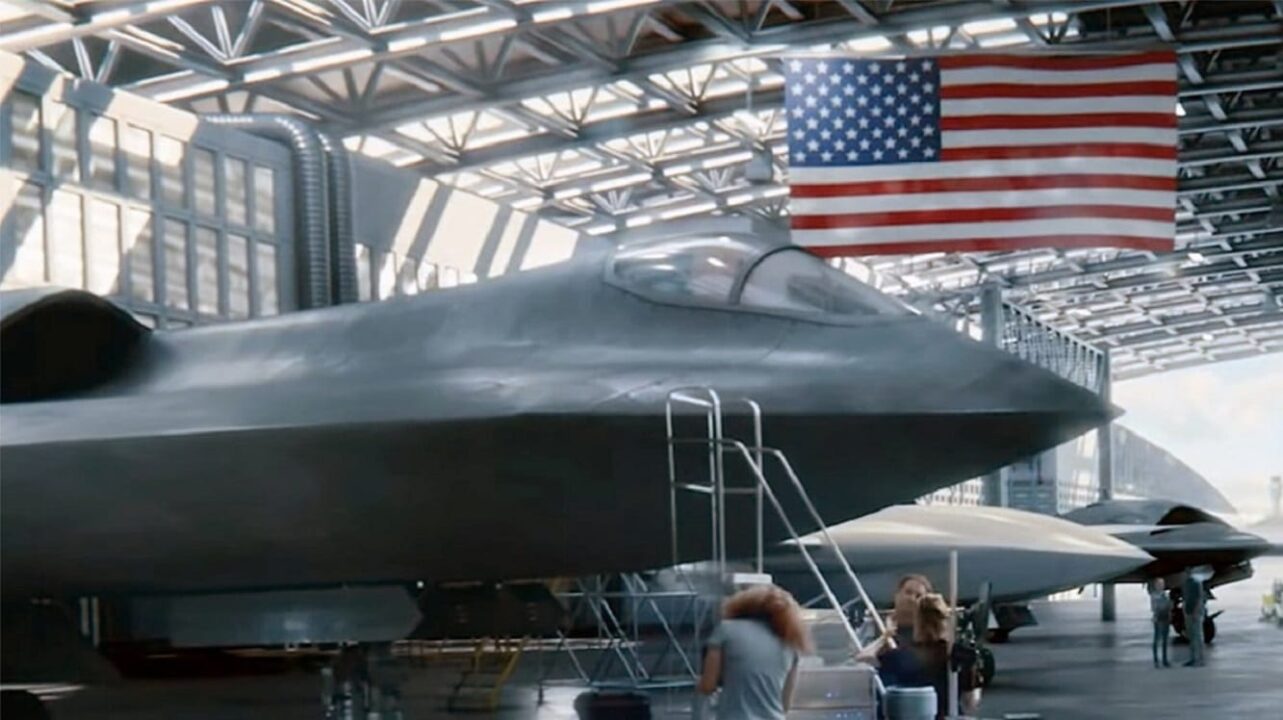
NGAD F-47. Image Credit: Creative Commons.
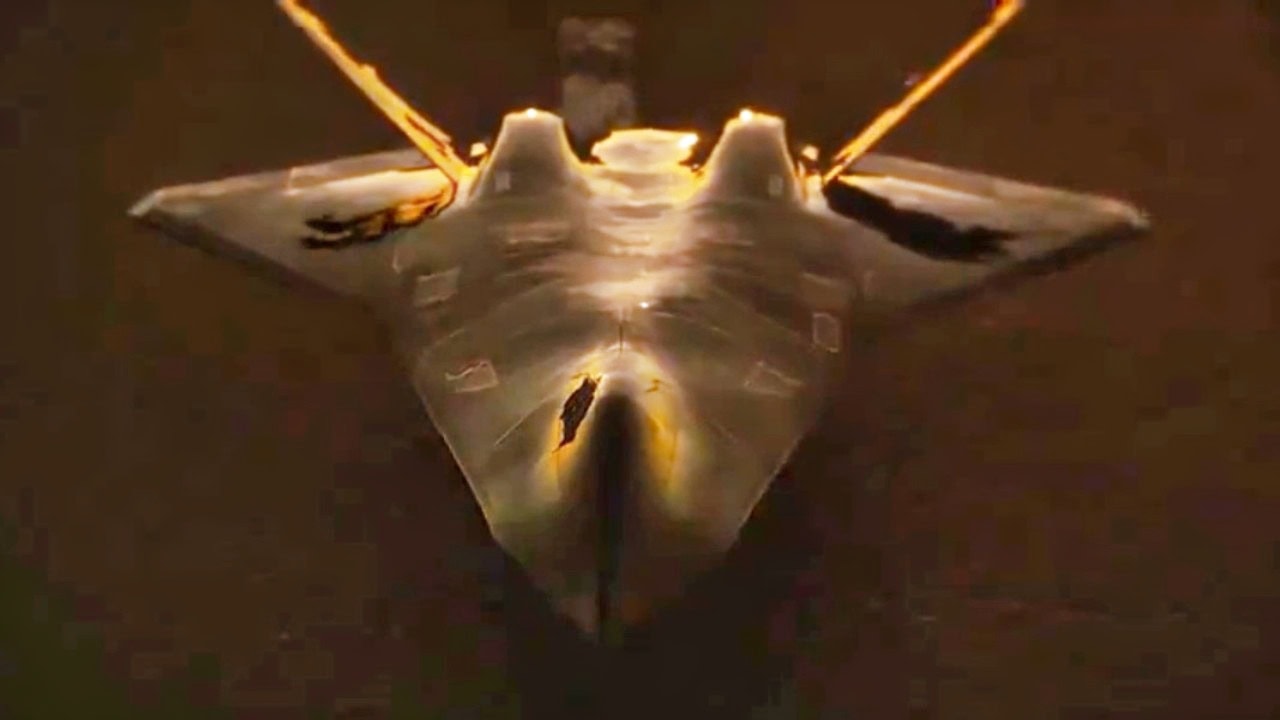
F-47. X Screenshot.
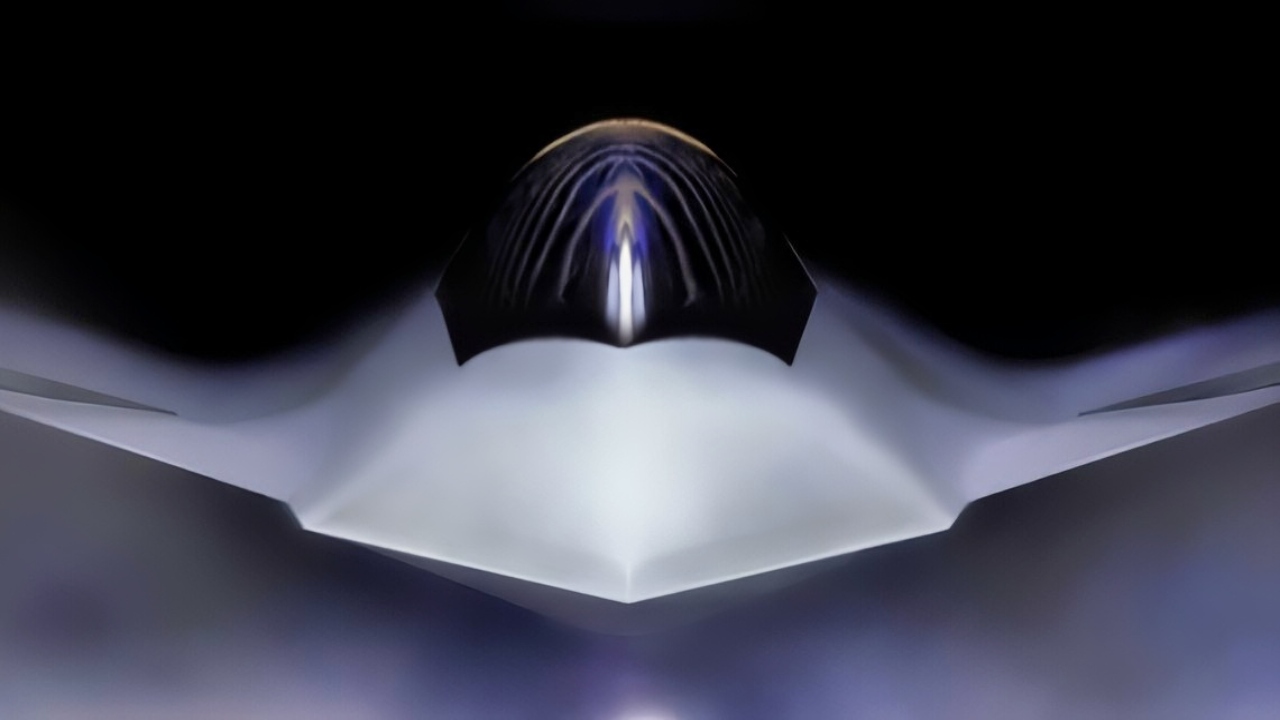
Shown is a graphical artist rendering of the Next Generation Air Dominance (NGAD) Platform. The rendering highlights the Air Force’s sixth generation fighter, the F-47. The NGAD Platform will bring lethal, next-generation technologies to ensure air superiority for the Joint Force in any conflict. (U.S. Air Force graphic)
Why the Twin-Engine F-55 Changes Everything
One of the biggest changes proposed by Lockheed for the F-55 “Ferrari” was the inclusion of a twin-engine profile. Current F-35 designs center on a single Pratt & Whitney F135 engine. The entire F-35 stealth profile, thermal management system, fuel layout, center of gravity, internal weapons bay configuration, and fuselage geometry revolve around that design. Adding a second engine, as the proposed F-55 requires, is a significant change.
Lockheed would, therefore, redesign the fuselage, create new intakes, new exhaust geometry, and they’d need different internal fuel arrangements. The defense firm would then change the cooling systems, and Lockheed would rework the stealth geometry. These proposed changes are not merely modifications.
They’re talking about an entirely new plane with the name “F-35.”
There’d also be entirely new flight software and an overhaul of the plane’s structural engineering. With that, reengineering would come a new maintenance architecture–and all that would come with new costs.

A U.S. Air Force F-35 Lightning II assigned to the 56th Fighter Wing, Luke Air Force Base, Arizona, performs a strafing run during Haboob Havoc 2024, April 24, 2024, at Barry M. Goldwater Range, Arizona. Haboob Havoc is an annual total force exercise that brings together multiple fighter squadrons from numerous bases to practice skills and test abilities in various mission sets. (U.S. Air Force photo by Staff Sgt. Noah D. Coger)
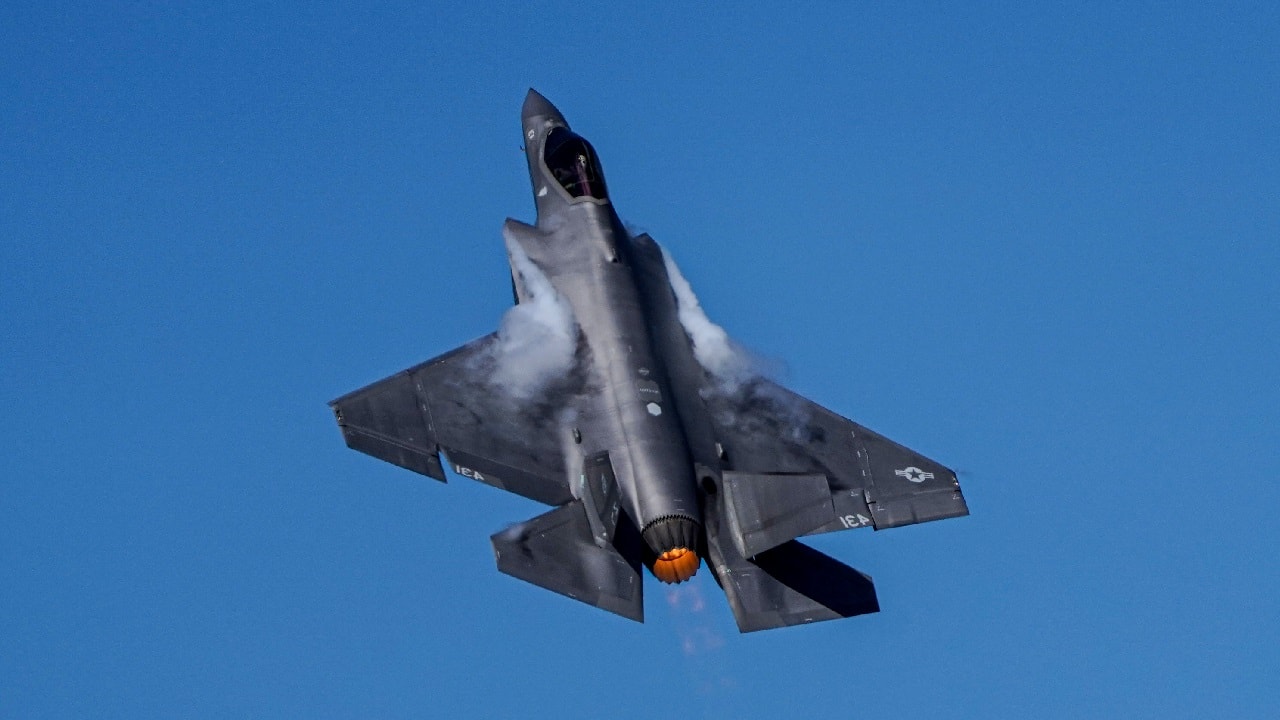
F-35 Fighter Heading Into the Sky. Image Credit: Creative Commons.
The Existing F-35 Program Is Already Struggling
We’ve already witnessed how the Pentagon struggles to maintain the current F-35 program. Basic modernization and upkeep efforts of the existing platform have failed. The aircraft’s Technology Refresh-3 (TR-3) upgrade package–which is necessary for the full Block 4 modernization plan–has suffered for years. TR-3 includes improved processors, memory, cockpit systems, and computing architecture needed for future weapons and sensor integration.
So, without TR-3, many future F-35 improvements won’t work.
That plays directly into the F-35 “Ferrari” concept, which assumes the Pentagon can successfully execute a far more ambitious modernization roadmap on top of an already struggling modernization effort. Lockheed, smarting over their loss in the race for the sixth-generation warplane to Boeing, is trying to sell the futuristic F-55 concept to save the money they lost in their sixth-generation bid.
The problem is that they have not stabilized the existing platform. How on Earth is it possible that Lockheed could then branch off and create the F-55 in any meaningful, affordable way?
Spoiler alert: they can’t! (And everyone knows it).
The Pentagon Risks Repeating Its Biggest Mistake
In fact, the Lockheed proposal risked recreating the Pentagon’s worst habits: trying to evolve one aircraft into far too many roles. The F-35 program itself has already suffered enormously from trying to satisfy three separate service branches with a single platform. The F-35 became a Jack-of-all-trades-and-master-of-none. That also significantly increased the cost to US taxpayers, ballooning the plan’s complexity, all while creating real strategic gaps in America’s readiness.
Adding the F-55 to the docket would compound these issues while failing to resolve the original problem of the delayed rollout of the sixth-generation warplane.
The Strategic Problem Beneath the Debate
There’s a deeper issue, though. America might simply be pricing itself out of air superiority. Modern stealth fighters have become so technologically complex and expensive that the United States risks fielding exquisite but numerically insufficient fleets. China, the primary geopolitical challenger for the United States, is watching these developments closely. They’re taking notes and learning important lessons for their own military modernization program.
For instance, the Chengdu J-20 “Mighty Dragon” fifth-generation air-superiority warplane, China’s supposed answer to the F-22 Raptor, continues to expand production. At the same time, Beijing, with its superior industrial capacity, continues to develop next-generation drone swarms, missiles, and integrated air defense systems.

China’s J-20 Stealth Fighter. Image Credit: Chinese Weibo/Screenshot.
The future air war over the Pacific may depend less on whether America possesses the single best fighter and more on whether it can sustain enough combat power across enormous distances.
America’s Air Dominance Strategy Is Breaking Down
All the talk about the F-55 “Ferrari” version of the F-35 just reminds the world how unprepared the US military is for modern, great-power conflict.
What’s more, it highlights how utterly flawed the American strategy for air dominance has become. The country is still operating on strategic concepts crafted during the immediate post-Cold War era, when the United States was the undisputed global hegemon. Those days are long behind us. Yet the defense establishment has not caught up.
That is the main reason you haven’t heard about the F-55 concept anymore. It was a quiet acknowledgment by our military that, despite a $1.5 trillion defense budget for next year, it simply can’t build warplanes anymore.
About the Author: Brandon J. Weichert
Brandon J. Weichert is a Senior National Security Editor. Recently, Weichert became the editor of the “NatSec Guy” section at Emerald. TV. He was previously the senior national security editor at The National Interest. Weichert hosts The National Security Hour on iHeartRadio, where he discusses national security policy every Wednesday at 8 p.m. Eastern. He hosts a companion show on Rumble entitled “National Security Talk.” Weichert consults regularly with various government institutions and private organizations on geopolitical issues. His writings have appeared in numerous publications, among them Popular Mechanics, National Review, MSN, and The American Spectator. And his books include Winning Space: How America Remains a Superpower, Biohacked: China’s Race to Control Life, and The Shadow War: Iran’s Quest for Supremacy. Weichert’s newest book, A Disaster of Our Own Making: How the West Lost Ukraine, is available for purchase at any bookstore. Follow him via Twitter/X @WeTheBrandon.


