


Key Points and Summary: The Russian Aerospace Forces entered Ukraine in February 2022 with approximately 1,400 frontline combat aircraft and a plan to establish air superiority within 72 hours. Four years and three months later, Russia has lost approximately 361 combat aircraft to confirmed visual tracking, with actual losses likely substantially higher.
-The Su-34s and Su-35s that survived the war are now being cannibalized for parts because the production pipeline cannot keep pace with attrition.
What Russia Thought Its Air Force Would Do In Ukraine — And The Losses That Followed
When the Russian General Staff finalized the plan for the February 2022 invasion of Ukraine, the Russian Aerospace Forces were assigned the kind of mission Western air forces have considered routine since Operation Desert Storm.

Russia Tu-160 Bomber on Tarmac. Image Credit: Creative Commons.
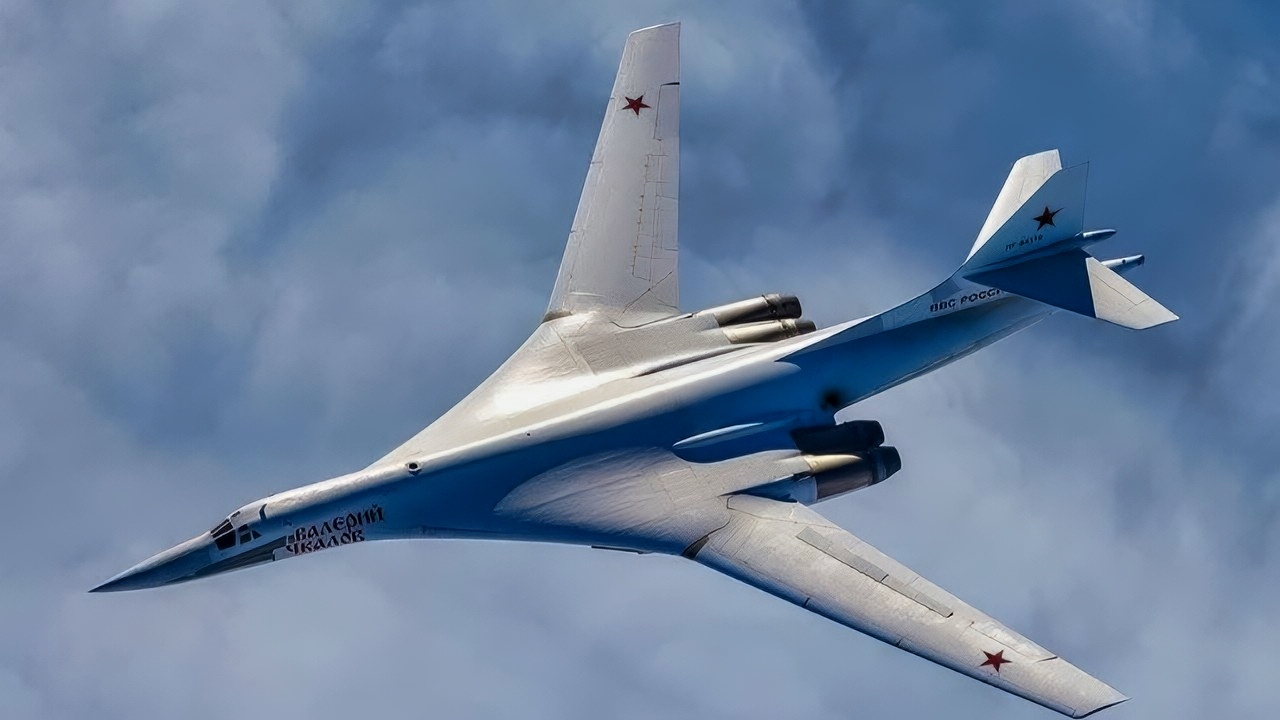
Tu-160 Bomber from Russia. Image Credit: Creative Commons.
The Russian air component was supposed to establish air superiority over Ukraine within the opening days of the campaign through a coordinated suppression of enemy air defenses effort, destroy the Ukrainian Air Force’s command and control infrastructure, eliminate the small fleet of operational Ukrainian fighter aircraft on the ground or in the air, and then provide sustained close air support to the ground forces racing toward Kyiv, Kharkiv, and Mariupol.
The campaign timeline was approximately 72 hours for the initial air superiority phase and approximately two weeks for the broader strategic objective of replacing the Zelensky government with a Russian-aligned alternative.
The Russian Aerospace Forces entered that war with approximately 1,300 to 1,400 frontline combat aircraft. The fleet included the Su-35S air-superiority fighter, the Su-34 strike fighter, the Su-30SM multirole fighter, the MiG-31 interceptor, the Su-25 close-air-support aircraft, the Tu-22M3 long-range bomber, and approximately 270 Ka-52 and Mi-28 attack helicopters.
The numerical advantage over the Ukrainian Air Force was approximately 10-to-1 at the start of the war. The qualitative advantage was even larger. Russian pilots flew aircraft that were generally one or two generations more advanced than the Soviet-era platforms the Ukrainians had inherited and had only partially modernized.

Su-25. Image Credit: Creative Commons.
The Russian theory of how the air war would unfold was straightforward. Massive numerical and qualitative superiority would overwhelm Ukrainian air defenses across the first 48 hours. Coordinated cruise missile and ballistic missile strikes would destroy Ukrainian command nodes and the small fleet of Ukrainian S-300 surface-to-air missile batteries. Russian fighters would then establish persistent combat air patrols over Ukrainian airspace, hunt down what little remained of the Ukrainian Air Force, and free Russian strike aircraft to operate against ground targets at low altitude with effective impunity.
This was the framework Russian air planners had built around since the late 1990s. It was the model the Russian military had used in Syria with substantial success. It was the model that, by every pre-war Russian assessment, would work the same way in Ukraine.
It did not work that way. And Putin is now paying the price.
The Collapse That Actually Happened
Russian aircraft losses since February 2022 have reached approximately 361 combat aircraft of all types per Oryx’s visually confirmed tally, with 299 destroyed outright, 57 damaged, and 5 captured.
Ukrainian government figures place the total higher at approximately 425 to 470 fixed-wing aircraft destroyed across the war. Independent military tracking now lists 524 verified Russian aircraft losses across all categories, including both combat aircraft and supporting platforms. The actual figures are almost certainly higher than any tracker can verify because aircraft destroyed in contested territory or deep inside Russian airbases frequently cannot be confirmed through satellite imagery.
The losses by aircraft type tell the more damaging story. Russian rotary-wing losses include 168 helicopters destroyed or damaged, with 66 Ka-52 attack helicopters lost — meaning roughly a quarter of Russia’s pre-war Ka-52 fleet has been destroyed in combat. The Ka-52 was the platform Russia relied on most heavily for the close air support and anti-armor missions that the ground campaign was supposed to be built around. The fleet that survives is substantially smaller, increasingly cannibalized for parts, and operating in a battlefield environment where Ukrainian drones and shoulder-fired air defenses have made low-altitude operations prohibitively expensive.
The A-50 Problem
The A-50 airborne early warning fleet has suffered particularly damaging losses. Russia entered the war with only nine operational A-50s and a handful more in various stages of refit. Ukrainian strikes have destroyed multiple A-50s on the ground and in flight, including an advanced A-50U shot down in early 2024 that pushed Russia into curtailing its air operations across eastern Ukraine for several weeks afterward.
The A-50 is the platform that provides Russian fighters with the radar picture and target handoff capability needed to engage Ukrainian aircraft and ground-based air defenses at range. The remaining fleet is now sufficiently small that Russian airborne early-warning coverage across the war zone has become an operational problem the Aerospace Forces cannot adequately address.
Why Russia Cannot Replace What It Has Lost
The structural problem underneath the loss tallies is replacement.
The UK government’s senior military adviser, Nicholas Aucott, assessed in 2024 that Russia was losing combat aircraft at approximately 20 times the rate at which the Russian aerospace industry could produce replacements.
That ratio has persisted through 2025 and into 2026, as Russian production has not significantly accelerated despite the war’s strategic priority. Russian Su-35 production rates remain at approximately 10-12 aircraft per year. Su-34 production has roughly matched that figure. Su-57 production has fallen substantially behind pre-war Russian projections, with deliveries now estimated in single digits annually rather than the squadron-strength deliveries the Russian aerospace industry promised before the war.
The sanctions environment is the dominant constraint. Russian combat aircraft pre-war contained substantial Western and South Korean electronics, materials, and subcomponents. Sanctions have forced Russian aircraft manufacturers to either substitute domestically produced alternatives, which are generally lower quality and less reliable, or source through third-country gray-market networks, which are expensive and unreliable. The result is that the small number of new Russian combat aircraft entering service since the start of the war is operationally inferior to the pre-war baseline they are supposed to replace.
Take from One Warplane to Save Another
The cannibalization story is the part of this picture that has gone almost entirely unreported in mainstream Western defense coverage. Aerospace defense analysts have publicly noted that some of Russia’s most modern Su-34s and Su-35s have reached the end of their service lives and are now being cannibalized for parts to keep other aircraft in the operational fleet flying.
The practice of stripping working aircraft to provide spare parts for other working aircraft is the kind of thing that desperate air forces do in wartime when the production pipeline cannot keep pace with attrition. It is also a self-defeating practice that compounds the underlying problem. Every cannibalized Russian aircraft removes a combat platform from the operational order of battle to extend the life of another platform that will eventually need to be cannibalized.
The American Newsweek coverage of the broader collapse framed the situation in terms that have aged accurately. The Russian air force has lost approximately 10 percent of its overall fleet in confirmed combat losses, but the operational impact is substantially larger due to cannibalization, parts shortages, and the difficulty of training new pilots quickly enough to replace lost aircrew.
The Russian Aerospace Forces that exist today are smaller, older, less reliable, and less effectively employed than the force that entered Ukraine four years ago.
What The Future Holds: The Russian Air Force Is In Trouble
Russian aerospace planning across the next five years is now focused on damage mitigation rather than capability expansion. The Su-57 stealth fighter program — which was supposed to be the Russian answer to the F-35 and the J-20 — has not produced operational squadrons at any scale. The Su-75 Checkmate single-engine stealth fighter program, unveiled with substantial fanfare in 2021, has produced essentially nothing. The Tu-160M2 strategic bomber modernization program has produced a handful of upgraded airframes at extraordinary cost. The MiG-31 replacement program has been quietly deferred.
Russia is not, by any credible Western or Russian assessment, going to field a competitive next-generation air force across the next decade.
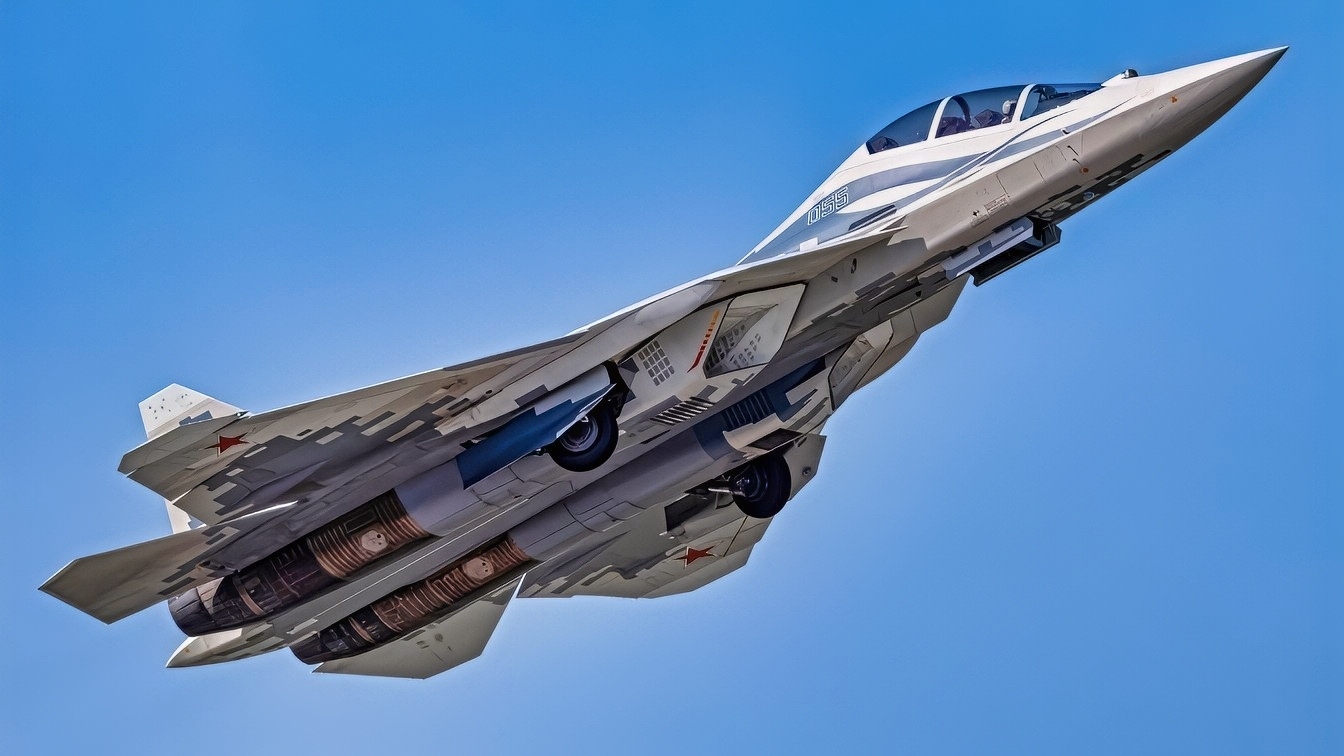
Su-57D Felon. Image Credit: X Screenshot/UAC.

Su-57 Felon Fighter from Russia

Su-57 Felon Fighter Ready for Action. Image Credit: Creative Commons.
The operational implications are significant for both the ongoing war in Ukraine and the broader strategic environment. Russia will not be able to establish air superiority over Ukraine before the war ends because it does not have the aircraft, the pilots, or the capability to suppress enemy air defenses to do so. Russia will not be able to threaten NATO airspace credibly across the next decade because its modern combat aviation fleet has been substantially depleted.
Russian capacity to support potential future operations against any neighboring state — Moldova, the Baltic states, Kazakhstan, or any other adjacent territory — is now substantially below what it was in February 2022.
The Russian Air Force Faces An Uncertain Future
The Russian Aerospace Forces, which planned to dominate Ukrainian skies in 72 hours, have spent four years and three months unable to do so. The fleet that was supposed to demonstrate Russian air power has instead revealed its limits. The cannibalized aircraft, the unreplaceable losses, and the production pipeline that cannot meet wartime demand are now the structural reality the Kremlin has to operate within for the foreseeable future.
Russia entered this war with an air force. Russia is leaving it with a substantially smaller and less effective air force, and no clear path to reconstitute the lost capability before the next strategic challenge arrives.
About the Author: Harry J. Kazianis
Harry J. Kazianis (@Grecianformula) was the former Senior Director of National Security Affairs at the Center for the National Interest (CFTNI), a foreign policy think tank founded by Richard Nixon based in Washington, DC. Harry has over a decade of experience in think tanks and national security publishing. His ideas have been published in the NY Times, The Washington Post, The Wall Street Journal, CNN, and many other outlets worldwide. He has held positions at CSIS, the Heritage Foundation, the University of Nottingham, and several other institutions related to national security research and studies. He is the former Executive Editor of the National Interest and the Diplomat. He holds a Master’s degree focusing on international affairs from Harvard University.


Swamplaw Yankee
May 28, 2026 at 3:09 am
Well, why start with 2022 years after this stage of World War Xi was in full kinetic swing?
That Harry wigs + jigs numbers about post-2022 for little effect, just make the absence of the numbers pre-2014 much more in demand by the peer readers.
What did the CCP expect Xi to achieve when they hired him on as their ‘Big Guy’ – post the Obama election of 09? Did Xi advise his vassal Putin correctly on what funding/stolen tech that the CCP was prepared to donate to the Kremlin Muscovy air element pre-2014? This question is even more pressing to have openly answered post-Feb. 2014!! Where the hell are all the Counter-Intelligence articles/books that detail why the PRC Xi=Putin vassal structure did not place their “BALKANIZATION” of Ukraine funds in the needed “soft’ spots?
It is hard to pin down in print who accurately assessed why the PRC allowed the funding of the intrusion of insurrection Kremlin Muscovy forces inside Ukraine pre-2014? Particularly, if the Kremlin Muscovy did not allocate Federation funds pre-2014 to have the air frame counts in place by 2022 that Harry, at al, now play numerology with in 2026.
That Han intelligence failed in 2022 is painfully obvious. Their initial success in the capitulation of Benedict Arnold Obama in 2015 to Balkanize Ukraine is evident. But, Han intelligence just did not count on the millions of Ukrainian Boys remembering exactly why the Ukraine of 1710 created the World’s first written Constitution. Every Ukrainian Boy knew the 1000 year history of the sex-slave rapers that came out of Moscow under the endless Muscovy tsars. The 1710 Constitution was a legal code to stop the 700 years of castrating Ukrainian Boys sold by the Muscovy to Ottoman Sultans.
The Ukrainian kids of 2014 pulled their drones out to help save their mothers/ sisters and never stopped their struggle to repel the evil of the vile Kremlin Muscovy. Harry, et al, write about the same kids today.