

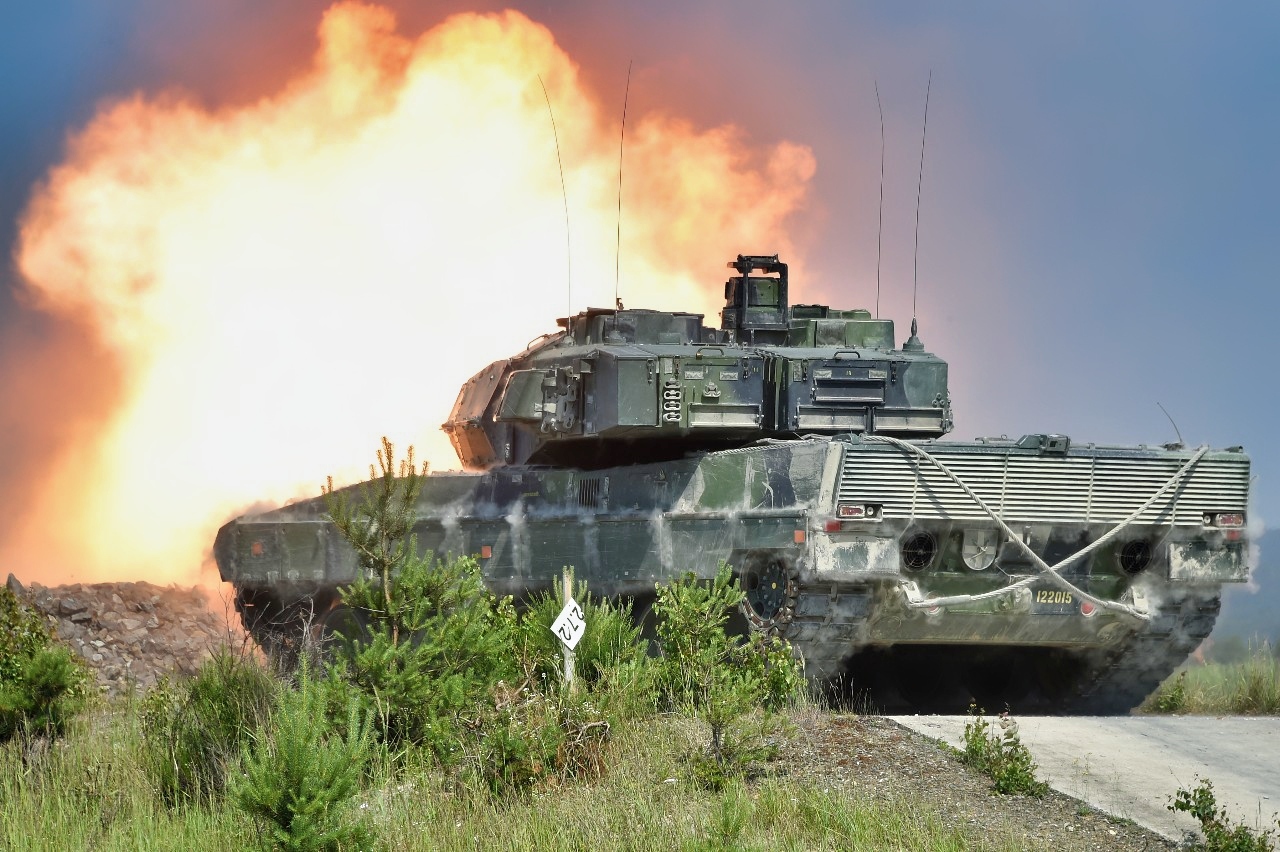
Summary and Key Points: Whenever the fighting stops, Russia will still be sitting on a slice of Ukrainian territory, and many observers will read that as a win for the Kremlin. It is not.
-Measured by the things that actually make a country powerful — its people, its economy, its credibility, its alliances, its independence — Putin has left Russia worse off than the day he invaded.
Russia Already Lost The Ukraine War, No Matter Where The Final Border Is Drawn
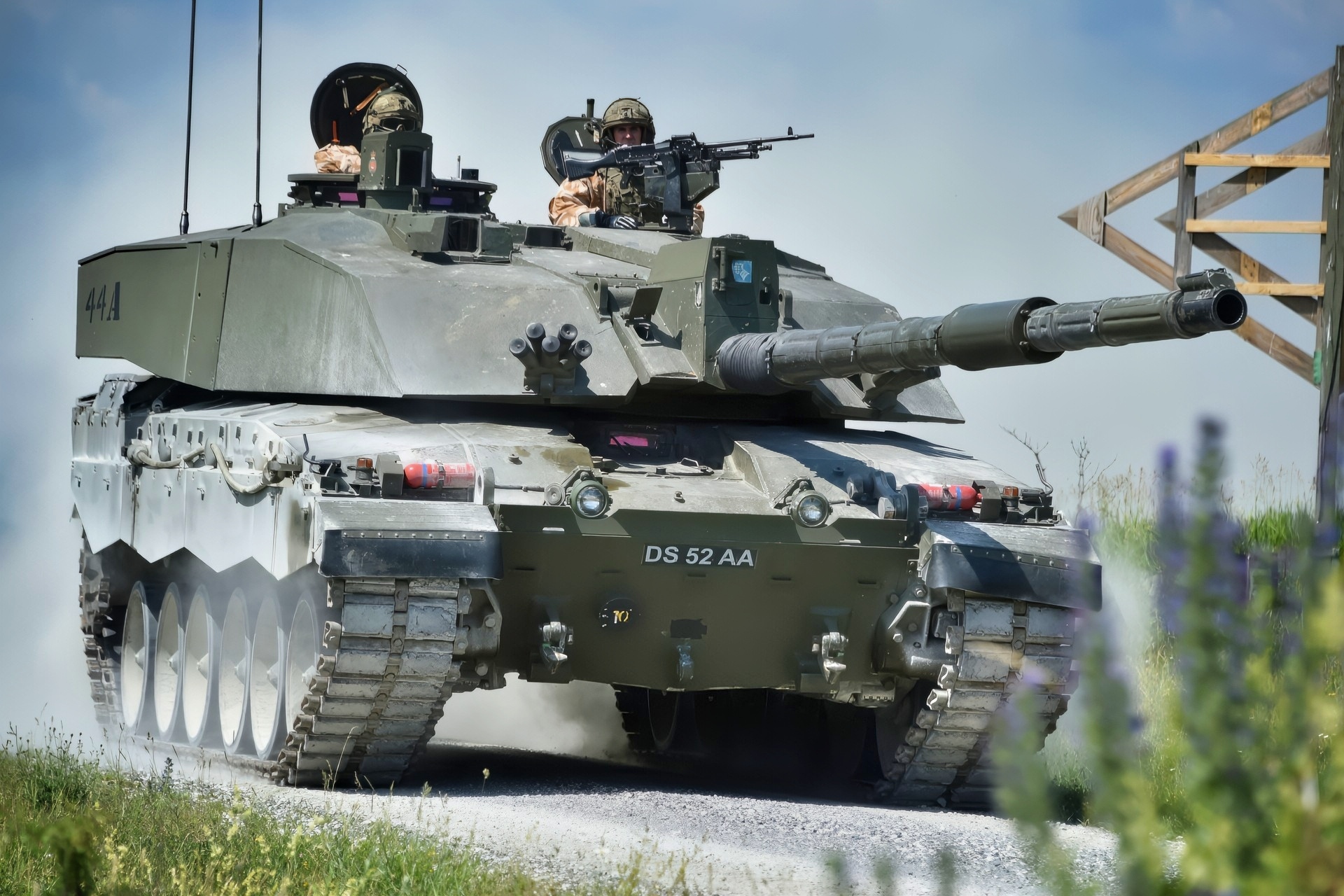
British soldiers with the Queen’s Royal Hussars move a Challenger II main battle tank down range during the Strong Europe Tank Challenge at the 7th Army Training Command’s Grafenwoehr Training Area, June 4, 2018. The U.S. Army Europe and the German Army co-host the third Strong Europe Tank Challenge, which is an annual training event designed to give participating nations a dynamic, productive and fun environment in which to foster military partnerships, form Soldier-level relationships, and share tactics, techniques and procedures. (U.S. Army photo by Gertrud Zach)
When the Ukraine war finally ends, whether through a negotiated ceasefire, a frozen line, or simple exhaustion, the maps will show Russia holding some portion of eastern and southern Ukraine. Commentators will measure the outcome in those terms, counting the square miles Moscow kept and the ones it lost, and some will call it a Russian victory on the grounds that Putin ended the war with more Ukrainian territory than he started with.
That accounting will be wrong because the territorial map is the least important scoreboard in this war.
Russia has already lost, and it lost on the measures that actually determine whether a nation grows more or less powerful over the long run. The human toll, the economic self-mutilation, the destruction of its reputation as a military power and an arms supplier, its demotion to junior partner of China, and the permanent loss of Ukraine to the West are wounds that no battlefield gain can offset.
Putin set out to make Russia stronger and more feared. He has made it weaker and more dependent, and the damage will take decades to repair, regardless of where the final border runs.
A Demographic Wound That Cannot Heal On Any Reasonable Timeline
The first and most permanent cost is human. Russia has suffered staggering casualties, and the Center for Strategic and International Studies estimated that Moscow had absorbed 1.2 million casualties, including at least 325,000 deaths, from the start of the full-scale invasion through the end of 2025, with the institute noting that no major power has suffered anywhere near these numbers in any war since the Second World War.
The independent Russian-language outlet Mediazona, building its count from named individual deaths, had documented roughly 352,000 Russian soldiers killed as of May 2026, while Ukrainian tallies of total killed and wounded run past 1.3 million. These are losses concentrated among young, working-age men, drawn from a population that was already shrinking before the first tank crossed the border.
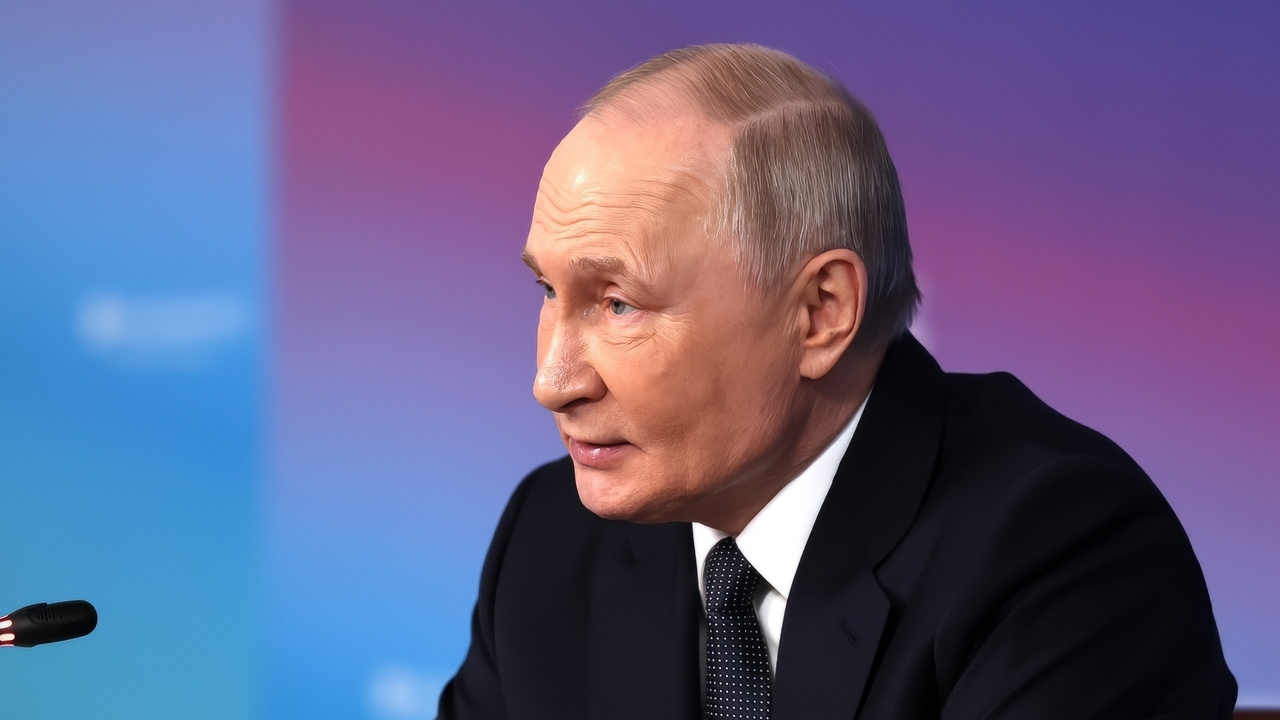
Vladimir Putin in Murmansk (2025-03-27). Image Credit: Creative Commons.
The demographic math does not forgive this kind of loss. Even before the war, Russia was experiencing what one analysis called a triple demographic blow of low birth rates, high mortality, and high emigration, and the invasion has deepened all three at once. The average age of a Russian combatant is around 35, and the loss of so many young men mortgages the country’s demographic and economic future, with future veterans more likely to become a social burden than a productive asset. On top of the battlefield dead, the war drove roughly a million people, many of them young and educated, out of the country, with Western reporting noting that up to a million fled Russia, particularly after Putin’s September 2022 conscription order.
A country cannot lose hundreds of thousands of young men to a war, drive a million more abroad, and suffer a collapsing birth rate all at once without paying for it across a generation. The men who died do not come back, and Putin inflicted this on his own country in pursuit of territory.
An Economy Converted Into A War Machine, It Cannot Sustain
Russia entered the war with one of the strongest macroeconomic positions of any major economy, a low-debt petro-state with a vast sovereign wealth fund and inflation under control.
It has spent that inheritance.
The country now devotes roughly 40 percent of its federal budget, around $238 billion, to defense and security, runs deficits it must cover from reserves, and fights an inflation problem its own military spending generates. The central bank was forced to raise interest rates to a record 21 percent in October 2024 to contain the damage, choking off the civilian economic activity that might otherwise produce growth.
The more serious damage is structural and lasting. Western sanctions have cut Russia off from the advanced technology and components its industries depended on, forcing it to substitute lower-quality domestic or third-country alternatives. The energy revenue that funded the Russian state for two decades is permanently diminished, because Europe has weaned itself off Russian gas and is not coming back, and Russian oil now sells at a discount to a shrunken pool of buyers. Even when the shooting stops, none of this reverses on its own.
The sanctions architecture will not be dismantled the moment a ceasefire is signed; the European energy market will not return; and technological isolation will compound year after year. Russia has traded a functioning modern economy for a war economy running on borrowed time, and the bill comes due whether or not Putin keeps the Donbas.
The Arms Industry in Russia Destroyed By Going To War in Ukraine
The most underappreciated loss is the collapse of Russia’s reputation as a weapons maker, and with it, one of the central pillars of both its economy and its global influence. For three decades after the fall of the Soviet Union, Russia was the second-largest arms exporter on earth, behind only the United States, and that business bought it influence across Asia, Africa, and the Middle East. That business is now in freefall.

Su-35 Fighter. Image Credit: Creative Commons.
According to the Stockholm International Peace Research Institute’s March 2026 report, Russia’s arms exports fell by 64 percent over the past five years, and its share of the global arms market collapsed from 21 percent in the 2016 to 2020 period to just 6.8 percent in 2021 to 2025. Russia was the only top-ten supplier whose exports fell at all.
The number of significant customers buying Russian weapons has dropped dramatically, from 31 nations down to roughly 12.
Two forces are driving the collapse, and both trace directly to the war. The first is that Russia now needs its weapons for its own use, leaving little to sell. The second, and more damaging over the long term, is that the war has been a four-year live advertisement for the failure of Russian arms.
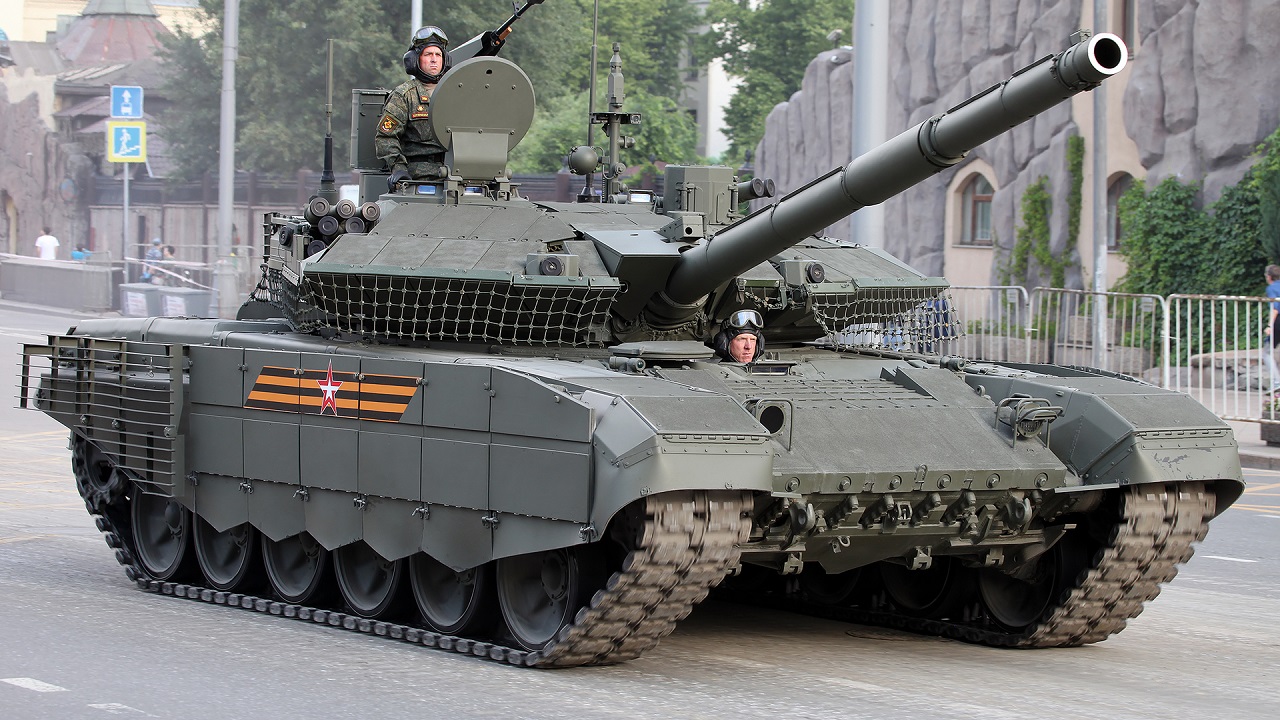
T-90M. Image Credit: Creative Commons.
Russian tanks have been filmed having their turrets blown off by cheap drones, Russian aircraft have been downed, and Russian air defense systems have been found wanting, while the Black Sea Fleet was driven from its own ports by a country with no navy. Customers noticed. India, long the largest buyer of Russian weapons, has been steadily diversifying away from Moscow and has shown little interest in the Su-57 stealth fighter, and Algeria cut its Russian arms imports by 78 percent. A nation’s weapons are only as marketable as their last performance in combat, and Russia’s performance has gutted a business it spent decades building.
The Great Power That Became China’s Junior Partner
Putin invaded Ukraine to restore Russia’s standing as a great power that the world would respect and fear. He achieved the opposite. The war has made Russia profoundly dependent on China, and the relationship is not one of equals. China is now the main market for Russian crude, purchasing roughly half of Russia’s oil exports while squeezing out a discount from Russian firms that have nowhere else to sell under G-7 sanctions. The yuan’s share of Russia-China settlements has surged from under 2 percent before the war to a dominant position in bilateral trade, propping up the Chinese currency in the process.
This is a historic reversal, and analysts no longer dance around what it means. Russia has accepted junior-partner status as the price of survival, and the asymmetry only widens with time, because China can adjust its purchases without much pain while Russia’s fiscal health depends on sustained Chinese demand. For most of the modern era, Russia was the senior partner in this relationship, the more advanced industrial and military power.
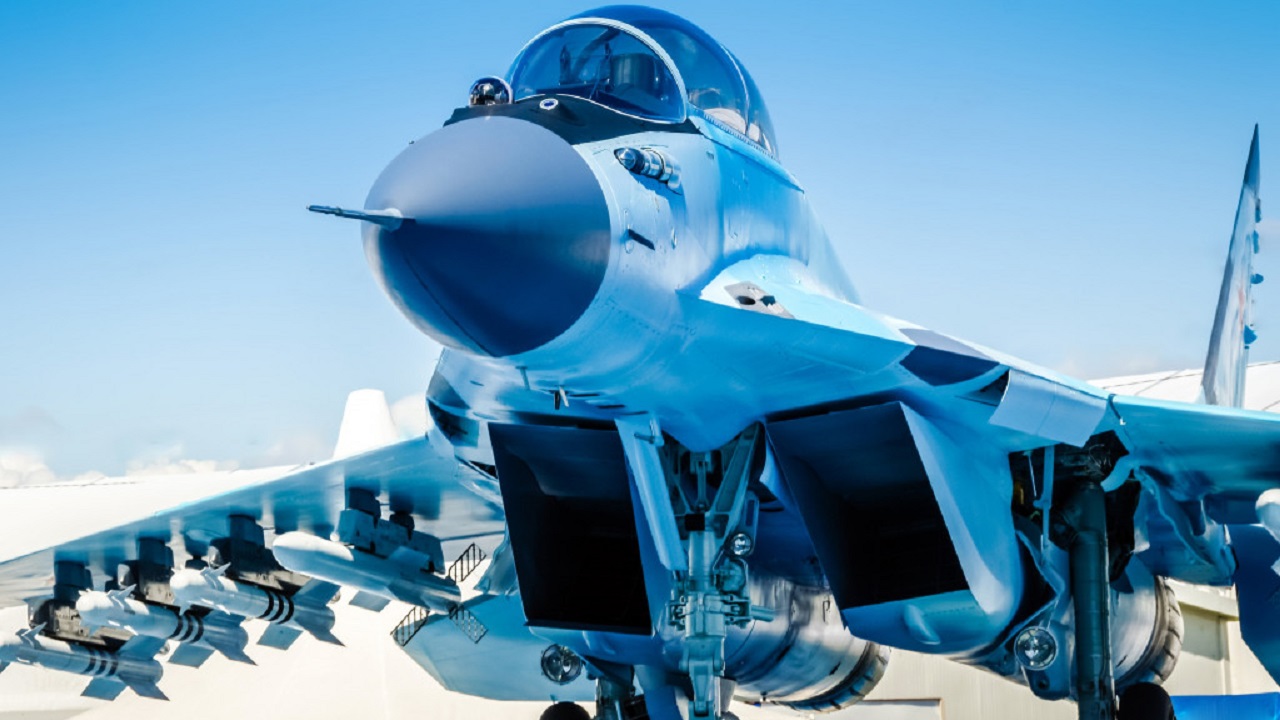
MiG-35 Fighter Creative Commons Image.
The war has flipped that hierarchy, and Beijing knows it, leveraging Moscow’s weakened position to demand favorable pricing on everything from crude to the long-sought Power of Siberia 2 gas pipeline. Putin set out to stand as a pole in a multipolar world and instead made his country dependent on Beijing for trade, industrial goods, and economic survival, a satellite of the very rising power it should regard as its greatest long-term concern.
Every War Aim Produced Its Opposite
The final measure of Russia’s defeat is that the war backfired against every objective Putin used to justify it. He invaded, by his own account, to halt NATO’s expansion toward Russia’s borders. The result was that Finland and Sweden, two militarily capable states that had stayed out of the alliance for generations, joined NATO in direct response to the invasion, more than doubling NATO’s direct border with Russia and turning the Baltic Sea into something close to a NATO lake. Putin got vastly more NATO on his frontier, not less.
He invaded to pull Ukraine back into Russia’s orbit and to erase its identity as a separate nation oriented toward the West. The result was the opposite, and it is irreversible. Ukraine is now bound to the West more tightly than at any point in its history, moving toward European Union accession, rebuilding its military with a long-term commitment of Western aircraft and weapons, and forging a national identity defined in large part by its resistance to Moscow.
Whatever territory Russia holds when the fighting stops, it has permanently lost the country it actually went to war to capture. An entire generation of Ukrainians will grow up regarding Russia as the enemy that bombed their cities, and no future settlement reverses that.
What Losing Actually Means Here
None of this means Russia has been destroyed, and the argument for admitting it is stronger.
Russia still holds Ukrainian territory it did not control before 2022. It retains the world’s largest nuclear arsenal, a functioning state, and a regime that has so far survived every internal pressure the war has generated. Putin is still in power. In the narrow sense of physical control over ground, Russia can plausibly claim to have gained something.
But great-power competition is not measured in square miles of contested farmland. It is measured in economic strength, military credibility, demographic health, technological capacity, alliances, and influence, and on every one of those measures, Russia is weaker today than it was before it invaded. It has bled its population, hollowed its economy, wrecked its arms industry, subordinated itself to China, driven its neighbors into NATO, and lost Ukraine to the West for a generation. A country can hold territory and still lose a war if the price of that territory is the long-term decline of national power on every axis that matters.
That is precisely what Putin has purchased.
About the Author: Harry J. Kazianis
Harry J. Kazianis (@Grecianformula) was the former Senior Director of National Security Affairs at the Center for the National Interest (CFTNI), a foreign policy think tank founded by Richard Nixon based in Washington, DC. Harry has over a decade of experience in think tanks and national security publishing. His ideas have been published in the NY Times, The Washington Post, The Wall Street Journal, CNN, and many other outlets worldwide. He has held positions at CSIS, the Heritage Foundation, the University of Nottingham, and several other institutions related to national security research and studies. He is the former Executive Editor of the National Interest and the Diplomat. He holds a Master’s degree focusing on international affairs from Harvard University.


