

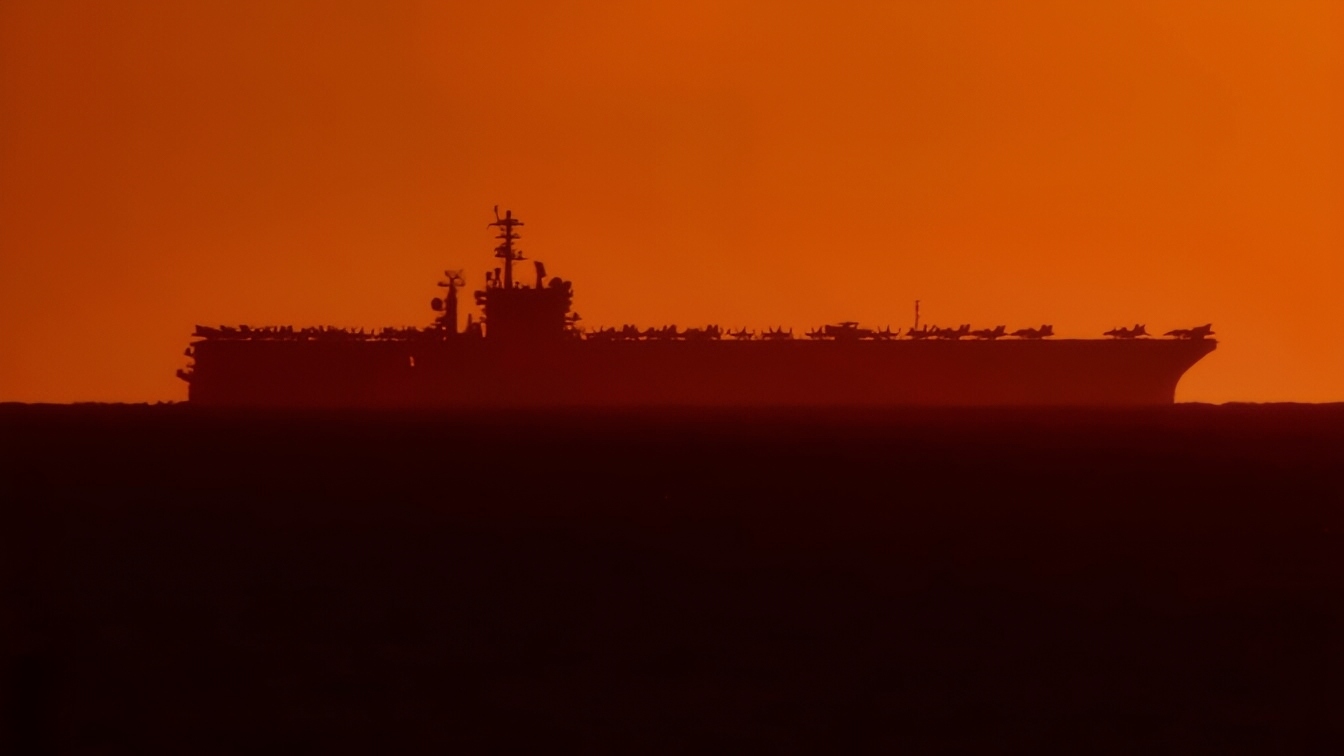
Summary and Key Points: The USS Nimitz, commissioned in 1975, is scheduled to decommission next spring after nearly 52 years of service — even as the Ford-class carrier meant to replace her, the USS John F. Kennedy, runs behind schedule and the Navy’s carrier fleet is already stretched thin across the Pacific, the Middle East, and now the Caribbean.
With shipbuilding delays showing no sign of easing, the question is whether retiring America’s oldest carrier on schedule leaves the fleet dangerously short.

USS Nimitz Sailing Near Canada. Image Credit: Creative Commons.
USS Nimitz: Retirement or Reboot?
The USS Nimitz (CVN-68) arrived in the Port of Kingston, Jamaica, on Monday and will spend a few days there as part of its Southern Seas 2026 maritime cooperation deployment.
The Nimitz- and Arleigh Burke-class guided-missile destroyers USS Gridley (DDG 101) and USS Arleigh Burke (DDG 51) are scheduled to conduct passing exercises and operations at sea with partner-nation maritime forces as the ships circumnavigate the continent of South America, according to SOUTHCOM.
“The Southern Seas 2026 deployment provides a unique opportunity to enhance interoperability and increase proficiency with our partner-nation forces across the maritime domain,” said Rear Adm. Carlos Sardiello, commander, U.S. Naval Forces Southern Command/U.S. 4th Fleet.
“Deployments like this demonstrate our unwavering commitment to ensuring a secure and stable Western Hemisphere. This mission is a shining example of our dedication to strengthening maritime partnerships, building trust, and working together to counter shared threats.”
Promoting Goodwill But Providing a “Big Stick”
While essentially considered a goodwill tour for its final cruise, the Nimitz is also providing the US a strike platform (if needed) against Cuba. Especially in the wake of the United States Department of Justice announcing it had charged former Cuban President Raúl Castro and other Cuban officials with murder for their roles in the Feb. 24, 1996, shoot‑down of two unarmed U.S. civilian aircraft operated by Brothers to the Rescue over international waters.
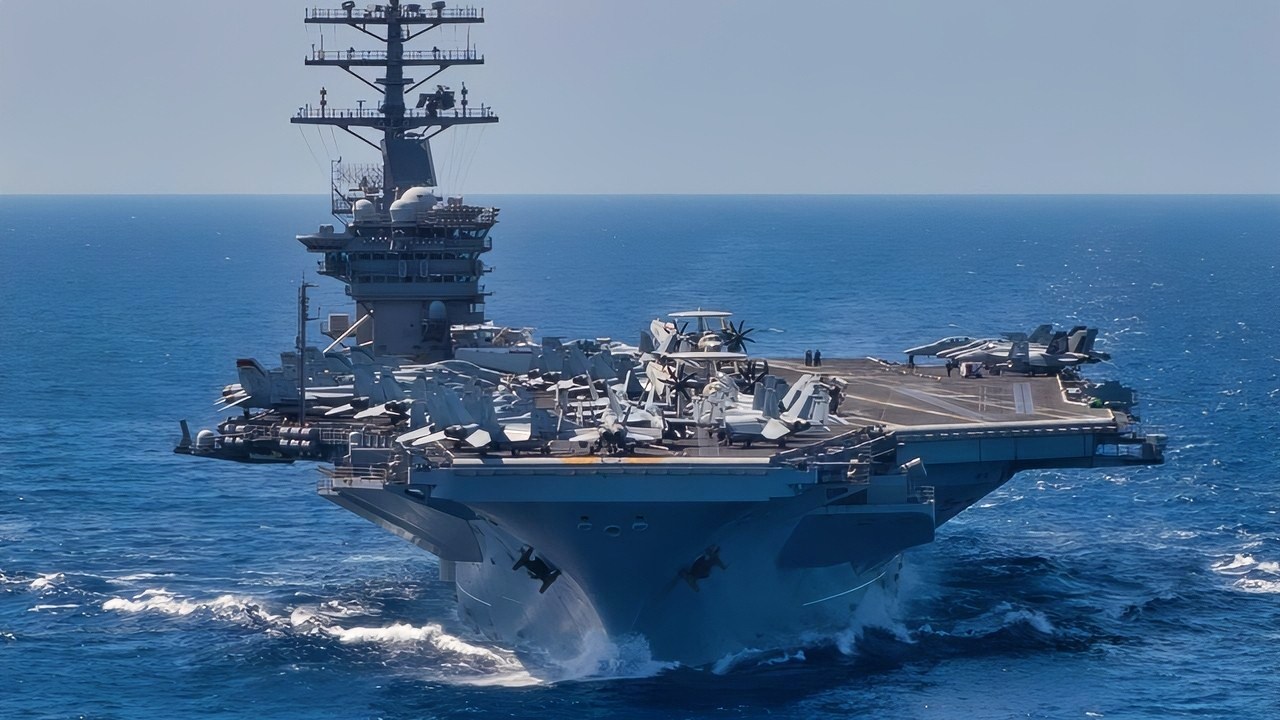
(Feb. 1, 2021) The aircraft carrier USS Nimitz (CVN 68) steams through the Indian Ocean. Nimitz is part of the Nimitz Carrier Strike Group and is deployed conducting maritime security operations and theater security cooperation efforts. (U.S. Navy photo by Mass Communication Specialist Seaman Joseph Calabrese)
The Nimitz and the Gridley will finish up their goodwill tour, but have no further ports of call scheduled. They could stay in the Caribbean, providing a presence against the Cuban regime (Teddy Roosevelt’s big stick), until the Wasp-class amphibious assault ship, the USS Kearsarge (LHD-3), which has been preparing for its 2026 deployment, arrives on station.
Is The Navy’s Decision To Retire The Nimitz The Right Call?
The Nimitz, commissioned in May 1975, is scheduled to be decommissioned next March, after nearly 52 years in service.
While she’s aging, which makes maintenance costly, the extension was necessary to prevent a fleet gap and maintain the congressionally mandated requirement of 11 operational aircraft carriers while waiting for the next Ford-class carrier, the USS John F. Kennedy (CVN-79), to be commissioned. That is scheduled for March of 2027.
Nimitz-class carriers and their carrier strike groups are the centerpiece of the U.S. Navy. They project immense power worldwide.
However, should the Navy reconsider the decision to retire the USS Nimitz, given the news that the Ford-class carriers are facing the inevitable delays that run rampant in the US shipbuilding industry?
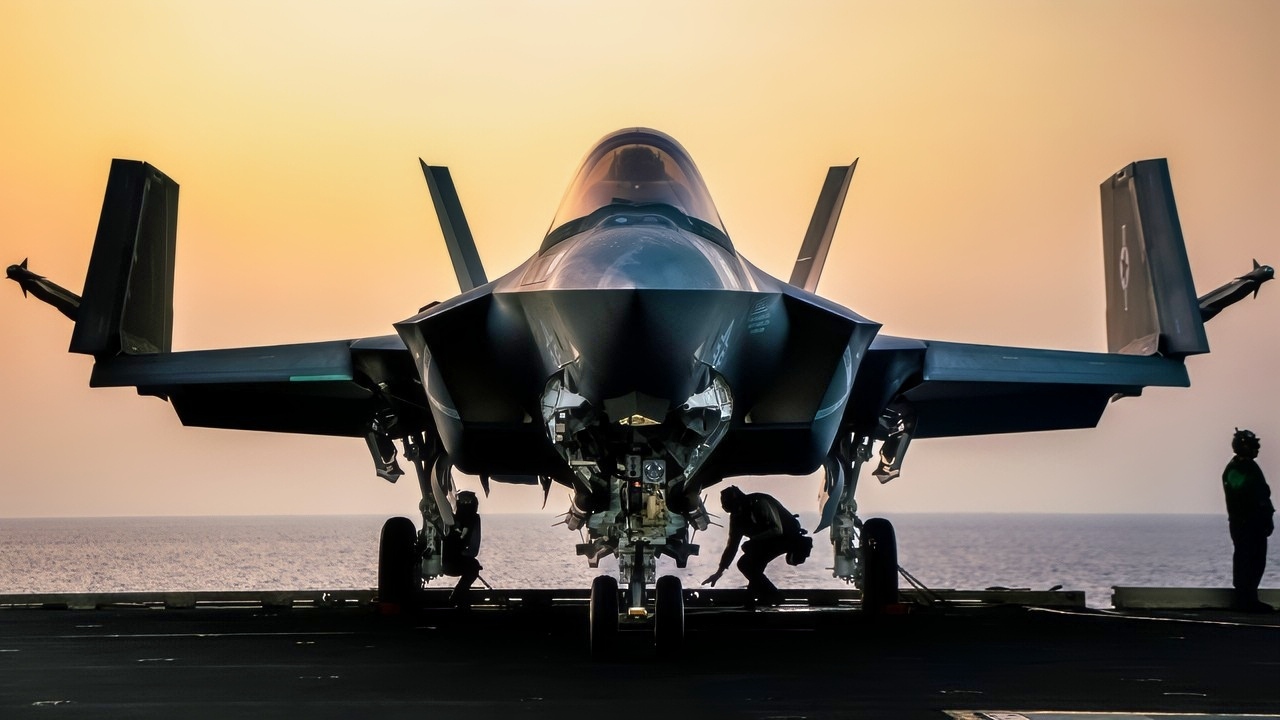
U.S CENTRAL COMMAND AREA OF RESPONSIBILITY (April 24, 2025) U.S. Sailors conduct pre-flight safety checks on an F-35C Lightning II, attached to Strike Fighter Squadron (VFA) 97, on the flight deck of the Nimitz-class aircraft carrier USS Carl Vinson (CVN 70) in the U.S. Central Command area of responsibility. (Official U.S. Navy photo)
Balancing Needs Versus The High Costs Of Maintaining The Nimitz
The debate over decommissioning the USS Nimitz (CVN-68) involves balancing its proven service and strategic need with its age, high upkeep costs, and the arrival of next-gen carriers; arguments for keeping it include maintaining the crucial 11-carrier fleet during Ford-class transitions.
While arguments for retiring it cite reaching its 50-year lifespan, obsolescence, and the cost of maintaining aging infrastructure, the Navy has announced its retirement in 2026 and has since extended it until next spring, despite current high demand.
The U.S. carrier fleet is currently stretched thin. Keeping the Nimitz active gives the military flexibility to handle unexpected conflicts or backstop diplomacy in the Western Hemisphere while newer carriers focus on global hotspots.
While it lacks the latest defenses, keeping it active, especially in the Caribbean, where the carrier strike group can more than ably protect it, will temporarily boost the fleet to 12 carriers, providing crucial operational flexibility amid rising tensions worldwide.
The Navy’s OPTEMPO Is Currently Extremely High
The current world situation is volatile, and the demand for US carrier strike groups in the Indo-Pacific, the Middle East, and Europe is very high. US doctrine states that the US maintains 11 aircraft carriers to meet the nation’s needs.
Even with the Nimitz operational, those capabilities have been stretched thin due to the Navy’s OPTEMPO. Now, with the next-generation USS John F. Kennedy (CVN-79) and Ford-class vessels delayed or still in trials, the retirement of the USS Nimitz from the fleet risks making America’s carrier force weaker than is advisable, considering the situation.

(September 24, 2021). The navy’s only forward deployed aircraft carrier USS Ronald Reagan (CVN 76) transits the South China Sea. Reagan is attached to Commander, Task Force 70/Carrier Strike Group 5 conducting underway operations in support of a free and open Indo-Pacific. (U.S. Navy Photo by Mass Communication Specialist 1st Class Rawad Madanat)
And the issues with the shipbuilding industry are not getting any better anytime soon.
The US Can Keep the USS Nimitz (CVN-68) Active
The high demand for carrier strike groups in the Indo-Pacific, the Middle East, the Arctic, and elsewhere (including the Caribbean) has already stretched the Navy thin. Carrier Strike Groups are vital for U.S. power projection in the Indo-Pacific, Middle East, and Europe, and removing one carrier weakens the force.
The transition gap leaves the Navy shorthanded. New Ford-class carriers (such as USS John F. Kennedy) are facing delays, potentially creating a gap in available carriers if the Nimitz leaves service too soon. There is a valid argument for keeping the Nimitz active, at least until the USS Kennedy is operational.
The Nimitz’s proven capability is, without question, a plus, despite her age. The Nimitz is a reliable, proven nuclear-powered platform that provides significant operational flexibility.
Having the Nimitz operate over the next couple of years would significantly enhance the United States’ ability to handle its current security commitments and any contingencies that arise.
The Case for Decommissioning The Nimitz Next Spring
The Nimitz has reached its age & lifecycle limit. The ship has served for over 50 years (commissioned in 1975), exceeding typical lifespans, and is reaching the end of its operational life.
The maintenance costs will be excessively high. The ship’s nuclear reactors, combined with wear to the hull and its aging systems, place a heavy maintenance burden on the vessel. Older ships require more upkeep, and the Nimitz’s aging infrastructure becomes increasingly complex and expensive to maintain.
The biggest issue is the reactors; after five decades of service, the ship’s nuclear reactors have reached their core lifespan, making further overhauls at Newport News Shipbuilding cost-prohibitive.
Issues of technological obsolescence need to be addressed. While upgraded, the Nimitz-class lacks some advanced features of the newer Ford-class, like EMALS. And although the Navy is having some issues with EMALS, the quicker they are fixed, the faster the Navy ecan upgrade its air operations.
The Navy Needs New Aircraft Carriers And Warships
Fleet modernization is a priority. Retiring older ships make way for newer, more capable carriers (Ford-class carriers) and streamlining the fleet. By retiring the Nimitz on time, the Navy is freeing up skilled manpower, dock space, and funding for newer carriers and other priorities.
Also, the Navy has already earmarked funds for the USS Nimitz’s deactivation. This includes defuelling of the ship’s reactors and preparation for inactivation. The process of deactivating the ship, as one would predict, is time-consuming and expensive.
The older carrier design cannot easily integrate next-generation sensors, electronic warfare suites, or autonomous drone systems without extensive modifications. The Nimitz doesn’t have EMALS and JPALS, and retrofitting it would be significantly costly.
The Navy Must Balance Its Current Needs With Its Issues
The Navy, as stated above, will be balancing the current needs (an 11-carrier fleet) against the costs of maintaining a 50+-year-old aircraft carrier. Keeping the Nimitz active would place additional strain on Newport News Shipyard’s already overtaxed maintenance capability, which is far behind schedule.
It is the only shipyard that handles aircraft carrier RCOHs, deactivation procedures, and new carrier construction.
The Navy believes that while extending the Nimitz would temporarily bridge the operational gap, it would also create additional shipyard issues that would further delay the construction of new carriers.
About the Author: Steve Balestrieri
Steve Balestrieri is a National Security Columnist. He served as a US Army Special Forces NCO and Warrant Officer. In addition to writing on defense, he covers the NFL for PatsFans.com and is a member of the Pro Football Writers of America (PFWA). His work was regularly featured in many military publications.


