

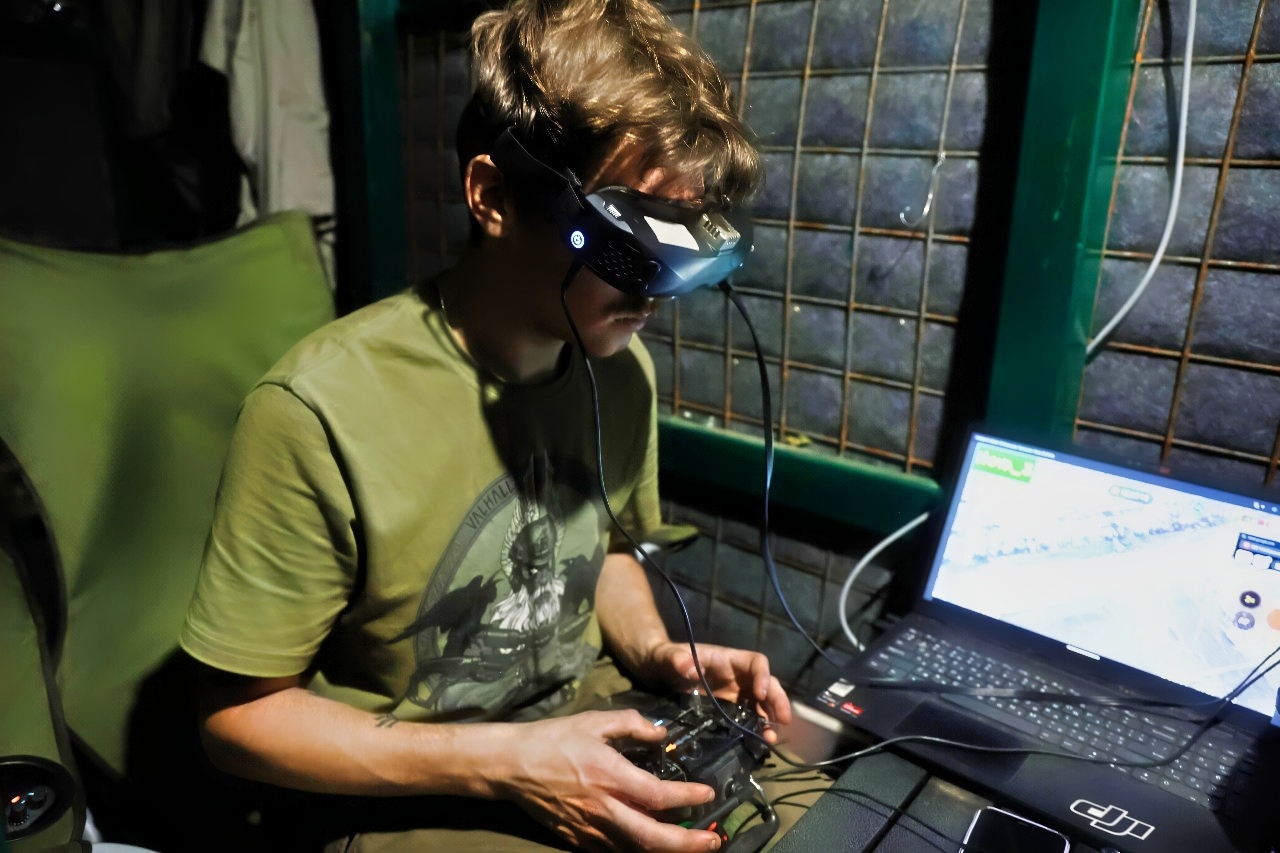
Summary and Key Points: For years, Russia terrorized Ukrainian cities with cheap drones. Now the weapon has turned around on Moscow, exposing a hole that Russia spent too long ignoring. Ukraine’s drone campaign is systematically wearing down Russia’s air defenses — forcing them to fire constantly, burn through their best missiles, and fall back on improvised and decades-old gear. The economics are brutal, and even the skies over Moscow no longer feel safe. Russia still holds significant advantages, but one kind of control it has always taken for granted is slipping away.
Ukraine Has Declared a Drone War on Russia
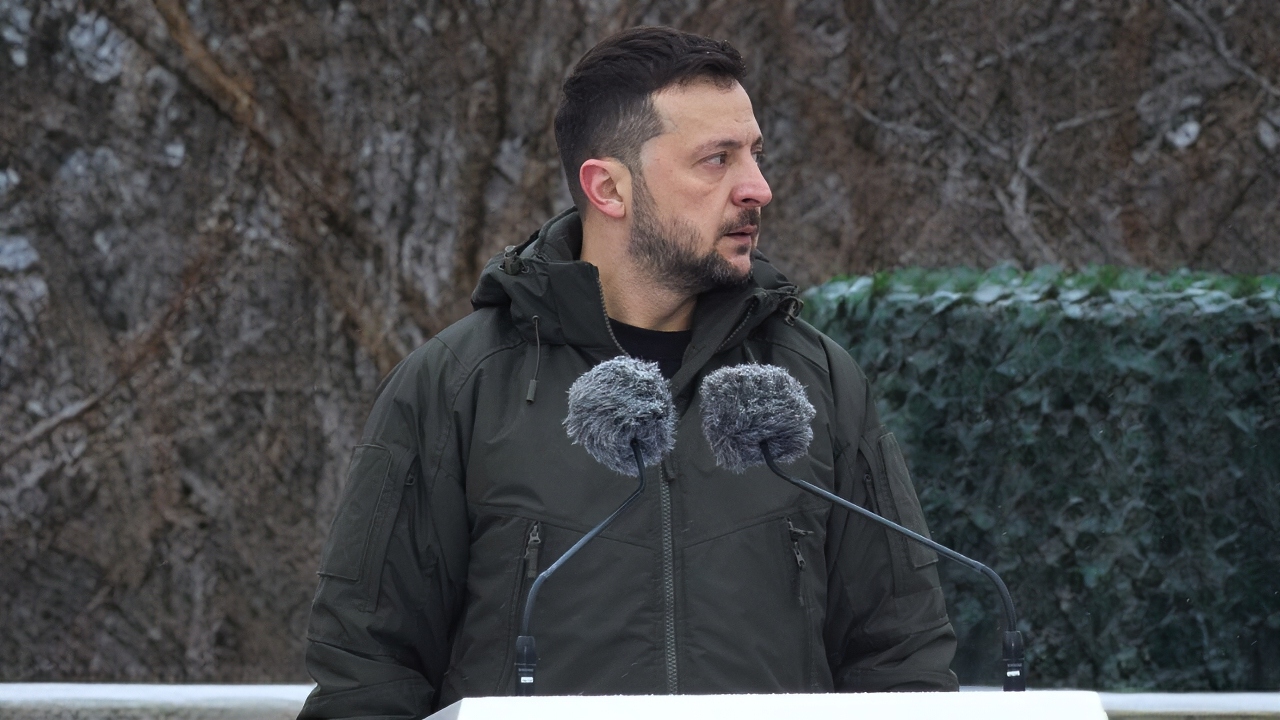
Image Credit: Office the the President, Ukraine.
Russia’s Air Defense Problems Are Growing: The roads to Crimea are beginning to tell the story of Russia’s defensive dilemma. Burned trucks, stranded convoys, and air defense systems hit while being transported suggest that Ukraine’s drone war is reaching deeper into the logistical arteries that sustain Russia’s occupation.
Valerii Zaluzhnyi, Ukraine’s former commander in chief, warned in May that “modern war is already different, and therefore it is simply impossible to predict its outcomes.”
What began as a defensive “drone wall” for Ukraine designed to slow Russian assaults has evolved into something much larger. With the growing role of mid-range strikes, Ukraine is increasingly targeting the Russian air defense system itself, as well as frontline logistical routes.
This was not the war Moscow expected at the start of the full-scale invasion, or even a year ago. Things change fast in drone warfare.
“Ukrainian territory must be free of Russian forces,” wrote the Azov First Corps. “The surest path to achieving this is pushing the ‘sanitization zone’ for enemy logistics closer to Russia itself and occupied Crimea.
The point was never that every drone would penetrate Russian defenses. The point was attrition. Force the system to fire constantly. Expose radar positions. Exhaust interceptor stocks. Create gaps. Then widen them.
Degrading the Air Defense Network
A March 2026 report by the Tochnyi open-source collective identified hundreds of Ukrainian strikes against Russian air defense and anti-access systems over less than a year. The main effort by Kyiv is the attempt to systematically degrade Russia’s stretched air defenses.

Ukraine War TOS-2. Image Credit: X Screenshot.
That degradation is already creating opportunities. Open-source military analyst Jakub Janovsky told me the suppression and destruction of Russian air defenses has allowed Ukraine to strike high-value targets that those systems were meant to protect, including air bases, missile launchers, and other military infrastructure.
A May 2026 Tochnyi report described a three-stage erosion of Russian logistics: HIMARS forcing depot dispersal in 2022, FPV drones expanding a kill zone to roughly 35 kilometers, and mid-range drones now striking convoys up to 150 kilometers deep. In May alone, Tochnyi recorded 130 geolocated strikes on Russian logistics vehicles.
Russian military bloggers now argue that convoys need their own mobile air-defense packages of radars, electronic warfare systems, anti-aircraft guns, and interceptor drones because Ukrainian strike drones have made large stretches of occupied territory too dangerous to secure permanently.
Air Defense Strain Is Real For Moscow
The air defense strain is being felt across Russia. Rybar, a Russian Telegram channel with more than 1.5 million subscribers, warned that Ukraine was systematically depleting air defenses and may have been trying not only to threaten the parade, but to force Moscow to pull more systems toward the capital.
Even the heavily protected air defense ring around Moscow is being penetrated with growing frequency.
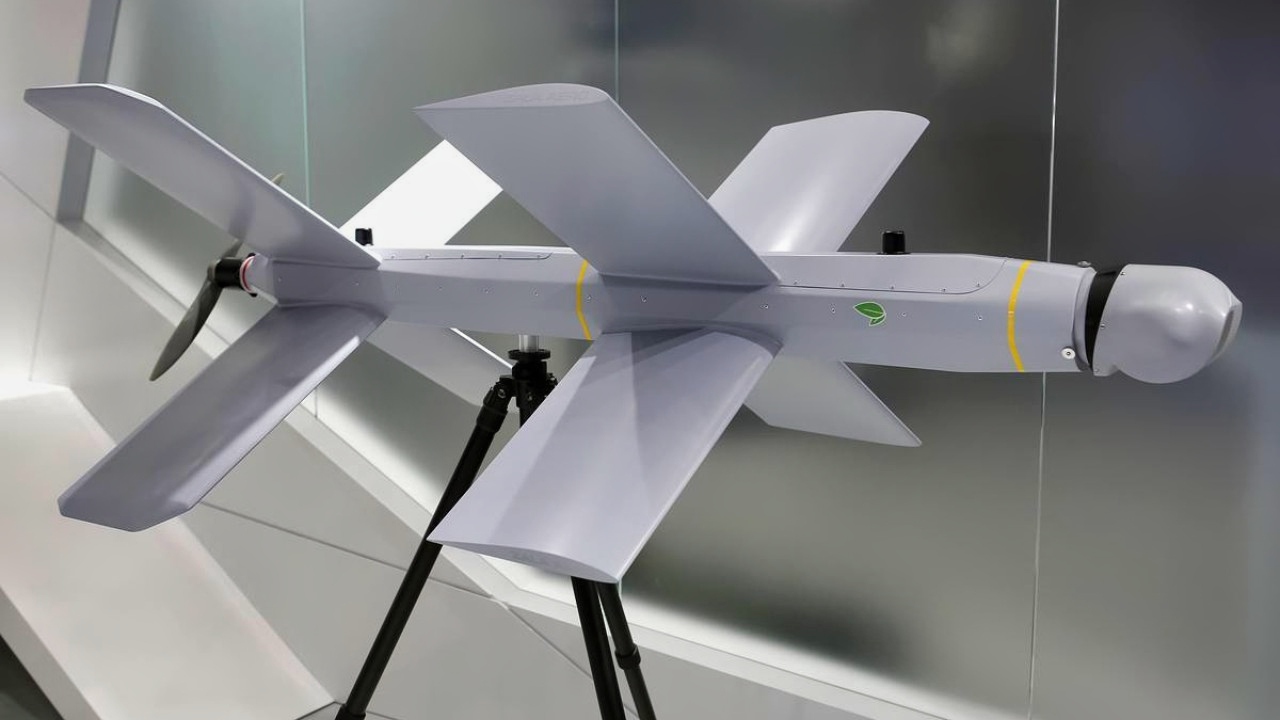
Lancet Drone. Image Credit: Russian State Media.
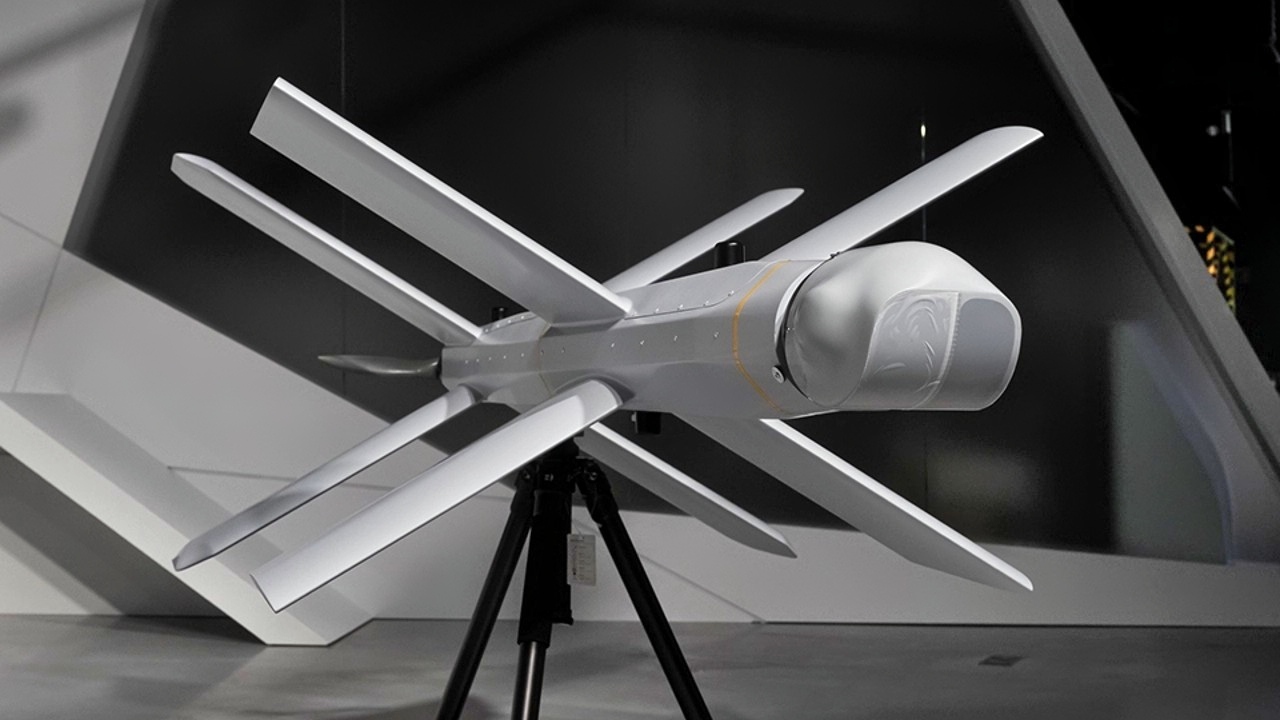
Lancet Drone from Russia. Image Credit: Creative Commons.
During a 2025 visit to St. Petersburg, Putin’s own security detail was reportedly seen carrying portable interceptor drones. The image was revealing. Modern Russian power, which once projected visions of big missiles and strategic bombers, now appears increasingly haunted by relatively cheap unmanned aircraft assembled in workshops and garages across Ukraine.
Built to Attack, Not to Defend
Russia spent years perfecting offensive drone warfare against Ukraine. It scaled production of Shahed-style drones and terrorized Ukrainian cities with nightly barrages.
But while Moscow focused on offense, Ukraine was forced into defensive adaptation, building layered drone defenses that gradually evolved into an offensive drone campaign of its own. Russia, by contrast, invested far less in cheap drone interception, continuing to rely heavily on expensive surface-to-air missiles.
Rostec’s new ZAK-30 Tsitadel, a 30mm anti-drone turret using timed airburst ammunition, shows Moscow is now trying to develop cheaper ways to counter small drones. But its reported short range makes it more useful for defending fixed sites than solving Russia’s broader air-defense problem.
“With its dwindling stocks of these expensive assets, Russia has little choice but to develop and rush new interceptors into service,” said open-source analyst Roy Gardiner, as Ukrainian long-range strikes continue growing in both number and effectiveness.
According to the Financial Times, Ukraine’s defense ministry reported that in the first four months of 2026, production of reconnaissance drones was already up 441% compared with all of 2025, while mid-strike drones were up 312% and deep-strike systems up 53%.
Ukraine built acoustic detection networks using AI-assisted microphones to track drones and direct mobile fire teams along their flight paths. Russia did not. In occupied Zaporizhzhia, Russian-installed authorities reportedly eased Telegram restrictions after complaints that alternative alert systems were inadequate, while military bloggers said the ban was also hampering mobile air-defense teams.
Russia continues relying heavily on expensive interceptor missiles and electronic warfare systems that are becoming less effective against drones equipped with AI-assisted targeting and Starlink connectivity.
The Math Favors Kyiv
The economics of the drone problem remain. A Ukrainian long-range drone may cost tens of thousands of dollars. A Tor interceptor missile can cost more than ten times as much. Every successful interception increasingly resembles a financial loss for Russia, especially when Ukraine can produce drones at scale.
Meanwhile, there are growing signs of strain inside Russian air defense units themselves: empty launcher slots, older missiles pulled from storage and improvised systems using modified air-to-air missiles. “Simply fabricating tens of thousands of Pantsir missiles out of thin air is physically impossible,” wrote Rybar.
Robert Brovdi, commander of Ukraine’s Unmanned Systems Forces, said Russia is increasingly using Soviet-era air defense systems and radars from the 1960s. Ukrainian forces, he said, have destroyed 134 Russian air defense systems since the start of 2026, helping open new opportunities for deep strikes.
One Russian posted to social media, warning drivers not to travel at night near occupied Mariupol because Ukrainian drones were increasingly hunting logistics vehicles on the roads. The roads near Berdiansk are piling up with burnt vehicles.
Russian war blogger Fighterbomber said Crimea’s fuel shortage reflects cascading logistics failures, including rail restrictions, damaged ferry capacity, driver shortages, and repeated Ukrainian strikes on fuel storage and tanker routes.
The anger was increasingly directed not at Ukraine, but at Russia’s own military leadership. Russian military bloggers openly questioned why sufficient anti-drone protections had not been established for critical infrastructure and logistical routes long before Ukrainian strikes expanded deeper into occupied territory.
The Skies Are Slipping
Russia still possesses enormous advantages in manpower, industrial capacity, and missile production. Ukraine is not on the verge of military victory. But the assumption that Russia can indefinitely defend its vast territory against an increasingly sophisticated Ukrainian drone campaign is beginning to look less certain.
Moscow will now need to invest heavily in its drone interceptor program. According to Dmytro Putiata, a drone operator with Ukraine’s 20th Unmanned Systems Brigade, Russia only began building a drone-on-drone interception system in the second half of 2025. Ukraine, by contrast, has been developing similar capabilities for years.
Russia’s problem is not that protecting Moscow from relatively slow drones is impossible. It is that Moscow underinvested in cheap interceptor systems for too long. Jonathan Lippert, president of Defense Tech for Ukraine, said Russia will likely deploy more mobile interceptor teams around the capital, but such a network will take months to build and may only gradually blunt Ukraine’s long-range strikes.
The weakness is not only technical. Russian drone developer Alexey Chadayev stated that bureaucracy is also slowing the response: mobile fire teams may face legal liability if an intercepted drone crashes into civilian property, creating incentives not to engage.
For years, Russia treated drones primarily as an offensive weapon. Ukraine, forced to defend itself, learned how to track and destroy them at scale. Now Moscow is discovering that defending a vast country against cheap unmanned aircraft may be harder than terrorizing a neighbor with them.
The Kremlin’s image of power has long rested on control: of territory, escalation, and the skies. Ukraine’s drone campaign is eroding all three.
About the Author:
David Kirichenko is an associate research fellow at the Henry Jackson Society. His work on warfare has been featured in publications such as the Atlantic Council, the Center for European Policy Analysis, and the Modern Warfare Institute. Follow him on X: @DVKirichenko.



dozy don
June 2, 2026 at 8:32 pm
The author is implying Ukraine is good at keeping out Russian drones, which could be true, given that Ukraine today enjoys massive western support through their air defense systems and their intelligence backup.
But the author forgets that what’s really keeping Ukraine alive in this ultra modern high tech drone war is Vladimir Putin.
Putin is the one that’s keeping kyiv alive in this war of great survival,today, now.
Once Putin leaves the scene, rest assured Ukraine will enjoy the fate of fascist Germany of 1945.
xi-xi-xi
June 2, 2026 at 11:28 pm
Drones have been used in Libya, nagorno-karabakh and Syria, before they became a big thing in the ukro conflict.
But the main thing is this, the US and the EU forced the bloody regime change in Ukraine, in order to bring it into the NATO fold.
That clearly hasn’t developed well, certainly not to the original US-EU aims.
But drones, missiles and flying bombs have become the main weapons (besides starlink) in Ukraine, today.
But that doesn’t mean Ukraine and its supporters are winning the drone-missile-bomb war.
No, Russia will eventually win this war.
How.
By developing strategic strike drones (SSD) to finish off the Nazis.
Whadda SSD.
SSD is a stealth long-range high power drone that lifts (air-launched) burevestnik missiles into the air.
Once the drone crosses the border, it will activate and release its burevestnik missiles toward the enemy.
The burevestnik missile can just be fitted with a conventional warhead, fooling the Nazis to attempt to intercept it.
Booooooom ! End of the Nazis’ terribly miserable lives.
zhduny
June 3, 2026 at 12:37 am
Right now, today, Wednesday June 3 2026, Russian forces are almost in control of the strategic town of kostiantynivka (kostantinovka), an important nazi lynchpin of the ukro forces in donetsk.
So, where the drones.
The ukro drone operators in the area have been severely mauled by the Russian military.
In a few days’ time, the Nazis will be forced to flee for their lives. No wonder, the western media outlets are filled with overflowing, massively overflowing stories and news reports that the russian military in eastern Ukraine is…is..is …. COLLAPSING.
Collapsing, my asse.