

Until now, President Donald J. Trump has kept to the ceasefire despite Iran’s provocations. He was reluctant to resume airstrikes because he believed negotiations were making progress. But the downing of a U.S. Army Apache helicopter on June 8 by forces of the Iranian Revolutionary Guard Corps changed all that. The IRGC followed up with missiles launched toward Jordan, Bahrain, and Qatar – just days after striking Israel.
“They’ve taken too long to negotiate a deal that would have been great for them, now they have to pay the price!!!” President Donald J. Trump posted on Truth Social.
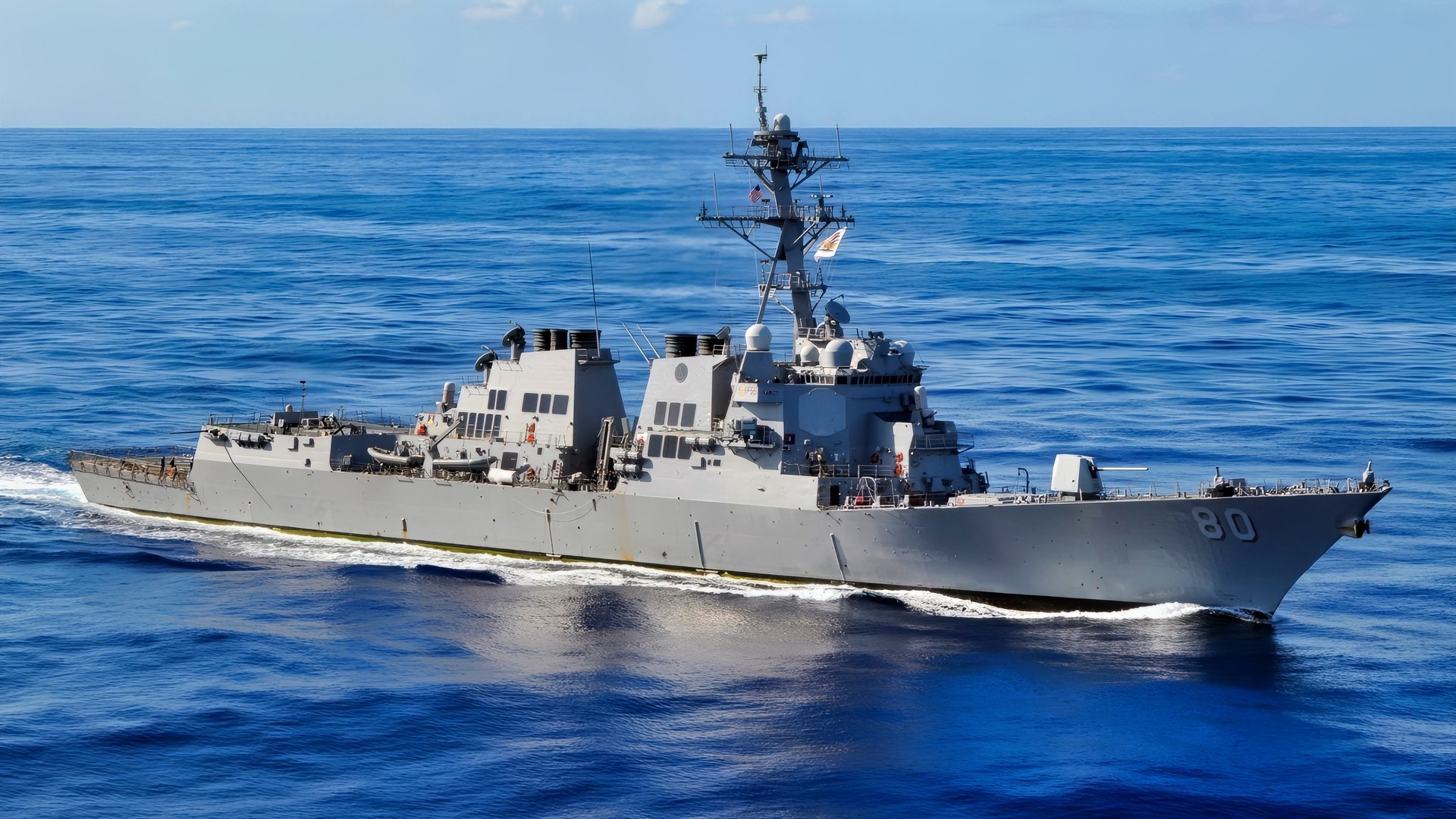
ATLANTIC OCEAN (Sept. 06, 2008) – The guided-missile destroyer USS Roosevelt (DDG 80) steams through the Atlantic Ocean. Roosevelt is deployed as part of the Iwo Jima Expeditionary Strike Group (ESG) in support of maritime security operations in the Navy’s 5th and 6th fleet areas of responsibility. The Iwo Jima ESG is made up of Roosevelt, homeported at Mayport, Fla.; the amphibious assault ship USS Iwo Jima (LHD 7); the amphibious dock landing ship USS San Antonio (LPD 17); the amphibious transport dock ship USS Carter Hall (LSD 50); the guided-missile cruiser USS Vella Gulf (CG 72); the guided-missile destroyer USS Ramage (DDG 61); all homeported at Norfolk, Va.; and the fast attack submarine USS Hartford (SSN 768), homeported at Groton, Conn. U.S. Navy photo by Mass Communication Specialist 2nd Class Jason R. Zalasky (Released)
Operation Epic Fury has already achieved its principal military goals: halting Iran’s nuclear weapons progress and taking away the power projection capabilities that Iran was amassing.
However, as the whole world sees, Iran is an almost impossible interlocutor.
This fanatic and foolhardy regime has been frustrating diplomats for 47 years.
If negotiations are stuck, here are three options for Trump’s next move.
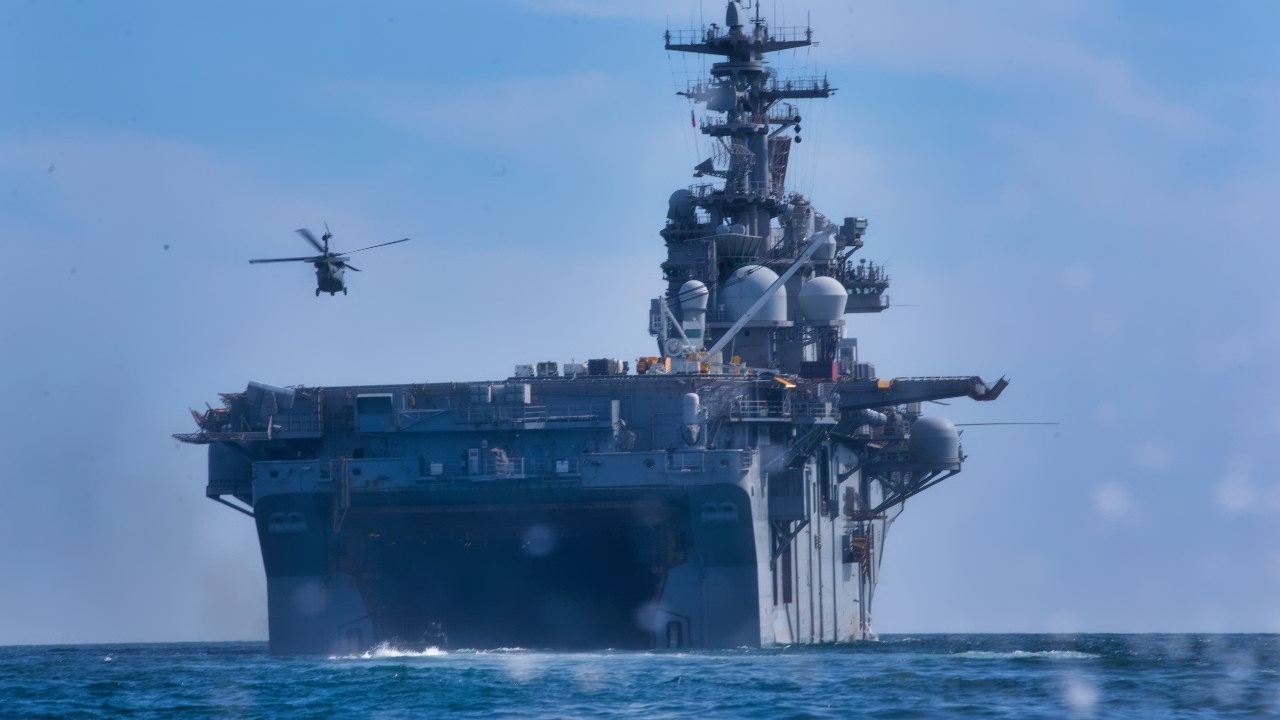
U.S. Marines with Bravo Company, 2d Assault Amphibious Battalion, 2d Marine Division approach the USS Wasp (LHD 1) in assault amphibious vehicles off of Onslow Beach during a three-day ship-to-shore exercise on Camp Lejeune, N.C., June 27, 2020. During the exercise, the Marines conducted amphibious maneuvers and dynamic ship-to-shore operations with the USS Wasp (LHD 1). (U.S. Marine Corps photo by Lance Cpl. Jacqueline Parsons)
Operation Epic Fury, Round Two
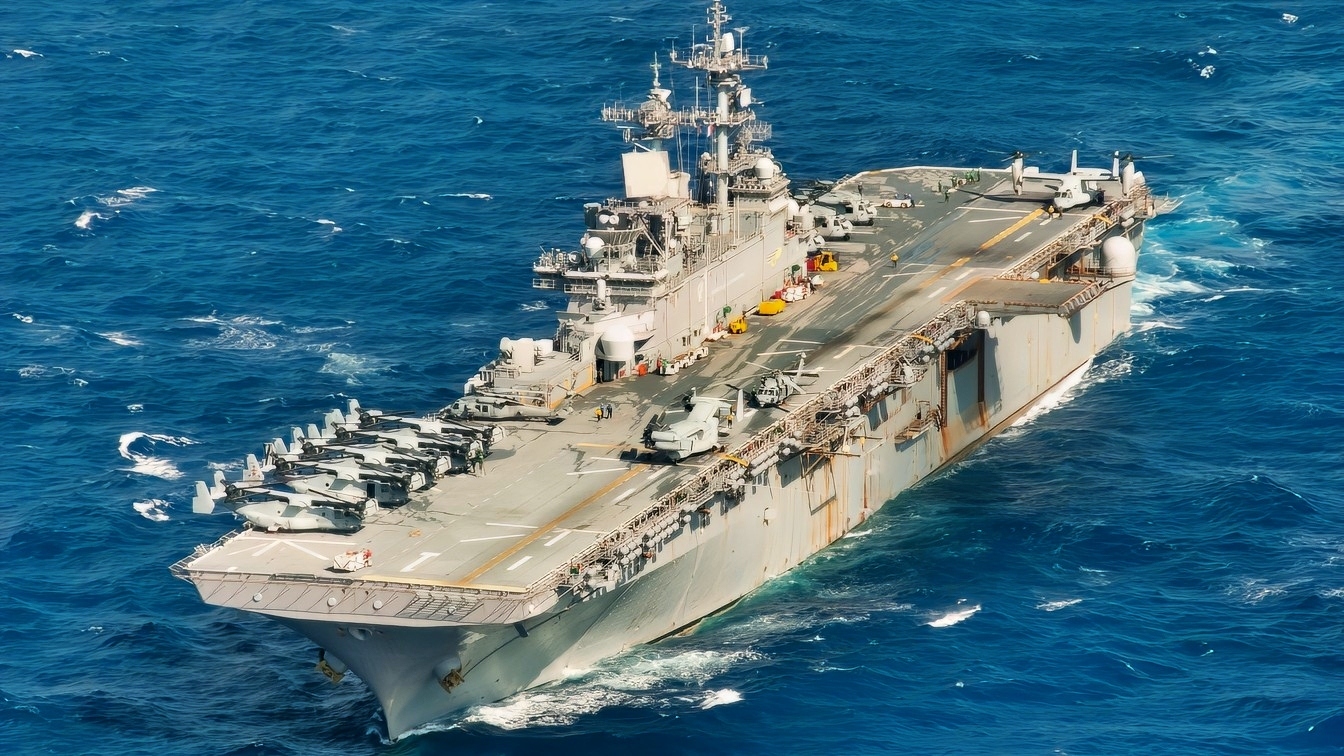
President Trump’s negotiating position is reliant, first and foremost, on over 50,000 U.S. forces still deployed by U.S. Central Command. Two aircraft carriers, the USS Tripoli, several Arleigh Burke-class guided missile destroyers, and, of course, plentiful land-based air in the form of F-16s, F-15s, F-22s, and F-35s are sustaining air and maritime dominance.
U.S. Central Command has targets locked and loaded for a return to another campaign of air strikes. Iran is outmatched but still eager to attack. Their most recent attack on Israel on June 7 began with a salvo of 30 ballistic missiles fired by Iran toward northern Israel. In tactical terms, that is a far cry from over 300 missiles and drones launched in April 2024, when Iran first made the fatal decision to attack Israeli targets en masse.
Iran’s forces have been closely watched throughout the ceasefire. Additional targets would include any active defense sites, such as surface-to-air batteries, as well as other missile or drone launchers.
Drone factories may again be struck. The firing of missiles by Iran at Israel may have revealed additional locations and command and control nodes to add to the target set.
On top of this, Trump may choose to include targets for bridges or the electric grid to strengthen the message.
Remember, the U.S. still has air dominance over Iran and can select precision targets at will. Expect to see F-15Es and B-1, B-2, and B-52 bombers back in action. Iranian military outposts on Kharj Island may be due for a restrike if steady air operations resume.
Seizing Kharj Island
The USS Tripoli and Army forces based in Kuwait and other locations are also in position to seize the island. The strategic rationale is that 90% of Iran’s export oil is pumped from this coral island measuring only 8 miles square. The island is far up in the Persian Gulf and 21 miles from Iran’s coast.
The tiny island has a runway. U.S. forces could air assault the island, essentially turning it into one massive forward arming and refueling point.
An assault on Kharj Island would take place under massive close air support. Picture a cross between the fighters and bombers stacked up over downtown Baghdad during Operation Iraqi Freedom in 2003 – and the layered cyber, space, and special forces effects enveloping the presidential compound in Venezuela during the apprehension of former President Nicolas Maduro.
The U.S. would seize the island swiftly due to its preponderance of firepower, but the risk of casualties would be a factor.
Once taken, there is no need to keep a large U.S. ground force presence on Kharj Island. Its approaches can be controlled from the air, with layered air defenses and counter-drone defenses, not unlike defending Guam or an airbase.
U.S. Central Command has had months to refine assault plans, defenses, and logistics. “Maybe we take it, maybe we don’t,” Trump commented in late March.
Escorting International Shippers
Another option is to cordon off Iran and move to active assistance for commercial shipping transits through the Strait of Hormuz while negotiations continue.
Without a deal, more U.S. military action to get VLCCs and other ships underway in the Strait will become unavoidable.
As it so happens, U.S. Apache helicopters have been patrolling the Strait and driving off IRGC small boats near the transit lanes. Apaches were flying in support when the U.S. Navy destroyers USS Truxtun and USS Mason transited the Strait over the first weekend in May. The Apaches with their 30 mm gun, Hellfire missiles, drone links, and sensor packages have proven highly effective at interdicting small craft of the IRGC.
For example, on May 4, AH-64 Apache and MH-60 Seahawk helicopters were in action to “eliminate six Iranian small boats threatening commercial shipping,” reported Admiral Brad Cooper, Commander, U.S. Central Command. The U.S. Apache that went down was likely part of this mission.
The U.S. has also been quietly checking for mines and clamping down on small boats. The U.S. Navy began surveillance and counter-mine operations in late April. Much of this work is now done remotely.
For example, the 38-foot MCM Unmanned Surface Vehicle (USV) is carried by Littoral Combat Ships with the mine countermeasures package deploys sonar to hunt, localize and neutralize mines. Don’t forget two U.S. Navy destroyers transited the Strait of Hormuz back in
Merchant shippers absolutely do not want to sail with any shooting going on. The tankers, container ships, and bulkers have small crews with minimal security. The Iranian drones, missiles, and small boats that the U.S. Navy parries skillfully are insurmountable for the shippers. These large ships don’t sail without insurance, and “war zone” rates are astronomical.
Workarounds have helped. Saudi Arabia’s East-West pipeline to Yanbu on the Red Sea is moving 7 million barrels of oil per day. Ironically, it was built during the 1980s Iran-Iraq war as a backup option.
The UAE may expand the Habshan-Fujairah pipeline to carry 2 million barrels per day. But the pipelines are not enough to carry all of the normal flow of oil at about 20 million barrels per day. Pipelines are vulnerable to one-way attack drones, and Iran has periodically launched attacks at Fujairah.
Add in the layers of maritime overwatch – up to and including the Space Force – and the U.S. has plenty of options for assuring safe passage. Even so, shipping traffic restoration will take time.
“It’s not going to be a swift recovery. We estimate at S&P that it would take as much as six months to get back to 80 percent of where we were before. You got to get tankers out of the Gulf. You got to get new tankers in,” S&P Global Chair Daniel Yergin told NPR.
What Will Trump Do Next?
Thanks to the skill of U.S. military forces, Trump has a unique opportunity to extinguish Iran’s military violence.
The Iran-Iraq war began in 1980 and ended in 1988 with Ayatollah Khomeini accepting a UN-brokered ceasefire, under the threat of more chemical weapons attacks by Iraqi forces.
Even in 1987, it was “very difficult to ferret out specific details concerning leadership decision-making,” U.S. Navy Rear Admiral Harold Bernsen recalled of the Kuwaiti tanker reflagging of Operation Earnest Will. “So what you really did was make your assumptions based on what you knew about them, their track record.”
By that measure, Iran’s recent track record and the IRGC’s failure to abide by the ceasefire signal that the U.S. must prepare for action again.
About the Author: Dr. Rebecca Grant
Dr. Rebecca Grant is a national security analyst based in Washington, D.C., specializing in defense and aerospace research and national security consulting. She has over 20 years of experience working with the United States Air Force, United States Navy, and top aerospace clients. In addition, Dr. Grant has often appeared on television as an expert on national security for Fox News, Fox Business, CNN, and MSNBC, and as a series regular on The Smithsonian’s Air Warriors. Dr. Grant also writes on China, Russia, and other technology and national security topics for Fox News Opinion. Her military books include 75 Great Airmen (with Lt. Gen. Chris Miller), The B-2 Goes to War, and Battle-Tested: Aircraft Carriers in Afghanistan and Iraq. Dr. Grant graduated from Wellesley College and earned a PhD in International Relations from the London School of Economics, University of London.


bobb
June 10, 2026 at 1:19 pm
The U.S. now, today, in 2026, absolutely has no intention to let iran survive any further as a society or nation.
The reason for that is so simple, even the average five-year-old kid can easily comprehend it.
It has to do with the big US media that are following trump like a pack of hound dogs.
So, trump, the unchallenged master of grand theatrics, feels obliged to feed them.
Feeding them with news bits about how US forces are bludgeoning and mangling humans long despised by western society.
That way, the media hounds also won’t pay any heed to the files saga which now have too many exposes that have becone quite difficult to digest in one go. Would take many years.
The US is turning into a horribly horribly extreme predator on Earth. Beware.
Paul66
June 11, 2026 at 2:57 pm
Taking Kharj would give Iran two equally tough options:
A) Becoming fully dependent on the US in all oil exports untill a peace deal is reached, or
B) Trying to destroy its oil facilities and eliminate their ability to export oil for years.
Tough choice..
Steven Jod
June 11, 2026 at 9:27 pm
This article drips with naked Western imperialism. The US and Israel are the aggressors in this war – not Iran. Trump won’t do anything. If the US seized Kharg Island the Iranians would blitz the UAE’s Barakah nuclear power plant and the prevailing winds in the Gulf run North to South. Check-mate.
And/or the Iranians would blow the island with massive underground demolition mines. And as for not being able to export oil and gas if they did that – well the Iraqis knocked out Kharg Island for years during the Iran-Iraq War. You know what the Iranians did? They improvised and worked around the problem. If Iran and its regime can survive the 8 year Iran-Iraq War they can see off Netanyahu and Trump with relative ease. Which in fact they seem to be doing quite successfully.