

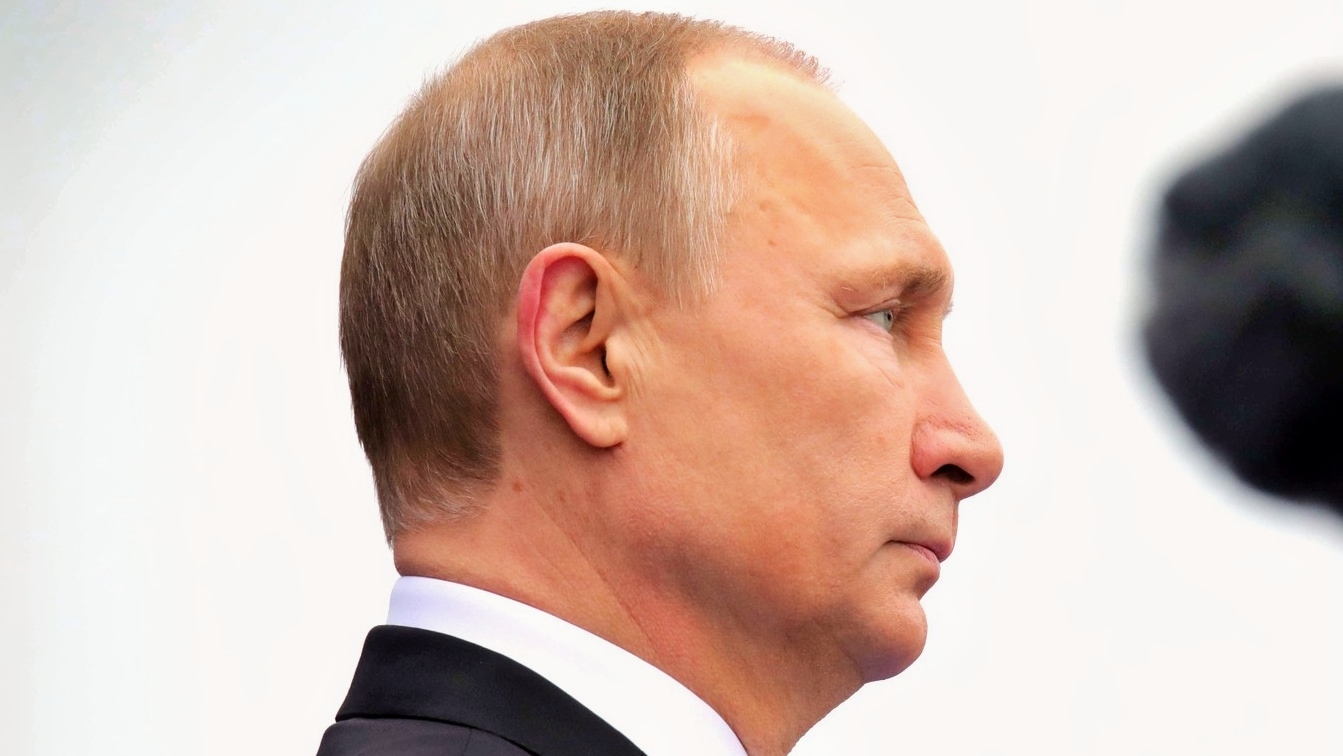
Ukraine’s war effort has increasingly extended beyond the front lines to include deep drone strikes on oil infrastructure, attacks on military airfields, logistics interdiction, and the assassination of senior Russian military figures. Will the asymmetrical pressure force Putin to negotiate for peace? Probably not. While Ukraine’s campaign can impose high costs, forcing the Kremlin to modify its decision-making is another story. Putin is an autocratic leader whose authority derives from the perception of strength and of defying the West; for Putin to capitulate would undermine the source of his authority.
What Ukraine is Doing

Tennessee Army National Guard Soldiers with Alpha Battery, 1-181st Field Artillery Regiment conduct a training exercise using the M142 High Mobility Artillery Rocket System (HIMARS) at Camp Shelby, Mississippi, June 9. The unit’s annual training enhances battalion readiness, focuses on mission-essential tasks and ensures Soldiers are proficient in critical skills. (U.S. Army National Guard photo by Sgt. Grayson Cavaliere)

HIMARS Rocket. Image Credit: Creative Commons.
Ukraine is executing a rather broad campaign that extends beyond simple drone attacks.
Simultaneously, Ukraine is targeting oil refineries, fuel depots, rail infrastructure, military airfields, and senior military leadership. The goal is to raise the cost of war for Russia far beyond the battlefield.
Rather than target Russian soldiers on the battlefield, Ukraine is now targeting the behind-the-lines systems that keep Russian soldiers supplied and coordinated.
The Assassination Campaign
The most dramatic element of Ukraine’s efforts is an assassination campaign targeting senior Russian officers. Reported examples include Lt. Gen. Fanil Sarvarov (killed this week with a car bomb), Maj. Gen. Yaroslav Moskalik and Gen. Igor Kirillov, among others.
The immediate military effect of these assassinations is command disruption, confusion, and loss of institutional knowledge.
But Russia possesses a deep officer corps, so these losses are absorbable; generals can be replaced—often by younger commanders with something to prove. So while assassinations create friction, they do not create any kind of strategic paralysis; Russia will be able to continue the fight.

An M1A2 Abrams tanks, assigned to 1st Battalion, 16th Infantry Regiment, 1st Armored Brigade Combat Team, 1st Infantry Division, maneuver into fighting position during a battalion live-fire range during Agile Spirit 19 at Orpholo Training Area, Georgia, August 9, 2019. AgS19 is a joint, multinational exercise co-led by the Georgian Defense Forces and U.S. Army Europe which incorporates a command post exercise, field training and joint multinational live fires. (U.S. Army photo by Staff Sgt. True Thao)
The Deep Strike Campaign
Arguably more important than the assassinations is Ukraine’s expanding attacks on Russian energy infrastructure. Targets include Moscow-area refineries, Samara facilities, Vladimir-region oil sites, and St. Petersburg energy infrastructure—far from the front lines.
This campaign is especially important because, for Russia, oil is not merely an economic asset; it is fuel, vital domestically and militarily, and it is a massive source of export revenue, crucial to the state’s economy. By targeting oil, Ukraine can reduce Russia’s ability to finance and sustain long-term operations.
Logistics Lockdown
Ukraine’s drone force is also increasingly targeting fuel trucks, rail hubs, supply routes, and transport nodes. The objective here is to make resupply increasingly difficult, with a particular focus on Crimea and the southern occupied territories.
Ukraine understands that armies run on logistics; if supplies cannot move, then even successful front-line units eventually weaken. And over time, this strategy may prove more consequential to the war effort than individual tactical victories.
Putin’s Resolve
Still, despite the effectiveness of Ukraine’s campaign, Putin is unlikely to back down. In the West, such pressure might naturally produce compromise. But authoritarian systems work differently.
For Putin, retreat would carry an enormous, possibly fatal, political risk. Domestically, the Kremlin has portrayed the conflict as a struggle against NATO, necessary for Russia’s defense.
So when Ukraine strikes deep inside Russia, or kills a Russian general with a car bomb in Moscow, this can be framed in support of the Russian defense narrative.
When packaged correctly, the Ukrainian attacks can be used to reinforce the notion that Russia must continue fighting. Regardless, Putin’s political strength is tied to the perception that he is strong and bold.
Pressure is unlikely to inspire Putin to negotiate or capitulate, as either could appear as weakness. It would be more “on brand” for Putin to escalate in response, doubling down on the notion that the war is necessary and that he is uniquely capable of conducting the war.
Long-Term Effects
If Putin stays in the fight, the Ukrainian campaign can achieve long-term effects. The deep strikes and the assassinations won’t prompt an immediate surrender or anything so dramatic, but they can cause systemic degradation over time—i.e., higher military costs, reduced fuel production, greater logistical friction, declining operational efficiency.
The campaign might not force a sudden surrender, but it can make continuing the war increasingly difficult. That the campaign is hurting Russia seems clear, but there isn’t evidence that it is forcing Russia to change its behavior.
About the Author: Harrison Kass
Harrison Kass is a writer and attorney focused on national security, technology, and political culture. His work has appeared in City Journal, The Hill, Quillette, The Spectator, and The Cipher Brief. He holds a JD from the University of Oregon and a master’s in Global & Joint Program Studies from NYU. More at harrisonkass.com.


yor uncle bob
June 10, 2026 at 6:40 pm
Putin is completely useless now.
Back in the 2000s, he saved russia from bankruptcy, but now, he’s threatening to ‘bankrupt’ the country he singlehandedly saved two decades ago.
No leaders are indispenssble. Once you hit your past-due-date, you gotta go.
Trouble is, putin today isn’t aware he needs to make himself scarce.
He has failed to demonstrate real leadership, at a time his country needs henuine leadership, today only living in a fake cocoon of stupid irrelevant truly unreal dream-like daily living.
Putin needs to go.