

For most of this war, the honest answer to the question of Russian losses was that nobody outside the Kremlin knew, and the Kremlin was not saying. Ukraine’s daily tallies ran high by design, Moscow published almost nothing, and Western intelligence kept its estimates classified or vague.
That era is ending. As of this spring, four independent counting methods — name-by-name verification, statistical demography, photographic confirmation, and Western intelligence assessment — are converging on the same range, and the range is staggering: well over a million Russian casualties, with the dead alone numbering in the hundreds of thousands.
The numbers can now be laid out method by method, domain by domain, and the picture they form is the most expensive military campaign any country has waged since the Second World War.

Tu-160M Bombers from Russia. Image Credit: Creative Commons.
How The Counting Works: Mediazona, Oryx, And Western Intelligence
Every figure in this accounting belongs to one of four evidence tiers, and the tiers matter more than any single number.
The floor is name-by-name confirmation: the Russian independent outlet Mediazona, working with the BBC’s Russian service, verifies individual deaths through obituaries, cemetery records, and official notices, a method that undercounts by design because many deaths never surface publicly. One tier up sits statistical estimation, in which Mediazona and Meduza analyze Russian probate filings and excess-mortality data to estimate total deaths that the naming method misses. The third tier is photographic: the open-source project Oryx logs every tank, vehicle, aircraft, and gun for which destruction can be visually documented, another deliberate undercount since cameras miss much of a thousand-kilometer front. The ceiling is the claims tier, Ukraine’s General Staff daily figures, which run far above every other method and serve best as an upper bound.
Western intelligence estimates float between the statistical and claims tiers, built from intercepts and battlefield reporting nobody outside government can audit.
The honest way to read what follows is that the truth lies somewhere between the floor and the ceiling, and the remarkable development of 2026 is how much the floors have risen.

MSTA-S Russian Army. Image Credit: Creative Commons.
Russian Casualties: From 200,000 Named Dead To Half A Million Killed
The evidence stack now runs, tier by tier, as follows: more than 200,000 individually identified Russian dead as of February by the Mediazona-BBC verification count; 352,000 Russian men between 18 and 59 estimated killed in Mediazona and Meduza’s May statistical update; roughly 1.2 million permanent losses including more than 500,000 dead in the April assessment of the Netherlands’ military intelligence service; nearly 500,000 killed per the head of Britain’s GCHQ, Anne Keast-Butler, in May; 1.1 to 1.5 million total killed and wounded in The Economist’s mid-May estimate; and 1.2 million casualties including 325,000 dead by the Wall Street Journal’s reckoning — all compiled in Harvard’s weekly war report card, which has tracked the estimates since the invasion began.
The tempo behind the totals explains them. Officials tracking the war estimate Russia took 430,000 casualties in 2024 and another 415,000 in 2025 — more than a thousand men per day, sustained across two full years.
The Soviet Union lost roughly 15,000 dead across an entire decade in Afghanistan, a toll that helped unravel the state; Russia now absorbs losses on that scale in a matter of weeks and continues recruiting through wages, prison releases, and, since late 2024, North Korean troops.
However, the final accounting settles, the conclusion no longer depends on which tier you trust: every method, including the most conservative, now puts the Russian dead above any war the country has fought since 1945.
Tanks And Armor: 14,000 Confirmed Lost, Soviet Stockpiles Drained
The armor ledger shows the same gap between floor and ceiling, with a floor that has become damaged on its own. Oryx’s photograph-by-photograph count stands at roughly 14,000 Russian tanks and armored vehicles destroyed, damaged, or captured, within a confirmed total of about 23,500 pieces of military equipment of all types. Ukraine’s General Staff claims run higher: 11,920 tanks alone, plus 24,541 armored combat vehicles, along with more than 95,000 trucks and fuel vehicles. Even the visually confirmed floor exceeds the active tank force Russia brought to the war in February 2022, which is why the army that once paraded T-90s now sends refurbished T-62s and T-55s pulled from Soviet-era open-air storage toward the front.
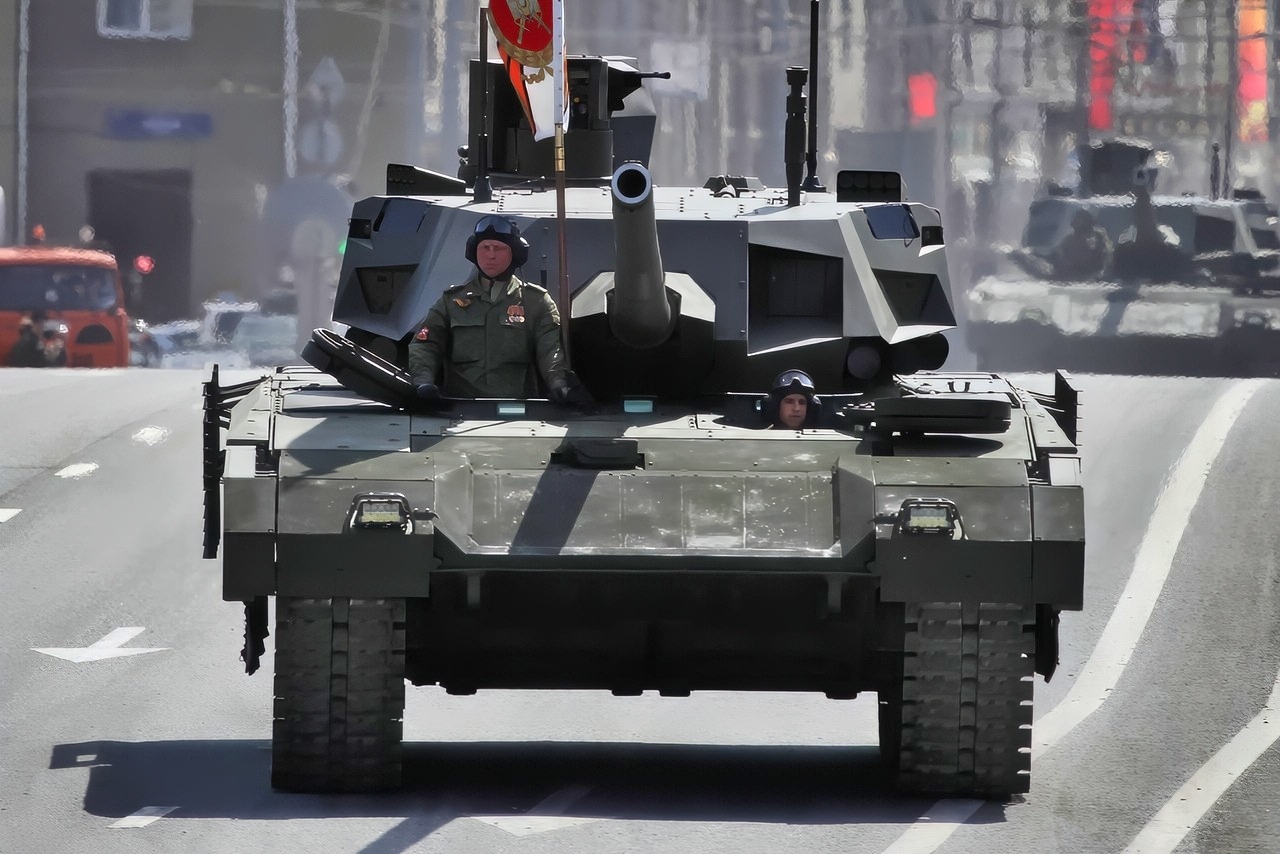
T-14 Armata Tank from Russia. Image Credit: Creative Commons.
The Harvard report card recently flagged a methodological wrinkle that belongs in any honest accounting: Oryx revised some totals downward this spring without a published explanation, and careful aggregators withheld the updated figures pending clarification.
The episode cuts in the project’s favor — a count that gets audited and corrected is worth more than one that only climbs — and the corrected floor remains above 14,000 armored hulls. Russian industry offsets some of the bleeding, with production and refurbishment claims of more than a thousand tanks per year, but the storage yards that feed the refurbishment lines are visibly emptying in satellite imagery, and the trade of modern armor for museum stock has run in only one direction.
Artillery, Air Defense, And The Arsenal That Fed The War
The same General Staff accounting puts Russian artillery losses at 41,712 systems, along with 1,780 multiple-launch rocket systems and 1,371 air-defense systems. The claims tier deserves its usual discount, and the artillery figure in particular outruns photographic confirmation by a wide margin.
Nonetheless, the direction is corroborated by the battlefield itself: the gun duels of 2022 and 2023, in which Russian batteries fired tens of thousands of shells daily, gave way to a drone-dominated front precisely because both sides’ tube artillery was ground down and Russia’s barrel production could not keep pace.
The air-defense losses carry a different significance, since every S-300 and S-400 battery destroyed in Ukraine or in the deep-strike campaign against Russian territory is a system not defending Moscow, a fact the past year’s drone penetrations of Leningrad and the capital region have made plain.
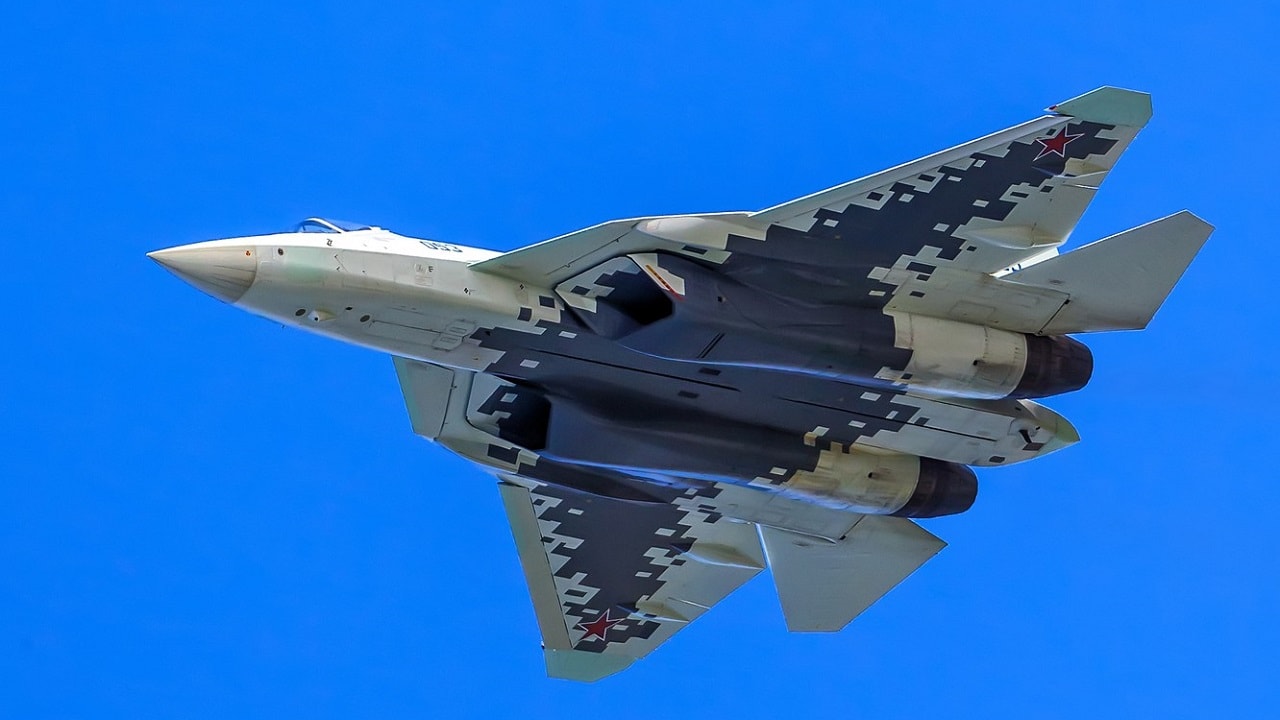
Su-57 Felon from Russian Air Force. Image Credit: Creative Commons.
Aircraft: Operation Spiderweb And A Third Of The Bomber Fleet
The air ledger was transformed in a single morning. On June 1 of last year, Ukraine’s SBU launched 117 truck-smuggled drones against four Russian air bases in Operation Spiderweb, claiming 41 aircraft destroyed or damaged for roughly $7 billion, including Tu-95 and Tu-22M3 bombers, Tu-160s, and A-50 radar aircraft, with satellite imagery independently confirming 13 destroyed airframes at the Belaya and Olenya bases and NATO assessing the strike disabled about a third of Russia’s strategic aviation.
The claims-versus-confirmation discipline applies here too: Ukraine’s own General Staff initially logged 12 aircraft in its daily count while the SBU claimed 41, a spread that says the truth sits between the satellite floor and the agency ceiling. The analysis is brutal at any number in that range, because the bombers are irreplaceable — Soviet-era platforms no longer in production, with no realistic path to restoration. A fleet that mattered to Russia’s nuclear signaling and its cruise-missile terror campaign against Ukrainian cities shrank by something between a tenth and a third in one day, permanently.
Across the wider war, Ukraine claims hundreds of additional fixed-wing aircraft and helicopters, with Oryx confirming a substantial fraction. The pattern repeats from the armor ledger: the floor alone represents the worst attrition any major air force has suffered since the mid-twentieth century.
The Black Sea Fleet: From The Moskva To Exile In Novorossiysk
The naval chapter is the cleanest of all, because warships sink in public. The cruiser Moskva, flagship of the Black Sea Fleet, went down in April 2022 after Ukrainian Neptune missiles struck her off Odesa, the largest warship lost in combat in four decades. What followed was stranger: a country whose navy amounted to a handful of old patrol boats used sea drones and missiles to sink or damage a substantial share of the fleet and drive the survivors out of Sevastopol entirely, relocating eastward to Novorossiysk and abandoning the blockade mission that was the fleet’s reason for existing.
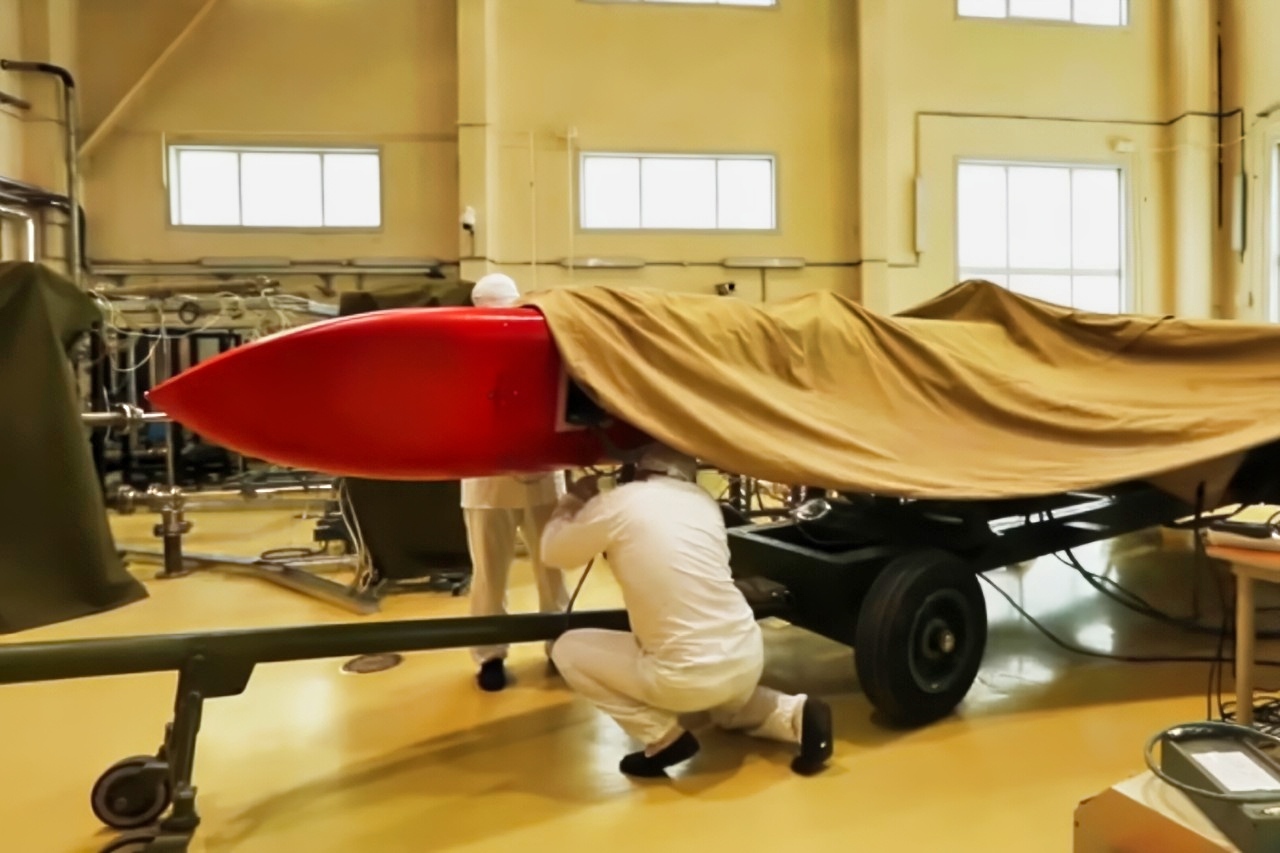
Skyfall Missile Russian Flying Chernobyl. Russian Government/Screenshot.
This spring’s strike on a corvette in dry dock at Kronstadt, in the Gulf of Finland, extended the reach of that campaign to Russia’s second fleet. Russia began this war with naval mastery of the Black Sea and now exercises sea control over little beyond its own harbors.
Ukraine’s Losses And The Regeneration Question
An honest ledger includes the other column. CSIS assessed in January that Ukraine suffered 500,000 to 600,000 casualties through December 2025, including 100,000 to 140,000 killed, and that Russian losses run roughly two to two and a half times Ukraine’s. Those are catastrophic numbers for a nation a quarter the size of Russia, and they explain Kyiv’s manpower crisis as fully as the Russian figures explain Moscow’s recruitment economics.
Furthermore, Russia regenerates: monthly contract recruitment in the tens of thousands, the prison pipeline, North Korean formations, and a defense industry running on war footing have so far replaced men and machines fast enough to keep the offensives coming. Losses of this scale have degraded the Russian army’s quality, gutted its junior officer corps, and stripped its modern equipment, yet they have not broken it, and any analysis claiming imminent collapse has been wrong for four consecutive years.
What A Million Casualties Bought
The final column in the ledger is territory, and it is the shortest. Four years of war, more than a million casualties by every serious estimate, the named graves of 200,000 men, 14,000 confirmed armored vehicles, a third of the strategic bomber fleet, and the flagship of the Black Sea Fleet have purchased Russia roughly a fifth of Ukraine — much of it rubble, none of it secure, and all of it costing more each month to hold than it returns.
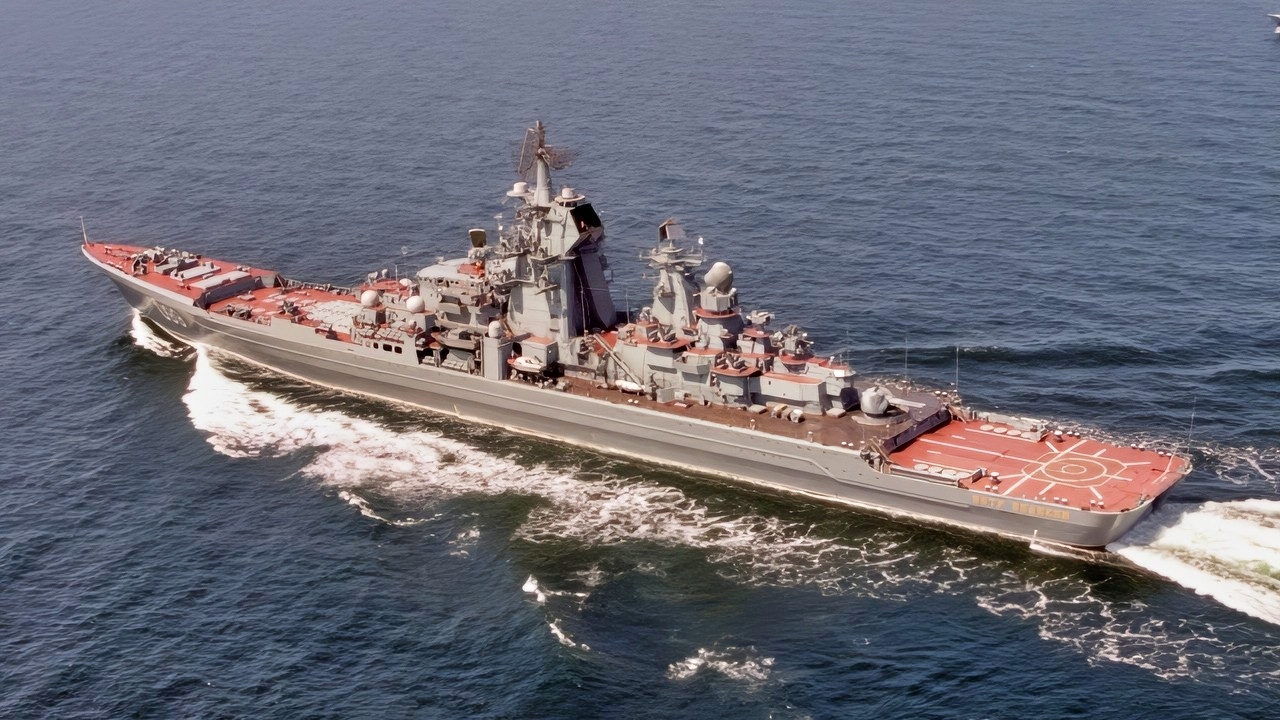
Russian Navy Kirov-Class. Image Credit: Creative Commons.
About the Author: Harry J. Kazianis
Harry J. Kazianis (@Grecianformula) was the former Senior Director of National Security Affairs at the Center for the National Interest (CFTNI), a foreign policy think tank founded by Richard Nixon based in Washington, DC. Harry has over a decade of experience in think tanks and national security publishing. His ideas have been published in the NY Times, The Washington Post, The Wall Street Journal, CNN, and many other outlets worldwide. He has held positions at CSIS, the Heritage Foundation, the University of Nottingham, and several other institutions related to national security research and studies. He is the former Executive Editor of the National Interest and the Diplomat. He holds a Master’s degree focusing on international affairs from Harvard University.


Swamplaw Yankee
June 11, 2026 at 1:32 pm
Nothing was “purchased”! The independent Ukraine of 2014 was betrayed by the 2014 POTUS Obama covert, unilateral “GREEN” light facilitation of the Balkanization of independent Ukraine. Ad rem: Obama betrayed the WEST.
Own that 100% in 2026 MAGA POTUS Trump elite brain space!