

The framework taking shape this week fixes the crisis that the war itself produced. It does almost nothing about the three problems Washington had with Iran before any of this started.
That distinction is getting lost in the relief. Oil is cheaper. The Strait of Hormuz is supposed to reopen. The Lebanon front is supposed to go quiet. Markets like all of that, and they should — a closed strait was costing the global economy real money every day it stayed shut. But “the war is over” and “the Iran problem is solved” are different claims, and the gap between them is where the next two years of policy toward Tehran will be decided.
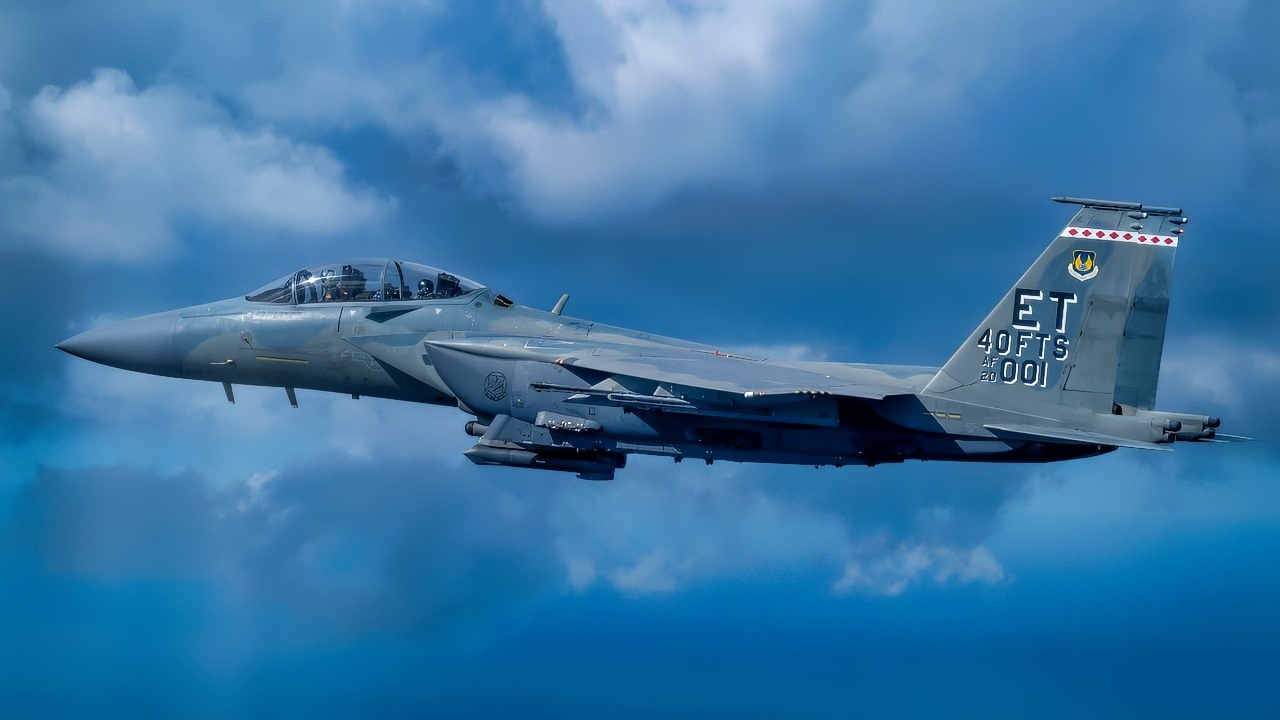
A U.S. Air Force F-15EX Eagle II fighter jet assigned to Eglin Air Force Base, Florida, flies near Jacksonville, Florida, Nov. 2, 2024. Airmen from the 40th Flight Test Squadron and 96th Aircraft Maintenance Unit supported a flyover for the annual Florida-Georgia college football game. (U.S. Air Force photo by Staff Sgt. Blake Wiles)
The War Added a Fourth Problem
Before the war, Washington was already dealing with Iran on three separate tracks. The nuclear program took up most of the oxygen, partly because enrichment levels, inspections, and stockpiles gave negotiators something concrete to argue over, which is what the JCPOA did in 2015. The missile program was the harder one, and the 2015 deal mostly left it alone — it lets Iran put Gulf bases, Israel, and the shipping lanes at risk without ever building a nuclear warhead. And then there were the proxies: Hezbollah, the militias in Iraq, the Houthis, a network that lets Tehran lean on its neighbors and on shipping while keeping its own fingerprints off whatever happens.
Then came the war, and it added a fourth.
Once the campaign turned into open conflict, Iran’s ability to threaten Hormuz stopped being a regional military question and became a global one. Oil prices, shipping insurance, inflation, midterm politics — all of it got pulled into the Iran file in a way it hadn’t been since the tanker wars of the 1980s. The campaign was supposed to reduce Iranian leverage. Instead, it handed Tehran a new kind, one that registered in Washington within days.
So when people call this agreement a solution to “the Iran problem,” what they mean is that it solves this problem — the one the war created. Under the framework, hostilities are supposed to stop everywhere, including Lebanon. The blockade is to lift; Trump moved quickly on that part after the announcement. Hormuz reopens on signing, which Pakistan’s prime minister says is set for June 19.
There’s a 60-day window for talks, though Iran has made it clear that the clock only starts once it has verified that Washington’s commitments are met. Graded purely on “does the immediate crisis end,” that earns a passing grade, if it holds.
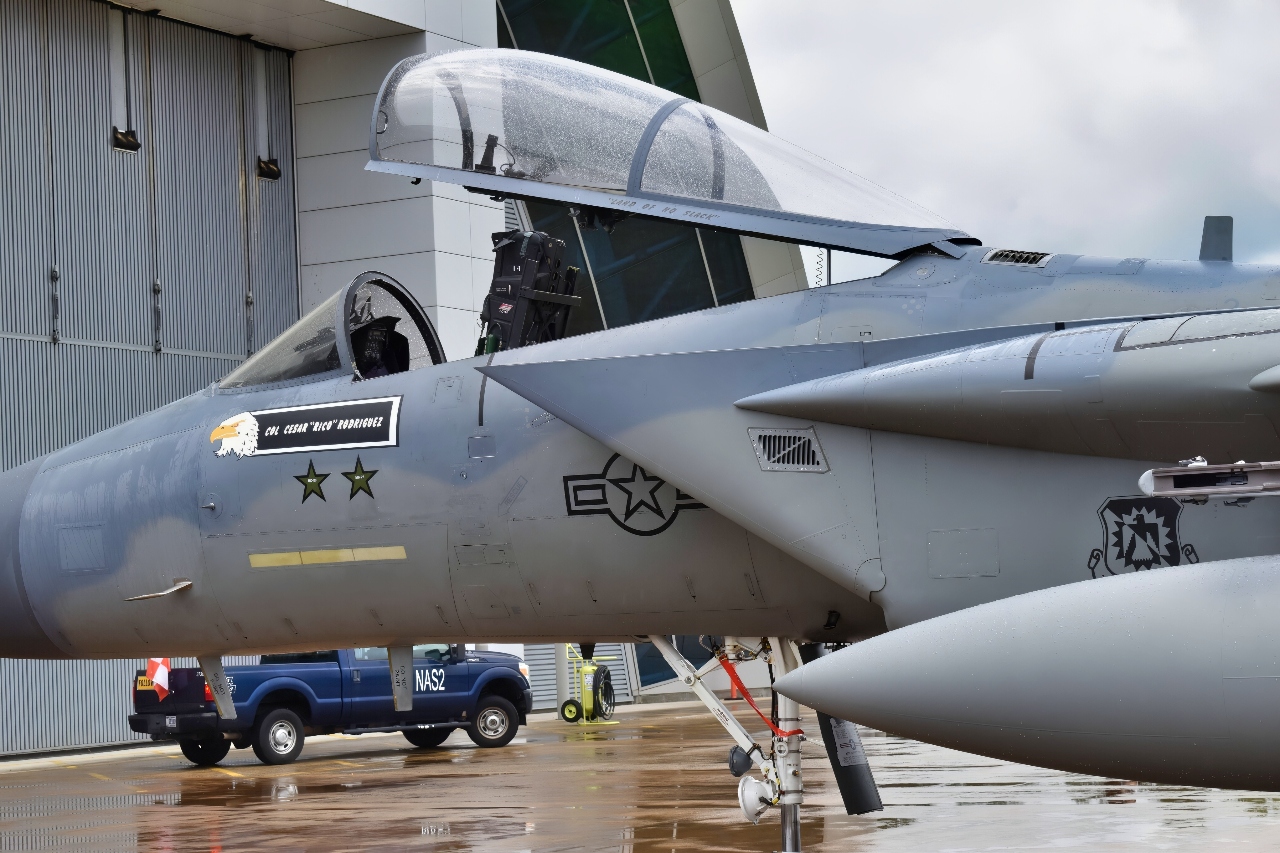
F-15C Fighter at Smithsonian August 13 2025. Image Credit: National Security Journal.
What the Sixty-Day Clock Doesn’t Cover
The nuclear file is not resolved here. It is pushed into the subsequent talks. Sanctions relief, the frozen-assets question — Iranian accounts put the figure in the $24–25 billion range — and the actual disposition of Iran’s enriched stockpile: none of that gets settled by a ceasefire, because ceasefires end fighting, they don’t write arms control agreements.
The missile program sits where it’s been for years, embedded deep enough in Iran’s defense doctrine that no Iranian government has ever bargained it away.
And the proxies, Hezbollah especially, are now tangled up with Israel’s own war aims in Lebanon, where Israel isn’t a signatory and has given no sign it considers itself bound by terms it didn’t negotiate. Israel’s defense minister said this month the country won’t withdraw from the Lebanese territory it holds, and Israeli officials have pressed Washington to keep the asset freeze from going through at all.
None of this makes the deal fake. A ceasefire that holds is nothing, and the people calling this a sellout would have called it one regardless of the terms. But “the war stopped” and “the strategic position changed” are different claims, and right now we only have evidence for the first.
The administration’s case is not absurd. Iran just absorbed months of military pressure and economic damage — there’s a separate, grim story about ordinary Iranians and inflation that deserves its own column — while also discovering it could choke global oil flows hard enough to bring Washington to the table.
If Tehran reads that as “we cannot sustain this,” the sixty-day window becomes the channel through which the war’s pressure translates into real nuclear concessions: verified caps, inspectors with actual access, maybe movement on issues the JCPOA never addressed.
European governments have signaled that their own sanctions relief depends on verifiable limits, which adds pressure that doesn’t run through Washington alone. In that world, the war was brutal and expensive, but it bought something durable.

F-15EX Eagle II. Image Credit: Creative Commons.
What Tehran Is Counting On
Tehran may see the sixty days as something more useful: a way to get money moving before the nuclear file closes.
On this reading, Iran did not capitulate. It endured. It used the one card it had to force a negotiation that stops the bleeding, and now it gets sanctions relief, frozen funds, and time. Time to rebuild what the campaign damaged, restock the proxies, and let the nuclear file drift in talks that can run for months without urgency, because the urgent thing is already over. Iran’s insistence on verifying U.S. compliance before substantive talks even begin only underlines who is setting the pace.
This is the familiar pattern with deals like this. A state under pressure doesn’t always break, and Iran has reason to think this is one of the times it can wait, because keeping the pressure on is something Washington has to pay for week after week, and Tehran does not. Iran doesn’t need a dramatic win — just the shooting stopped, the money flowing, and enough ambiguity downstream that the nuclear and missile questions never get resolved in a way that constrains it. The 1980s ended with Iran’s regional position intact. The 2015 deal left two of three files essentially untouched.
What Actually Matters Now
The signing ceremony will not settle this. Either of these stories can survive a successful signing.
What tells you something is whether Iran actually does anything with its enriched stockpile over the next two months — ships it out, dilutes it, or accepts a cap that an inspector could verify rather than one that sounds good in a statement. Whether the missile program gets mentioned at all, rather than being walled off the way it always has been. Whether Hezbollah’s position in Lebanon is addressed in anything binding, or folded into language so vague that everyone can claim victory. And whether sanctions relief is tied to performance on those things, or front-loaded because that’s what keeps the ceasefire from collapsing in week three.
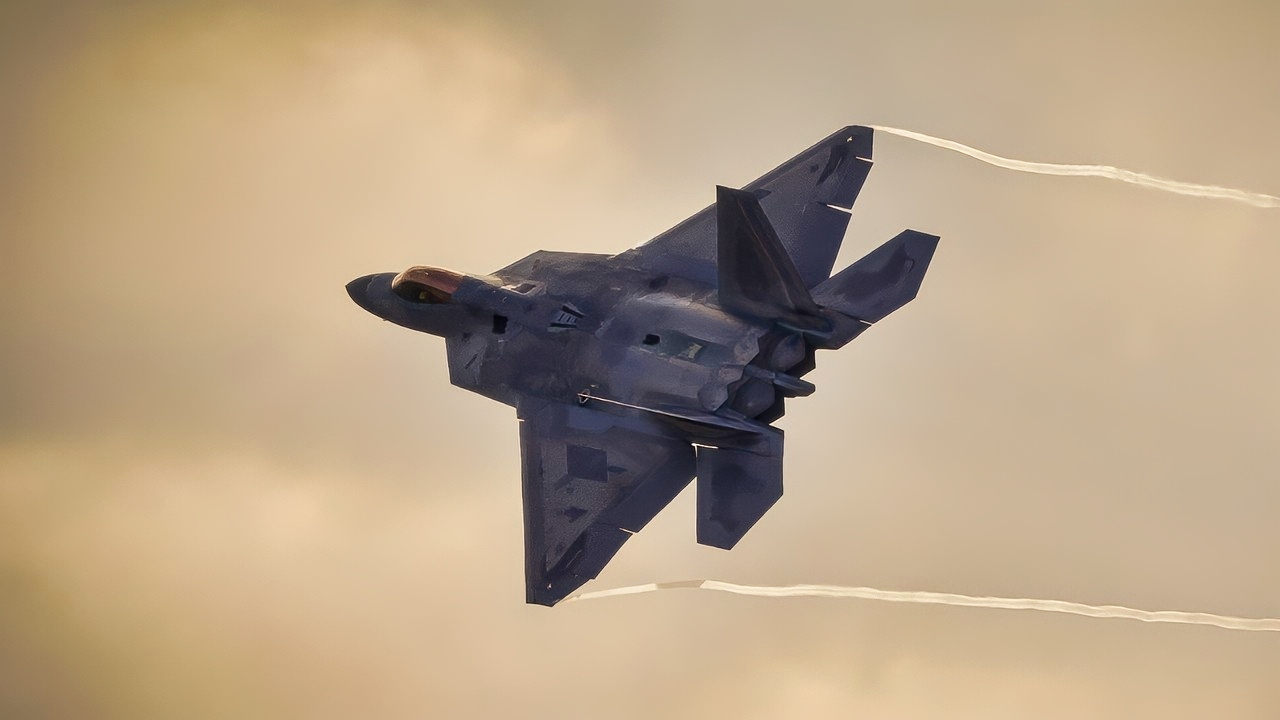
A U.S. Air Force F-22 Raptor assigned to the 90th Fighter Squadron soars over Joint Base Elmendorf-Richardson during ARCTIC EDGE 2025 (AE25), Aug. 18, 2025. AE25 provided Special Operations Command North the opportunity to test a range of capabilities and response options to deter, disrupt, degrade, and deny competitor activity in the Arctic in support of globally integrated layered defense of the homeland. AE25 is a NORAD and U.S. Northern Command-led homeland defense exercise designed to improve readiness, demonstrate capabilities, and enhance Joint and Allied Force interoperability in the Arctic. (U.S. Air Force photo by Airman 1st Class Gracelyn Hess)
That last one matters most. Front-loaded relief isn’t automatically wrong — sometimes you give something to keep a deal alive — but it changes the incentives entirely. If Iran gets the money before giving up anything on the nuclear file, the leverage the war supposedly created has already been spent.
What Iran Walks Away Knowing
None of this argues against the ceasefire. Ending an active war and reopening the Strait of Hormuz is genuinely good, and pretending otherwise to score points would be its own kind of dishonesty.
But it’s worth being honest about what kind of win this is. Trump’s team inherited an Iran problem with three stubborn, decades-old components, started a war that added a fourth and more urgent one, and has now gotten that fourth one mostly off the table. The original three sit roughly where they were before any bombs fell — except Iran has also demonstrated, to itself and everyone watching, that it can threaten a chokepoint through which roughly a fifth of global petroleum liquids consumption moves, and bring a superpower to the table to stop the shooting.
That’s a fact Iran keeps regardless of how the nuclear talks go. The next time Washington wants leverage over Tehran, it’ll be negotiating with a country that just learned exactly how much leverage it already had.
About the Author: Dr. Andrew Latham
Andrew Latham is a professor of international relations and political theory at Macalester College in Saint Paul, MN. You can follow him on X: @aakatham.


