
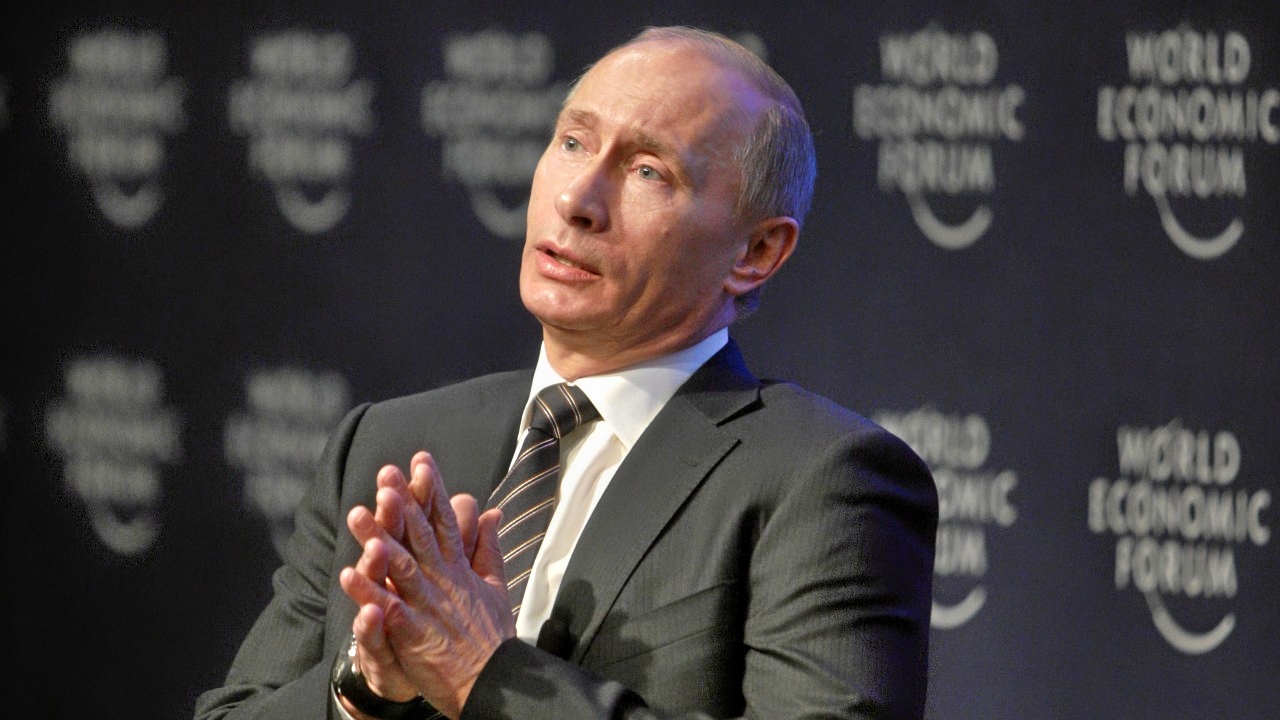
Amid mounting pressure from Ukraine’s long-range strike campaign and threats issued to Belarus over its hosting of Russian military infrastructure, Belarusian leader Alexander Lukashenko and Russian President Vladimir Putin held talks on June 26. The meeting has ignited speculation that the two countries may be preparing to deepen Belarus’ involvement in the conflict.
Putin met with Lukashenko at his Valdai residence in the Novgorod region. The Kremlin confirmed the conversation, announcing that the two leaders discussed everything from economic cooperation and joint projects to “regional security.”

Su-34 Fullback from Russia. Image Credit: Creative Commons.
And while officials on both sides publicly described the meeting as routine, the timing is curious, coming only days after Zelenskyy accused Minsk of allowing Russian forces to use signal relay stations on its territory to guide missile attacks against Ukraine.
Kyiv warned Minsk that the infrastructure should be dismantled, or possibly face military strikes designed to disable it.
What We Know
The Kremlin confirmed that Putin and Lukashenko met at the Russian president’s official residence, but provided few details about exactly what was discussed. Kremlin spokesman Dmitry Peskov said the two leaders discussed trade and security and, before the meeting, told Russian state media there would be no documents signed and no public press conference afterward.
It was the lack of a public readout that immediately drew attention to the meeting, given that it took place just as Belarus is being pressured to distance itself from Russia.
Russian and Belarusian media reports later confirmed that the discussions continued into Saturday – news that raised even more questions about the purpose of the meeting. The second meeting reportedly included additional officials from both countries.
At this stage, military cooperation is widely believed to have been the topic of discussion. That being said, the two leaders still meet relatively frequently within the Russia-Belarus Union State, a supranational organization aimed at integrating the two nations.
Zelenskyy’s Threat
Speaking at a joint press conference with Honduran President Nasry Asfura in Kyiv on June 19, Zelenskyy accused Minsk of allowing Russian forces to use signal relay stations located on Belarusian territory to assist with drone and missile attacks against Ukraine. Zelenskyy also said that Ukraine had repeatedly raised the issue with Minsk through military and intelligence channels before making the warning public.
He claimed that at least four relay stations were operating in Belarus, and warned Lukashenko that if they were not disabled within seven days, the Ukrainian military would take action.
“Belarus still has time to dismantle this equipment. We also know about every factory in Belarus that works for Russia and supports the war,” Zelenskyy said.
“If he doesn’t do it, we’ll do it,” he continued.
Zelenskyy also accused Belarus of helping Russia to sustain the war effort through fuel exports, and urged the Belarusian leader to stop supplying petroleum products to the Russian military.
The ultimatum was later condemned by the Kremlin and described as an attack on Belarusian sovereignty, with Peskov describing the comments as “nothing more than an attempt to further incite the war and escalate tensions.”
How Belarus Responded
Belarus did not publicly announce it had dismantled the relay stations, but on June 25, Zelenskyy said Ukrainian intelligence had determined they were no longer functioning.
Curiously, the Ukrainian president stopped short of claiming that they had been removed.
The claim has not been independently verified.
Lukashenko also sought to de-escalate tensions, but warned Kyiv against taking any military action in Belarusian territory.
The Belarusian leader also said that he had recently met with representatives of the Ukrainian leader, and that he told them continued threats would change the nature of the war.
What Lukashenko Said
During a televised meeting, Lukashenko described his comments.
“Guys, tell your president that if he thinks he can speak to us like that and try to drag us into the conflict, then the nature of the war will change instantly. This war will be completely different,” he said.
Despite Zelenskyy saying that the relay stations had ceased operating, he warned that Belarus was still expanding its military infrastructure near the Ukrainian border.
Zelenskyy said that Belarus is expanding road infrastructure and building ammunition storage sites and fuel depots that have no purpose “other than military.” The developments could suggest that Minsk has sought to mitigate tensions by addressing Kyiv’s immediate concern while also continuing to deepen its military cooperation with Moscow – and that may well have been the topic of discussion in Novgorod.
A Balancing Act
Lukashenko is in a difficult position. Since the Russian invasion began, he has allowed Moscow to use Belarusian territory and airspace, but he has repeatedly insisted that Belarusian troops would not enter the war unless the country itself is attacked.
It has long been reported that Putin wanted even greater military support from Belarus, even from the early days of the conflict – and now, with Ukrainian long-range strikes inflicting major damage across the country, Putin may be expecting the Belarusian leader to commit to doing more.
About the Author: Jack Buckby
Jack Buckby is a British researcher and analyst specializing in defense and national security, based in New York. His work focuses on military capability, procurement, and strategic competition, producing and editing analysis for policy and defense audiences. He brings extensive editorial experience, with a career output spanning over 1,000 articles at 19FortyFive and National Security Journal, and has previously authored books and papers on extremism and deradicalization.


