

Iran Just Needs to Outlast the SPR: Each additional week of danger in the Strait of Hormuz pushes Washington closer to a decision this administration doesn’t want to make. Not whether to keep fighting, but whether to fight harder, faster, and with fewer restraints, before the domestic cost of the war becomes impossible to hide.
The Strategic Petroleum Reserve (SPR) is why that decision hasn’t arrived yet. Since the war began at the end of February, the United States has drained almost 99 million barrels from the reserve. As of July 10, it stood at 316.5 million barrels, the lowest level since April 1983, part of a 172-million-barrel American commitment inside a record 400-million-barrel release coordinated with the International Energy Agency. Those barrels have done real work. They are also running out, and their disappearance may not produce the caution most observers assume.
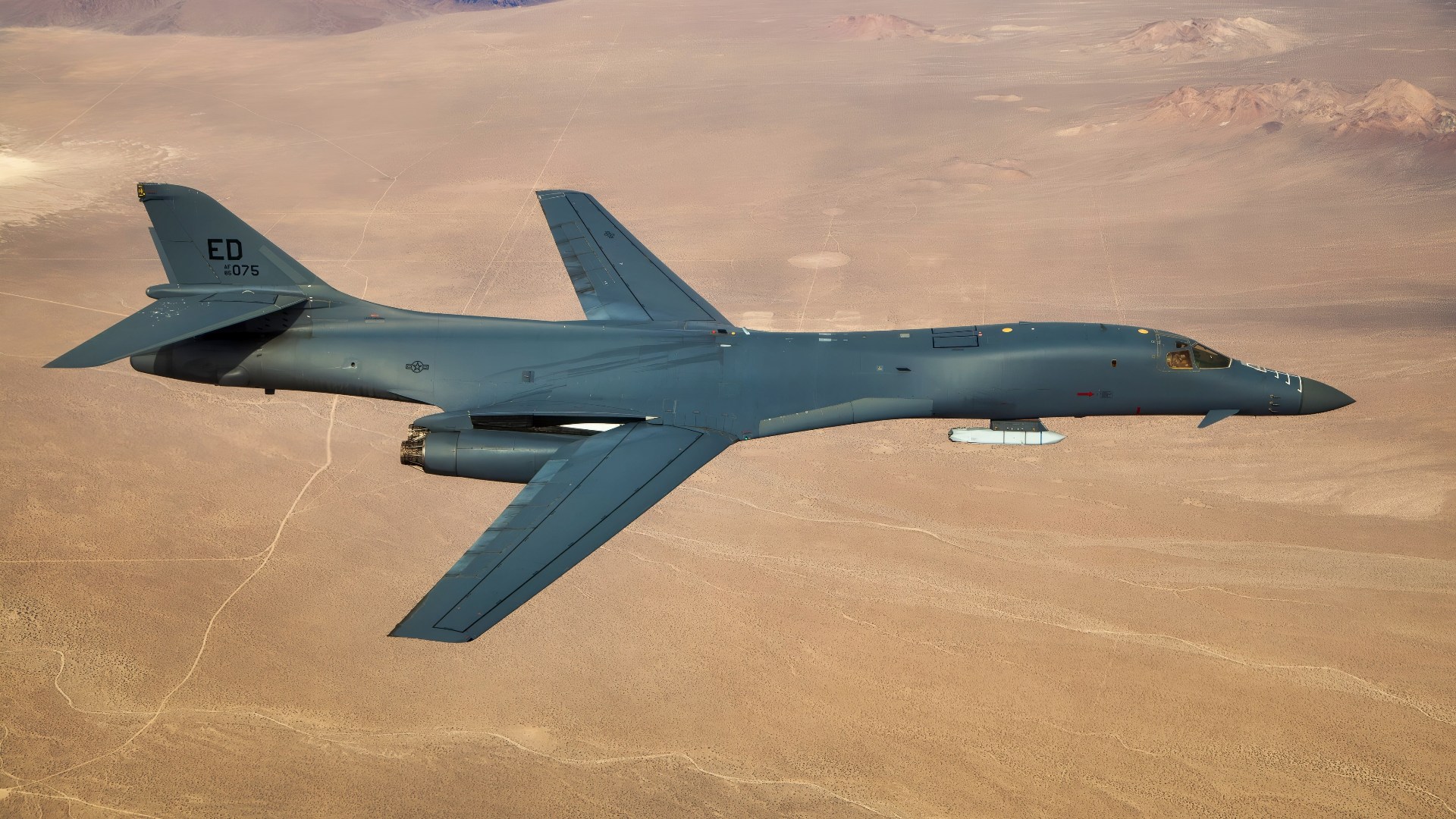
A B-1B Lancer with a Joint Air-to-Surface Standoff Missile (JASSM) flies in the skies above Edwards Air Force Base, California, Nov. 20. The flight was a demonstration of the B-1B’s external weapons carriage capabilities. (Air Force photo by Ethan Wagner)

B-1B Lancer. Image Credit: Creative Commons.
A Bridge, Not a Fix
The SPR was never built to replace the roughly 20 million barrels a day that used to move through Hormuz before the war, about a fifth of the oil the planet consumes.
At its current level, the entire reserve is equivalent to only about sixteen days of that prewar flow. What it does instead is soften the shock. It steadies refinery supply and tells traders that Washington has room to absorb a disruption without panic. That buys the war political room. Every Iranian strike on a tanker doesn’t have to show up at the pump the next morning.
But a bridge only works if something is waiting on the other side: reopened shipping, new production, a settlement. Washington is using up that bridge while the fight over who controls Hormuz remains unresolved, and that gets harder to sustain as the cushion thins.
Tehran Isn’t Trying to Win a Naval War
Iran cannot contest American air power, and it cannot win a prolonged naval engagement against the Fifth Fleet. Tehran’s military leadership knows this. What it can do is make the waterway unpredictable enough that shipowners and insurers start making their own decisions about whether the risk is worth it. By July 13, tanker traffic through the strait had fallen to a two-month low, and Kpler’s tracking showed crossings down by more than half from the previous week alone, likely an undercount given how many vessels are now running dark.
That’s the strategy: not defeating the Navy, but outlasting Washington’s tolerance for a war whose costs keep showing up at the pump. Iran doesn’t need to close the Strait of Hormuz. It needs to make Hormuz expensive enough and for long enough that the SPR can’t paper over the difference.
It would be convenient if this were arithmetic: divide the inventory by the weekly drawdown rate and get a date certain when Washington runs dry. It isn’t that simple.
The reserve still holds hundreds of millions of barrels, and the Department of Energy’s maximum drawdown rate is 4.4 million barrels a day, so physical exhaustion is far off. Most of the oil being released is structured as an exchange, meaning companies borrow it and return it later with a premium, so the reserve is contractually set to refill even as the war keeps draining it now. None of that is the constraint that matters.
What matters is confidence. The SPR loses its stabilizing power once traders stop believing releases can keep pace with a prolonged disruption, and that moment arrives well before the caverns are empty. Nor is every barrel equally available at the speed markets may require: aging infrastructure and repeated drawdowns have reduced the system’s practical throughput. The relevant limit isn’t zero barrels. It’s the point where another release stops calming the market.
The Part Everyone Gets Backward
The comfortable assumption in Washington is that a shrinking reserve will eventually force restraint on the administration, that scarcity disciplines policy. It’s a reasonable instinct. It may also be exactly wrong.
As long as the SPR continues to cushion the price signal, the administration can tolerate a long, indecisive campaign without paying much of a political price. Once the cushion weakens, the options narrow, and none are comfortable: accept restricted traffic and higher prices heading into the midterms, negotiate some acknowledged Iranian role around the strait, or escalate hard enough to settle the question by force before the bill comes due.
Trump Is Already Choosing the Third Option
The past few days confirm where this is heading. The Islamabad Memorandum agreed in mid-June didn’t hold. Iran fired a warning shot at a commercial vessel on July 11 and declared the strait closed until further notice. The U.S. struck multiple Iranian sites; Iran retaliated against targets in Jordan, Qatar, Kuwait, and Oman, and the UAE reported missile fire too.
On July 13, Trump announced the reimposition of a naval blockade on Iranian shipping and a 20 percent toll on cargo transiting the strait in exchange for American protection, an idea Secretary of State Marco Rubio had ruled out less than three weeks earlier. Brent crude jumped 9.6 percent that day to a one-month high. This is not an administration edging toward restraint as its cushion erodes. It is one reaching for a bigger hammer, and Washington’s actual interest here, commercial passage through Hormuz without an Iranian permit system, is getting harder to distinguish from a demand for Iranian surrender.
The Dangerous Moment Isn’t the Last Barrel
The instinct to assume that a dwindling reserve disciplines a war gets the mechanism the wrong way around. The most dangerous point in this conflict may not be the day the SPR runs dry. It may come much earlier, while the reserve still holds plenty of oil but has lost enough credibility that markets start passing every disruption straight to the pump, and an administration that has spent months insisting it controls Hormuz decides the only way to prove it is to escalate.
Iran was never going to outfight the United States. It only has to keep Washington believing a wider war is the fastest way out of this one.
About the Author: Dr. Andrew Latham
Andrew Latham is a professor of international relations and political theory at Macalester College in Saint Paul, MN. You can follow him on X: @aakatham.


