

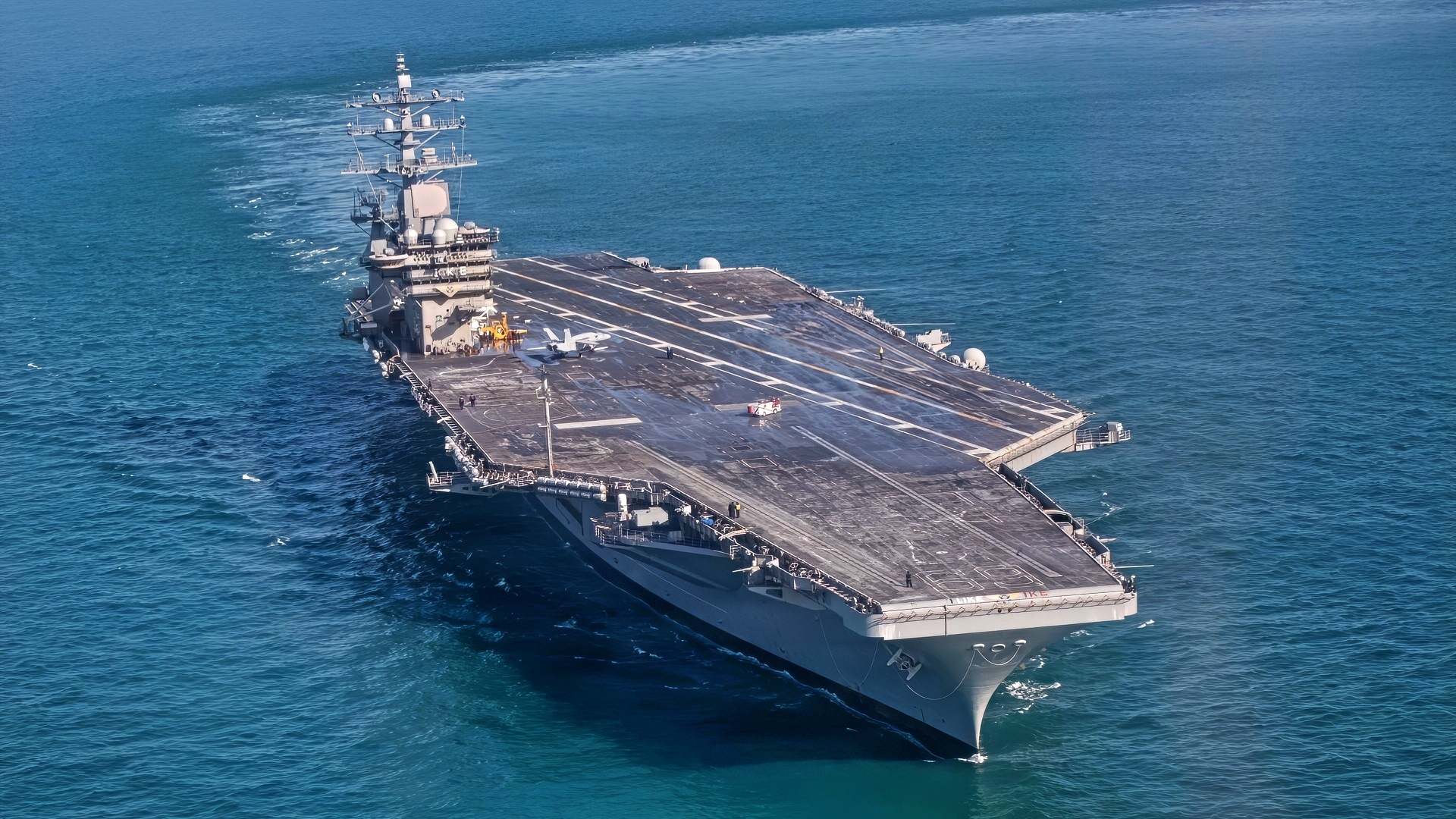
In 1981, an $80 million Canadian diesel-electric submarine quietly snuck through the screen of destroyers, cruisers, and air patrols protecting the USS Dwight D. Eisenhower—and “sank” the $5.6 billion American supercarrier in a NATO exercise. Running on batteries, blending into the natural sounds of the ocean, the Royal Canadian Navy’s Oberon-class boat scored one of the most embarrassing simulated kills in modern naval history.
How Canada Sank a Navy Aircraft Carrier in a Drill
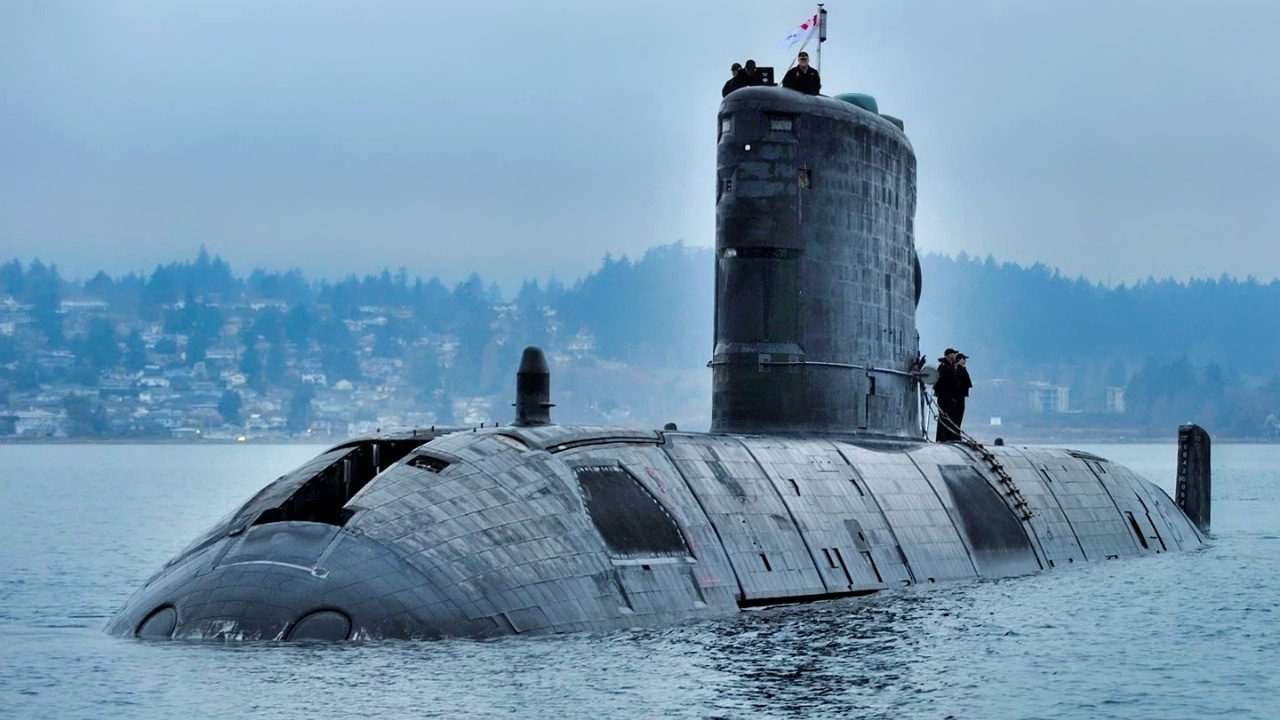
Victoria-Class Submarine Canada Navy. Image Credit: Creative Commons.
The submarine program of the Royal Canadian Navy (RCN; “Marine royale canadienne [MRC]” in French) is in dire straits, “underwate undesirable metaphorical sense as opposed to the desirable literal sense. To make matters worse, this situation has gotten lost in the shuffle of tr” in thehe ever-deteriorating state of Canada’s relations with the United States, typically framed in the context of the ongoing drama of whether Canada is going to continue purchasing the F-35. (There’s also the small matter of Canada courting America’s biggest adversary, the People’s Republic of China.) But back “in happier times” for Canada’s submarine force, they scored some prideful bragging rights points in the Can-Am rivalry: one of their (comparatively”) “cheap” $80,000,000.00 diesel-electric submarines “sank” (simulated in a training exercise, of course) a $5,500,000,000.00 U.S. Navy supercarrier, i.e., a nuclear-powered aircraft carrier (aka “flattop”).
Profile of the Hunter: Oberon-Class Submarine
The “cheap” diesel-electric submarine in question was a British-made Oberon-class boat.
Designated as successors to the Porpoise-class subs, a total of 27 of these warships were built between 1957 and 1978, with the labor spread out across four shipyards: Cammell Laird (four hulls), Chatham Dockyard (six hulls), Scotts Shipbuilding and Engineering Company (11 hulls) and Vickers-Armstrongs (six hulls).
13 of them were acquired by Great Britain’s Royal Navy, six by the Royal Australian Navy, six by the Brazilian Navy (Marinha do Brasil), two by the Chilean Navy (Armada de Chile), and three by the RCN/MRC (plus two ex-Brit boats later acquired for non-commissioned roles).
The three commissioned Canadian Oberons were the HMCS (as in Her Majesty’s Canadian Ship) Ojibwa, Onondaga, and Okanagan, all renamed for First Nations tribes, i.e., the indigenous peoples of Canada.
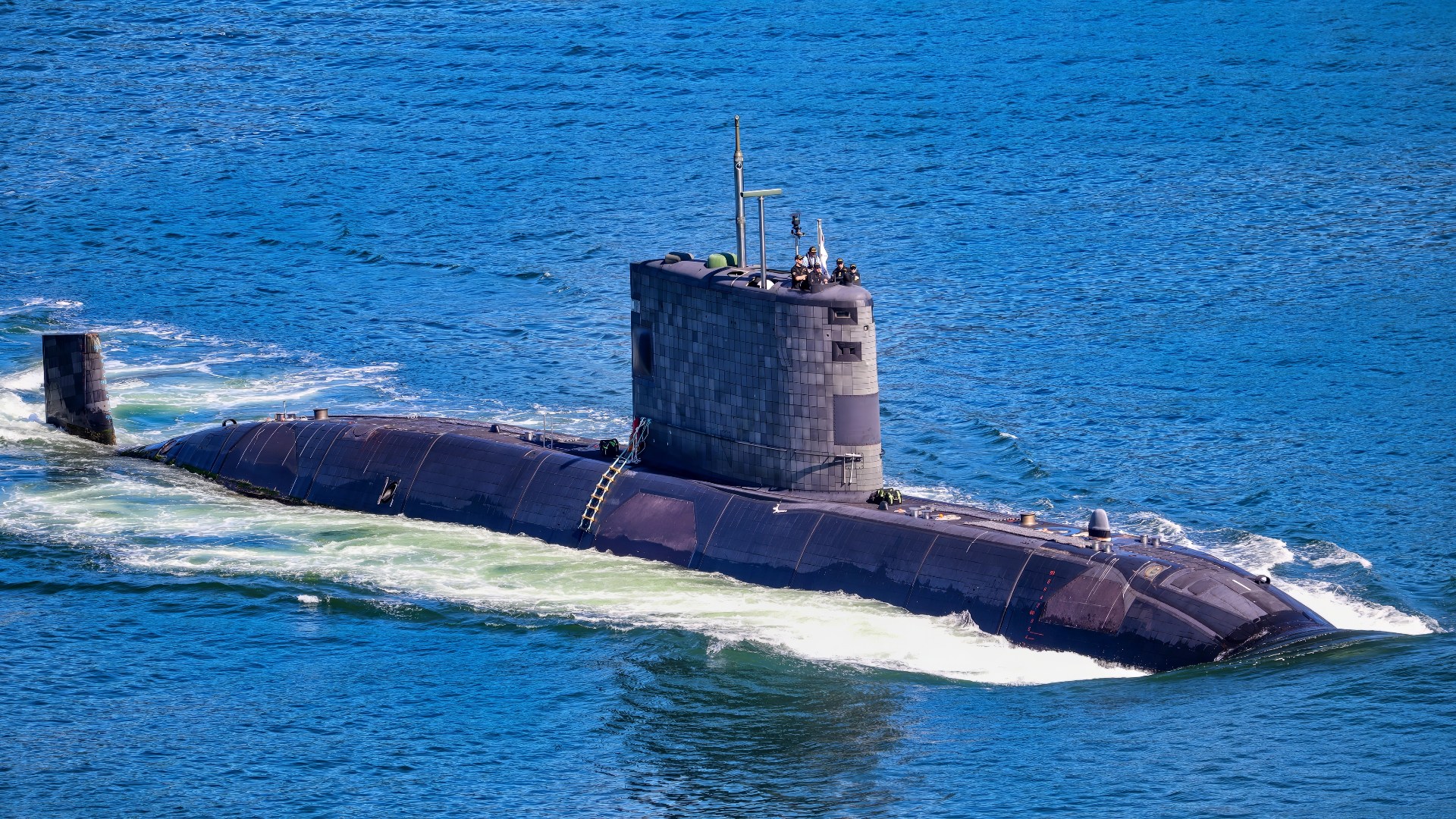
Victoria-Class Submarine of Canada
(As a bit of gee-whiz trivia, Okanagan is also the name of a lake that is allegedly home to Ogopogo, the North American continent’s equivalent of Scotland’s legendary Loch Ness Monster.)
Meanwhile, the non-commissioned boats were the Olympus (acquired as a stationary training vessel) and the Osiris (acquired for cannibalization in a spare parts deal between the United Kingdom and Canada.
The Oberon-class subs had a submerged displacement of 2,410 tons, a hull length of 295.2 feet (90.0 meters), a propulsion source consisting of two Admiralty Standard Range V16 diesels (generating 1,840 hp) that gave the ships a max submerged speed of 17 knots, a crew complement of 7 commissioned officers + 62 enlisted sailors, a test depth of 650 feet (200 meters), and an armament package consisting of six 21-inch (533.4 mm) bow tubes containing 20 torpedoes and two more such tubes in the stern packing two torpedoes.
Profile of the Hunted: USS Dwight D. Eisenhower (CVN-69) Aircraft Carrier
CVN-69 was the second ship of the Nimitz-class. Named after the famous WWII Army five-star general (Army-Navy rivalries notwithstanding) and 34th President of the United States from 1953 to 1961 (known as “Ike” to his friends, family, and colleagues), she was authorized by Congress in fiscal year 1970, laid down on August 15 of that same year, sponsored & christened at 11:11 a.m., October 11, 1975, by Mamie Doud-Eisenhower (Ike’s widow), and commissioned October 18, 1977, under the command of Capt. William E. Ramsey.
The mighty vessel embarked upon her first Mediterranean Sea deployment in 1978.
The ship cost $679 million to build back then, which equates to $5.6 billion in 2025 dollars when adjusted for inflation.

ATLANTIC OCEAN (June 14, 2011) The Nimitz-class aircraft carrier USS Dwight
D. Eisenhower (CVN 69) conducts rudder turns during sea trials. Dwight
D. Eisenhower completed a nine-month planned incremental availability at Norfolk Naval Ship Yard on June 10 and is scheduled to resume underway operations this summer. (U.S. Navy photo by Mass Communication Specialist 1st Class Christopher Stoltz/Released)
Since then, CVN-69 has participated in multiple U.S. military operations that would’ve done her namesake proud, from Operation Desert Storm (the 1991 Persian Gulf War) to Operation Enduring Freedom (the Afghanistan War) to Operation Iraqi Freedom (the 2003 Iraq War and “sequel” [as it were] to Desert Storm) to Operation Inherent Resolve (the war against the Islamic State/ISIS/ISIL/Da’esh terrorist group).
The “Mighty Ike” (the ship, that is, not the long-deceased flesh & blood human being) displaces 100,000 tons fully laden, has a hull length of 1,092 feet (332.8 meters), is powered by two Westinghouse A4W nuclear reactors generating 260,000 shp, a top speed of 30+ knots, an endurance limited only by crew provisions, a crew of a whopping 3,500 commissioned officers and enlisted seamen in the ship’s company plus 2,480 in the air wing (these supercarriers are known as “floating cities” for good reason), and last but not least, an aircraft carrying capacity of 90 fixed-wing and rotary-wing assets.
In short, a pretty major disparity in size & power between the Nimitz-class carriers and Oberon-class subs (to say the least).
The 5Ws/1H: Who/When/Where/When/Where/Why/How It All Went Down
From the various sources consulted in researching this article, we have not been able to glean the specific Oberon-class boat that the RCN used in the incident.
We do know that the incident occurred in 1981 during Ocean Venture, a joint naval exercise in the Atlantic Ocean conducted by NATO and other Western allies. “Mighty Ike” was protected by a screen of destroyers, cruisers, and submarines, along with air support from carrier-based aircraft, and her group was tasked with detecting and neutralizing threats before they could reach the carrier.
Radar systems monitored the skies whilst underwater sensors scanned beneath the waves.
A seemingly impenetrable barrier…at least on paper.
However, this seemingly insurmountable challenge didn’t deter the daring and intrepid RCN submarine crew.
As described in a summation by Arezki Amiri of Indian Defence Review in a March 7, 2026, article appropriately titled “’David vs. Goliath’: A $5.5 Billion U.S. Nuclear-Powered Aircraft Carrier Was ‘Sunk’ by a Tiny $80 Million Diesel Submarine:
“By remaining submerged and minimizing mechanical noise, the submarine gradually moved closer to the defensive perimeter. Careful maneuvering allowed the vessel to remain hidden within the natural background sounds of the ocean…During the NATO scenario, the submarine eventually reached a location where its torpedoes could theoretically target the aircraft carrier. According to reporting summarized by defense analysts, the attack position met the criteria for a successful strike. Within the exercise simulation, the USS Dwight D. Eisenhower was declared destroyed.”
Er, oops.
The Canadian sub was operating on battery power at the time.
This simulation was one of several that served as a painful lesson to the U.S. Navy that even seemingly antiquated diesel-electric submarines, when manned by a skilled and determined crew, remain one of the most credible and persistent threats to American carrier dominance.
As the saying goes, “It’s not the size of the dog in the fight, it’s the size of the fight in the dog.” In this instance, score one for the salty sea dogs of the Royal Canadian Navy.
As for the precedent of real-world combat, remember that back in World War II, the world’s very first supercarrier (albeit a non-nuclear one), the Imperial Japanese Navy’s Shinano, was sunk by the submarine USS Archerfish, skippered by Capt. Joseph F. Enright.
Where Are They Now?
HMCS Onondaga and HMCS Ojibwa have been preserved for posterity as floating museums, with the former in Rimouski, Quebec, and the latter in Port Burwell, Ontario. The rest were sent to the scrapyard.
Meanwhile, USS Dwight D. Eisenhower remains very much in service (the embarrassment of that simulated sinking notwithstanding). She currently serves as the flagship for Commander, Carrier Strike Group (CCSG) 2.
About the Author: Christian D. Orr
Christian D. Orr is a Senior Defense Editor. He is a former Air Force Security Forces officer, Federal law enforcement officer, and private military contractor (with assignments worked in Iraq, the United Arab Emirates, Kosovo, Japan, Germany, and the Pentagon). Chris holds a B.A. in International Relations from the University of Southern California (USC) and an M.A. in Intelligence Studies (with a concentration in Terrorism Studies) from American Military University (AMU). He is also the author of the book “Five Decades of a Fabulous Firearm: Celebrating the 50th Anniversary of the Beretta 92 Pistol Series,” the second edition of which was recently published.


