


Key Points and Summary – Admiral Kuznetsov was the Soviet answer to U.S. carrier power: a heavy, missile-armed STOBAR carrier meant to project fixed-wing airpower at sea.
-Launched as the Cold War waned, it never reached the reliability its designers imagined.
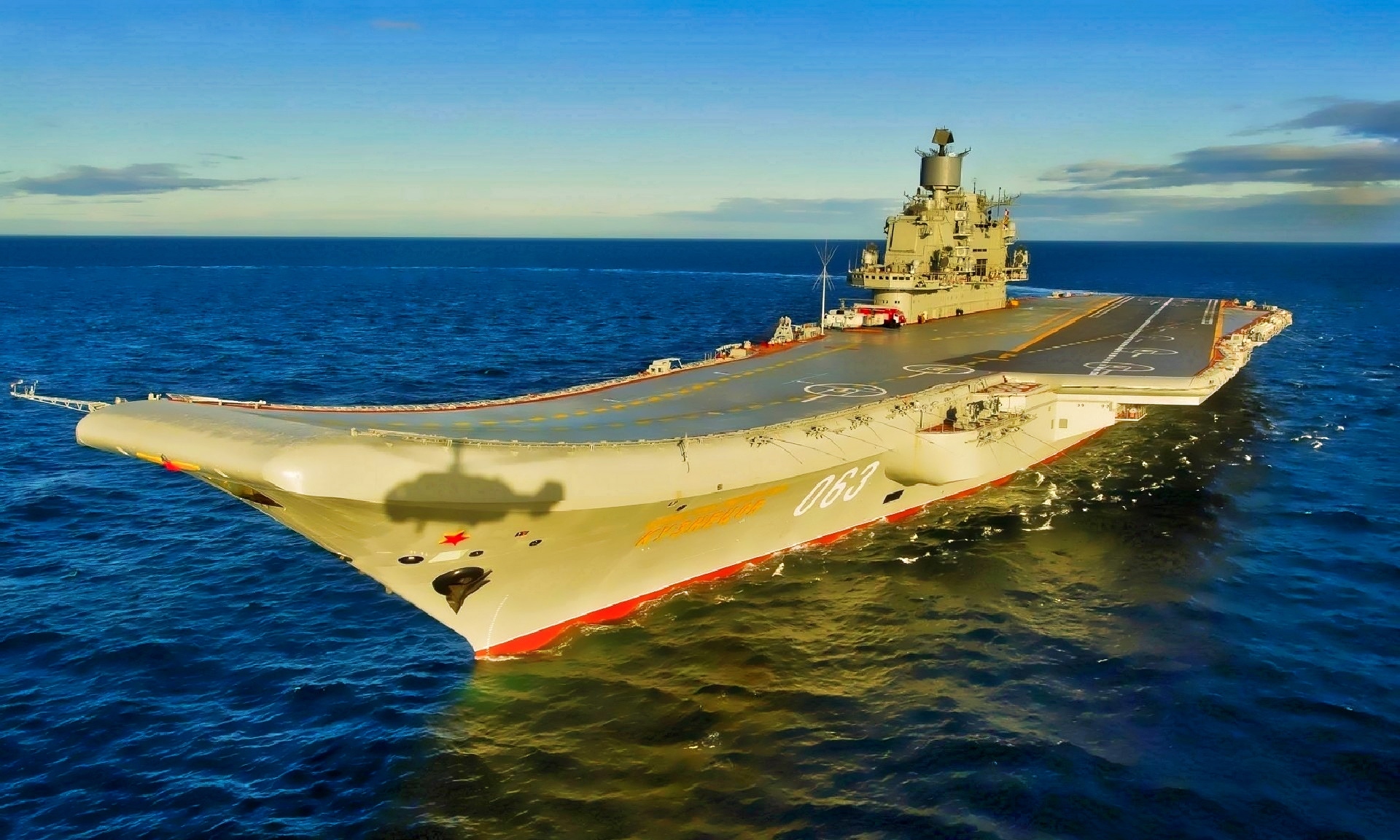
Admiral Kuznetsov Aircraft Carrier. Image Credit: Creative Commons.
-The ship belched black smoke, suffered deck mishaps and headline accidents in refit, yet made one combat cruise off Syria in 2016–17.
-Since 2017 it has languished in a prolonged overhaul marred by fires, a sunken drydock, and spiraling delays.
-In the past few months, Russian state and independent outlets have reported that Moscow may finally scrap the ship.
-Its likely epitaph: ambition outpaced industry and budgets.
Admiral Kuznetsov: From Cold War Ambition To An Uncertain End
During the late Cold War, the Soviet Navy set out to narrow one of the biggest gaps with the U.S. Navy: sustained, long-range sea-based airpower. Submarines and bombers could threaten carriers, but only a carrier air wing could persistently cover fleets, shield surface groups, and influence distant crises. Soviet planners also prized sea denial and bastion defense of SSBN patrol areas in the Barents and Pacific; a carrier with long-legged fighters could extend that protective umbrella and complicate NATO operations.
But Soviet doctrine never cloned the U.S. blueprint. Instead of a pure strike carrier, Moscow pursued a “heavy aircraft-carrying cruiser” concept—marrying a ski-jump flight deck for fighters with ship-mounted heavy anti-ship missiles. In theory, the ship could fight even without its air wing; in practice, this hybrid carried compromises that would define its career.
Research, Design, And The Leap Beyond Kiev
The 1970s Kiev-class ships, with Yak-38 V/STOL jets and heavy missiles, proved the politics and logistics of fixed-wing aviation at sea but lacked the performance NATO fighters could bring. The follow-on design—Project 1143.5—adopted a full-length deck with ski-jump and arrested recoveries (STOBAR), optimized for Su-33 fighters and Ka-27/31 helicopters. Below decks sat launchers for P-700 Granit anti-ship missiles, embodying the cruiser-carrier hybrid in steel.
Built at the Black Sea Shipyard in Mykolaiv, the ship was launched in 1985 as Tbilisi and later renamed Admiral Flota Sovetskogo Soyuza Kuznetsov. By the time she reached the Northern Fleet in the early 1990s, the Soviet Union had dissolved. Budgets shrank; training pipelines thinned; the second hull (Varyag) never joined her—ultimately sold by Ukraine and finished by China as Liaoning. The lone Russian carrier entered service bearing both the promise and the fragility of a vanished industrial base.
Operational Reality: A Hard Ship To Love
Kuznetsov had moments of competence in northern waters and Mediterranean cruises, but the ship was maintenance-hungry and temperamental. Her dated, pressure-fired boilers were notorious for belching black smoke, a visual signature that drew mockery during public transits. On her best days she could put Su-33s aloft and recover them reliably; on bad days she required a salvage tug in company and displayed the fits and starts of a ship whose propulsion, arresting gear, and catapult-less deck conspired to limit launch weights and sortie rates.
The carrier’s sole combat deployment—off Syria in late 2016 to early 2017—captured the contradiction. Russia used the cruise as a strategic message and a live-fire test. The air wing flew strikes, but the ship also lost a MiG-29K and later a Su-33 to recovery mishaps while the task group’s smoky Channel passage became a meme. The deployment proved that Russia could operate fast jets from a carrier in war—but also that it struggled to do so efficiently, safely, or at scale.

Admiral Kuznetsov Aircraft Carrier from Russia. Image Credit: Creative Commons.
The Downward Spiral: Docks, Fires, And Delays
In 2017 the Navy pulled Admiral Kuznetsov for a long-planned overhaul and modernization—new air defenses, overhauled machinery, updated sensors, and a life-extension refit. That plan soon unraveled.
2018 Drydock Disaster. The giant floating drydock PD-50 suddenly sank under the carrier during a power failure; a 70-ton crane crashed onto the flight deck, tearing a large hole and injuring workers. The loss of PD-50 also erased Russia’s primary facility capable of handling a ship of this size, triggering years of rearranged yard plans.
2019 Major Fire. A blaze during welding work killed and injured workers and caused extensive damage; repairs were prolonged and costly.
2022 Fire Again. Another onboard fire, reportedly smaller, still signaled ongoing yard-level safety and systems issues.

Admiral Kuznetsov Russian Aircraft Carrier. Image Credit: Twitter/Screenshot.
Schedules Slipped Right. Announced return-to-sea dates moved from 2021 to 2022, then 2023–24. Each new target slid amid sanctions, workforce churn, and budget choices shaped by the war in Ukraine.
By 2025, even pro-government media were reporting that work had been suspended and that senior leaders were weighing decommissioning and disposal. Independent outlets and Western press amplified the same signals: keeping Kuznetsov alive looked like throwing good money after bad.
Why The Black Smoke for? And Why It Matters
The black exhaust that drove headlines wasn’t just optics. It pointed to aging boilers, inconsistent fuel quality, and maintenance debt—a trifecta that erodes confidence among aviators and escorts. A carrier is a system of systems: propulsion affects wind-over-deck, which affects launch weights and recovery windows, which shapes sortie generation. When propulsion becomes a variable, the rest of the air plan suffers. For a Navy with few carrier-qualified pilots and limited spare aircraft, those variables turn into risk.
Operational History In Brief
1990s–2000s: Shakedowns and Northern Fleet cruises; periodic Mediterranean deployments aimed more at presence and training than combat.
2016–2017 Syria: First combat use of Russian carrier aviation. Missions struck Syrian targets, but two fast-jets were lost in deck operations, and the task group’s smoky transit drew allied escorts and public scorn.
Post-2017: Continuous yard time in Murmansk, marked by the PD-50 sinking, fires, and target dates that receded into the future.
It is a short operational résumé for a ship that consumed so much national treasure.
The Past Few Months: Hinting At The Endgame
This summer, multiple signals converged. A pro-Kremlin newspaper reported repairs and modernization “suspended” and said top leaders would decide the ship’s fate soon.
Regional outlets covering the Murmansk yards echoed that tone, and Western reporting added that Russia’s shipbuilding leadership had publicly floated scrapping or selling as realistic outcomes.
None of these are formal decrees, but together they mark the strongest indication yet that Admiral Kuznetsov will not return to sea in Russian service.
Why A New Russian Aircraft Carrier Is Unlikely
If Admiral Kuznetsov goes, could Russia build another? Not soon, and not easily.
Industrial Geography. The Soviet yard that built her sits in Ukraine, now an enemy in an all-out war. Recreating that heavy-ship capacity in Russia would take years and vast investment.
Money And Sanctions. War costs, sanctions on high-tech imports, and competing priorities (submarines, missiles, air defense, and land forces) crowd out an ultra-expensive prestige program.
Doctrine And Alternatives. Russian admirals and analysts now publicly question whether big carriers make sense in a world of drones, long-range missiles, and satellites—especially for a navy that largely defends regional seas.
Human Capital. Carrier aviation is a fragile ecosystem: pilots, deck crews, maintainers, and a training pipeline that must run continuously. After eight years without an operational flattop, that pipeline has cooled.
Platforms. The Su-33 fleet is aging; the MiG-29K inventory is small. Developing a new naval fighter—or navalizing a current design—would be another long, expensive hill to climb.
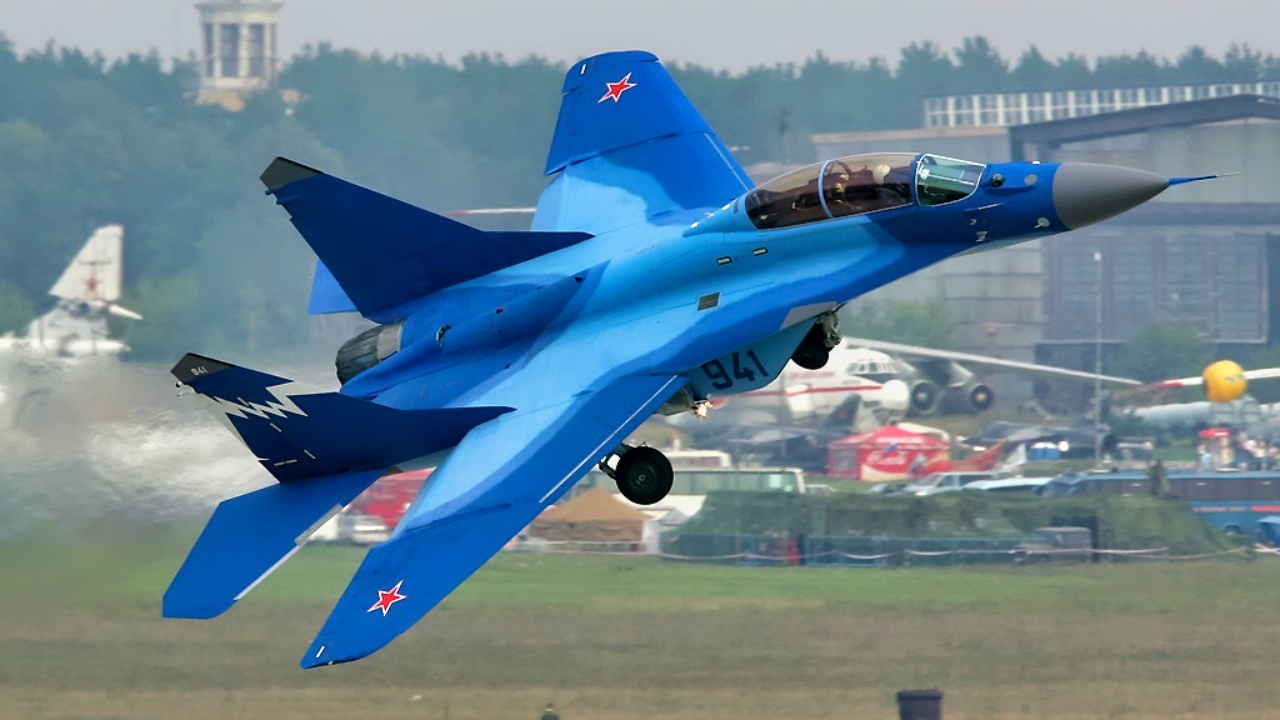
MiG-29K. Image Credit: Creative Commons.
A token “future carrier” rendering might surface in state media, but the opportunity cost of actually building one looks prohibitive.
The Carrier’s Legacy: Ambition, Compromise, And Cautionary Tales
What did Admiral Kuznetsov leave behind?
Proof Of Concept—With Asterisks. Russia showed it could operate fixed-wing jets from a carrier in combat, something not guaranteed after the 1990s. But it also showed the limits of doing so without catapults, with older boilers, and with thin pilot depth.
Industrial Lessons. The collapse of PD-50 and subsequent yard struggles reveal the fragility of heavy-ship repair capacity. Great-power naval dreams live or die in infrastructure, not artist’s impressions.
Strategic Messaging Over Warfighting. The ship often served as theater, a floating press release. When the message is undermined by smoke, tugs, and mishaps, the propaganda backfires.
A Pivot To What Russia Does Well. Submarines, long-range missiles, and coastal air defense are areas where Russia can still produce credible capability. Kuznetsov’s saga will likely push planners further toward that asymmetric comfort zone.
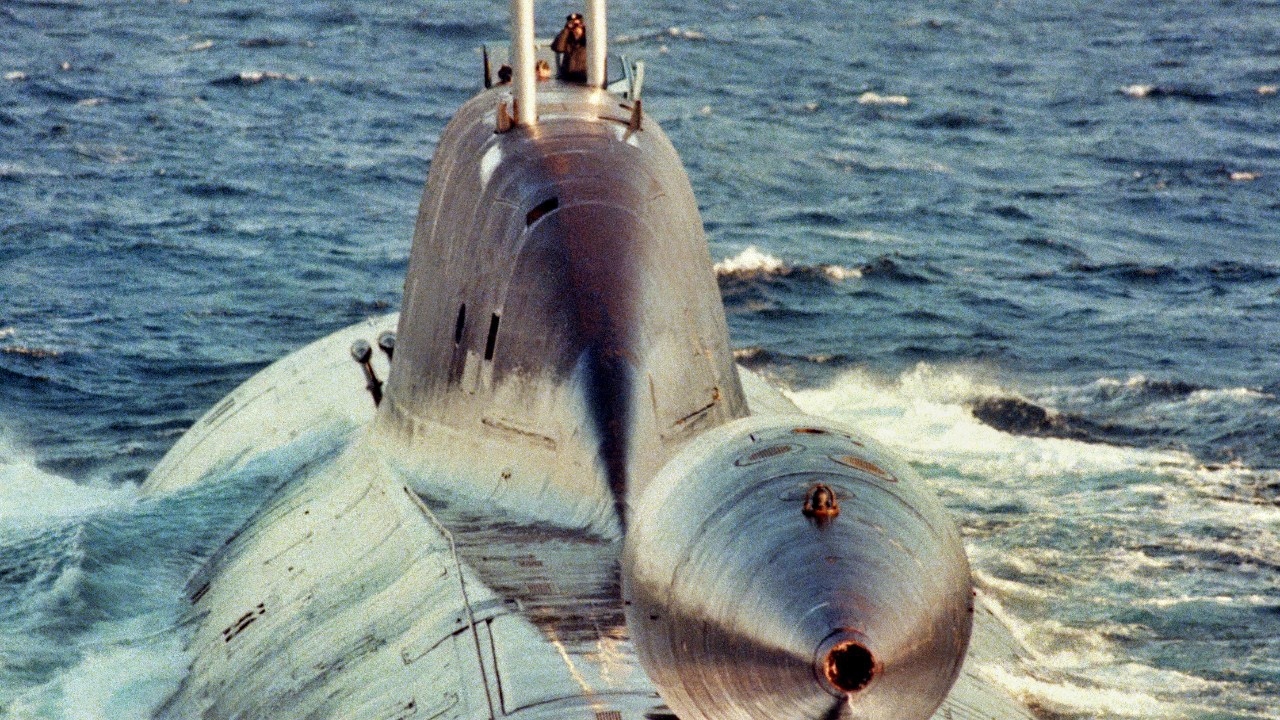
An aerial stern-on view of the Russian Northern Fleet AKULA class nuclear-powered attack submarine underway on the surface. Image Credit: Creative Commons.
If She’s Scrapped: What Endures
Should Moscow scrap Admiral Kuznetsov, Russia would become the only permanent UN Security Council member without an operational carrier. That fact carries prestige weight but not necessarily combat weight. In the Barents and Black Seas—Russia’s most likely maritime arenas—shore-based aviation and missiles can do much of what a carrier would. What Russia loses is global presence and the training crucible a carrier provides. What it avoids are decades of cost for a capability it has repeatedly struggled to master or maintain.
Final Assessment
Admiral Kuznetsov began life as a pragmatic compromise: a cruiser and a carrier in one hull, born to compete with the U.S. Navy on Soviet terms. She sailed into the Russian Federation carrying outsize symbolic freight and the maintenance burden of a unique, aging machine. Her lone war cruise proved headlines and hardware in equal measure. Her long refit became a parable about industrial decay and budget reality.
If the curtain finally falls, the ending will feel overdue. The larger story is not one ship, but a navy confronting what it can afford, sustain, and credibly fight. On that score, Kuznetsov taught Moscow a hard lesson it seems ready—at last—to heed.
About the Author: Harry J. Kazianis
Harry J. Kazianis (@Grecianformula) is Editor-In-Chief and President of National Security Journal. He was the former Senior Director of National Security Affairs at the Center for the National Interest (CFTNI), a foreign policy think tank founded by Richard Nixon based in Washington, DC. Harry has over a decade of experience in think tanks and national security publishing. His ideas have been published in the NY Times, The Washington Post, The Wall Street Journal, CNN, and many other outlets worldwide. He has held positions at CSIS, the Heritage Foundation, the University of Nottingham, and several other institutions related to national security research and studies. He is the former Executive Editor of the National Interest and the Diplomat. He holds a Master’s degree focusing on international affairs from Harvard University.
More Military
Russia’s ‘New’ Kirov-Class Battlecrusier Is Like a ‘Death Star’
The U.S. Military’s Big X-44 Manta Stealth Fighter ‘Mistake’ Still Stings
China’s New Fujian Aircraft Carrier Looks Close to Fully Operational
The Air Force Could Soon Have 32 Additional F-22 Combat Ready ‘Raptor’ Stealth Fighters
China’s J-20 Mighty Dragon vs. Russia’s Su-35 Flanker Fighter: Who Wins Summed Up in 4 Words


