

Grumman’s Super Tomcat 21 — and its ASF-14 evolution — was the company’s 1990s effort to transform the F-14 Tomcat into a long-range multirole strike fighter with limited supercruise at Mach 1.3, an active electronically scanned array radar, FLIR sensors, possible thrust-vectoring nozzles, more internal fuel, and General Electric F110-GE-429 engines. It was designed to replace both the canceled A-12 Avenger II and the retiring A-6 Intruder. The Navy chose McDonnell Douglas’s F/A-18E/F Super Hornet instead. Secretary of Defense Dick Cheney called the F-14 a jobs program. Three decades later, China’s anti-access and area-denial network has the Navy worrying about exactly the long-range carrier strike problem the Super Tomcat would have solved.
The Super Tomcat 21 Could Have Done Much of What the F/A-XX Wants to Do Now

F-14 Tomcat Photo Taken on August 24 2025. Image Credit: Jack Buckby/National Security Journal.
As the U.S. Navy inches closer to selecting its next-generation F/A-XX carrier fighter, it’s worth looking back at an abandoned aircraft proposal from the 1990s that attempted to solve many of the same operational problems the Navy is now openly discussing.
The proposed “Super Tomcat 21,” or ST21, was Grumman’s effort to transform the F-14 Tomcat into a long-range multirole strike fighter with greater range, payload, endurance, and advanced avionics.
The project ultimately lost to the F/A-18E/F Super Hornet. Still, today’s concerns about operating carriers against China’s expanding anti-access and area-denial network have revived debate over whether the Navy abandoned the wrong aircraft.
Meanwhile, the Navy is preparing to make a major decision on the F/A-XX program, expected later this year.
Chief of Naval Operations Adm. Daryl Caudle recently confirmed that the service expects a downselect between Boeing and Northrop Grumman around August.
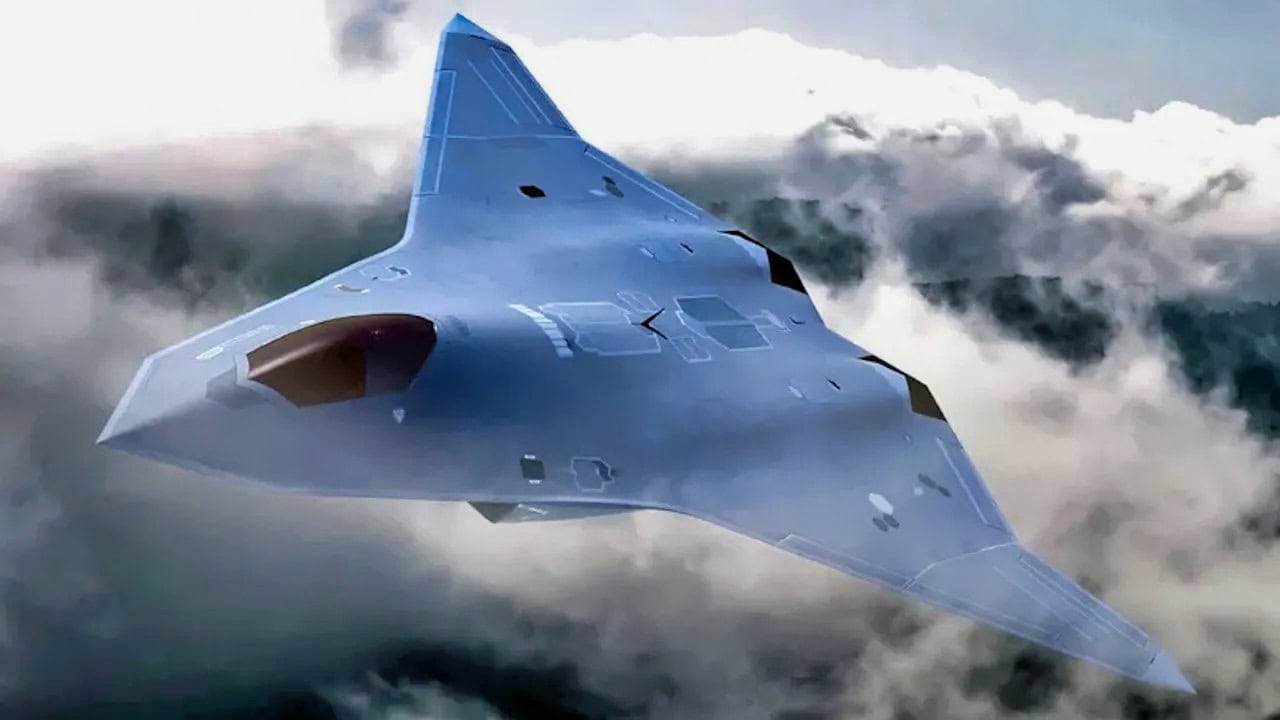
F/A-XX Fighter Mockup. Image Credit: Creative Commons.

F/A-XX U.S. Navy Fighter. Image Credit: Creative Commons.

F/A-XX U.S. Navy Fighter. Image Credit: Creative Commons.
“I think you’re going to see a downselect on this in August. I think that’s the month that they have committed to making the decision on the program,” Caudle said at the Navy League’s Sea-Air-Space Symposium.
The Super Tomcat Was Supposed to Replace Multiple Aircraft
The Super Tomcat was intended to be more than just an upgraded F-14 with a few new electronic packages.
It was developed during a transition period for U.S. naval aviation after the cancellation of the A-12 Avenger II stealth attack aircraft in 1991 and the approaching retirement of the A-6 Intruder attack fleet.
The A-12 Avenger II was supposed to become the Navy’s next-generation stealth carrier strike aircraft, designed to penetrate heavily defended airspace and replace the aging A-6 Intruder, while the A-6 itself had served for decades as the Navy’s primary all-weather carrier-based attack aircraft capable of delivering heavy bomb loads over long distances.
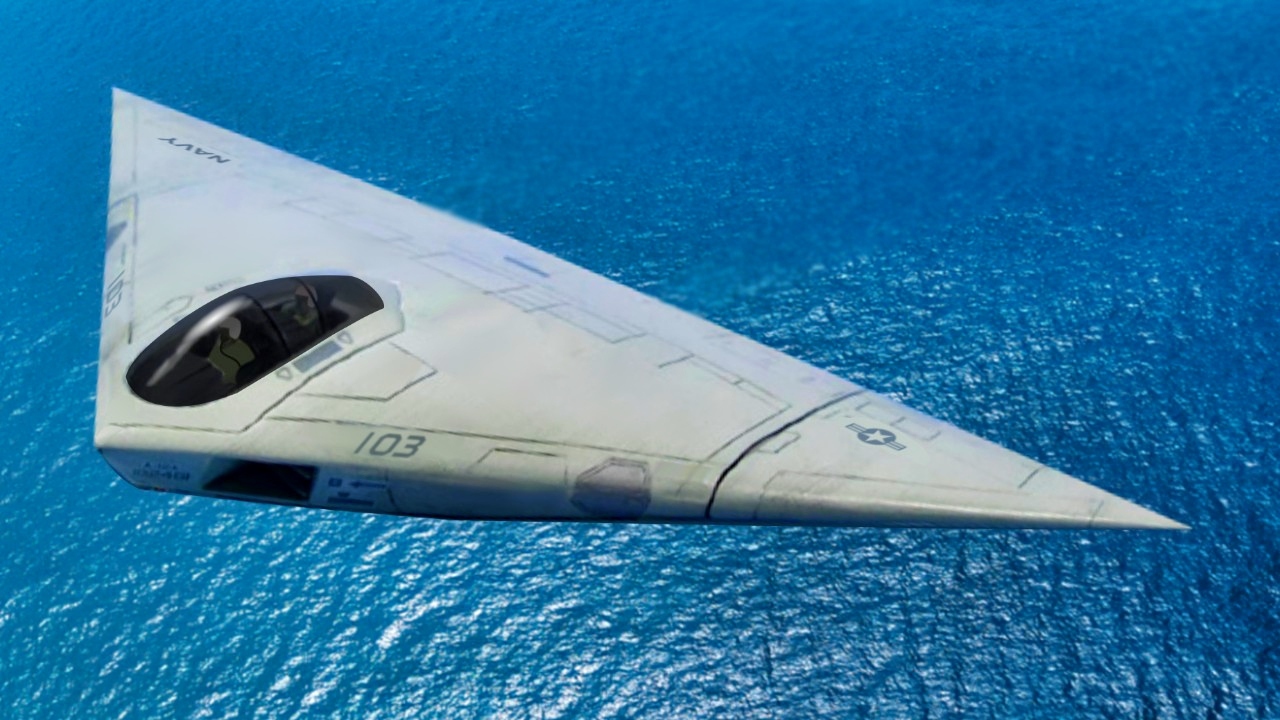
The US Navy’s pursuit of carrier-launched drones dates back to the 1980s with the A-12 Avenger II, a planned stealthy bomber drone. Image Credit: Creative Commons.
Grumman believed the Navy still needed a large, long-range carrier aircraft capable of both fleet defense and deep strike.
Multiple Designs
The proposal evolved over time, with several variants developed under the same concept. Ultimately, Grumman’s idea was to keep the core strengths of the F-14 – speed, range, radar size, and payload capacity – while also modernizing the aircraft to make it suitable for post-Cold War operations.
The upgraded aircraft would have used more powerful General Electric F110-GE-429 engines and would have substantially increased internal fuel capacity by enlarging the wing glove sections.
The aircraft was reportedly capable of limited supercruise at around Mach 1.3 without afterburners, and proposed upgrades reportedly included modernized avionics and improved cockpit systems, attack-focused FLIR sensors, possible thrust-vectoring nozzles, and, eventually, an active electronically scanned array radar.

Super Tomcat ST-21 Creative Commons Image Artist Rendition
One of the most important selling points, though, was range.
The Tomcat was already significantly longer-ranged than the F/A-18 Hornet family, and the Super Tomcat proposals would have pushed that advantage even further.
Today, the Navy is increasingly concerned that carrier aircraft lack the combat radius necessary for a Pacific war against China without heavy tanker support.
The U.S Navy Wanted A Cheaper, Lower-Risk Aircraft
Despite the Tomcat’s capabilities and popularity, the aircraft had a reputation for being expensive and maintenance-intensive. Grumman attempted to address this through the ASF-14 proposal by redesigning many of the hydraulic and electronic systems that made the original F-14 difficult to maintain, while also incorporating lighter materials and more modern components.
However, the Navy and Pentagon leadership ultimately moved in a different direction.
While Grumman was pitching the Super Tomcat concepts, McDonnell Douglas was developing what would ultimately become the F/A-18E/F Super Hornet. Although marketed as an evolution of the existing Hornet, the aircraft was substantially redesigned and offered a lower-risk procurement path than continuing large-scale Tomcat development.
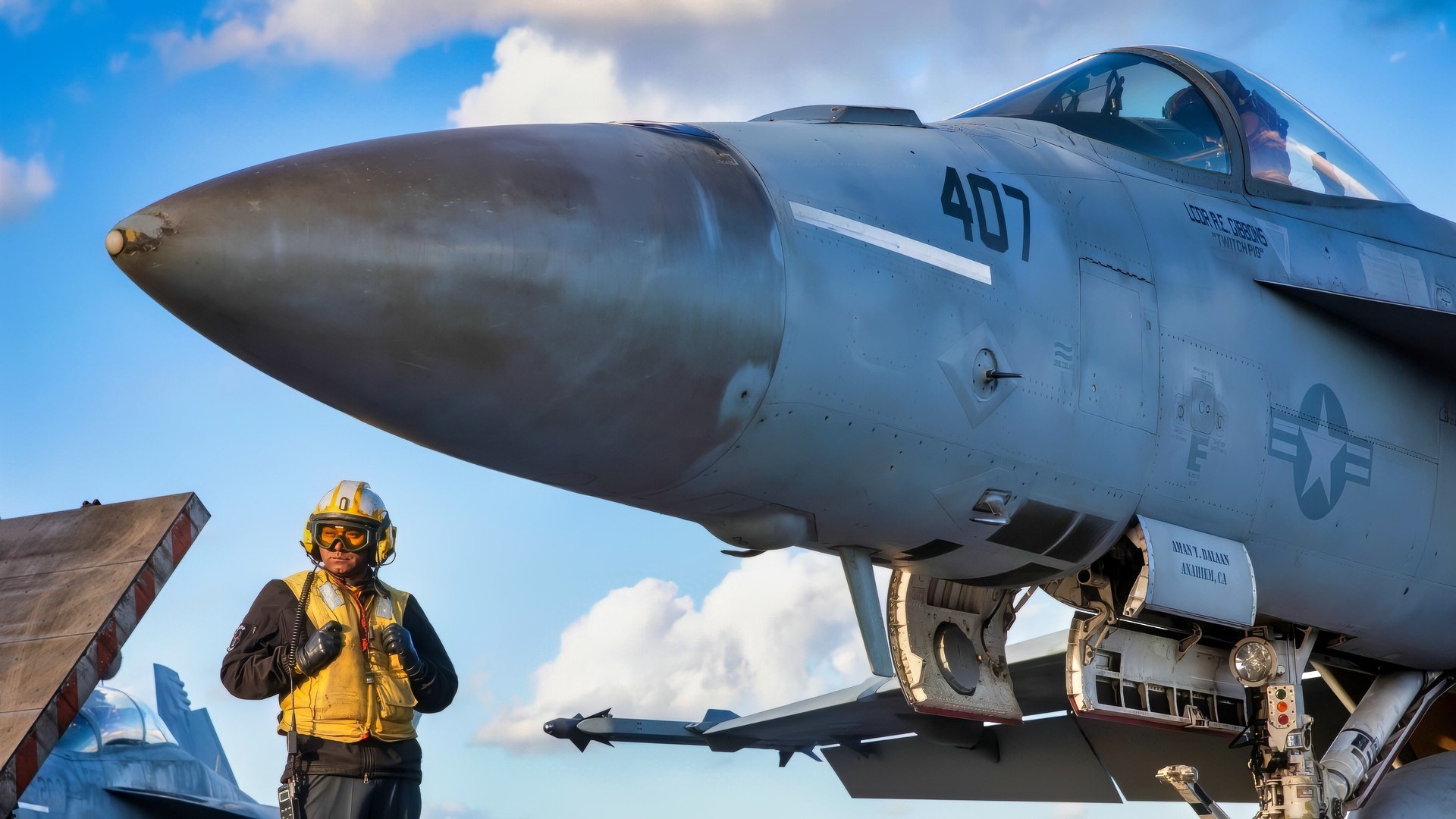
Aviation Boatswain’s Mate (Aircraft Handling) 1st Class Jose Mejiacastro, assigned to Air Department aboard the world’s largest aircraft carrier, USS Gerald R. Ford (CVN 78), prepares to signal to a Carrier Air Wing 8 F/A-18E Super Hornet attached to Strike Fighter Squadron 87 on the flight deck, Sept. 26, 2025. Gerald R. Ford, a first-in-class aircraft carrier and deployed flagship of Carrier Strike Group Twelve, is on a scheduled deployment in the U.S. 6th Fleet area of operations to support the warfighting effectiveness, lethality and readiness of U.S. Naval Forces Europe-Africa, and defend U.S., Allied and partner interests in the region. (U.S. Navy photo by Mass Communication Specialist 2nd Class Mariano Lopez)
Budget Cuts
The decision was also driven by post-Cold War budget cuts.
At the time, the Pentagon was reducing defense spending after the collapse of the Soviet Union, and Secretary of Defense Dick Cheney strongly opposed efforts to continue major F-14 procurement.
Cheney reportedly referred to the F-14 program as a “jobs program,” and the aircraft became increasingly politically vulnerable during defense cuts of the early 1990s. Eventually, the Super Hornet won because it was seen as cheaper and easier to maintain, more flexible, and less risky than continuing to evolve and upgrade the Tomcat into an entirely new aircraft.
China Has Revived the Range Problem
All these years later, it’s interesting to look at the arguments that helped kill the Super Tomcat and consider how different they look in the context of a potential conflict with modern China.
The Navy is increasingly concerned that Chinese anti-ship ballistic missiles, cruise missiles, submarines, and long-range aircraft could force U.S. carriers to operate much farther from combat zones than they did during the wars in Iraq and Afghanistan.
That creates major pressure on carrier aviation range and tanker support – something that is clearly evident when one considers the U.S. Air Force’s Agile Combat Employment (ACE) strategy. ACE is designed to disperse aircraft, personnel, fuel, munitions, and maintenance teams across many smaller airfields rather than concentrate them at a few large bases that could be targeted by Chinese missiles.
The idea is to make U.S. airpower harder to destroy in the opening stages of a war.
About the Author: Jack Buckby
Jack Buckby is a British researcher and analyst specializing in defense and national security, based in New York. His work focuses on military capability, procurement, and strategic competition, producing and editing analysis for policy and defense audiences. He brings extensive editorial experience, with a career output spanning over 1,000 articles at 19FortyFive and National Security Journal, and has previously authored books and papers on extremism and deradicalization.


