


Key Points and Summary – Secretary of War Pete Hegseth is set to unveil a major overhaul of U.S. arms-export processes and acquisition, aiming to speed deliveries to allies and rebuild strained U.S. stockpiles.
-His plan—backed by recent executive orders—would shift the Defense Security Cooperation Agency from the policy shop to Acquisition & Sustainment, giving procurement leaders more control over Foreign Military Sales.

Secretary of Defense Pete Hegseth hosts a teleconference with NFL players Aaron Jones and Elijah Higgins during their visit to the 386th Air Expeditionary Wing in Kuwait from the Pentagon, Washington, D.C., April 2, 2025. (DoD photo by U.S. Navy Petty Officer 1st Class Alexander Kubitza)
-The move follows supply-chain shocks, Ukraine war demands, and allied frustration with slow approvals that have pushed buyers to non-U.S. suppliers. Supporters see a necessary reset; critics worry about guardrails and internal turf wars. The November 7 industry session is the rollout moment.
Secretary of War Hegseth Shakes Up Pentagon’s Weapons Export Organization
WARSAW, POLAND – The US Secretary of War, Pete Hegseth, is initiating a reorganization within his department to streamline and reconfigure the current US Government system and processes for arms export sales.
The proposed changes would reportedly not only be a major overhaul of the mechanisms by which the Pentagon ships weapon systems to our allies but would also address the issue of stockpiles available to the US Armed Forces falling to critically low levels.
To reveal the details of these plans, Secretary Hegseth is convening a meeting of defense industry executives on November 7, billed as a follow-up to another major speech he delivered to a gathering of flag-rank officers.
According to sources who spoke to Washington, D.C.-based media outlets on condition of anonymity, the former Fox News host will reportedly use this address at the National Defense University to announce several initiatives on defense acquisition reform.
This event is being called a major test for the Secretary of War, who has no previous executive experience within the US Government.
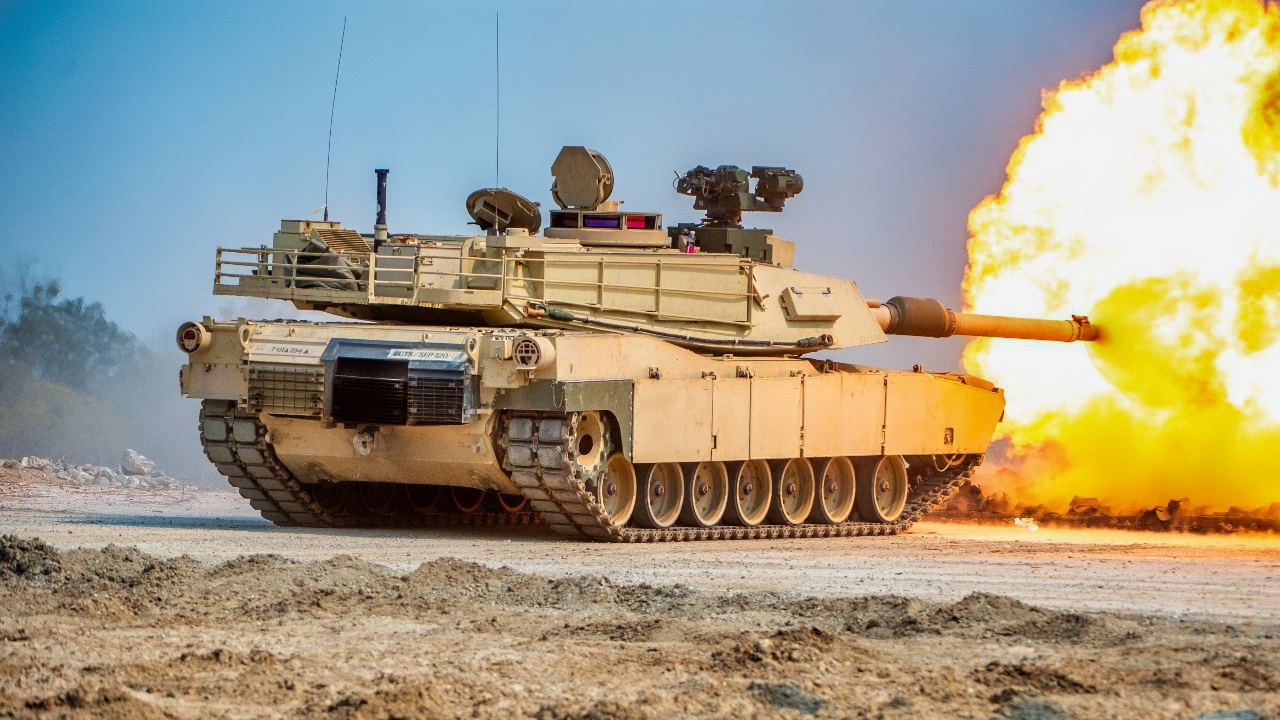
FORT MOORE , Ga. Maneuver Center of Excellence hosts the 2024 Armor Week media day on Harmony Church Mar. 14, 2024. The event featured live-fire demonstrations with the M1 Abrams Main Battle Tank, and an opportunity to get up close and hands-on with M1 Abrams and M2 Bradley Fighting Vehicle. Armor Week, April 29 to May 3, and the 2024 Sullivan Cup competition requires mastery of individual tasks, technical and tactical competence, and the ability to demonstrate an array of maneuver, sustainment, and gunnery skills. The competition focuses primarily on the performance of the Soldiers functioning as a crew. (U.S. Army photo by Patrick A. Albright)
However, the somewhat unorthodox choice of Hegseth for the role of Pentagon chief was heralded by Vice President JD Vance, who predicted that in this position Hegseth would prove to be an effective “disrupter.”
Managing to provide weapon systems to export client nations has proven to be, at times, a torturous process for several administrations. Problems created by COVID-19 and the impact on the supply chains that defense corporations depend on caused no end of troubles for delivery schedules in recent years.
War Creates Its Own Dynamic
This state of affairs might have persisted for years had not the now nearly four-year war in Ukraine come to pass.
The challenges of supplying Ukraine with sufficient military hardware have accelerated efforts by nations to develop more hardware, with many anxiously examining their own low stockpiles as they simultaneously strive to provide as much military aid as possible to Ukraine.
As the head of NATO’s Military Committee, Royal Netherlands Navy Admiral Rob Bauer told the Warsaw Security Forum as far back as October 2023, “the bottom of the barrel is now visible.”
In the two years since, what has been taking place is an increasingly frenzied effort to catch up.
However, there have been two problems with rather adverse effects on the US defense industry and US interests abroad in general that Hegseth’s changes are likely to address. One is that some nations have begun looking for non-US suppliers for their military requirements.
This is not because foreign suppliers are necessarily selling better weapons at cheaper prices than the US. It is usually more a case of non-US weapons makers being capable of delivering weapons sooner than US firms, with fewer approvals required. A case in point is the Ukrainians’ decision to explore the acquisition of the Swedish Saab JAS-39E fighter over US-supplied options.
Transferring of Authority
The other unfortunate activity that has been taking place is that there are parties within the Pentagon who have been working to block shipments of arms to Ukraine rather than looking for options to expedite them.
Specifically, the US Undersecretary of War for Policy, Elbridge Colby, has more than once tried to prevent weapons that were en route to Ukraine from being delivered.
At one point, Colby had also been restricting the access that Kyiv’s military had to US intelligence and targeting data for strikes on facilities deep inside of Russia proper.
He established a monitoring and approval mechanism within the Pentagon that required Ukraine to obtain permission for any long-range strikes in advance.
This may be part of the reason that Hegseth is announcing that the Pentagon’s primary arms sales administrative body, the Defense Security Cooperation Agency (DSCA), will be moved out from under Colby’s policy directorate and over to the acquisition and sustainment organization.
This is a significantly larger administrative apparatus that manages the Pentagon’s $400 billion weapons procurement activity and is headed by the acquisition chief, Michael Duffey.
What is prompting Hegseth to make these and other changes is two of President Donald Trump’s April executive orders that called for a significant reform of defense acquisitions and arms sales to other nations. The US is already the global leader in arms exports.
That sum exceeds the entire Defense Department budget request.
Allies waiting on weapons deliveries and the defense industry that wants to make sales to them have also complained for years about the slow pace of what has become a tedious and laborious export approvals process.
In Poland, one of NATO’s largest spenders on defense, the armed forces have already turned to South Korea for tanks, aircraft, and long-range artillery that arrive significantly faster than requests for US equipment.
About the Author: Reuben F. Johnson
Reuben F. Johnson has thirty-six years of experience analyzing and reporting on foreign weapons systems, defense technologies, and international arms export policy. Johnson is the Director of the Asia Research Centre at the Casimir Pulaski Foundation. He is also a survivor of the Russian invasion of Ukraine in February 2022. He worked for years in the American defense industry as a foreign technology analyst and later as a consultant for the U.S. Department of Defense, the Departments of the Navy and Air Force, and the governments of the United Kingdom and Australia. In 2022-2023, he won two awards in a row for his defense reporting. He holds a bachelor’s degree from DePauw University and a master’s degree from Miami University in Ohio, specializing in Soviet and Russian studies. He lives in Warsaw.
More Military
China Has the Missiles to Sink U.S. Navy Aircraft Carriers, But Questions Remain
The P-51 Mustang Was the Best WWII Fighter
The U.S. Navy’s Great Aircraft Carrier Shortage of 2025 Won’t End
The Navy Isn’t Prepared For What’s Coming
Not Made in USA: The Vanguard-Class Missile Submarine Has Just 1 Mission


