

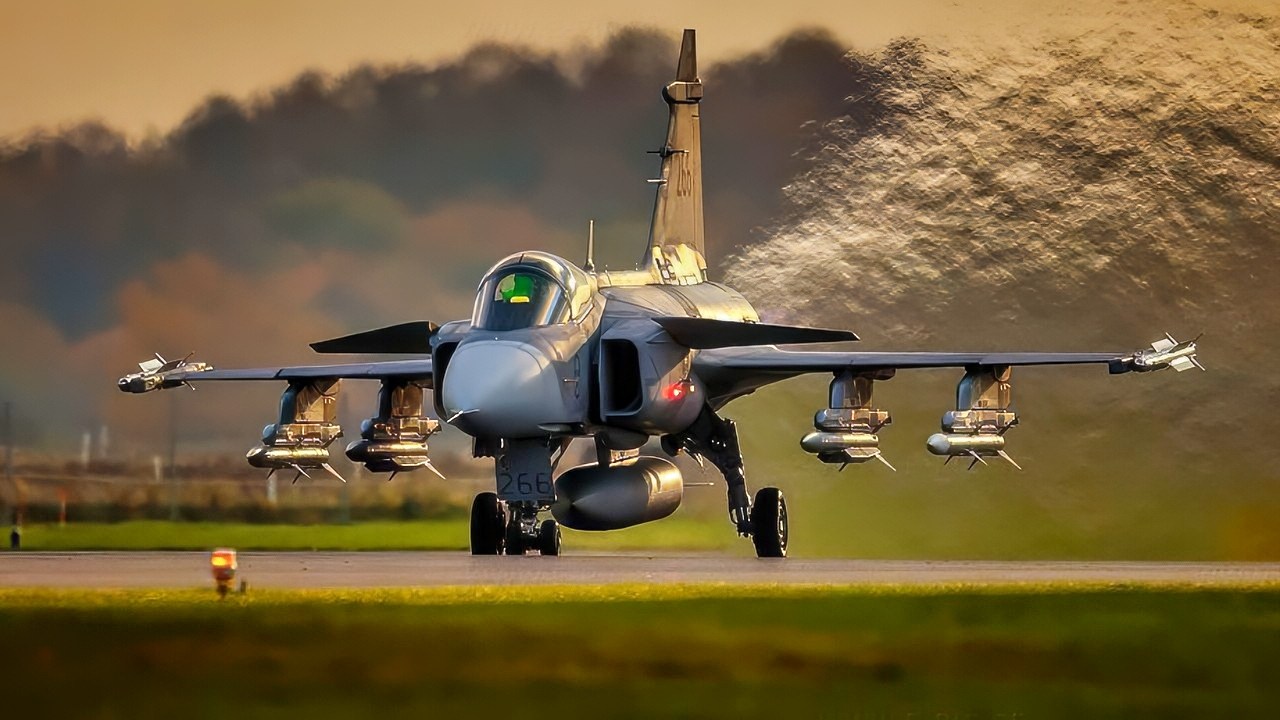
Key Points and Summary – Kyiv and Stockholm signed a Letter of Intent for 100–150 JAS 39 Gripen-E fighters, a package that could rebuild Ukraine’s air force with modern 4.5-gen jets optimized for austere, dispersed basing.
-The E-model brings AESA radar, robust EW, ultra-low operating costs, and—crucially—compatibility with Meteor ramjet missiles, extending no-escape zones against Russian fighters and glide-bomb carriers.

JAS 39 Gripen. Image Credit: Creative Commons.
-Paired with Sweden’s Erieye AEW&C, Gripens can fight “seen-first, shoot-first” without lighting their own radars.
-Costs may reach $14–22B and funding remains unresolved; deliveries likely start late decade, with earlier C/D transfers possible. If executed, this fleet would seriously complicate Russia’s air campaign.
Why a Ukrainian Order of Swedish JAS 39 Gripen-E Fighters Could Spell Trouble for Russia
Last week, Ukraine and Sweden announced that Ukrainian President Zelensky and Swedish Prime Minister Ulf Kristersson had signed a Letter of Intent, indicating plans for Ukraine to purchase between 100 and 150 Swedish JAS 39 Gripen-E multi-role fighters—enough to replace all Ukrainian fighters lost in the war. The aircraft package would include necessary training services and equipment, with the first deliveries expected to arrive within three years.
That’s a significant development, even if it’s not yet a strictly done deal, showing Kyiv is thinking big about rebuilding its air force, the PSU, with modern 4.5-generation fighters.
The PSU totaled around 124 operational Soviet-era combat jets when Russia invaded again in 2022. After over 46 months of fighting, it has lost around 100 to combat and accidents. Dozens of donated jets—first Soviet MiG-29s and Su-25s, then American-built F-16A/Bs and French Mirage 2000-5s—have kept the PSU in the fight. By 2025, its warplanes will primarily defend against drones and cruise missiles and deliver standoff precision strikes.
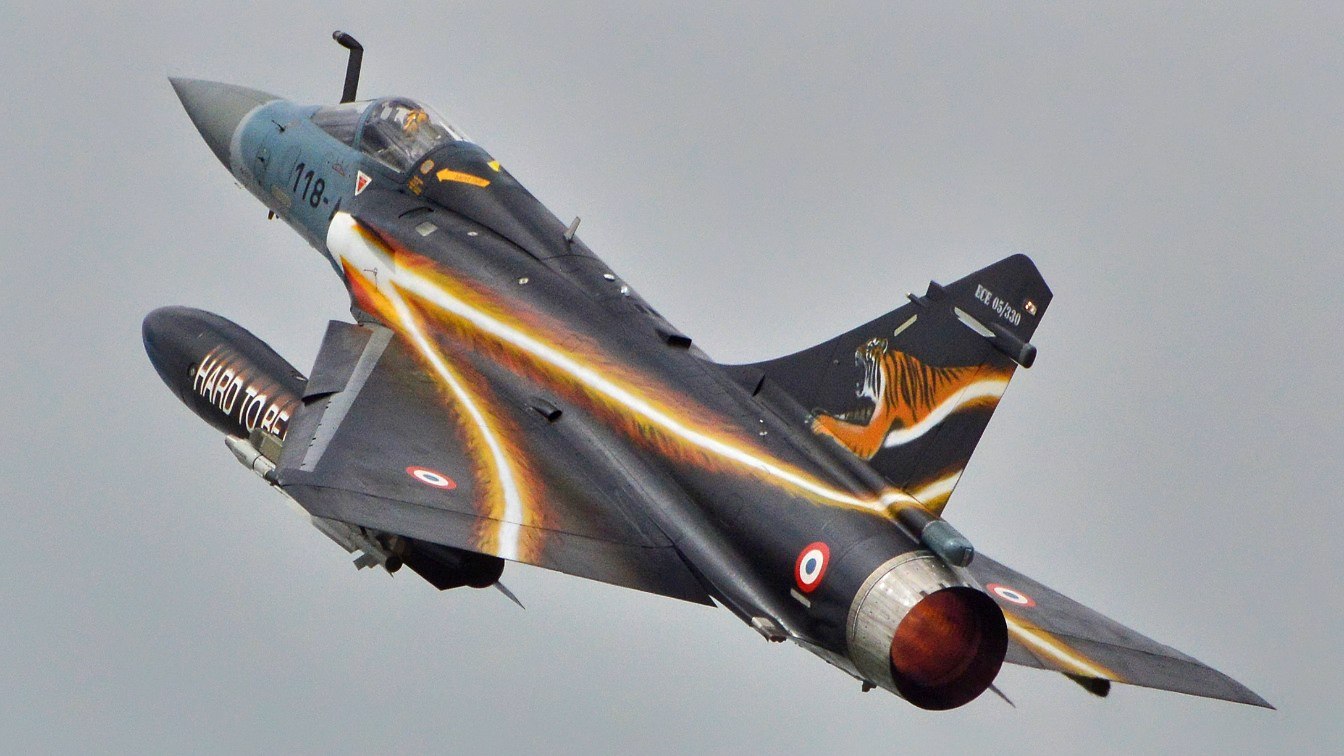
Mirage 2000. Image Credit: Creative Commons.
The Gripen buy alone, therefore, could reconstitute the pre-war strength of the PSU and provide its first 21st-century 4.5-generation fighter. So far, the PSUA has only operated fourth-generation Soviet and Western jets, equipped with 1980s and 1990s-era systems, respectively.
Late in October, Zelensky stated Kyiv is also still pursuing parallel talks for French Rafales and American F-16s for a planned force of 250 “modern” fighters. Whether that count incorporates Ukraine’s burgeoning fleet of F-16A/Bs and Mirage 2000s (over 100 delivered or in the pipeline) is unclear.
Zelensky also hinted interest in possible transfers of the over 30 fourth-generation Gripen Cs and Ds being retired by the Swedish Air Force, suggesting some could enter Ukrainian service as early as 2026. Ukraine’s air force has studied its capabilities for several years, and these could serve as a bridge to the more sophisticated Gripen-E. However, Kristersson indicated such an arrangement has yet to be finalized.
The Gripen has long been a smaller “budget option,” compared to rival twin-engine Eurofighter Typhoons and French Rafales—but in the best sense of that word, with low logistics footprints vital to operators like Ukraine.
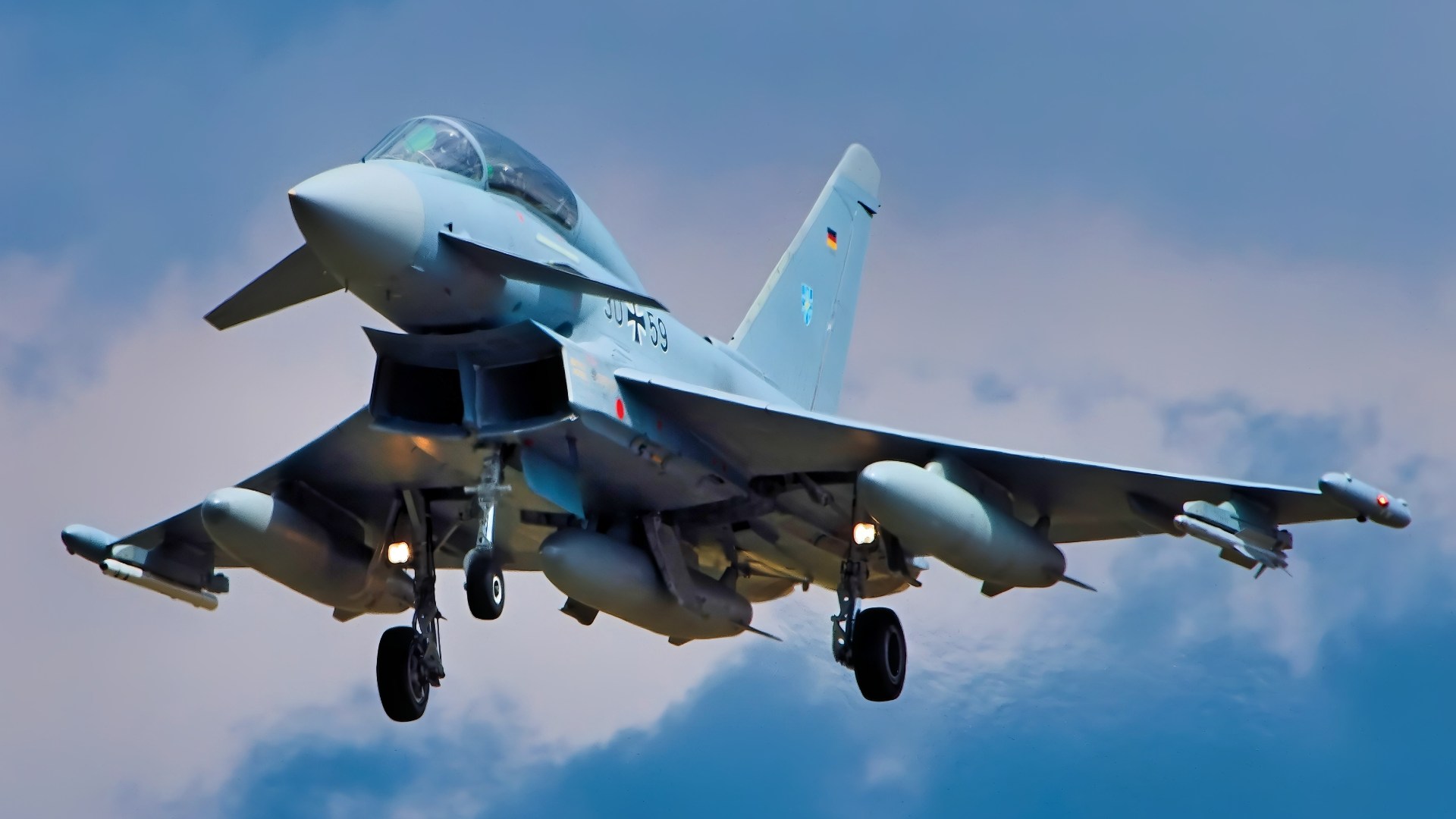
2017 Eurofighter Typhoon. Image Credit: Creative Commons.
The lightweight jet reportedly costs just $8,500 per flight hour, compared to $15,000 to $45,000/hour or more for typical modern fighters. The new E-model boasts advanced radar, computers, and self-defense systems, and can employ state-of-the-art missiles.
Ukraine’s pursuit of Gripen is likely driven by the airframe’s best-in-class operating costs and optimization for dispersed, austere operations. Speed of delivery and political reliability are also factors, given the unstable Trump-Ukraine relationship and the lengthy line of customers awaiting deliveries of Rafales and F-16Vs.
The order could also more than double the current planned Gripen-E production (60 for Sweden plus around 50 slated for export). That may reassure prospective buyers worried that the boutique-scale Gripen-E production could herald insufficient or expensive spare parts, upgrades, and services down the line.
Who Will Pay for Ukraine’s JAS 39 Gripens?
Despite its low operating costs, the JAS 39 Gripen-E’s purchase price of around $85 million approaches that of an F-35 stealth fighter. According to a recent Thai order bundling in training, equipment, and support services, 100-150 Gripens might end up costing $14 to $22 billion.
Kyiv can’t afford that, particularly mid-war. Prime Minister Kristersson has suggested frozen Russian assets may fund the Gripen order. However, the exploitation of €140 billion in Russian assets was recently blocked by Belgium, so that avenue isn’t yet resolved politically.
Saab’s CEO told the press that production of Gripen-Es has already increased from 12 to 20-30 aircraft annually, but that it would open facilities doubling that rate, should the Ukrainian order go through. He intimated potential for assembly in Ukraine itself to sweeten the deal, an approach already underway with Brazilian Gripens.

JAS 39 Gripen Fighter from Back in 2017. Image Credit: Creative Commons.
The Gripen E incorporates American F414 turbofans, Italian radars, and Israeli targeting pods, among other components, so these countries would also indirectly support Gripen sales.
Stealthy, but not a Stealth Fighter
Admittedly, the Gripen-E isn’t a fifth-generation F-35 stealth fighter. That means Russia’s modern fighters and surface-to-air missiles will continue constraining Ukraine’s warplanes from operating significantly beyond the frontline/border, the way Israeli F-35s penetrated Iranian airspace earlier this year. (Fortunately, Ukrainian air defenses ensure Russian warplanes face the same limitations.)
Without stealth jets, prevailing in this context is about leveraging long-range weapons and sensors more effectively (and minimizing one’s own signature) to deliver precision strikes, contest aerial no man’s land, and intercept missile raids more efficiently. Those are things 4.5-generation fighters can still do better than Ukraine’s current aircraft.
For starters, Gripens are not bereft of tricks for managing enemy threats. Already, they have a slimmer Radar Cross-Section of between 0.6 and 1.5 square meters carrying weapons, compared to 3 m² for an F-16. That reduces detection margins, albeit not proportionately.
More importantly, the Gripen E has an advanced electronic warfare self-defense system with three components:
-Digital Radio Frequency Memory technology that analyzes incoming radar waves in order to mimic them and send back false negative returns
-A Doppler emitter that can create shifting “mirror image” targets
-Traditional radio frequency “noise” jamming that clutters sensors
Additionally, it incorporates a 360-degree coverage Missile Approach Warning System that can help warn against missiles, not relying on active radar guidance.
Such capabilities enable Gripens to delay radar detection, push slightly deeper into contested airspace, and generally mitigate risks in high-threat environments.
Perfect for Aerial Guerrilla Warfare
During the Cold War, Sweden’s military forecast that its large airbases would be targeted by Soviet air and missile attacks in the event of conflict. So it planned for aerial guerrilla warfare from dispersed secondary bases.
As a result, the JAS 39 was designed to reliably take off and land from rough satellite fields or even stretches of highway as short as 600 meters long using anti-skid landing gears and lift-inducing canard wings.
And because that strategy precluded luxurious airbase facilities, Gripens were built with numerous easy-access panels, digital self-diagnostic systems, and auxiliary power units to enable servicing, rearming, and refueling by just five conscript technicians and one trained specialist in 10-20 minutes.
Since 2022, Ukraine’s air force has faced the onslaught Sweden dreaded—and effectively practiced those very solutions to protect its warplanes from Russian strikes despite occasional Russian successes. This led some experts to argue that Ukraine should have received Gripen fighters, not F-16s, as assistance. While that unsurprisingly didn’t happen—over 10 times more F-16s have been built—factory-fresh Gripen-Es could bring those qualities into Ukrainian service.
Modern air combat may increasingly be driven by radars and stealth rather than maneuverability. In this regard, the mechanically steered Irbis-E radar on Russian Su-35 fighters is notoriously powerful and far-reaching.

Su-35 Fighter. Image Credit: Creative Commons.
However, while the JAS 39 Gripen-E’s Raven ES-05 radar is smaller and has only around half the maximum range, it benefits from Active Electronically Scanned Array (AESA) technology, making it more jam-resistant, harder to detect, more reliable, and capable of extraordinary multitasking, including simultaneous scanning and jamming.
The ES-05 can also pan to achieve a scanning arc of 100 degrees to the left or right. Thus, a Gripen could turn 90 degrees away from an incoming enemy jet and maintain tracking while staying obscured in the “notch” of the target’s radar.
While the Irbis-E’s power/range advantage isn’t insignificant, the ES-05 enables stealthier tactics that may be harder to detect, and much harder to counter in return.
Gripen Jets Will Have a ‘Big Buddy’ Looking Over Their Shoulders
The PSU will soon operationalize two Saab 340 Airborne Early Warning and Control (AEW&C) aircraft, donated by Sweden, equipped with a large Erieye AESA radar capable of tracking larger targets up to 250 miles away. AEWC (or AWACS) aircraft greatly enhance the effectiveness of fighters, by seeing further ahead and below, relaying targeting data to execute long-range attacks, and making it possible to stealthily fly with inactive radars, relying on the AEW&C plane to “see” for them. While these aircraft will benefit the PSU’s current fighters, they and the Gripen jet are designed to work together, resulting in a more seamless degree of functionality and additional capabilities.
The Meteor Missile Spells Trouble for Russian Fighters
Ukraine’s F-16s armed with AIM-120C missiles partially redress the PSU’s problem, facing Russian fighters armed with comparable R-77-series missiles. But a broader issue is that neither side’s long-range shots are hitting often. Usually, they’re detected early enough to allow a fighter to race away outside their effective range.
However, Gripen-Es bring compatibility with Europe’s more advanced MBDA Meteor missile, which not only boasts twice the maximum range of an AIM-120C-6 (implying over 120 miles) but also a substantially higher kill probability due to its use of a throttleable ramjet motor that can surge to higher speeds in the terminal phase. That significantly improves the odds that a long-range attack may reach its target and extends the “no escape zone.”
The Meteor’s datalink also means it can approach targets with its radar seeker off—steered remotely using surveillance radars that don’t trigger warning receivers—then activate the seeker once it’s too close to evade.
Thus, Meteors could prove a potent weapon for deterring standoff glide bombing tactics that have become the bread and butter of Russian ground attack operations by crewed aircraft.
Gripens can employ a versatile mix of American and European weapons.
Beyond just Meteor, Gripen-E supports both European and American weapons—unlike the Mirage and F-16. That includes the prolific American AIM-9X Sidewinders and AIM-120 AMRAMs, as well as European IRIS-Ts and ASRAAMs, and Israel’s Python and Derby.

F-16 Fighting Falcon Onboard USS Intrepid. Image Taken on September 18, 2025.
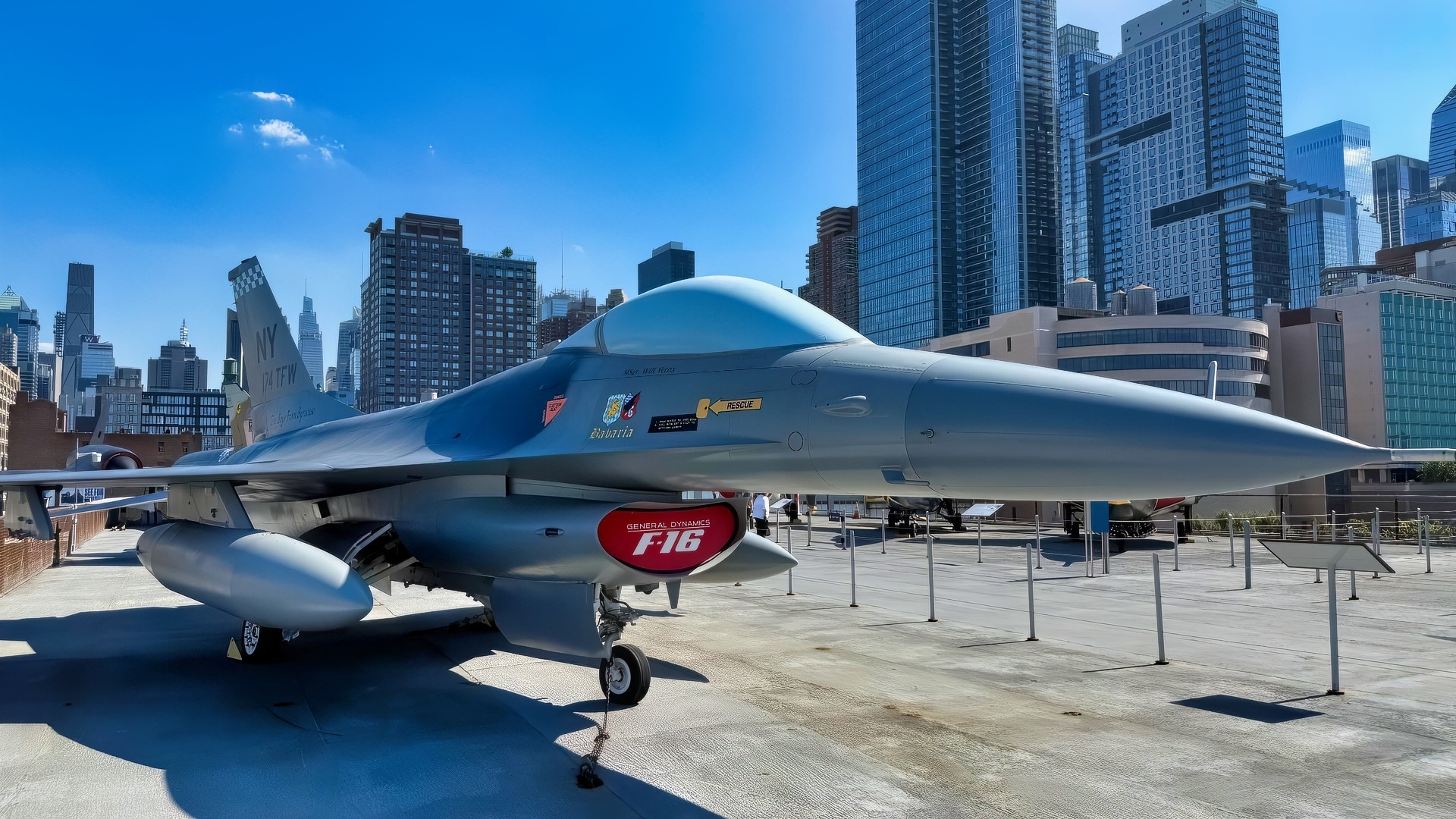
F-16 Fighting Falcon National Security Journal Photo. Taken on 9/18/2025 Onboard USS Intrepid.
Air-to-surface munitions include American Paveway laser-guided bombs, Maverick missiles, and GPS-guided Small Diameter Bombs—but also Swedish RBS-15 Mark IV anti-ship/surface missiles and Taurus and SCALP/Storm Shadow cruise missiles with hundreds of miles’ range. Integration of AARGM-ER anti-radar missiles and British SPEAR and Brimstone air-to-surface missiles is also planned.
As Ukraine has suffered from the shifting availability of munitions from its allies, supporting a wide range of weapon types is a significant logistical and tactical advantage.
Why An Upgraded Air Force Will Help Ukraine
A large Gripen-E fleet could enable Ukraine’s air force to adopt a more offensive posture—albeit still cautiously, due to the dense surrounding air defenses—because it can match Russian warplanes on more equal technical terms, thereby disrupting the current modus operandi. They could also execute precision standoff strikes more effectively, reactively, and deeply than current jury-rigged solutions.
Admittedly, the earliest possible timeframe for Gripen E deliveries (2029) means full-scale hostilities will likely have ended or abated. However, barring dramatic political changes, risks of renewed conflict will remain lamentably high.
Therefore, ensuring the PSU is considerably more capable than in 2022—while still able to sustain distributed basing strategies, its needs to survive—is one of several sensible long-term investments Ukraine and its allies can make to discourage renewed conflict, or help win another one should that become necessary.
About the Author: Defense Expert Sebastian Roblin
Sebastien Roblin writes on the technical, historical, and political aspects of international security and conflict for publications including The National Interest, NBC News, Forbes.com, and War is Boring. He holds a Master’s degree from Georgetown University and served with the Peace Corps in China. Roblin is also a National Security Journal Contributing Editor.
More Military
Canada’s F-35 Fighter Debate Summed Up in 3 Words
The U.S. Air Force’s B-52J Bomber Crisis
Mach 5.1 X-51 Waverider ‘Hypersonic Scramjet’ Has a Message for the Air Force
Beast Mode: How the F-35 Stealth Fighter Bolts on 22,000 Pounds of Bombs


