

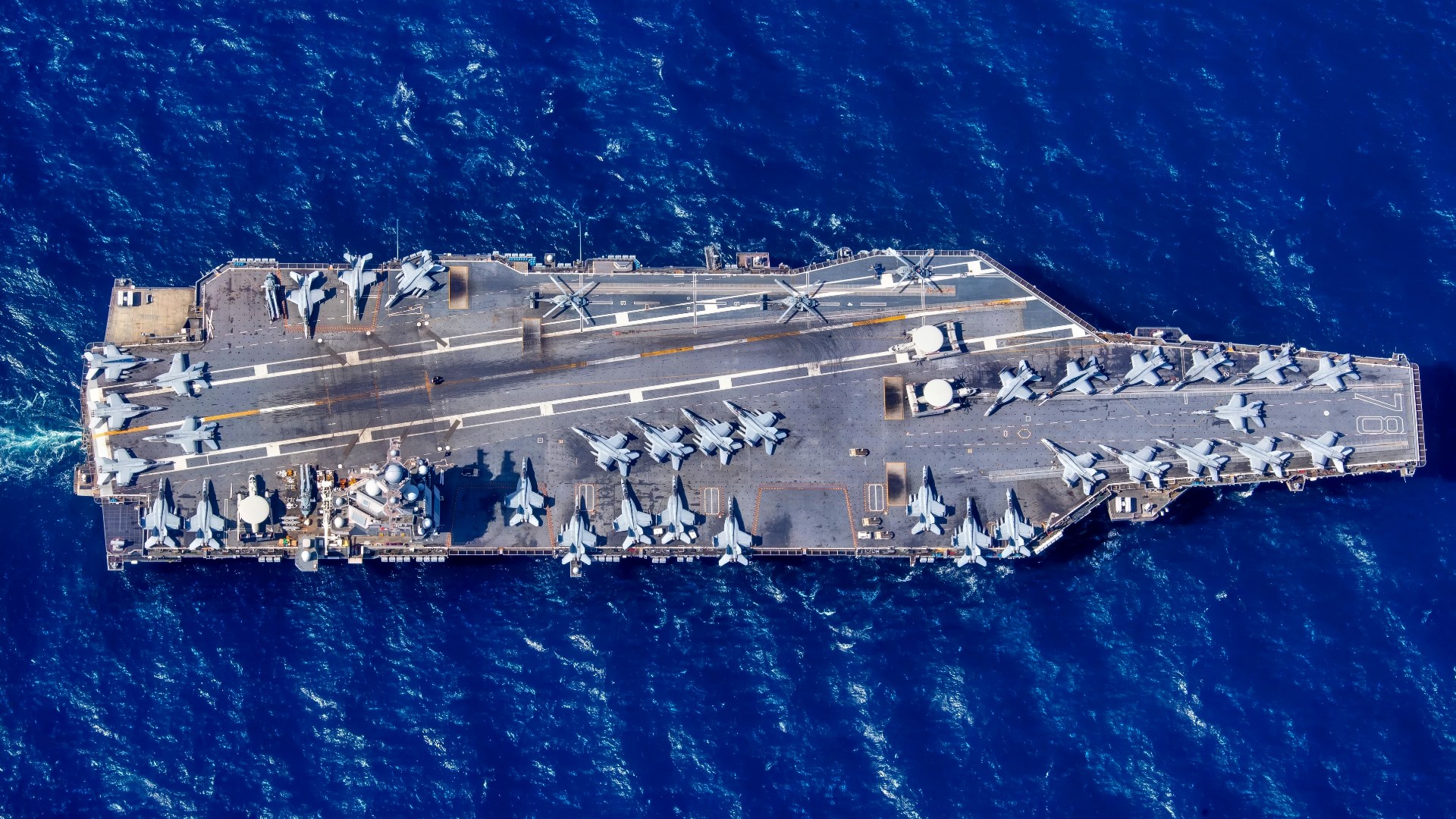
Key Points and Summary – While China’s “carrier-killer” missiles dominate headlines, the U.S. Navy is fielding its own formidable array of offensive weapons to sink Chinese warships.
-The Maritime Strike Tomahawk gives ships and submarines a powerful cruise missile capable of hitting moving targets at sea.
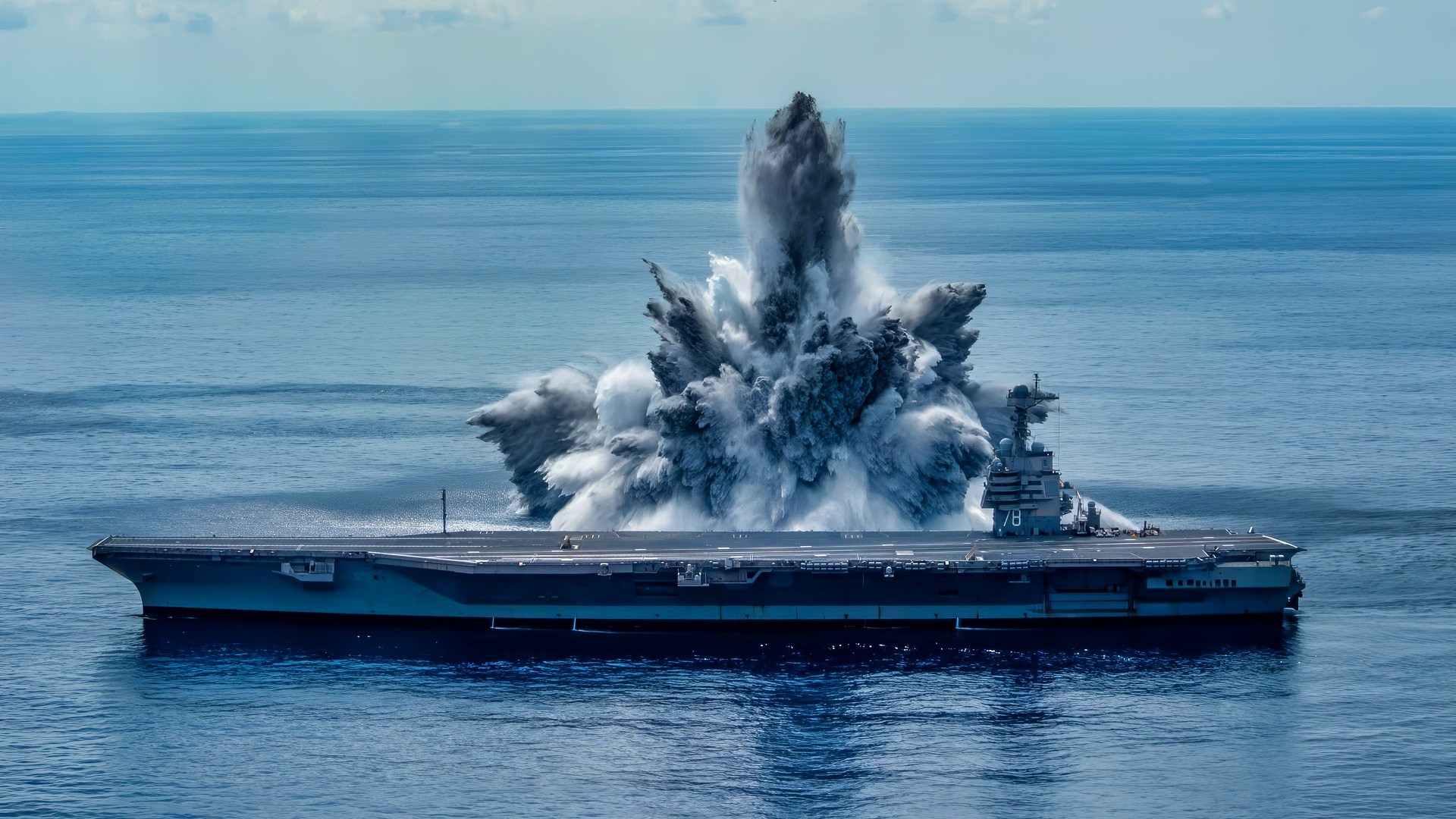
The aircraft carrier USS Gerald R. Ford (CVN 78) successfully completes the third and final scheduled explosive event of Full Ship Shock Trials while underway in the Atlantic Ocean, Aug. 8, 2021. The U.S. Navy conducts shock trials of new ship designs using live explosives to confirm that our warships can continue to meet demanding mission requirements under harsh conditions they might encounter in battle. (U.S. Navy photo by Mass Communication Specialist 3rd Class Novalee Manzella)
-Stealthy Virginia-class submarines can use advanced torpedoes and forward-deployed undersea drones for targeting.
-From the air, carrier-launched fighters like the F-35C are armed with the Long Range Anti-Ship Missile (LRASM), a stealthy weapon designed for autonomous targeting.
-These layered offensive capabilities are a direct counter to China’s growing naval power.
3 Ways the U.S. Navy Could Sink a Chinese Aircraft Carrier
Chinese “carrier-killer” missiles have been capturing headlines for so many years that perhaps many are inclined to overlook or simply forget the fast-improving attack methods the United States military could use to destroy the People’s Liberation Army-Navy aircraft carriers.
The People’s Liberation Army Navy (PLAN) DF-26 anti-ship missile can travel as far as 2,000 miles to destroy US Navy carriers.
Still, far too many observers seem quick to overlook the growing sphere of integrated, layered ship defenses currently protecting carriers and warships.
Increasingly, the US Navy positions warships to jam the RF or electronic guidance system of a DF-26 to essentially throw it off course.
US destroyers are also increasingly armed with short, medium, and long-range interceptor missiles as a growing ability to use unmanned systems and multi-domain networking to see attacking anti-ship missiles at much greater distances, something which, of course, makes efforts to intercept much more realistic.
For example, ship-based radar could network with a manned command and control plane. A Low Earth Orbit satellite or drone can acquire and destroy an incoming PLA anti-ship missile.
All of these variables are likely a significant reason why the US Navy remains confident and optimistic about the future value of its carrier fleet.
US Navy on Offense to Strike Aircraft Carriers
The other, lesser-recognized variable of great relevance to this equation is the US Navy’s constantly improving ability to conduct long-range, precision offensive attacks on PLAN carriers and anti-ship missile launch locations. One of the most effective methods the US Navy could use is the Tactical Tomahawk.
This weapon, fired from submarines’ and warship decks’ Vertical Launch Systems, emerged several years ago as a breakthrough capability in which Tomahawk missiles could draw upon additional RF throughput and guidance technology to adjust course in flight to hit moving targets.
This development was the reason the classic Tomahawk missile evolved beyond being used only to hit fixed targets such as command and control centers, weapons storage facilities, and bunkers.
Today’s warship-launched Tomahawk can use its own surveillance to loiter over a target and use a two-way datalink to change course in flight as needed. This functionality gives the US Navy added capability to target and attack Chinese carriers.
Undersea Attack
The US Navy’s undersea attack capability is yet another area capable of holding Chinese carriers at risk.
The US Navy’s Virginia-class submarines are increasingly stealthy, having been upgraded with quieting technologies, stealth coatings, and the ability to launch forward undersea drones positioned to acquire targets for attack with torpedoes and Tomahawks.

JASSM Missile National Security Journal Photo
As part of this undersea surveillance capability, forward-opening undersea drones could tether to a surface node and potentially send real-time targeting data to surface and air platforms in position to strike.
In this way, an undersea drone operating with advanced sonar could potentially acquire the signature or signal from a Chinese warship and quickly send verified targeting data to weapons systems in position to strike.
In Two Words: New Weapons
This kind of longer-range, multi-domain targeting could potentially enable US land or carrier-launched fighter jets to destroy PLAN warships from the air. Perhaps a carrier-launched F-35C could be sent targeting specifics related to a high-value target and use its 25mm cannon or longer-range air-to-surface missiles to destroy and sink Chinese carriers.
The US Navy also operates a series of next-generation air-launched anti-ship missiles, such as the Long Range Anti-Ship Missile (LRASM), which can now be fired from F-15s, F/A-18s, and both “B” and “C” variants of the F-35.

AGM-158 Extreme Range LRASM. Image Credit: Industry Handout.
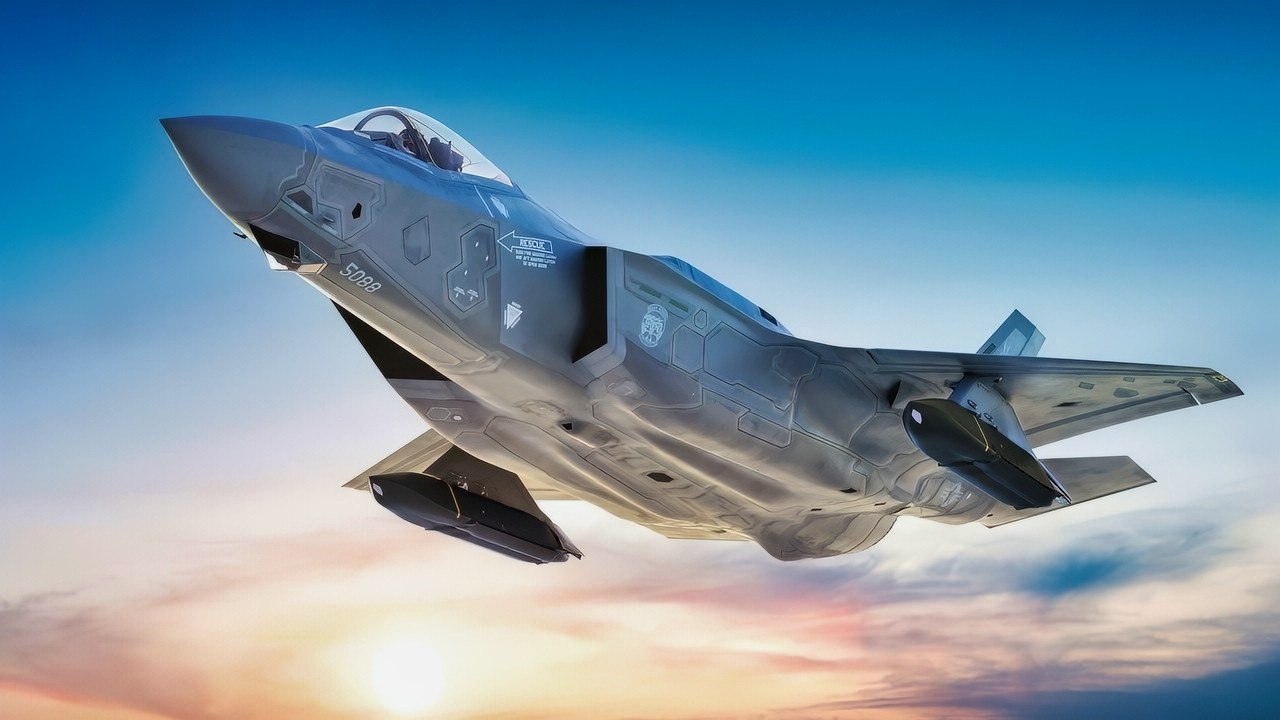
F-35 Fighter With LRASM Missiles. Image Credit: Lockheed Martin.
The LRASM uses an advanced seeker to enable semi-autonomous flight path technology, allowing the missile to adapt to new information and “re-route” in flight to ensure it hits a moving target at sea.
About the Author: Kris Osborn
Kris Osborn is the President of Warrior Maven – Center for Military Modernization. Osborn previously served at the Pentagon as a highly qualified expert in the Office of the Assistant Secretary of the Army—Acquisition, Logistics & Technology. Osborn has also worked as an anchor and on-air military specialist at national TV networks. He has appeared as a guest military expert on Fox News, MSNBC, The Military Channel, and The History Channel. He also has a Masters Degree in Comparative Literature from Columbia University.
More Military
The F-22 Raptor Stealth Fighter Still Haunts the U.S. Air Force
The U.S. Navy’s Big Nuclear Attack Submarine Mistake Still Stings
China’s J-20 Mighty Dragon vs. F-22 Raptor Stealth Fighter Summed Up in 4 Words
Why Is a U.S. Navy Aircraft Carrier Still Damaged 8 Months After a Collision?


