


Key Points and Summary – The U.S. Navy faces a plain arithmetic problem under the waves: we’re decommissioning Los Angeles-class attack submarines faster than we can deliver Virginia-class replacements.
-Skilled labor gaps, brittle supply chains, complex new variants, and competing demands from the Columbia ballistic-missile program all slow output.

The Ohio-class ballistic-missile submarine USS Maine (SSBN 741) begins a dive into the Strait of Juan de Fuca off the Washington Coast, March 18, 2025, during routine operations. Special units within the Coast Guard are tasked with the protection of U.S. Naval submarines while surfaced and transiting U.S. territorial waters to and from their patrol stations. (U.S. Coast Guard photo by Petty Officer 1st Class Steve Strohmaier)
-Meanwhile, Russia and China are fielding better boats and spreading sensors, and AUKUS adds long-term production promises to an already-stretched industrial base.
-The fix isn’t a slogan. It’s expanding yards and suppliers, protecting maintenance capacity, buying more munitions, integrating uncrewed systems, and—above all—funding Virginias and their successor at a pace that changes combat power, not headlines.
The Navy’s Submarine Math Problem: A Simple Problem with Complicated Causes
If you strip away the buzzwords, the Navy’s submarine dilemma is blunt. We are retiring older Los Angeles-class attack submarines faster than we are building Virginia-class replacements. The plan on paper has long called for delivering two Virginia-class boats per year. In practice, we’ve struggled to hit that cadence consistently, and the newest, more complex versions take longer. Every year we fall short, the gap grows—because the ocean doesn’t wait.

101210-N-5538K-056 PHILIPPINE SEA (Dec. 10, 2010) The Los Angeles-class attack submarine USS Houston (SSN 713) takes part in a photo exercise as part of Keen Sword 2011. Keen Sword is a joint, bilateral exercise designed to strengthen Japan-U.S. military operations. (U.S. Navy photo by Mass Communication Specialist 3rd Class Casey H. Kyhl)
This isn’t because the United States forgot how to weld steel. It’s because the entire ecosystem that supports submarine building and upkeep—skilled trades, specialized suppliers, nuclear components, testing rigs, dry docks, and quality-assurance processes—takes years to grow and minutes to overload. Add in the once-in-a-generation Columbia-class ballistic-missile submarine program, which rightly gets priority, and you can see why the attack-sub line keeps catching a cold.
Then layer on AUKUS, the agreement to help Australia field nuclear-powered submarines. It’s strategically smart—more allied hulls in the water—but it’s also a promise that leans on the same U.S. industrial base that is already behind. Without serious expansion, we risk trying to pour from an empty cup.
Why Attack Submarines Matter More Than Ever
Attack submarines (often called SSNs) do quiet jobs that make everything else possible. They trail hostile submarines and keep them honest. They slip into contested waters to gather intelligence and, if needed, take the first shot. They carry cruise missiles that can strike deep from offshore. They shadow carrier groups and protect sea lanes. When a crisis breaks, the first asset a combatant commander often asks for is “a sub on station.”
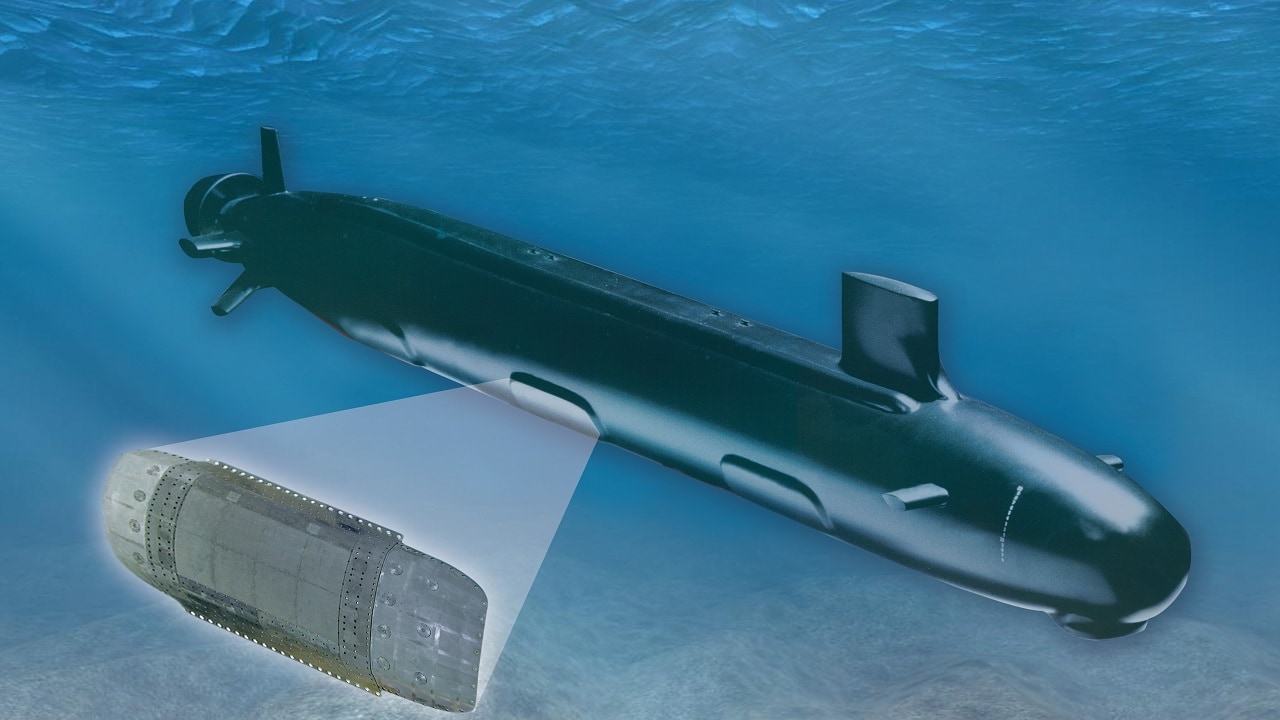
Image of Virginia-Class Submarine. Image Credit: Creative Commons.
Russia’s newest boats—the Yasen-M class, for example—are quieter and carry long-range missiles that challenge U.S. ships and shore targets. China has multiplied patrols and invested heavily in anti-submarine warfare, while moving toward more advanced designs of its own. Neither rival needs to “match” the U.S. Navy one-for-one to make life harder. A handful of modern adversary submarines, operating under a growing web of sensors, can force us to spread thin.
That’s the strategic rub: presence and persistence. A submarine can’t be in two oceans at once; it can’t be forward-deployed at full tempo forever. Numbers matter. Availability matters. The math has caught up.
The Production Potholes We Keep Hitting
Workforce reality. Submarines are among the most complex machines humans build. They demand master shipfitters, pipefitters, welders, electricians, and nuclear-qualified technicians who aren’t trained in a weekend. The pandemic years hollowed out experience; retirements did the rest. Hiring is up, but new hands must apprentice under old hands—and there haven’t been enough of the latter.
Brittle suppliers. An Ohio-sized casting or a precision valve isn’t a catalog item. Many crucial parts come from single or limited-source vendors who, after decades of feast and famine, shrank to survive. Ramping them back up requires capital, long contracts, and confidence that the pipeline won’t go dry again. That confidence is still catching up.
Complexity creep. Newer Virginia variants add the Virginia Payload Module (an extra mid-body section with four large-diameter tubes). It’s a smart way to regain the strike punch we lost as the four guided-missile Ohios retired, but it also means more work hours per boat, new jigs, and new quality steps. Throughput dips before it rises.

Norfolk, VA. (May 7, 2008)-The Virginia-class submarine USS North Carolina (SSN 777) pulls into Naval Station Norfolk’s Pier 3 following a brief underway period. North Carolina was commissioned in Wilmington, N.C. on May 3, 2008. (U.S. Navy Photo By Mass Communications Specialist 3rd Class Kelvin Edwards) (RELEASED)
Competing priorities. The Columbia-class ballistic-missile submarines are the most important ships we build—full stop. They carry the sea-based leg of America’s nuclear deterrent. When Columbia needs people or parts, Columbia gets them. That’s not poor planning; it’s national strategy. But it pushes attack-sub timelines right when the fleet needs them most.
Maintenance choke points. Even when you own enough boats, they don’t all sail. Public shipyards struggle with backlogs; dry docks and skilled crews are finite. Delays in scheduled overhauls mean submarines sit pier-side waiting their turn. A boat you can’t return to sea is a statistic, not a deterrent.
AUKUS: Strategy Meets Production Reality
AUKUS is huge: Australia will stand up a domestic nuclear-powered submarine capability with U.S. and U.K. help, and the U.S. plans to sell Virginias to Australia in the 2030s while rotating allied subs through Western Australia much sooner. That’s good strategy in a tough neighborhood. It also implies reliably delivering U.S. boats on time while helping Australia grow a new industrial and regulatory ecosystem from scratch.
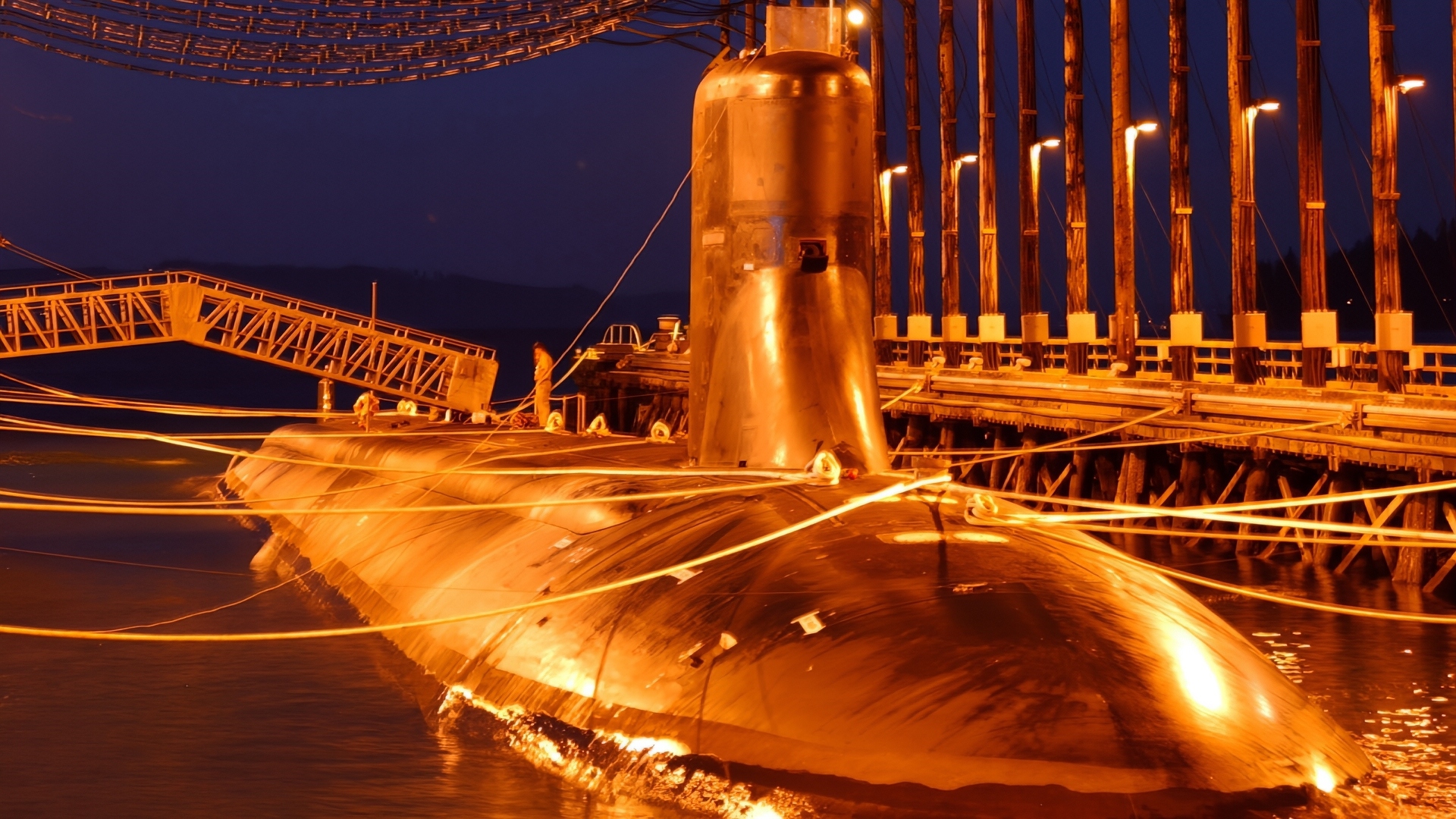
The nuclear-powered attack submarine USS Jimmy Carter (SSN 23) sits moored in the magnetic silencing facility at Naval Base Kitsap Bangor in Silverdale, Wash., on Aug. 16, 2006. The Jimmy Carter is the third and final submarine of the Seawolf-class. (DoD photo by Master Chief Jerry McLain, U.S. Navy. (Released)
Done right, AUKUS expands the pie—more investment in suppliers, more training pipelines, more demand that justifies growth. Done wrong, it slices the same pie thinner. The difference is policy follow-through: long-term contracts, multiyear funding, and allied industrial planning that turns speeches into welders, inspectors, and parts on shelves.
“Just Build Faster” Isn’t a Plan—This Is
1) Buy time by boosting availability. It’s cheaper to get an existing submarine back to sea than to build a new one from keel up. Fund the boring things that unblock maintenance: spare parts forward, extra shifts at public shipyards, mobile repair teams for targeted jobs, and digital work packages that cut rework. Every month cut from an overhaul is a month of real presence.
2) Treat suppliers as part of the fleet. Give critical vendors predictable demand five to ten years out, with financing tools that let them add lines and people without betting the company. Share quality data early so defects don’t travel down the value chain. When a sole-source supplier is a single point of failure, seed a second source—even if it costs more at first. Redundancy is combat power you can’t see.
3) Grow humans, not just headcounts. Apprenticeships, partnerships with community colleges, relocation bonuses, and retention pay for high-skill roles will sound unglamorous next to a glossy rendering of a submarine. Do them anyway. A shipyard without mentors is a shipyard that makes the same mistake twice.
4) Lock in the “two-per-year” floor—and then clear it. Congress and the Navy need to align funding and oversight so two Virginias per year is a minimum, not an aspiration. That means multi-year procurement, early material buys, and smoothing the production curve so yards aren’t whipsawed by budget cliffs.
5) Don’t starve the next design. The Navy’s follow-on attack boat—call it SSN(X)—shouldn’t have to choose between exquisite features and real numbers. Design for stealth and speed, yes, but also for buildability and maintainability so we don’t repeat today’s bottlenecks in the 2030s.

PERSIAN GULF (March 20, 2009) The Los Angeles-class attack submarine USS Hartford (SSN 768) is underway in the Persian Gulf after a collision with the amphibious transport dock ship USS New Orleans (LPD 18). Hartford sustained damage to her sail, but the propulsion plant of the nuclear-powered submarine was unaffected by this collision. (U.S. Navy photo/Released)
6) Add uncrewed mass and more munitions. Large unmanned undersea vehicles won’t replace a submarine, but they can scout, lay sensors, and complicate an adversary’s hunt. Meanwhile, torpedo and cruise-missile production must scale. An attack sub with shallow magazines is like a boxer with short arms.
7) Make AUKUS a net-add. Put joint training pipelines on rails now. Co-fund supplier expansions that serve all three nations. Share digital design tools and standards to avoid parallel, incompatible worlds. If we’re going to lift together, build the gym together.
What “Enough” Looks Like—and How We’ll Know
No single number will solve this. “Enough” looks like hitting the schedule more than once, delivering two Virginias a year as a habit, not a headline. It looks like maintenance availabilities that end on time, not after another continuing resolution. It looks like supplier scorecards trending the right way—fewer late parts, fewer quality escapes, fewer reworks that kill momentum. It looks like allied submarines rotating through the Indo-Pacific while U.S. boats keep to their own timetables.
You’ll know we’re there when combatant commanders stop using the word shortfall. You’ll know we’re there when a surge request doesn’t cause a maintenance crisis. You’ll know we’re there when AUKUS deliveries don’t show up as a red bar on a U.S. readiness slide.
Submarines and the Cost of Waiting
The undersea game is slow, patient, and unforgiving. Gaps invite risk-taking. Rivals probe when they believe your calendar is more fragile than theirs. Closing the gap is not about out-press-releasing Moscow or Beijing. It’s about doing a thousand unsexy things right for five to ten years without blinking.

(Dec. 10, 2010) The Los Angeles-class attack submarine USS Houston (SSN 713) takes part in a photo exercise as part of Keen Sword 2011. Keen Sword is a joint, bilateral exercise designed to strengthen Japan-U.S. military operations. (U.S. Navy photo by Mass Communication Specialist 3rd Class Casey H. Kyhl)
The Navy doesn’t need a miracle. It needs momentum. Two Virginias a year—then more. Maintenance that ends when we say it will. Suppliers that can fail without breaking the fleet. Apprentices who become masters. And allied programs that actually add steel and sailors to the fight.
The ocean is still big. But in this business, the only map that matters is a schedule you can keep.
About the Author: Harry J. Kazianis
Harry J. Kazianis (@Grecianformula) is Editor-In-Chief and President of National Security Journal. He was the former Senior Director of National Security Affairs at the Center for the National Interest (CFTNI), a foreign policy think tank founded by Richard Nixon based in Washington, DC. Harry has over a decade of experience in think tanks and national security publishing. His ideas have been published in the NY Times, The Washington Post, The Wall Street Journal, CNN, and many other outlets worldwide. He has held positions at CSIS, the Heritage Foundation, the University of Nottingham, and several other institutions related to national security research and studies. He is the former Executive Editor of the National Interest and the Diplomat. He holds a Master’s degree focusing on international affairs from Harvard University.
More Military
The U.S. Air Force’s B-52 Bomber and F-35 Fighter Have A Message for Venezuela
Russia’s Mach 4.3 MiG-41 Stealth Fighter Has a Message for the U.S. Air Force
Forget the F-35: The MQ-25 Stingray Might Be the Navy’s Best ‘Weapon’ Against China
Forget the F-35 of F-47: The GCAP 6th Generation Stealth Fighter Is Coming
U.S. and 9 Allies Just Held a Big Naval Exercise Right on China’s Doorstep


