


Key Points and Summary – The U.S. Air Force’s plan to buy “at least 185” F-47 sixth-generation fighters is “dangerously delusional” and inadequate for a future war.
-To maintain air dominance against peer competitors like China, the U.S. needs a fleet of at least 400-500 F-47s.

F-47 Fighter from U.S. Air Force. Image Credit USAF.
-The current plan repeats the historic mistake made with the F-22 Raptor, where a small, boutique fleet was procured that proved insufficient for global demands.
-Anything less than a massive increase in F-47 production is an “unforced error.”
The F-47 Fighter and the Numbers Questions
The Air Force says it plans to buy “at least 185” F-47 fighters—the crown jewel of its sixth-generation Next Generation Air Dominance (NGAD) program.
But is that number remotely sufficient for deterring China, sustaining forward presence in multiple theaters, and absorbing the brutal attrition of high-intensity conflict?
That’s the real question—one buried beneath layers of budgetary hedging, political symbolism, and technological optimism. The truth is that the Air Force’s current procurement plan is not just inadequate, it’s dangerously delusional.
To maintain credible air dominance in an era of multipolarity, great power competition, and contested skies around the globe, the United States must acquire no fewer than 400 F-47s—and likely closer to 500. Anything less risks leaving the nation underprepared, outnumbered, and overexposed at the very moment when margin for error is vanishing.
F-47 Fighter: What We Need to Know
Let’s start with the basics. The F-47 is not just a new fighter. It is the central manned platform in an integrated family of systems, pairing sixth-generation airframes with drone wingmen, AI-enabled networks, and advanced electronic warfare. It is meant to replace the F-22 and form the tip of the spear in any high-end fight with China—or, less likely but still conceivably, Russia or a coalition of hostile regional powers. But replacing a fighter isn’t the same as replicating numbers.
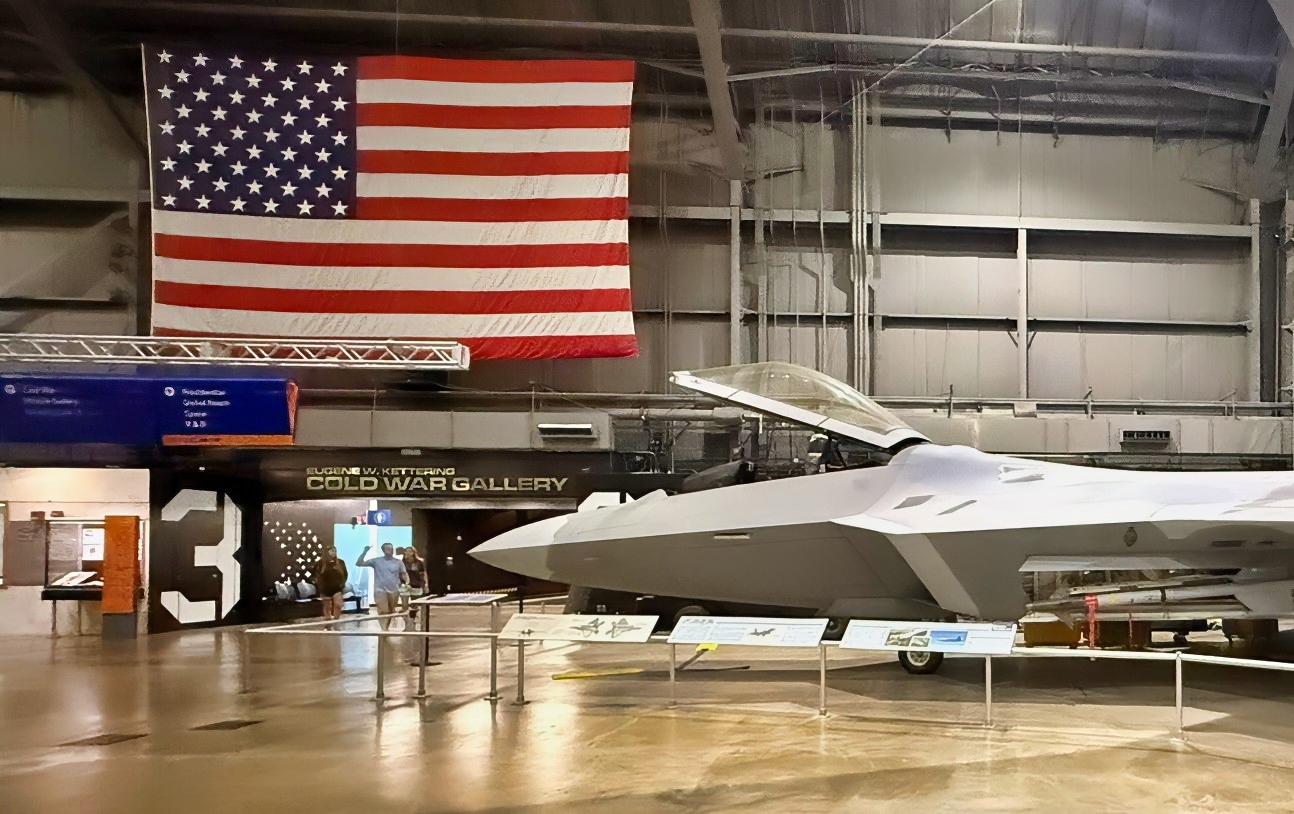
F-22A Raptor in the Air Force Museum. Image Credit: National Security Journal Original Photo.
A one-for-one substitution doesn’t account for vastly increased demands for forward presence, allied interoperability, and the sheer attrition that defines modern great power warfare.
Ask yourself this: how many squadrons does the Air Force need to sustain forward-deployed combat air patrols over Taiwan, the South China Sea, Eastern Europe, and the Middle East simultaneously? Then factor in the reality of maintenance downtime, training units, test beds, and attrition reserves. That operational math quickly climbs beyond 400 jets. Even without a shooting war, simply maintaining credible deterrence across three strategic theaters demands a scale of force structure that 185 aircraft cannot support.
Proponents of the 185 figure will point to cost. The F-47, after all, isn’t cheap. But neither is failure.
Warfighting is about mass, staying power, and redundancy. You can’t surge what you don’t have. And in an age where high-tech platforms are more survivable but also more complex and time-intensive to maintain, the logic of minimalism breaks down entirely. If only half the fleet is available at any given moment—and that’s a generous estimate—you’re talking about 90 operational aircraft globally. That’s not deterrence. That’s wishful thinking.
The truth is, every high-intensity air campaign since 1945 has required hundreds of fighters. In Korea, Vietnam, the Gulf War, and even over Syria and Iraq, the U.S. fielded numbers because it had to absorb losses, rotate squadrons, and fight on multiple fronts. The difference now is that the cost per platform is exponentially higher—and the consequences of losing even a handful of aircraft in a day are more strategically disruptive than ever. And yet, that makes the case for more aircraft, not fewer. The rarer the asset, the more intolerable its loss.
Then there’s the drone factor. The F-47 will fly alongside Collaborative Combat Aircraft—unmanned wingmen that extend its sensors and strike reach. But those drones aren’t substitutes for fighters. They’re amplifiers. And like all amplifiers, they only work when paired with enough manned nodes to process, direct, and exploit the expanded sensor web. One F-47 cannot command a swarm across multiple theaters. Again, quantity matters.

NGAD F-47 Fighter. Image Credit: Creative Commons.
What about allies? Some argue the U.S. can offset its own numbers by relying on allied participation. That argument has limits. While partners like Australia, Japan, and the United Kingdom are deeply embedded in U.S. defense networks, many are already pursuing their own sixth-generation fighter projects—such as the Global Combat Air Programme (GCAP), the Future Combat Air System (FCAS), and others. These programs aren’t just vanity projects; they’re genuine attempts to build sovereign industrial capacity and tailor future platforms to national requirements. That means demand for the F-47 abroad may be lower than it was for the F-35. Unlike last time, the U.S. cannot count on a wave of allied buy-in to backstop its own low numbers. If America needs 400 to 500 F-47s, it needs them for itself.
And if those allied programs fail or fall behind, the burden of filling the airpower gap will fall once again on the United States. That’s why Washington must plan as if it will bear the load alone. If GCAP and FCAS succeed, great—they can complement U.S. capabilities. But if they don’t, or if they remain limited in scope, America must have the operational depth to fill the vacuum. A sixth-generation force without scale is not a deterrent. It’s a vulnerability wrapped in glossy technology.
The China Challenge
China, too, is not standing still. Beijing is racing to field its own sixth-generation platforms. It is investing in stealth, drone integration, and next-gen sensor fusion. But unlike the United States, China is not constrained by divided procurement lines, budget politics, or symbolic fleet sizes. It is building for saturation and strategic effect. If Washington comes to a fight with 185 F-47s, it may find itself not just outnumbered—but outmaneuvered.
There’s a historical echo here. The F-22 was initially meant to field over 700 jets. By the time politics and budget games were done, only 187 were built. And the Air Force has regretted it ever since. We simply don’t have enough Raptors to meet current demands, let alone future contingencies. Are we really going to walk the same road again—this time with the fighter that’s supposed to replace the Raptor itself?
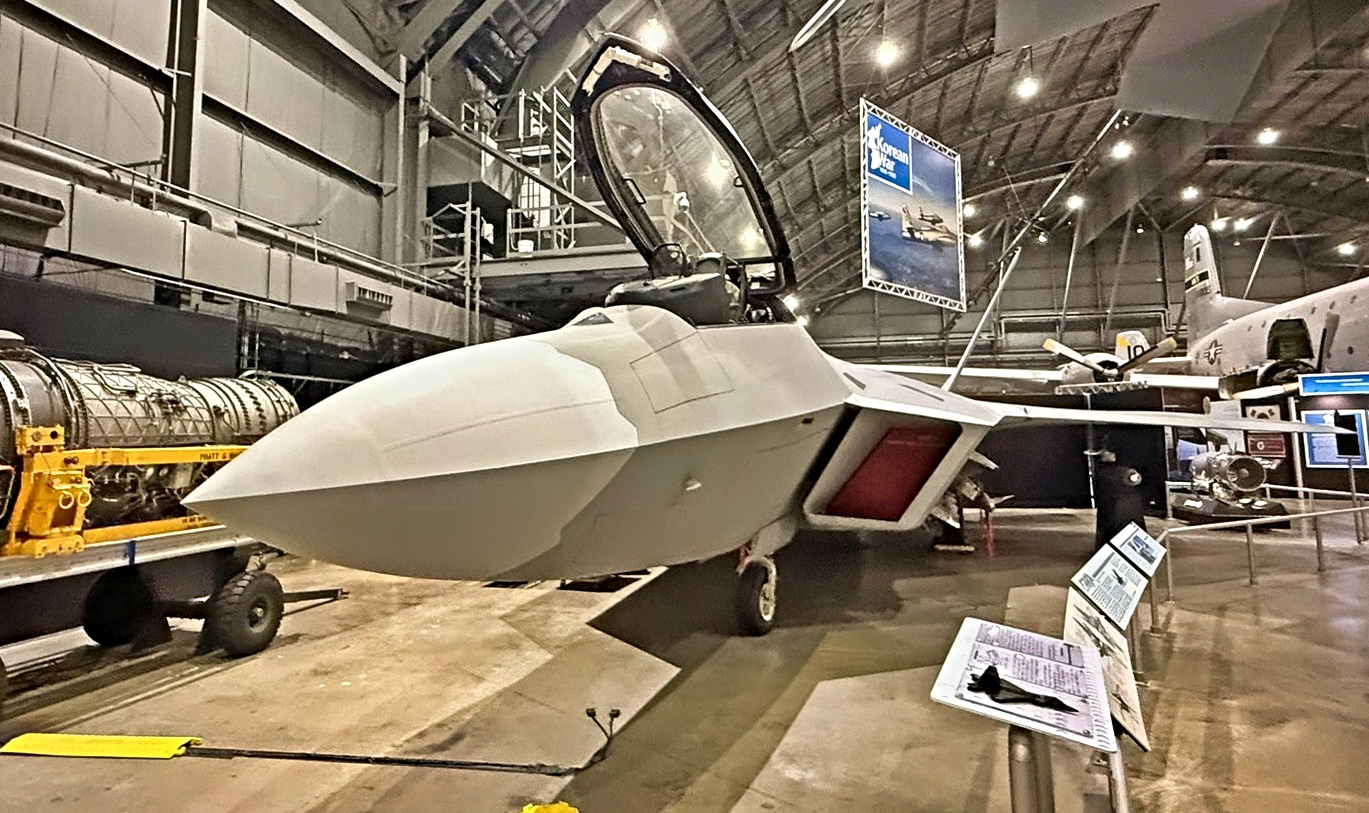
F-22 Raptor Nose Shot from U.S. Air Force Museum. Image Credit: National Security Journal.
The time to fix this is now. Before production lines are locked. Before budgets are entrenched. Before the Air Force is forced to fight a major war with too few aircraft and no time to fix the gap. The service should immediately revise its stated goals and request congressional authorization to scale F-47 production to at least 400 airframes, with the option to expand to 500 as drone integration and threat developments unfold. And Congress, for its part, should support this shift—not just with money, but with urgency.
The F-47 Fighter Must Dominate
The F-47 is not a boutique capability. It is the core of a future air dominance construct that must be credible, scalable, and sustainable under pressure. And that means fielding numbers—enough to maintain tempo, endure losses, and project strength across time and space. You don’t deter a peer competitor with promises and PowerPoint slides. You deter with force that can be seen, deployed, and reloaded. That’s what 400–500 aircraft buy you. Anything less is an unforced error.
As of July 2025, the Air Force is still publicly committed to a floor of 185 F-47s. That commitment is dangerously inadequate. It reflects outdated planning, fiscal caution disguised as strategic prudence, and a refusal to face the brutal arithmetic of modern war.
MORE – China’s H-6 Bomber Is Ancient But Ready for War
MORE – China Wants Its Own B-21 Raider Bomber
If we want to win—and if we want to deter—then the F-47 must be procured not in token numbers, but in numbers that add up a true warfighting fleet. Allied programs may surge ahead, or they may stall. But America’s security must not hinge on what others decide – or are able – to build. Anything fewer than 400 to 500 F-47s isn’t just a procurement mistake. It’s a strategic roll of the dice that is almost guaranteed to come up snake-eyes.
About the Author: Dr. Andrew Latham
Andrew Latham is a non-resident fellow at Defense Priorities and a professor of international relations and political theory at Macalester College in Saint Paul, MN. You can follow him on X: @aakatham. He writes a daily column for National Security Journal.
More Military
We Almost Touched the F-117 Stealth Fighter


taco
July 30, 2025 at 9:24 am
Against beijing, fighters like F-47 are largely irrelevant.
So, what’s relevant.
B61 bombs, B83 bombs, LRHW, LRSO, HAWC, HACM, tomahawks, SiAWs, B-21 and B-1 bombers and their payloads. Plus sub-launched cruise missiles and lamd-based rocket artillery like PrSM.
The idea is to create a hell of a hellish hellscape for beijing from the get-go, with the aim to collapse the whole of its civil society and ensure a total devastating resounding defeat.
But is the current beijing leadership aware of what’s in store for them right now. From the gang of Sam paparo and hegseth. And taco trump.
The answer is no.
bobb
July 30, 2025 at 9:34 am
Who’s really delusional today.
Who. Who else, but the braggart.
The braggart just announced a 25% tariff penalty on imports from south Asia.
Why the penalty. According to the braggart, it’s for purchasing Russian military hardware. This is ridiculous.
Russian hardware don’t break down for periods lasting over thirty days, and don’t cost an arm and a leg to purchase.
Their hardware are relatively easy to upgrade or modify and clone, so naturally people purchase of them.
That’s economics 101.
But the braggart has become detached from reality.
May he wake up to the smell of radioactive ash after aug 8 2025.
Bernard
August 1, 2025 at 10:44 am
So far the comments on here only show they hate the current administration. Totally lack factual arguments. Tariffs forcing the supply chain back to America is very important to our military industry. Depending on China for parts amd materials is a lose/lose situation. The F47 is clearly an improved YF 23. A very good starting point. The last four years have seen our military hallowed out. Using it as a social experiment. I’m glad cheap knock-offs and mostly junk is being driven out. It’s been a winner so far. If the Federal reserve would quit trying to sabotage it with high interest rates. There is dissection in the federal reserve about that.The built way more is the argument of the article writer. Not set policy. FYI my little 401k has done great since the election. All the construction workers I work with are very happy over time will not be taxed. Now if interest rates com down a little, home buying and construction will pick up.