

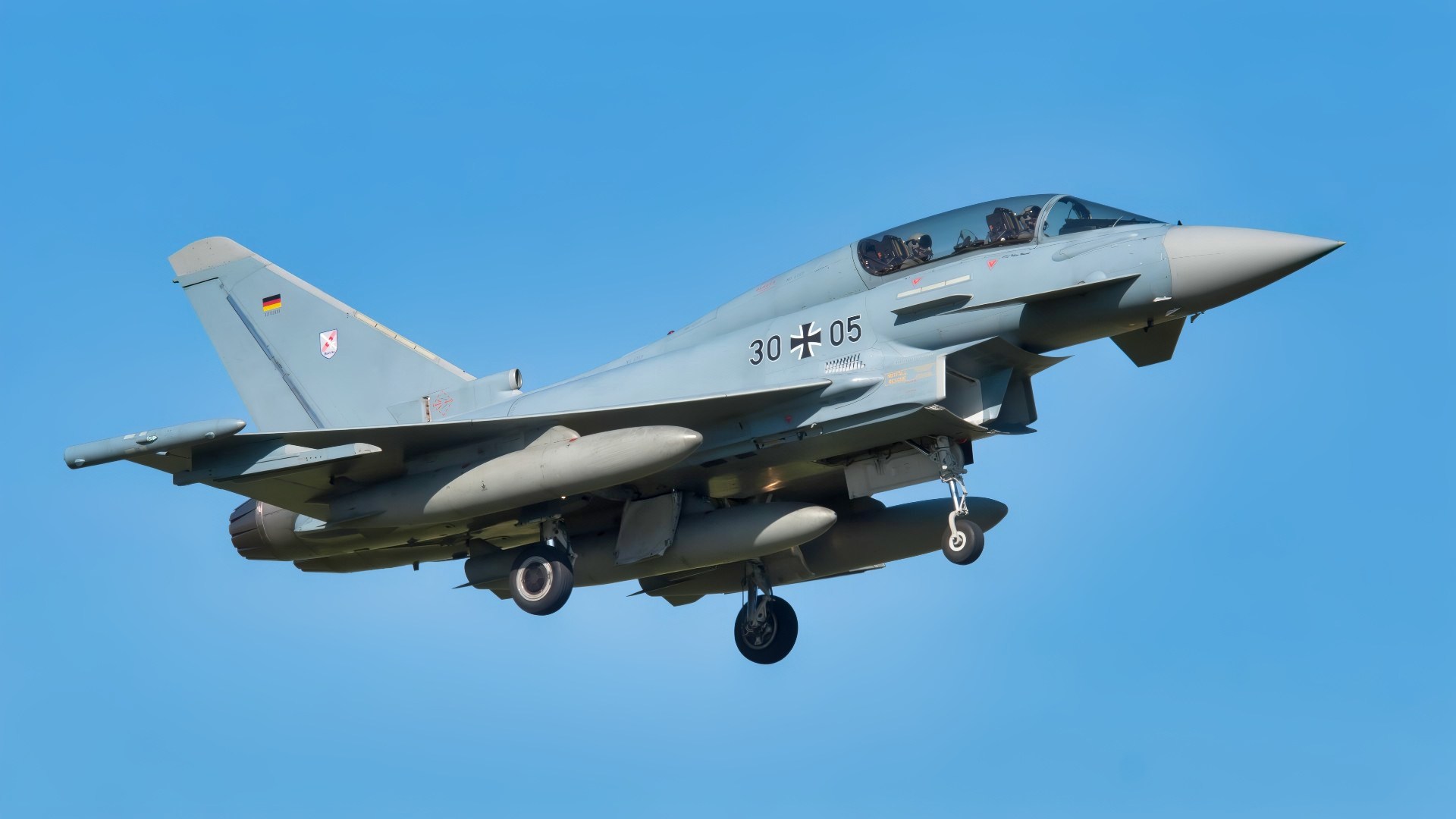
Key Points and Summary – Canada is already taking deliveries of the F-35, but debate never truly ends. Could Ottawa still pivot to the Eurofighter Typhoon?
-There are credible arguments: guaranteed industrial benefits at home, a twin-engine safety case for Arctic patrols, delivery and software-risk hedging, predictable sustainment with mature European partners, and a specialization in high-end air defense.
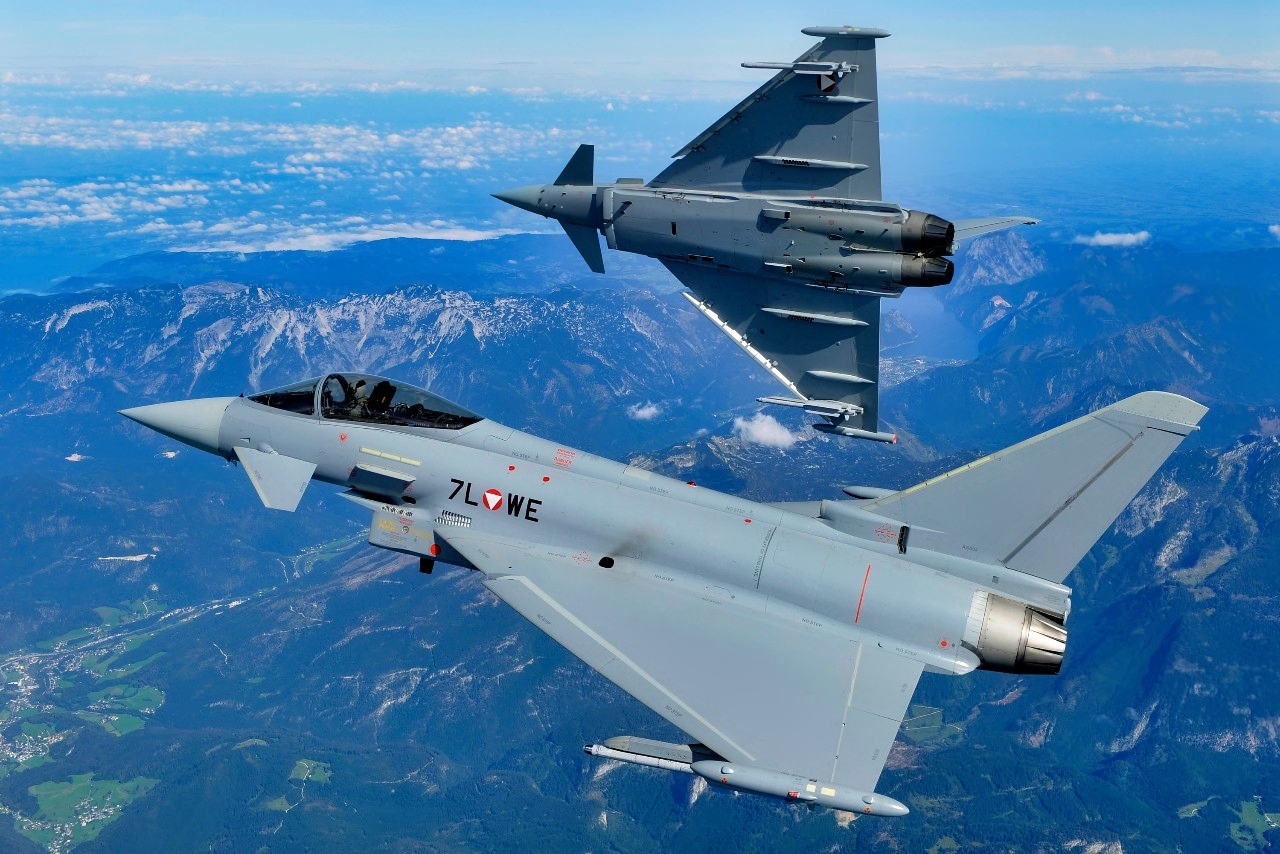
Eurofighter Typhoon. Image Credit: Creative Commons.

A UK Typhoon flies above the Baltics on 25 May 2022. UK and Czech fighter jets have been taking part in air defence training over the Baltic region. UK Eurofighter Typhoons, F-35s and Czech Gripens were involved in an exercise as part of Neptune Shield 22 (NESH22), a multinational maritime vigilance activity. NESH22 has seen a range of multi-domain activities between air, land and maritime assets across Europe and in the Baltic and Mediterranean Seas. It runs from 17 to 31 May 2022.
-Add concerns about sovereign data control and you can see the appeal.
-Yet the case for staying the course is stronger: stealth, sensor fusion, coalition interoperability, and a massive upgrade runway. For deterrence in North America and relevance in NATO alike, the F-35 remains the right bet.
Forget the F-35: Could Canada Go with the Eurofighter Typhoon?
Canada’s fighter debate mixes geography, industry, and alliance politics. The Royal Canadian Air Force must police a vast, cold, mostly empty airspace in the North while also showing up credibly for North Atlantic Treaty Organization commitments.
Canadian governments want domestic jobs and technology transfer. Meanwhile, the United States—Canada’s closest defense partner—flies the F-35 in bulk, and North American Aerospace Defense Command (NORAD) integration rewards sameness.
5 Reasons Canada Would Consider the Eurofighter Typhoon
And yet… the Eurofighter Typhoon always returns to the conversation. It’s a proven, fast, twin-engine air-defense thoroughbred with deep European backing. If Ottawa ever reconsidered the remaining F-35 buy, here are five reasons that could plausibly surface—followed by the equally plain-spoken reason to stay the course.

A UK Typhoon flies above the Baltics on 25 May 2022. Image Credit: NATO.
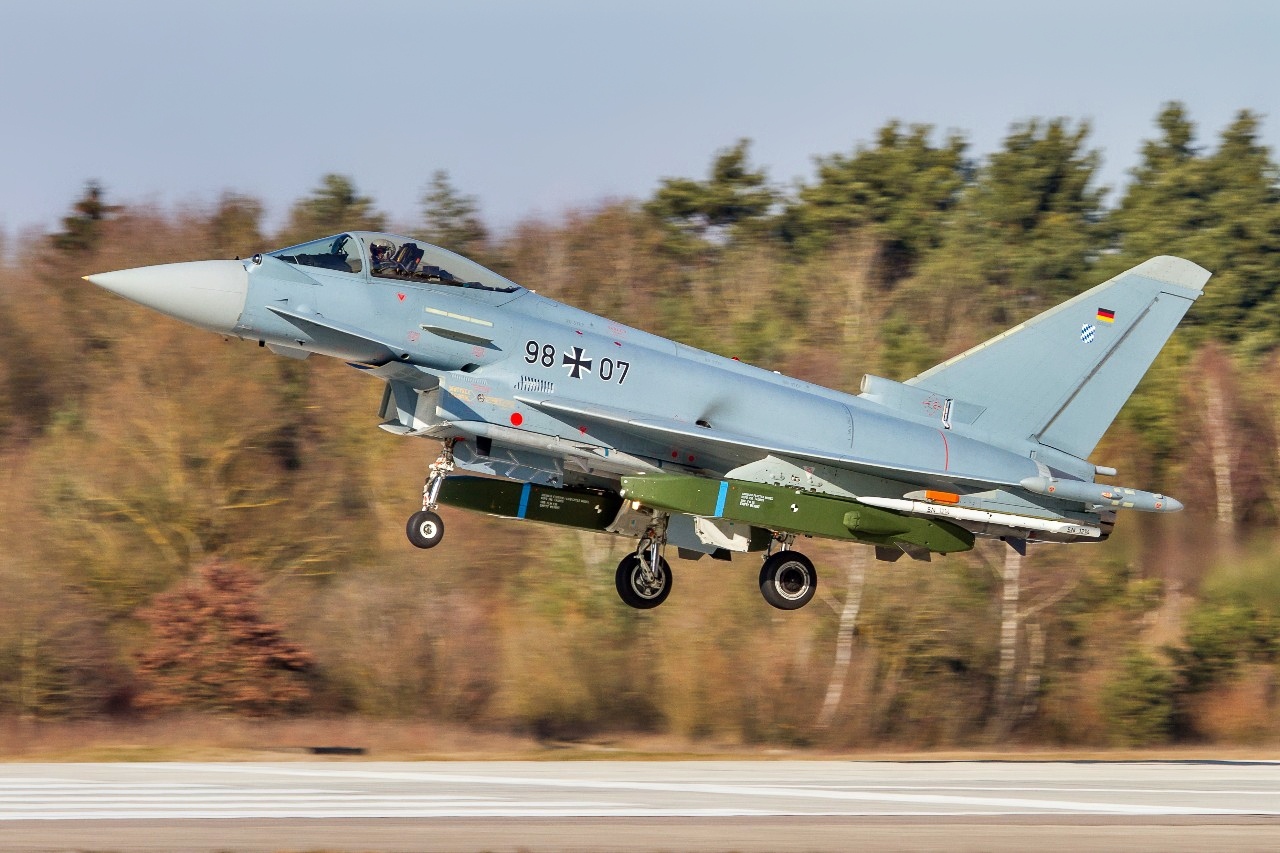
Taurus Missile on Eurofighter. Image Credit: Creative Commons.
1) Industrial Benefits You Can Touch (And Count)
Canada’s defense procurement has a well-known lodestar: industrial benefits at home.
Ottawa’s Industrial and Technological Benefits policy favors bids that guarantee work packages, maintenance, repair, and overhaul (MRO) jobs, and long-term technology activity in Canada. A Eurofighter bid can be sculpted to that policy—guaranteed subcontracts and heavy MRO work inside Canadian firms, spelled out in binding offset schedules that ministers can hold up in Parliament.
The F-35 has undeniably delivered Canadian workshare, but it’s a best-value partnership model spread across a global enterprise, not a classic offset. Companies compete for work continuously; nothing is permanently guaranteed. For some stakeholders, that feels like a moving target. A Eurofighter package can promise fixed work for a fixed number of tails—easier to brief, easier to audit.
Would this outweigh the network effects of joining the largest fifth-generation fleet on earth?
Probably not. But as a political argument inside Canada, “ironclad domestic jobs” is always potent.
2) Two Engines Over Ice And Ocean
Canada’s pilots spend a lot of time over frigid water and uninhabited tundra. That breeds a deeply human, not just technical, preference: two engines. The Eurofighter’s twin Eurojet EJ200s give crews and commanders a sense of margin if a bird strike, compressor stall, or sensor hiccup arrives at the worst possible moment, far from a divert field.
Is modern single-engine reliability excellent? Yes. The F-35’s powerplant has been exceptionally dependable across hundreds of thousands of flight hours. But risk is not just a statistic; it’s felt in bone marrow when the nearest runway is an hour away and it’s forty below. The Royal Canadian Air Force historically favored twin engines (the CF-18 Hornet) for precisely this reason. If the Typhoon advocates want to reopen the argument, the Arctic safety case is their opening move.
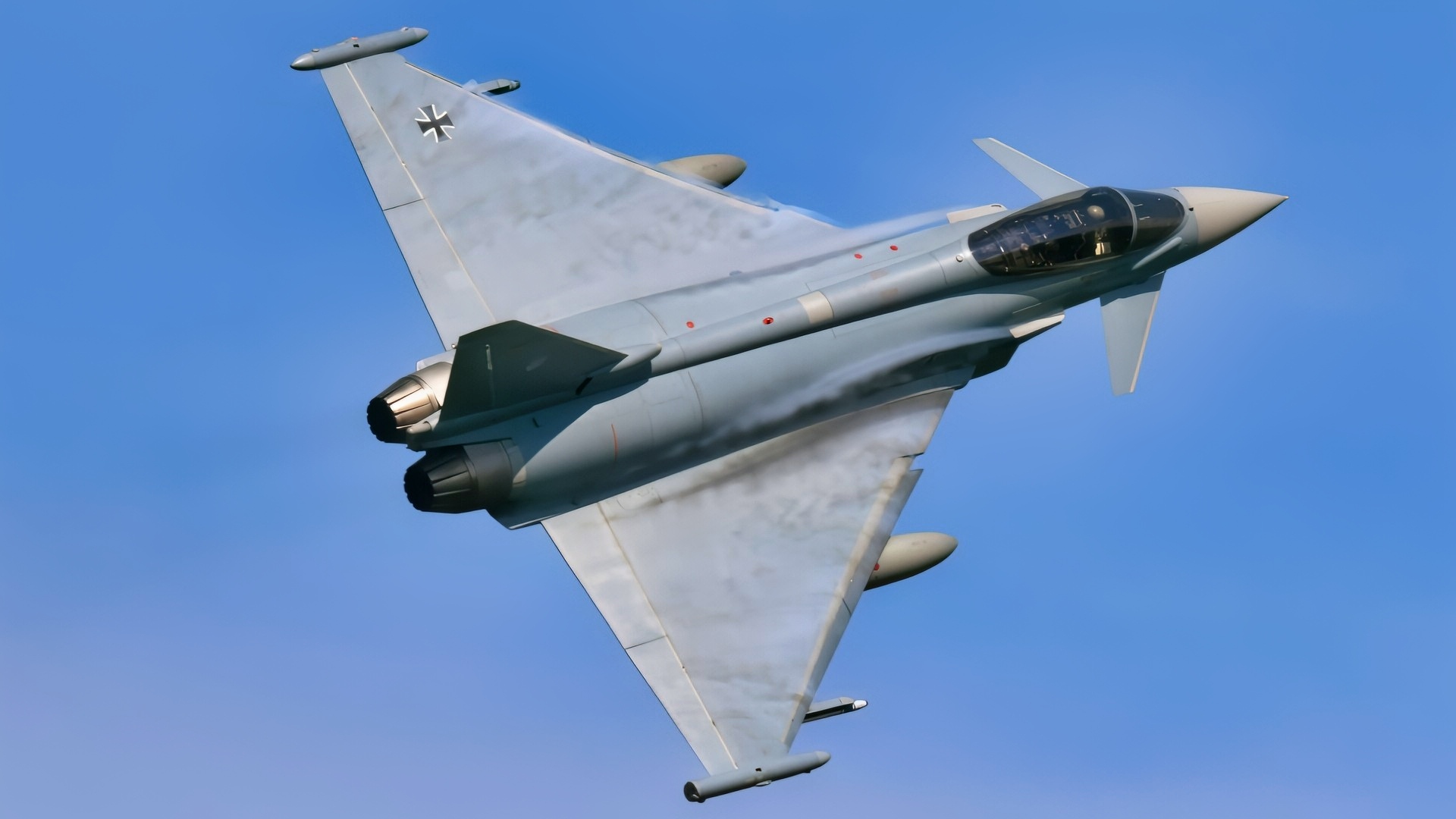
A German Air Force pilot, assigned to the German Air Force Weapons School, conducts strafing runs with an Eurofighter Typhoon in conjunction with U.S. Air Force Joint Terminal Attack Controller assigned to 2d Air Support Operations Squadron identifying targets on the ground at the 7th Army Training Command’s Grafenwoehr Training Area, Germany, June 9, 2021. (U.S. Army photo by Gertrud Zach)
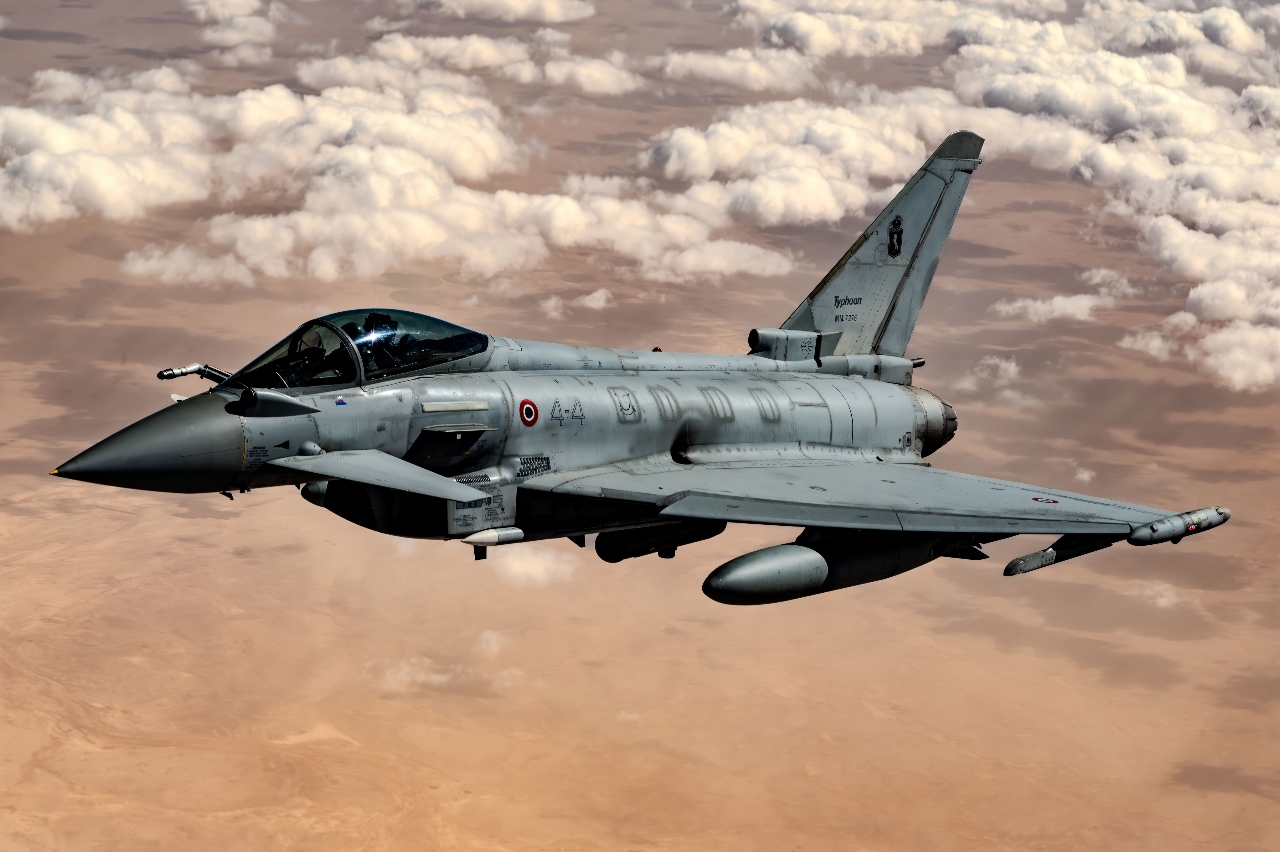
An Italian Air Force F-2000 Eurofighter Typhoon flies a routine presence patrol mission over the U.S. Central Command area of responsibility, Feb. 6, 2025. Close collaboration with partner nations improves interoperability, ensuring rapid crisis response and sustained operations to protect vital mutual interests in the AOR.
(U.S. Air Force photo by Staff Sgt. Jackson Manske)
3) Hedging Schedule And Software Risk
Another plausible reason to consider a Eurofighter pivot is schedule hedging. The F-35’s modernization cadence—new computers, Block 4 capabilities, and rolling software drops—delivers long-term power, but it also creates periods where deliveries pause or arrive “hardware-ready, software-awaiting.” Canada can live with that; it’s the price of being on the cutting edge. Still, a government staring at headlines about delays might be tempted by a mature, incrementally upgraded Eurofighter with fewer software cliffs.
Equally, if European partners can slot earlier delivery positions or loan airframes to accelerate conversion training, that becomes a tangible lever: pilots qualified sooner, squadrons at interim readiness while Ottawa waits for the latest F-35 software to stabilize. In politics, “on time” sometimes beats “best later.”
Of course, this cuts both ways: delays and backlogs happen in Europe, too. But as a narrative for reopening the file, “reduce near-term schedule risk” is credible.
4) Predictable Sustainment With Familiar Partners
Sustainment is where budgets quietly live or die. The Typhoon is supported by a large club—Germany, Italy, the U.K., Spain, and multiple export customers—running a mature sustainment consortium with known parts flows, fixed-price support options, and lots of airframes to cannibalize if needed. The jet is still modernizing, but most of its gremlins are catalogued and priced.
By contrast, the F-35 is still bending its sustainment curve down. The global enterprise is enormous and improving, yet some nations have felt spares bottlenecks or software-tool growing pains. Ottawa knows the F-35 will get there—the mass of the user base virtually guarantees it—but if a Canadian government wanted cost predictability right now, the Typhoon’s steady-state ecosystem is an argument they can make.
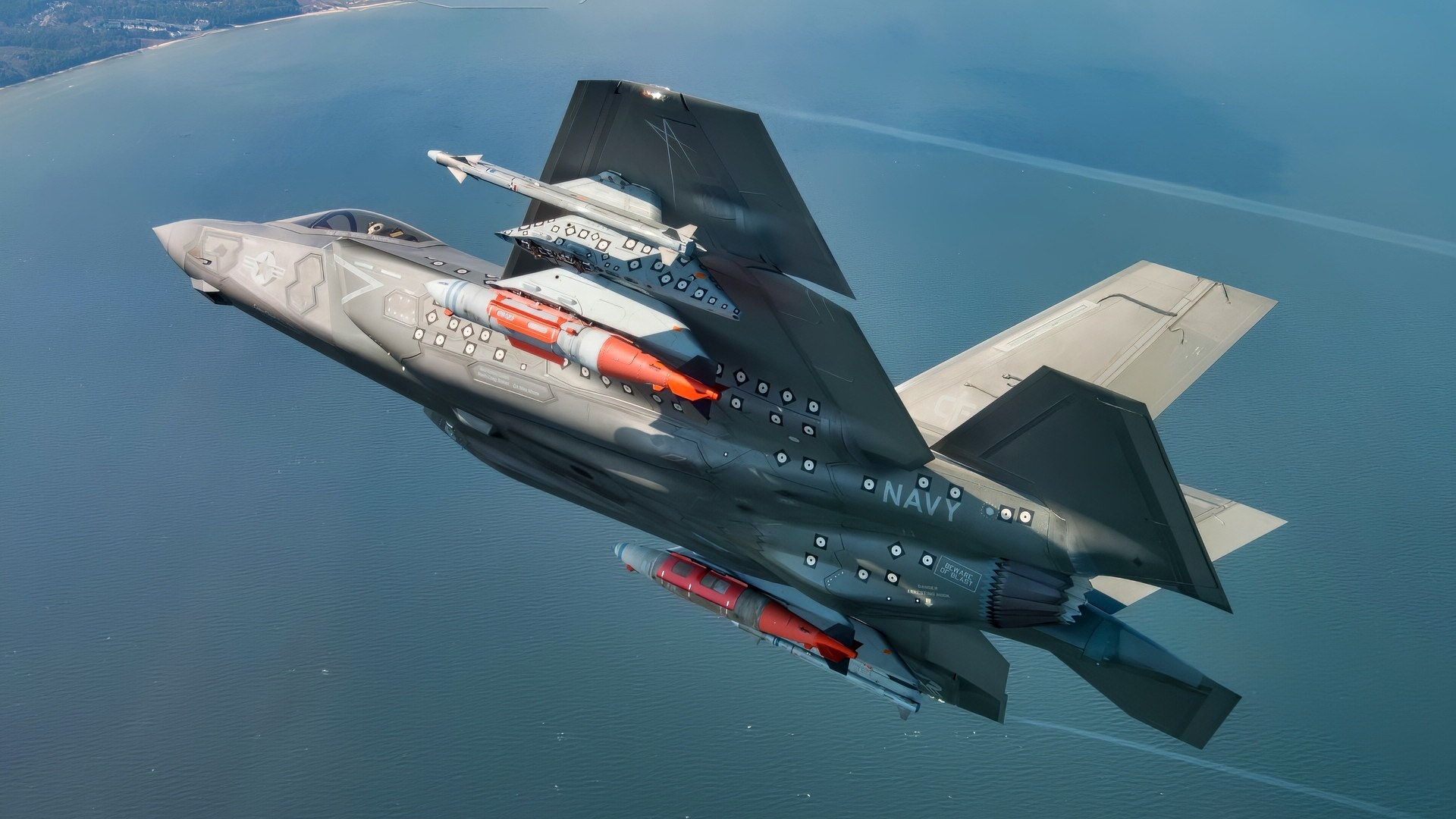
The final SDD Test flight CF-2 Flt 596 was piloted by BAE Test pilot Peter Wilson, April 11, 2018, from the F-35 Pax River Integrated Test Force. The F-35C completed a mission to collect loads data while carrying external 2,000-pound GBU-31 Joint Direct Attack Munitions (JDAM) and AIM-9X Sidewinder heat-seeking missiles. (Photo courtesy of Lockheed Martin)
There’s also the question of sovereign control. Some policymakers are more comfortable with European data policies and export regimes than with the U.S. International Traffic in Arms Regulations (ITAR). The Eurofighter community can often tailor sovereign maintenance, data hosting, and software-release arrangements to national preferences. For a country that prizes autonomy, that’s not nothing.
5) An Air-Defense Thoroughbred With European Teeth
Canada’s daily mission at home is air sovereignty: detect, intercept, and escort. The Eurofighter is built for that world—fast climb, big radar, high sprint speed, and a weapons ecosystem that includes the Meteor beyond-visual-range missile with a ramjet for sustained end-game energy. As a pure interceptor, Typhoon is easy to love. It’s also an excellent swing-role jet, but its soul is air-to-air.
In a NATO context, flying the same fighter as major European air forces has obvious interoperability perks—shared tactics, shared spares, and plug-and-play deployments to Baltic or Black Sea air policing. If the political goal were to rebalance transatlantic defense relationships a bit—more “Made with Europe,” slightly less “Made in America”—a Typhoon fleet helps make that point.
None of this means the F-35 is weak at air defense; it isn’t. But if you wanted the cleanest story for Arctic intercepts today, a twin-engine air-superiority mount with European weapons has a certain elegance.
The Counterpoint: Why The F-35 Still Wins Where It Counts
All of those reasons are real. They are also, taken together, not enough to outweigh the F-35’s long-term advantages for Canada’s actual missions.
Start with the mission that matters most in a crisis: arriving unseen. The F-35’s low observable design and sensor fusion—the way it blends radar, infrared, and electronic signals into a single picture—let a small number of jets do the work of a larger non-stealthy package. In the Arctic, that translates into fewer tankers, fewer support aircraft, and less radio chatter to accomplish the same patrol or intercept. In NATO operations, it translates into a jet that can kick down the door on Day One and then quarterback fourth-generation teammates on Days Two through Thirty.
Second, NORAD integration rewards sameness. The United States flies F-35s in bulk. The U.S. Navy and Marine Corps fly them from carriers and expeditionary pads. The most advanced tactics, data links, and software libraries will be written for and validated by the F-35 community first. In North American air defense—where you want machines and crews that already think together—the path of least friction is to fly the same jet your closest partner flies.
Third, the F-35 gives Ottawa a single fleet with many lives. As software and hardware modernize, the jet will field new weapons, new electronic-warfare tricks, and better manned-unmanned teaming without requiring a new airframe. A Typhoon can and will keep modernizing, but some of the deepest leaps—especially in signature and sensing—are constrained by the physics of its shape. Canada would be buying into a platform already at the frontier, not one that must work around its own fingerprints.
Fourth, coalition mass matters. The list of F-35 operators keeps growing. That means shared training syllabi, shared simulators, common spares pools, and multinational exercises where everyone is on the same playbook. The fuel Canada burns on interoperability will return more value in an F-35 world than in a split fleet or a Eurofighter-only lane.
Finally, the cost-per-effect calculus tilts toward the F-35. Sticker prices and hourly cost debates never end, but what commanders actually buy is effect: the dollars required to achieve a mission with acceptable risk. If a stealthy F-35 needs fewer escorts, fewer jammers, and fewer tankers to deliver the same result, its true price is lower than it looks on a spreadsheet.
What About The Twin-Engine Arctic Argument?
It’s the most emotionally resonant case for Typhoon, and it deserves respect. But the F-35’s single-engine reliability record is strong, and the North’s real constraints are often runways, sensors, ice, and distance, not pure engine redundancy. The better way to de-risk Arctic ops is a package approach: F-35s backed by resilient satellite communications, satellite and over-the-horizon sensors, smart basing, and robust search-and-rescue—paired with the tankers and transports that make Canada’s north reachable in the first place.
If Ottawa wants extra margin, it can buy it via operational concepts: two-ship tactics, conservative divert rules, and seasonal posture plans, rather than by changing the airplane.
Industrial Benefits Without Splitting The Baby
Could Canada get more domestic work inside the F-35 enterprise? Yes—by negotiating additional MRO depth, component lines, software labs, and depot-level activities that are naturally suited to Canadian firms. The F-35 is not a closed shop, and the global user base is hungry for new sustainment capacity. Ottawa can grow a bigger slice of a vast pie without giving up the advantages of flying the pie’s main flavor.
Put differently: the surest path to Canadian jobs that last is to anchor them to the world’s largest fighter program for the next thirty years, not a smaller club with narrower modernization funding.
The Real Choice: Hedge Today Or Dominate Tomorrow
A Eurofighter pivot would be a hedge—against software delays, against single-engine discomfort, against dependence on U.S. data regimes. Hedges feel good. But Canada isn’t buying a hedge; it’s buying thirty years of relevance in both North American defense and NATO coalitions. That future is being written in F-35 code, F-35 tactics, and F-35 upgrades.
The Typhoon is a superb aircraft. If Canada were equipping only for policing the Arctic on clear days, the case would be tempting. But Canada must also contribute to allied operations where arriving unseen, sensing first, and making the whole package deadlier are the coin of the realm. The F-35 is designed for exactly that.
Bottom Line: F-35 Is Still the Best Choice
Five sound reasons could re-ignite the Typhoon debate: guaranteed industrial work, twin-engine comfort over the Arctic, near-term schedule hedging, predictable sustainment with European partners, and a pure air-defense pedigree.
Taken together, they make a respectable political case.
But strategy isn’t a sum of talking points. It’s a choice about what kind of Air Force Canada wants to fly in 2035, 2040, and 2050. Stealth, sensor fusion, and allied commonality are not nice-to-haves; they are the entry ticket to the fights Canada hopes to deter—and, if necessary, win.
On that test, staying with the F-35 isn’t just prudent. It’s obvious.
About the Author: Harry J. Kazianis
Harry J. Kazianis (@Grecianformula) is Editor-In-Chief and President of National Security Journal. He was the former Senior Director of National Security Affairs at the Center for the National Interest (CFTNI), a foreign policy think tank founded by Richard Nixon based in Washington, DC. Harry has over a decade of experience in think tanks and national security publishing. His ideas have been published in the NY Times, The Washington Post, The Wall Street Journal, CNN, and many other outlets worldwide. He has held positions at CSIS, the Heritage Foundation, the University of Nottingham, and several other institutions related to national security research and studies. He is the former Executive Editor of the National Interest and the Diplomat. He holds a Master’s degree focusing on international affairs from Harvard University.
More Military
Why the U.S. Navy Finally Said No to the F-14 Tomcat
China’s ‘New’ J-35A Air Force Stealth Fighter Suffers From 1 Big Disadvantage
China’s Stealth Submarine Fleet Has a Message for the U.S. Navy
The U.S. Army’s Drone Nightmare Is Coming True
Mach 6 ‘Miracle’ SR-72 Darkstar Has a Message for Russia or China


US Patriot
November 3, 2025 at 4:43 am
Sadly the US is no longer a reliable ally of Canada as well as of Europe and Australia. Trump certainly acts often as an Putin ally. He negotiates tariffs with China but not with Canada, which he appears to hate, like he apparently hates Germany, despite denying this when asked – his actions convey another view.
Until this situation changes, Canada cannot reliably use the F35. It is assumed by many abroad that the US has the ability to block F35 use, no matter what may be claimed – which now matters, as Trump controls everything the US military does. Thus, very sadly, all European, Australian and Canadian weapons must be based solely on manufacturing in these countries that are reliable allies for themselves, including for their strategic and tactical nuclear weapons to deter Russia.
As an American based with his family in Europe who formerly worked as an independent lawyer for major Russian oil and gas companies as well as American companies, I heard about the Russian plan for a tactical nuclear weapons based blitzgrieg across non-nuclear Europe to the English Channel if Russia can get through Ukraine, which becomes likely if Russian can get through Ukraine, which becomes much more likely if Ukraine is forced by the US Sudetenland-style to surrender its key defensive positions in Donetsk Oblast. Apparently to help Putin (why else would this be done), Trump has blocked all US funded arms flow to Ukraine – not just to stop the contemplated Tomahawks – at this critical moment. Europe needs NATO troops in Ukraine – providing weapons is the least that can be done by the US. Until there is a new US president and direction for NATO, Europe, Canada and Australia must become self sufficient for their defence, including to replace the US nuclear umbrella that Trump can on his own unilaterally withdraw at any time without notice or consent by anyone else – which based on his current behavior appears to be a genuine risk. You must be able to understand how exposed the rest of NATO now reasonably feels – the awful fact is that Europe, and Americans in Europe, can no longer unquestionably count on the US as an ally, and must act accordingly.
DougyW63
November 3, 2025 at 5:21 am
As the UK has found the Typhoon is way better as an interceptor. It gets there way faster and has a much better dispatch rate.
Stavros Karpozilos
November 3, 2025 at 7:56 am
Canada probably needs both. You build your defence based what your adversaries have, and Canada’s adversaries do have stealth planes, hence, Canada needs stealth planes. Otherwise Canada may see its non-stealth planes falling out of the sky by missiles seemingly coming out of nowhere. However, stealth planes (the F-35s in specific) are not cheap to run and maintain, they are not the fastest, they are not designed to cover vast distances at high speeds (which is exactly what the EFs were designed and optimized for), and they are not agile enough in a dogfight scenario. Best approach would be to have the F-35s intercept potential threats when threats are unknown in nature, or known to be stealth, or penetrate guarded airspace, and basically send the EFs for anything else. You don’t need stealth to patrol your own land and waters (the opposite would be the case, you want to be seen doing it) and you don’t want single engined aircraft chasing bombers at high altitudes thousands of miles away. By having both, Canada also ensures that neither the US, nor the EU could “blackmail” their way to an undesired result (if the US has gone “funny”, nobody could guarantee that the EU couldn’t, at some point, become “funny” too), being able to pivot between the two, should that become necessary. A scenario that covers all of these would be for Canada to have a number of F-35s in the role of “special forces” plane, and a number of EFs in the role of “mainstream” plane.
Stephan Larose
November 3, 2025 at 4:23 pm
The only country that would conceivably invade Canada is the USA. F35s are lemons. Half the fleet routinely unavailable due to repairs or software glitches. Single engine, short range, can’t run, can’t turn. The only reason to have this is if Canada is planning a first-strike nuclear missile attack on China or Russia—which would mean certain doom for Canada. If Canada wants jets, it should build its own. We have done it before and if tiny Sweden can do it, so can we. Then you can claim some sovereignty. But again, if the US invaded, they’ll mop the floor with us, so jets are really just for status and pride, nothing more. We don’t need to participate in NATO wars of aggression and genocide and regime change, that is the path to self-destruction.
Bill Reynolds
November 3, 2025 at 6:37 pm
This article is a sham. Canada doesn’t have a big message for the Typhoon. Apparently an American who gets paid by Lockheed wants them to think so tho. What a disingenuous article clearly written to promote something for political gains.
National Security Jounal is becoming less and less a media website, and more and more a political manipulation tool for Washington and their dogs.
Elias Moreau
November 4, 2025 at 10:03 am
NATO countries didn’t buy the F-35 because it’s the best option available; they bought it despite equal or better alternatives elsewhere. They purchased the F-35 from what was considered a stable, reliable, and predictable partner backed by a significant military force and industry.
That partner has now been replaced with an unpredictable and unreliable regime throwing threats around. I’m afraid the 51st-state rhetoric isn’t going away anytime soon.
Furthermore, the F-35 is ridiculously expensive. The F-35 was sold under the premise it would get cheaper over time. Recently however, the cost is trending the other way. Flight hours matter, and most NATO countries will probably not be able to afford to let their pilots fly as much as required. Even the United States cannot afford to fully replace its fleet of F-16s with F-35s.
A report (which I can’t locate at the moment) suggested that only about one-third of the U.S. F-35 fleet is operational at any given time due to maintenance issues. Overall, the F-35 is an expensive, niche fighter jet–not a work horse–trading speed and maneuverability for stealth. The fighter jet originally intended to replace the F-16 has turned out to be nothing more than the F-16’s expensive sidekick.
The only question you—and Canada—need to ask is this: how useful is a grounded jet? Does it matter why it’s grounded—whether due to a lack of spare parts from an unreliable partner, excessive maintenance requirements, or budget constraints?
Maintaining a mixed fleet is the only sensible option going forward, despite the logistical complexity of managing two supply chains. The bulk of the air force should consist of modern fighter jets that Canada can afford to operate—maneuverable, fast aircraft with quick turnaround times flown by pilots with adequate flight hours under their belts.
The prima donna stealth fighters should only be used when stealth is an operational requirement—or for public relations stunts. Stealth will only get you so far anyway. Sooner or later, your position will be known and now you’re in a fighter jet that’s slower and less maneuverable than your opponent’s. Not to mention outgunned—stealth also means no visible armaments on uncovered hardpoints.
In summary, the F-35 is not a force multiplier but an insidious force reducer—doing more harm than good. Any modern European fighter jet is more than capable of protecting Canada’s airspace in ways the F-35 never will.
Douglas DeHart
November 4, 2025 at 2:47 pm
An American analyst says Canada should buy American. Unfortunately, the future of Canadian defense alliances does not look like it can safely be centered on the US rather than Europe. I would not be surprised that Canadian defense and trade interactions don’t increasingly turn toward Europe.
Alan T
November 8, 2025 at 6:10 pm
How reliable is the USA for support. What happens if the USA decides that support will be temporarily suspended, pending the results of a Pentagon review? Will Canada have to cannabalize the F35 fleet to support what’s left?