


Key Points and Summary – Russia’s Su-57 promises fifth-gen stealth and extreme agility, but its larger radar signature, small fleet, and engine delays undercut the hype.
-The F-15EX, by contrast, isn’t stealthy—but it brings long reach, heavy missile mass, modern AESA radar, and EPAWSS electronic warfare, plus an open-architecture “digital backbone” for rapid upgrades and CCA teaming.

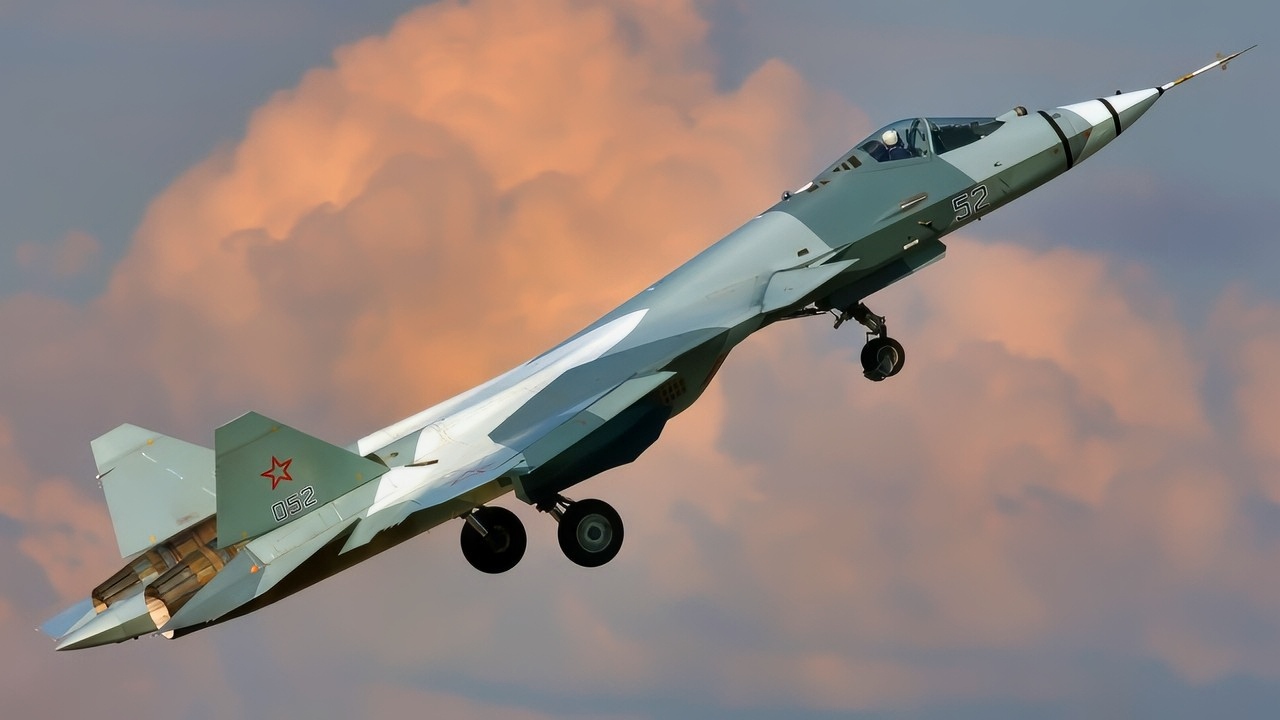
Su-57 Felon Stealth Fighter Taking Off. Image Credit: Creative Commons.
-In WVR, the Su-57’s thrust-vectoring and post-stall tricks can shine. In BVR—the way modern air wars are fought—the F-15EX’s sensors, networking, and missile volume likely tip the balance.
-Bottom line: the Eagle’s “missile truck” reality beats the Felon’s uneven stealth promise.
F-15EX Eagle II Against The Russian “Stealth” Su-57 Fighter
Once more into the breach, dear friends, let’s take a look at the newest variant of the iconic F-15, the F-15EX , and how it would fare in air combat against the Russian Su-57.
The F-15EX is the most advanced variant of the multirole, all-weather, and day-and-night-capable F-15 aircraft family, featuring affordability, speed, range, heavy-weapon payload capacity, a digital backbone, and an open architecture.
Background On the Aircraft At Hand
The Russians have been trying to hawk the Su-57 to just about anyone who would have one. India partnered with Moscow on a Fifth-Generation Fighter Aircraft (FGFA) program, a joint development of the Su-57, but exited in 2018 due to cost and technology transfer issues. Plus the fact that India was unhappy with the performance of the aircraft, especially its stealth (or lack thereof).
Please, look at the wing in the attached photo. Does that look like a stealth fighter’s wing?
Russia is now offering the Su-57E export model, which includes unprecedented access to source code for local integration of Indian avionics and weapons, to address security challenges and modernize India’s air force.

Image Credit: US Air Force.
Russia is actively proposing this deal, with studies underway for potential co-production and customization of the Su-57 in India. Fool me once…
So, let’s take a look at the aircraft on their own merits and see where the rubber meets the road.
Su-57 Headache For NATO or More Hype?
There are three countries currently that claim to have produced 5th Generation stealth fighters: the United States ( the Lockheed Martin F-22 Raptor and F-35 Lightning II), the People’s Republic of China (the Chengdu J-20 Mighty Dragon and Shenyang J-35), and Russia with the Su-57 Felon.
The Sukhoi Su-57 is widely regarded by many experts as the worst-performing stealth fighter, particularly in comparison to its American and Chinese counterparts, such as the F-22 Raptor and J-20, due to its significantly inferior stealth capabilities, limited production, technology issues, and poor workmanship by Russian manufacturing facilities.
Su-57 History
The Felon is capable of aerial combat, ground attack, and maritime strikes. The Su-57 incorporates some stealthy characteristics, supermaneuverability, supercruise, integrated avionics, and large payload capacity.
Russia and India signed a contract in 2010 for Sukhoi and Hindustan Aeronautics Limited (HAL) to develop a derivative of the PAK FA jointly called the Fifth Generation Fighter Aircraft (FGFA). Each country was to pay $6 billion, and the development was expected to take 8-10 years.
However, by 2014, the partnership fell apart. The Indian Air Force started voicing concerns over performance, especially the stealth feature, cost, and workshare. India found that the aircraft did not meet its requirements and left the partnership in 2018.

An F-15EX Eagle II, assigned to the 142nd Wing, taxis on the flightline before take-off during the official Unveiling Ceremony for the new fighter jet at the Portland Air National Guard Base, Oregon on July 12, 2024. The 142nd Wing will be replacing the F-15 C/D model Eagles with the new F-15EX Eagle II models. (National Guard photo by John Hughel, Oregon Military Department Public Affairs)
The Su-57 is powered by two Saturn AL-41F1 afterburning turbofan engines that power the aircraft to Mach 2.45. A new engine has been in the works for a decade, but has not materialized.
The armament for the aircraft includes a 30 mm autocannon under the nose, various anti-ship, anti-aircraft, and anti-armor missile configurations with eight hard points in the storage bays.
According to Air Force Technology, the Russian aircraft is also equipped with 3D thrust vector jets, enabling higher maneuverability and the capability to develop a supersonic cruising speed.
Stealth? Felon’s Radar Cross-Section Is Enormous
While it offers improvements over previous Russian aircraft, its radar cross-section is significantly larger than that of other fifth-generation fighters, and delays, budget issues, and reliance on older engines have plagued its development.
For instance, the F-35 has a frontal radar cross-section of 0.0001 m², thanks to its advanced fiber-matte radar absorbent material. In comparison, the SU-57 has a radar cross-section ranging from 0.1 to 1 m². Alex Hollings says the Felon’s radar signature is more likely to be 20 to 30 times that of an F-22 Raptor, which is still a massive difference in stealth. Fifth-Generational stealth?
Can They Actually Build Any?
Despite heavy marketing of the Su-57E (export version), Algeria appears to be the only taker. The two countries reportedly agreed on a deal for 14 Su-57s in late 2019, but it wasn’t confirmed by Algeria publicly until this year. Why?
Su-57 Felon Stealth Fighter in the Sky. Image Credit: Creative Commons.
Sukhoi is years behind in delivering Su-57s to the Russian military. The Russian Air Force currently has only about 15 Su-57s, and that may be a generous estimate.
Russia will likely struggle to meet the 2025 deadline for Algeria. Another reason is that Algerian law requires imported military aircraft to be flight-tested in the country first, which, according to Tom Cooper, an expert on Russian military aircraft, is something the Russians would never allow.
Meet the F-15EX Eagle II Fighter
The Air Force designed the F-15EX to be a missile truck to provide the capability to carry a large number of missiles in support of the F-35 Lightning, as well as to deliver firepower for destroying threats detected by the F-35 during combat operations.
However, the 4th-generation fighter still lacks stealth capability and will have to remain, for the most part, outside enemy airspace until those defenses can be overcome.
Modernized Avionics and Sensors
The F-15EX features a modernized avionics suite. The advanced radar systems and state-of-the-art avionics, including the Eagle Passive/Active Warning and Survivability System (EPAWSS), a new advanced electronic warfare suite, allow the F-15EX to operate in highly contested airspace.
Just a year ago, Boeing secured a $61 million upgrade for the avionics package for the F-15EX, which will improve the F-15 Advanced Display Core Processor II (ACDP II) Full Rate Production 1.
Open Mission Systems (OMS)
The F-15EX Open Mission System (OMS) suite allows for rapid upgrades and enhanced capabilities on the F-15EX fighter jet. This includes features like advanced avionics, electronic warfare systems, and a powerful radar.
The OMS architecture also enables the F-15EX to act as a networked battlespace manager, facilitating rapid integration with other aircraft and systems.
Enhanced Electronic Warfare (EW)
The F-15EX features an enhanced electronic warfare system known as the Eagle Passive Active Warning Survivability System (EPAWSS). EPAWSS is an all-digital radar warning, geolocation, and situational awareness platform designed to detect and counter threats in dense, contested electromagnetic environments.
It provides radio frequency (RF) electronic countermeasures (ECM) and is smaller and lighter than previous EW systems.
Increased Weapons Capability
The F-15EX “weapons truck” can carry a larger payload of weapons, including air-to-air missiles, air-to-ground munitions, and hypersonic weapons. The F-15EX has an expanded missile carriage capacity of 12 air-to-air missiles, compared to the eight air-to-air missile capacity of the standard F-15 aircraft, or it can carry 12 air-to-surface missiles.
It can launch a hypersonic missile up to 22ft long, providing an advantage in future near-peer conflicts. A single pilot can operate the aircraft and has a payload capacity of 13,300kg. It will also be able to operate with Collaborative Combat Aircraft (CCA) uncrewed “loyal wingman” aircraft.
Networked Battlespace Manager
The F-15EX can act as a networked battlespace manager, sensing, passing, and targeting information for enhanced situational awareness and coordination. The F-15EX’s role as a networked battlespace manager, particularly with its CCA integration, represents a significant advancement.
Two-Seat Configuration
The F-15EX features a two-seat cockpit that enhances its capability to serve as a command-and-control node in future high-end combat scenarios.
This configuration enables a dedicated weapons systems operator (WSO) to oversee operations, providing crucial support as threats and missions become increasingly complex.
Traditionally filled by a WSO, this role can adapt to address emerging challenges, evolving into that of an operator and battlespace manager. This flexibility positions the F-15EX as a vital asset in modern air warfare.
Air Combat: Who Wins?
An Su-57 Felon against one of the legacy F-15s would give the Felon a clear advantage. As a close-in dogfighter, it is a perfect aircraft. But calling the Felon a fifth-generation stealth aircraft is a bit of a stretch. Even their allies, the Chinese, called them out.
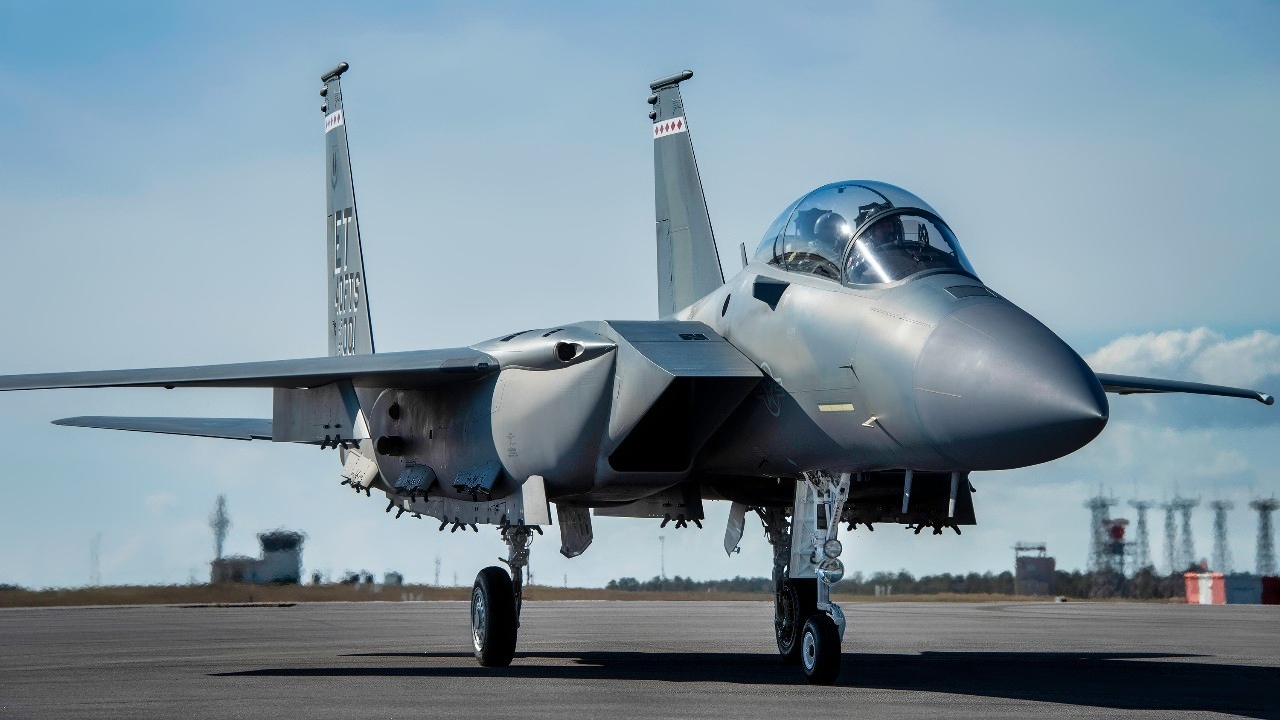
The F-15EX, the Air Force’s newest fighter aircraft, arrives to Eglin Air Force Base, Florida March 11. The aircraft will be the first Air Force aircraft to be tested and fielded from beginning to end through combined developmental and operational tests. The 40th Flight Test Squadron and the 85th Test and Evaluation Squadron personnel are responsible for testing the aircraft. (U.S. Air Force photo/Ilka Cole)
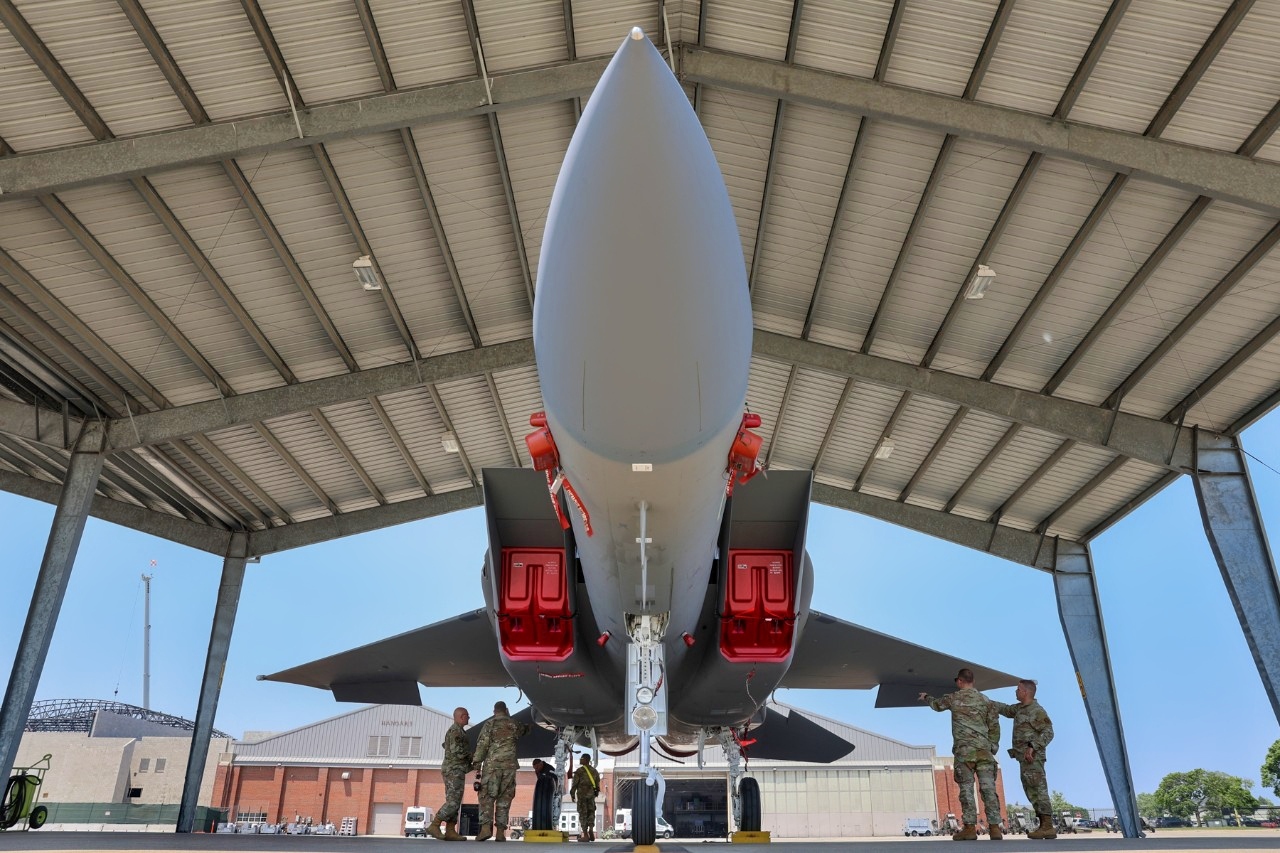
An F-15EX Eagle II from the Defense Contracting Management Agency Boeing St. Louis, sits on the flight line at Selfridge Air National Guard Base, Michigan, June 11, 2025. The aircraft visited the base as part of a site activation task force, an initial step to prepare the 127th Wing with the right infrastructure, personnel, and support the incoming F-15EX and KC-46 Pegasus missions . (U.S. Air National Guard photo by 1st Lt. Elise Wahlstrom)
The F-15EX can haul 29,500 pounds of weapons as high as 60,000 feet and as far as 1,100 miles at a top speed.
While neither has the stealth to be considered a fifth-generation fighter, the F-15 does have the advantage of a higher speed, able to reach Mach 2.5.
The F-15EX has more advanced and capable radar and avionics compared to the Su-57, with features like longer detection ranges, more robust electronic warfare systems, and a superior pilot-vehicle interface with touchscreen displays and dual digital helmet-mounted displays.
While the Su-57 was the first Russian fighter with an AESA radar, the F-15EX’s modern avionics, comprehensive detection capabilities, and proven ability to detect and track multiple targets at advantageous ranges provide a distinct advantage in air superiority scenarios.
Give me the old missile truck any day over a handful of sloppily built Felons.
About the Author: Steve Balestrieri
Steve Balestrieri is a National Security Columnist. He served as a US Army Special Forces NCO and Warrant Officer. In addition to writing on defense, he covers the NFL for PatsFans.com and is a member of the Pro Football Writers of America (PFWA). His work was regularly featured in many military publications.
More Military
The Boeing X-32B Stealth Fighter Deserves a Better Fate Than This
Poland Is Preparing for a War with Russia
Does the B-21 Raider Have a Size Problem?


