

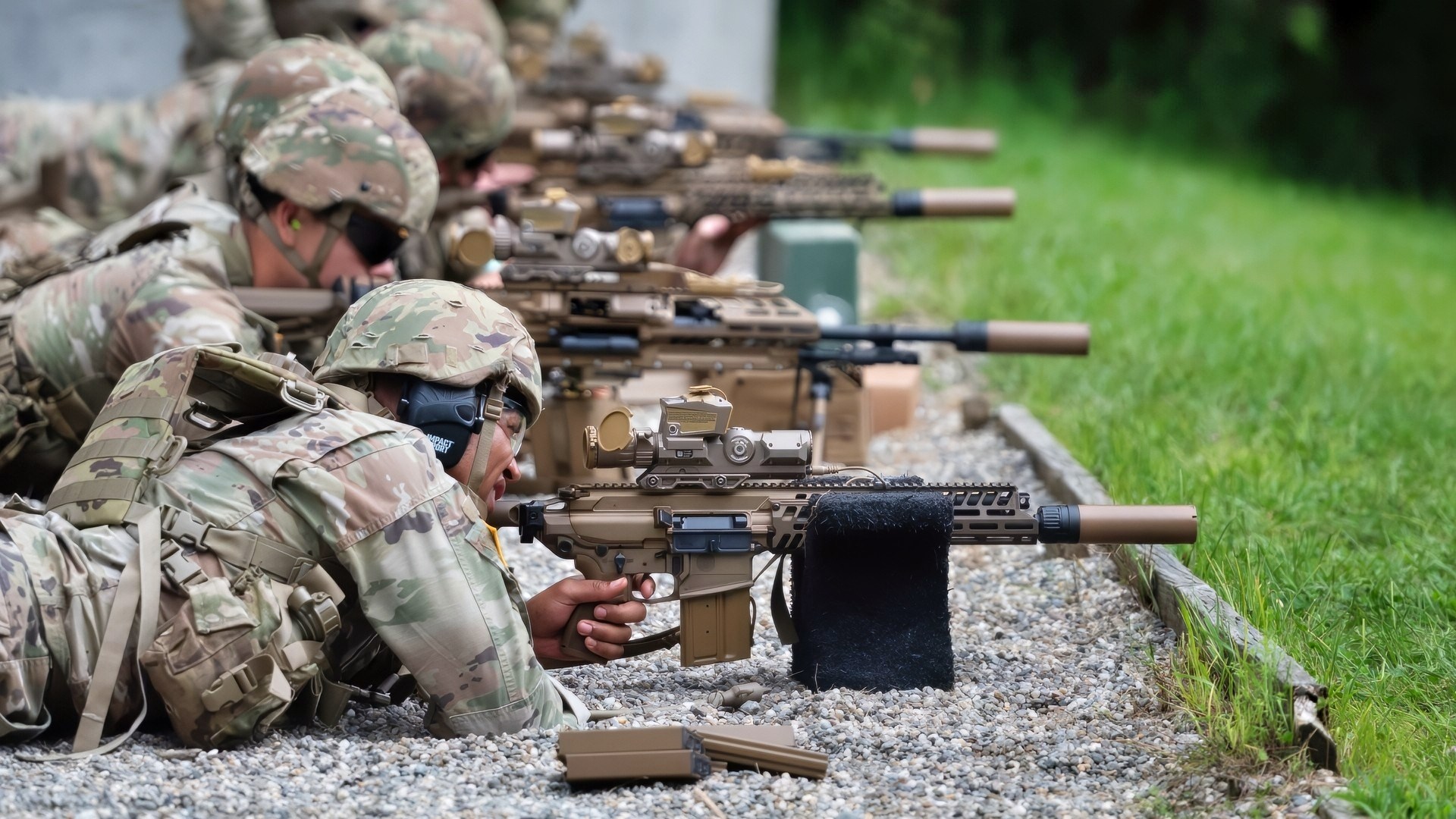
With negotiations between Tehran and Washington stalled, the American President is on the offensive, though only verbally so far. But in order to break the deadlock, President Trump is seemingly interested in pummeling Iran yet again — and suggested a Venezuela-style takeover of at least some of the country’s energy infrastructure and an invasion of what is perhaps the crown jewel of Iran’s oil and gas infrastructure.
Kharg Island: Invasion in the Future?
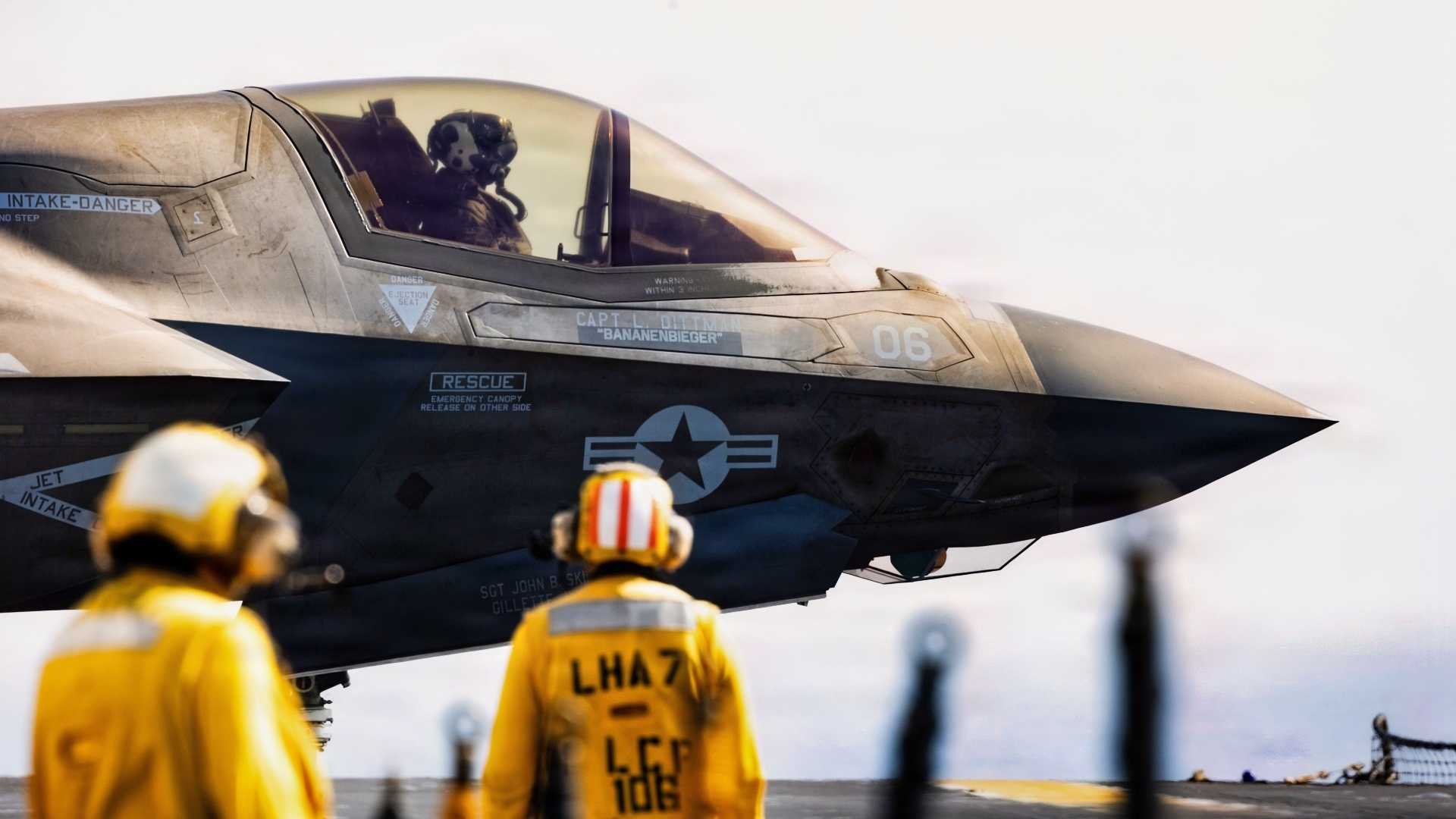
An F-35B Lightning II taxis on the flight deck of the amphibious assault ship, USS Tripoli (LHA 7) during flight operations in the U.S. Central Command area of responsibility, May 4, 2026. (U.S. Marine Corps Photo)
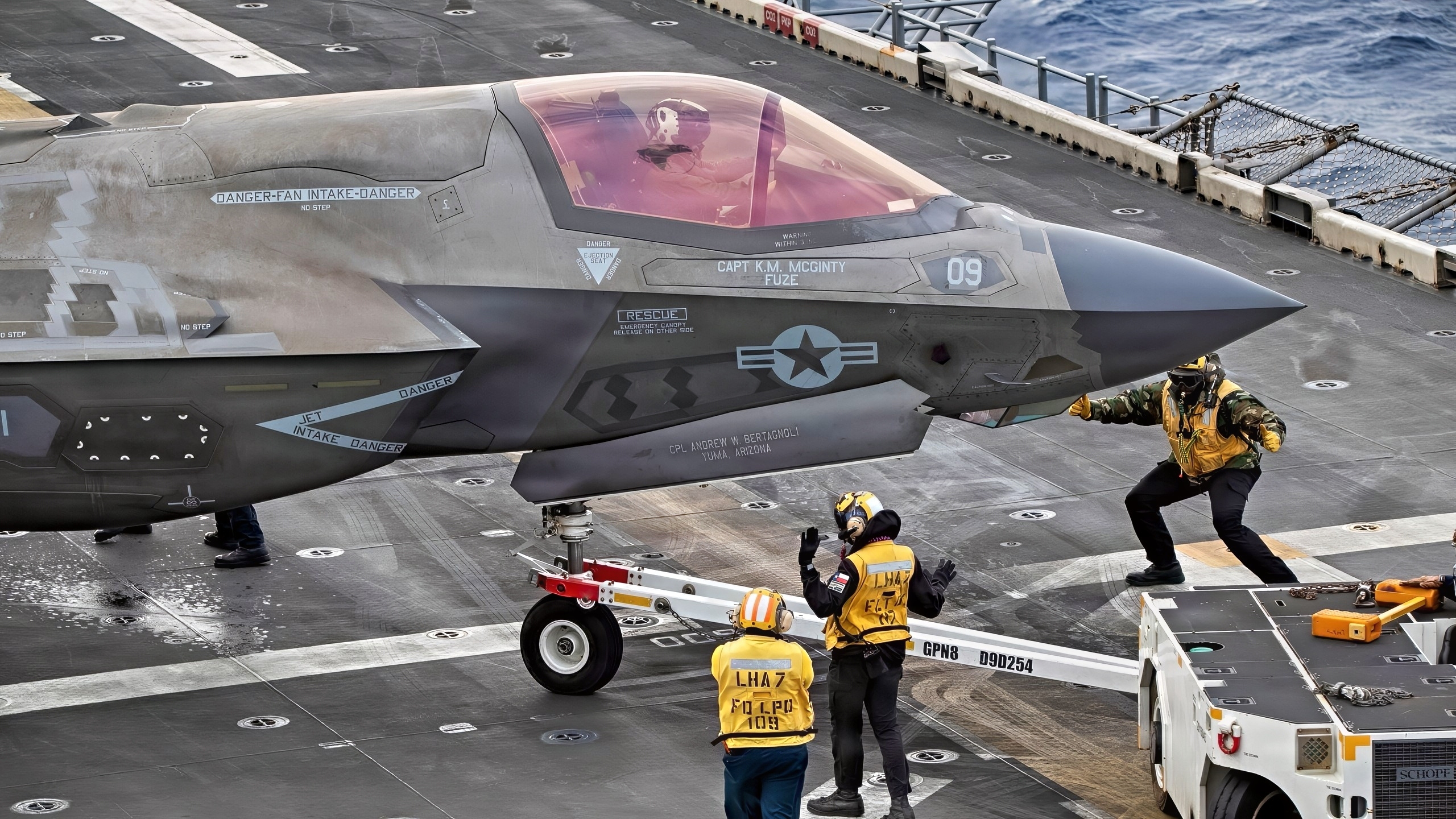
Sailors help move an F-35B Lighting II attached to Marine Fighter Attack Squadron (VMFA) 121 on the flight deck of America-class amphibious assault ship USS Tripoli (LHA 7), Mar. 05, 2026. Tripoli Amphibious Ready Group (ARG), composed of America-class amphibious assault ship USS Tripoli (LHA 7), San Antonio-class amphibious transport dock ships USS New Orleans (LPD 18) and USS San Diego (LPD 22), along with the 31st Marine Expeditionary Unit (MEU), are underway conducting routine operations in the U.S. 7th Fleet area of operations. U.S. 7th Fleet is the U.S. Navy’s largest forward-deployed numbered fleet, routinely interacts and operates with allies and partners in preserving a free and open Indo-Pacific. (U.S. Navy photo by Mass Communication Specialist Seaman Apprentice Reese Mitchell Taylor)
“The United States will be hitting Iran (whose Navy, Air Force, Radar, Anti-Aircraft, and all other forms of Defense, together with most of its offensive capability, are GONE!), VERY HARD TONIGHT,” American President Donald Trump posted to Truth Social.
“At some point in the not-too-distant future, we will be taking Kharg Island, and other oil infrastructure points, and assume total control of their Oil and Gas Markets, much like we have with Venezuela,” the president added.
Though the president has previously hinted that the United States could wrest control of the island from Iran, he has thus far refrained from doing so. But the president’s mounting frustration with the progress of both the war and negotiations between Iran and the United States has been evident.
Those talks, brokered in part through intermediaries, have proven drawn-out and inconclusive, at odds with the president’s preferred style of rapid, decisive conclusions.
Although an operation to seize Kharg Island would undoubtedly be a highly complex, potentially high-risk kind of operation, it would also be high-reward and give the United States a powerful bargaining chip, strengthening its hand in the ongoing conflict with the country’s nominally Islamist hardliners.
Kharg Island: Iran’s Energy Lifeline
At just five miles long and perhaps three miles wide, Kharg Island is by no means large. But the little island off Iran’s western coast in the Persian Gulf plays an outsized role in Iran’s number one source of funding: oil. Delivered by pipeline from the mainland, oil products are stored on the island before shipment to international markets, primarily to China. Oil storage capacity on Kharg Island is estimated at about 31 million barrels, and the start of last month was believed to be at 58 percent capacity, or nearly 18 million barrels.

Amphibious assault ship USS Makin Island (LHD 8) and aircraft carrier USS Nimitz (CVN 68) perform expeditionary strike force (ESF) operations, Feb. 15, 2023 in the South China Sea. Nimitz Carrier Strike Group (NIMCSG) and amphibious assault ship USS Makin Island (LHD 8) with embarked 13th Marine Expeditionary Unit are conducting joint ESF operations, representing unique high-end war fighting capabilities, maritime superiority, and power projection, demonstrating the U.S. commitment to our allies and partners in the Indo-Pacific region. (U.S. Navy photo by Mass Communication Specialist 3rd Class Kendra Helmbrecht)
In addition to oil storage facilities, the island also hosts a natural gas facility, an airport, a petrochemical complex, and several military sites. An oil terminal lies to the island’s west, and an LPG terminal as well as a jetty that can facilitate oil supertanker loading lie to the east.
A declassified document published by the CIA in 1984 explains the importance of the island to Iran’s economy, explaining that Kharg Island and the oil facilities it hosts are the “most vital in Iran’s oil system,” and adds that they are “essential to Iran’s economic well-being and ability to finance” its various projects at home and abroad.
“Khark Island’s oil facilities are extensive… [and are] the largest single oil export terminal in the Persian Gulf,” the CIA document explains. “Moreover,” it adds, “the unusual gravity flow oil delivery system to the island from oilfields ashore and from the tank farms to tankers reduces the risk of extended shutdown periods.” Given its importance as Tehran’s economic lifeline, “the island is also well defended,” the document adds.
Previous American Strikes on Kharg Island
An operation to seize the island would mark a major escalation of the ongoing war in Iran, but it would not be the first time that Kharg Island found itself in American crosshairs. In March, the United States struck military targets across the island, including facilities along Kharg’s airport. The president has been remarkably consistent in his views on the island, however.
In one 1988 interview with The Guardian, a leading British paper, Donald Trump projected bellicosity. “I’d be harsh on Iran. They’ve been beating us psychologically, making us look like a bunch of fools,” Donald Trump said. “One bullet shot at one of our men or ships, and I’d do a number on Kharg Island. I’d go in and take it.”
While Kharg Island is certainly the economic lifeline that has propped up the Islamic Revolutionary Guard Corps, it is also vital to Iran’s overall ability to extract oil from the ground. Unlike a faucet, which can be turned on and off at will, a stop to Iranian oil extraction would risk severe long-term damage to the country’s oil extraction infrastructure and jeopardize Iran’s post-war economic recovery.
About the Author: Caleb Larson
Caleb Larson is an American multiformat journalist based in Berlin, Germany. His work covers the intersection of conflict and society, focusing on American foreign policy and European security. He has reported from Germany, Russia, and the United States. Most recently, he covered the war in Ukraine, reporting extensively on the war’s shifting battle lines in the Donbas and writing about its civilian and humanitarian toll. Previously, he worked as a Defense Reporter for POLITICO Europe. You can follow his latest work on X.


