

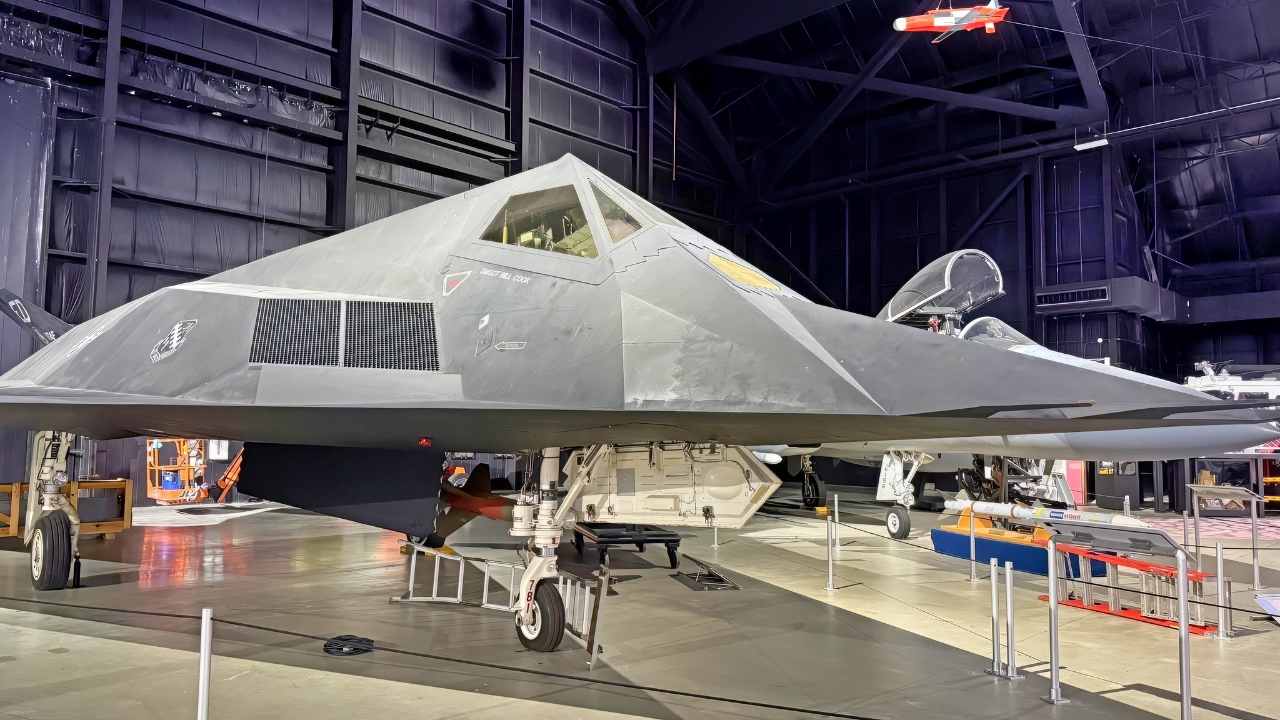
Key Points and Summary – The F-117A Nighthawk was the first true stealth strike jet and, for a while, it felt untouchable.
-That illusion ended on March 27, 1999, when an F-117, callsign “Vega 31,” was shot down over Serbia during NATO’s Kosovo campaign.
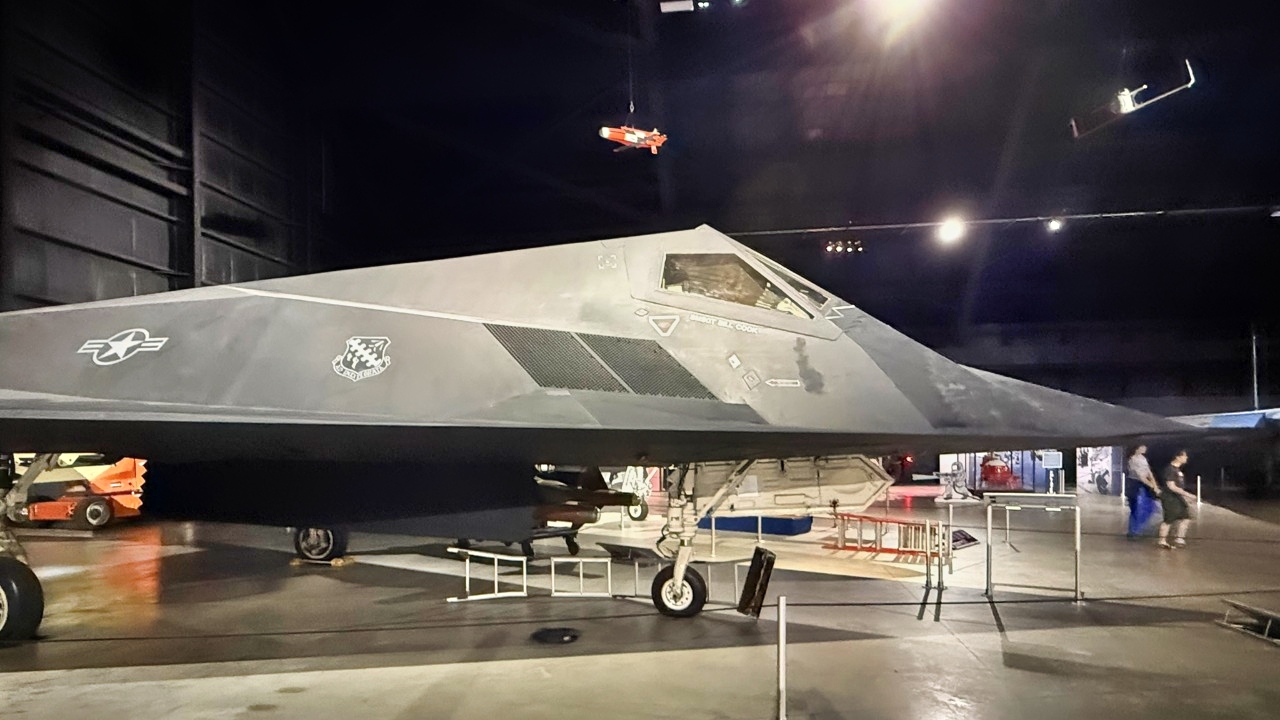
F-117 Stealth Fighter Original National Security Journal Photo.

F-117 National Security Journal Photo Taken at U.S. Air Force Museum.
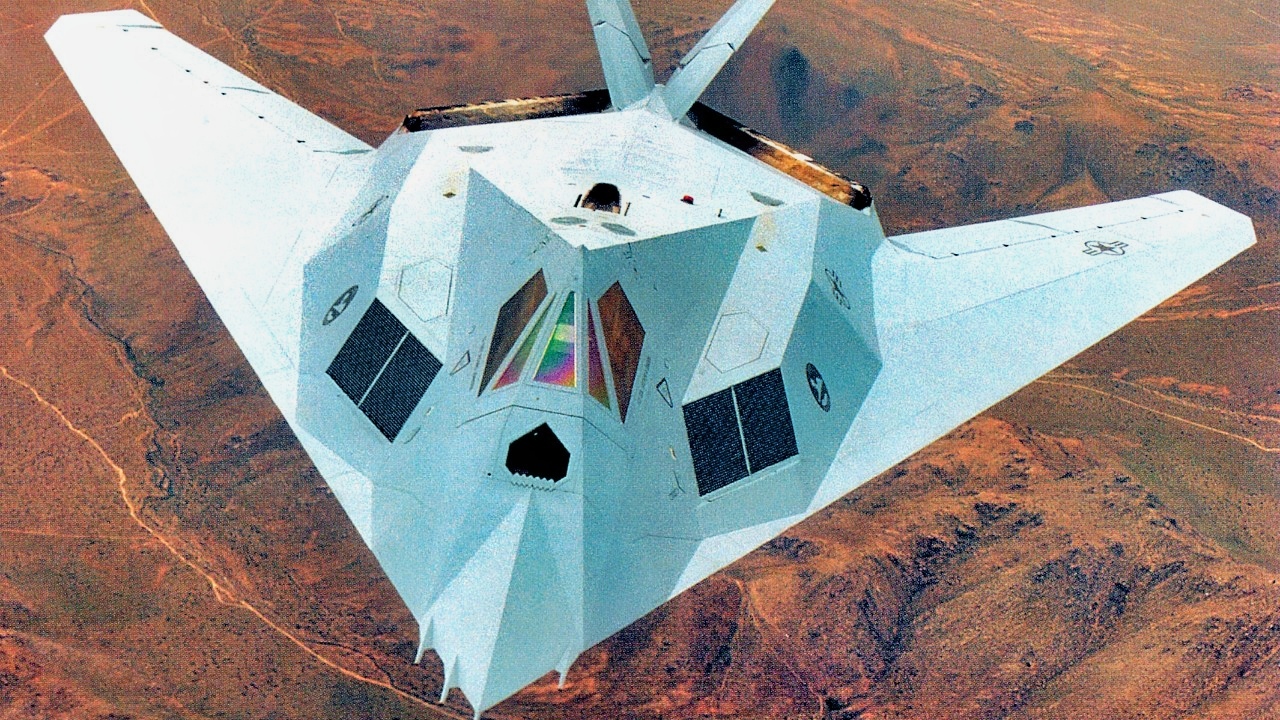
F-117 Nighthawk Stealth Fighter. Image Credit: Creative Commons.
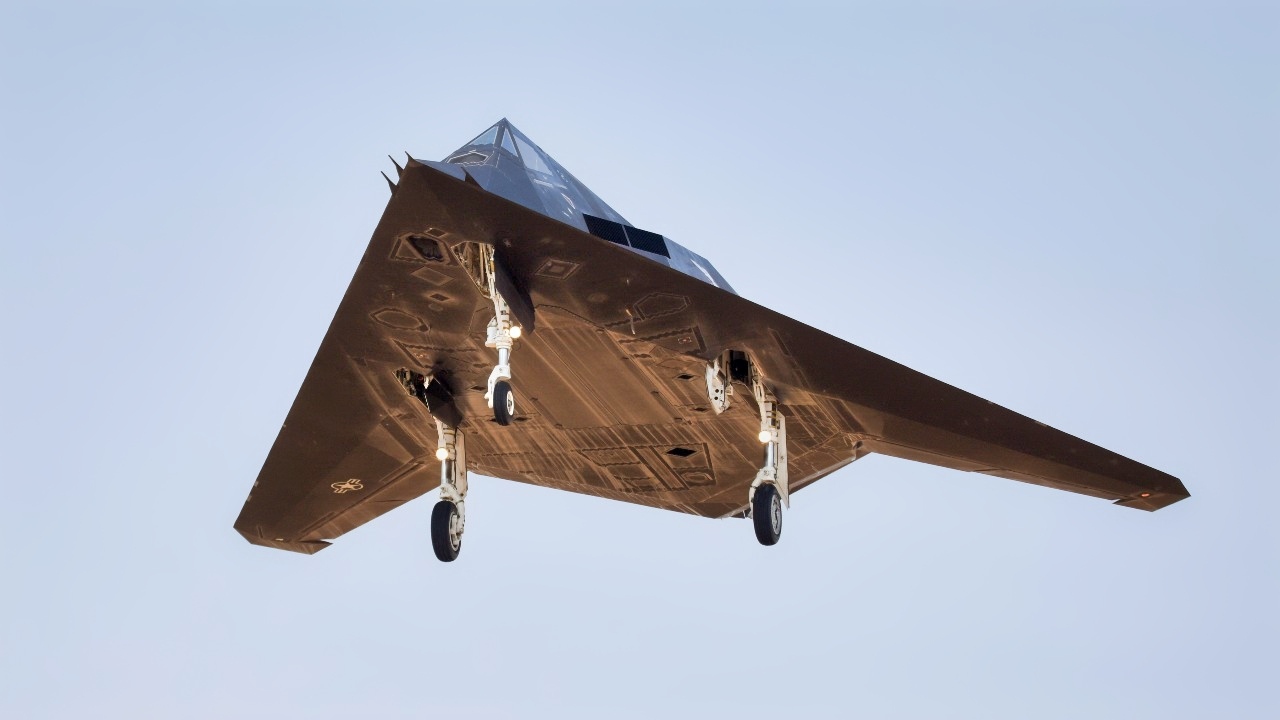
An F-117 Nighthawk lands at the Fresno Yosemite International Airport, Sept. 15, 2021, after conducting a training mission with the local Air National Guard unit. Two F-117 Nighthawks are participating in dissimilar air combat training missions this week along with F-15 pilots from the 144th Fighter Wing in Fresno, Calif. (U.S. Air National Guard photo by Capt. Jason Sanchez)
-A Yugoslav air defense unit armed with old Soviet-made SA-3 missiles used smart tactics: low-frequency radar, strict emission control, constant relocation, and an eye for NATO’s predictable routes.
-The pilot survived, the wreckage was paraded on TV, and the message was unmistakable.
-Stealth is a huge advantage. It is not, and never has been, a magic cloak of invincibility.
F-117A Nighthawk Stealth Fighter: The Jet That Wasn’t Supposed to Fall
For a quarter century, the F-117A Nighthawk has been the strange ghost at the edge of American airpower. And this summer, I spent hours just staring at the F-117A at the U.S. Air Force Museum in Dayton, Ohio (see my pictures throughout this piece from that visit). It was the first time I had seen the F-117A up close since 1995, when my family went to an air show at Quonset Point when I was growing up in Rhode Island. And, in fact, I plan to head back to the museum early next year.
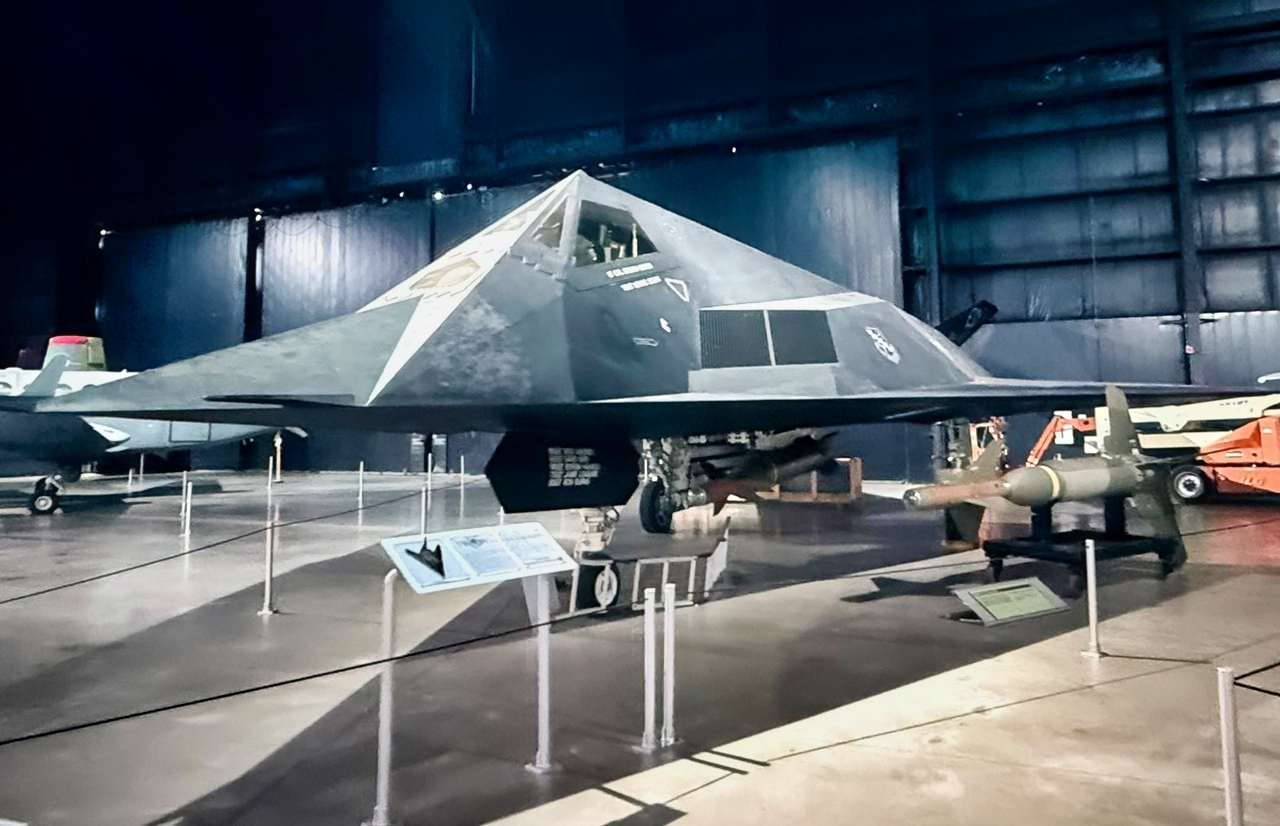
F-117 Stealth Fighter from NSJ at USAF Museum. Image take on 7/20/2025.

F-117 Fighter from 1990s National Security Journal Photo.
But back to the matter at hand: The F-117A was the first operational stealth warplane, born in the black world, tested in the Nevada desert, and blooded over Baghdad in 1991. It slipped through dense Soviet-made air defenses in Iraq and Panama, dropped precision bombs in the dead of night, and came home without a scratch. For many planners, the F-117 was proof that if you could not see it on radar, you could not kill it.
Even in “retirement,” the Nighthawk refuses to die. The Air Force quietly continues to fly a small fleet out of the western ranges, using them as stealth aggressors and as flying laboratories for low-observable tactics, sensors, and coatings.
But the Nighthawk’s myth has a crack through the center of it, and that crack runs through a muddy Serbian field in March 1999.
The night “Vega 31” went down did not just give America’s enemies a propaganda coup.
It forced the Pentagon to confront a simple reality: stealth is a tool, not a force field.
Night Over Serbia: Vega 31’s Last Mission
On March 27, 1999, NATO’s air campaign over Yugoslavia was only a few days old. Operation Allied Force was designed as a pressure campaign: no ground invasion, just escalating waves of air strikes meant to break Belgrade’s grip on Kosovo.
F-117s were part of the opening-night punch. They struck heavily defended targets around Belgrade and other key sites, slipping in alone or in small packages, escorted by jammers and supported by SEAD assets. Early missions went about as advertised. Serbian surface-to-air missile units fired a lot and hit nothing. The Nighthawk’s aura of untouchability grew.
On the fourth night of the war, one of those jets — serial 82-0806, callsign “Vega 31” — launched on another strike into central Serbia. The pilot, Lt. Col. Dale Zelko, was a veteran who had already flown stealth missions in Desert Storm. The route and timing that night were not radically different from previous sorties. The target area was familiar. The threat, on paper, was manageable: an aging, Soviet-era integrated air defense system that looked outclassed.
Somewhere near the village of Buđanovci, the complacent math broke.
Hidden in the dark countryside below, a Yugoslav air defense battery from the 3rd Battalion of the 250th Air Defense Missile Brigade waited with its S-125 “Neva” (SA-3 “Goa”) missiles and radars. They had been tracking NATO patterns for days. They knew roughly when and where the stealth jets tended to appear. They had drilled to move fast, shoot fast, and then vanish before NATO’s anti-radiation missiles could home in.
As Vega 31 crossed their engagement zone, the battery’s radars came alive for seconds at a time. A low-frequency early-warning set helped cue the fire-control radar to a tiny target. When the operators were confident enough, they broke their own rules and left the radar up just long enough to get a firing solution.
Two SA-3s went into the night.
One detonated close enough to shower the Nighthawk in fragments and shock. The black, faceted jet that had slipped through Iraqi air defenses in 1991 suddenly became just another wounded aircraft, rolling and tumbling in the dark. Zelko ejected and parachuted into enemy territory. Hours later, after a tense combat search-and-rescue mission, he was pulled out by U.S. special operations forces.
His jet was not so lucky. Wreckage lay scattered across fields and ditches. By morning, Serbian forces had secured the site. Soon the world saw pieces of America’s “invisible” jet paraded across television screens.
How an Old SA-3 Beat the Nighthawk
It is tempting to chalk the shootdown up to luck: the F-117A had a bad night. The truth is more uncomfortable.
The Yugoslavs did not have cutting-edge gear. They had a 1960s-era missile system and a patchwork radar network. What they matched it with was discipline and a good eye for NATO habits.
Over the years, officers in that air defense brigade studied how Western air campaigns worked. They watched Desert Storm and understood what happened to Iraqi batteries that left their radars on too long or stayed in one place. When Allied Force began, they put those lessons to work.
They moved constantly. Battery elements were disassembled, loaded onto trucks, and moved between pre-surveyed sites to avoid becoming targets. Radars were only turned on in short bursts. Orders limited fire-control radars to seconds of emission time per engagement, followed by immediate relocation. They used decoy emitters and old radar sets to draw NATO anti-radiation missiles away from their real launchers.
They also paid attention to the sky.
F-117s were not popping up at random. They tended to use similar ingress routes and altitudes, optimized for their stealth profile and for the targets they were assigned. When the weather and NATO’s own planning kept electronic jammers and “Wild Weasel” suppression aircraft farther away than usual on March 27, the opening appeared.

The F-117A Nighthawk Image By National Security Journal.
Low-frequency surveillance radars, which are far less affected by stealth shaping than the high-frequency fire-control sets the F-117 was optimized against, gave the Yugoslavs a rough picture of when something unusual was coming. Their fire-control radar then had to do the hard work of locking a small target for just long enough to shoot.
It took nerve. According to later accounts, the battery commander deliberately violated his own emission-time rule, gambling that NATO’s suppression response would be slow and that the opportunity to hit a stealth jet was worth the risk. He ordered a third radar illumination after the first two failed to produce a solid track.
On that third attempt, the old SA-3 got its lock. Seconds later, a weapon conceived to kill 1960s bombers shredded a 1980s stealth jet.
Technology mattered. But tactics and discipline mattered more.
What the Shootdown Really Taught About Stealth
Inside the Air Force, the loss of Vega 31 landed like a punch.
This was not supposed to happen. The F-117 had flown through some of the densest defenses in the world in Desert Storm. It had done so largely alone, with limited support, and had come home unhit. The Serbs, working with hand-me-down Soviet technology, had just proved that “low observable” is not the same thing as “unobservable.”
The lesson was not that stealth was a failure. It was that stealth had been oversold and, worse, overtrusted.
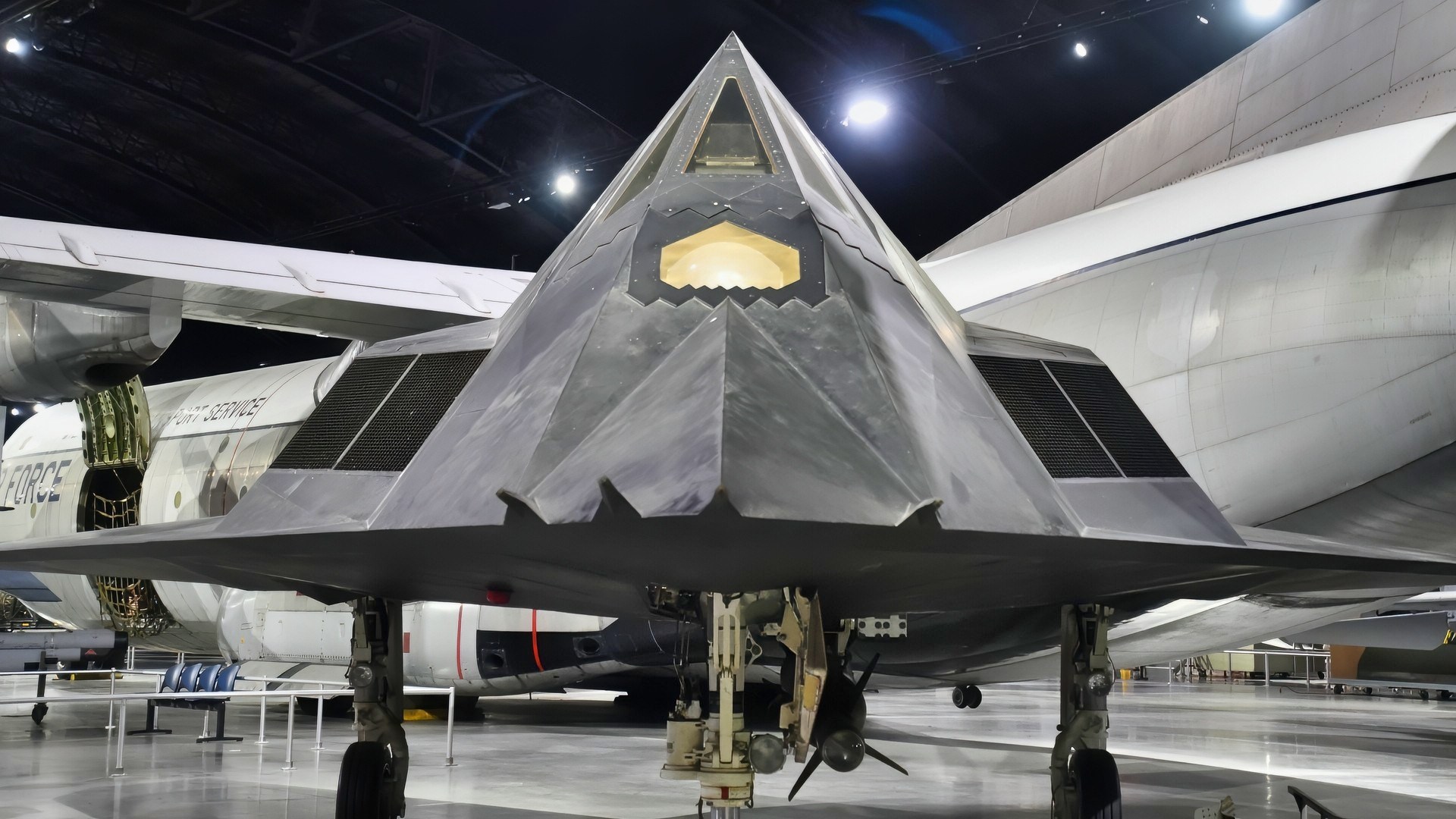
F-117A Nighthawk Stealth Fighter in Museum. Image Credit: Creative Commons.
Several themes came into sharp focus in the aftermath:
Predictability kills. Flying similar routes at similar times makes an even stealthier platform easier to ambush. Once your opponent understands the geometry of your preferred corridors, they can stack sensors and weapons along a path and wait.
Stealth needs friends. Low-observable jets still benefit from jammers, decoys, and aggressive SEAD/DEAD. When those supporting assets are pushed away by weather, basing, or politics, the risk to even very stealthy aircraft rises fast.
Low frequency is a real problem. The F-117’s shaping and coatings were optimized against higher-frequency radars. Long-wavelength surveillance sets cannot give razor-precise tracks, but they can reveal that “something” is there and help cue other systems. Yugoslav operators exploited that reality.
Emission control cuts both ways. Western air campaigns had conditioned SAM operators to fear turning their radars on. In Serbia, one unit flipped the script, using brief, aggressive radar bursts at key moments to reach out and touch a target everyone had labeled untouchable.
Senior leaders began saying publicly what engineers already knew privately: stealth is a significant advantage, but it does not make an aircraft invulnerable, nor does it eliminate the need for numbers, support, and innovative tactics.
The Wreckage, the Aftermath, and the Quiet Second Act
The wreckage of Vega 31 did more than dent egos.
Chunks of the Nighthawk ended up in Belgrade’s aviation museum, where they remain a kind of trophy. Foreign specialists reportedly examined smaller pieces. At a minimum, adversaries got a rare chance to walk around and touch an aircraft whose details they had previously only guessed at. U.S. officials and analysts at the time worried, with good reason, that those pieces would inform foreign counter-stealth efforts.
Back in the United States, the fleet kept flying through the end of Allied Force. One F-117 lost in combat did not trigger a panic grounding, but it did prompt changes in routing, tactics, and support. The aircraft soldiered on into the 2000s, flying over Iraq again, before bowing out of official frontline service in 2008.
Except, of course, it never really bowed out.
In the years since, F-117s have repeatedly been seen over the American West and beyond, working as stealthy sparring partners for F-15s, F-16s, F-22s, and F-35s, and as testbeds for new coatings and sensors. The jet that once symbolized American stealth dominance now helps U.S. crews and air defenses understand how to fight low-observable threats of their own.
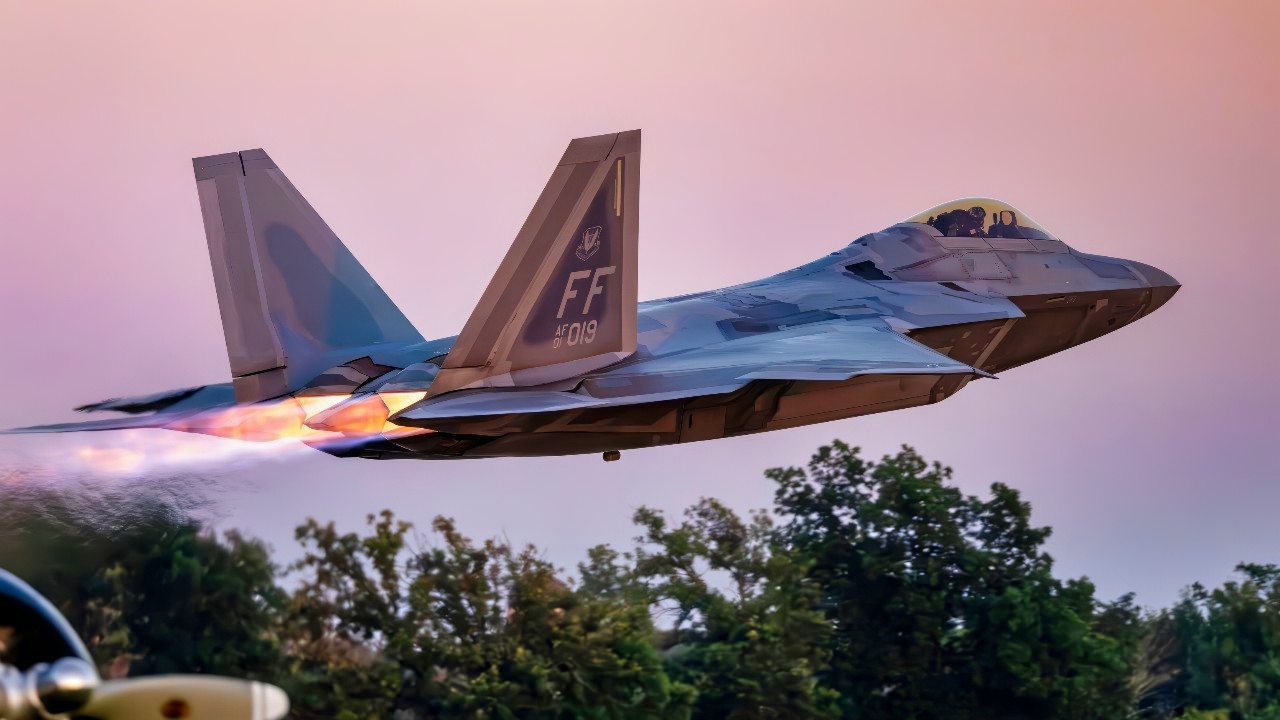
U.S. Air Force Capt. Nick “Laz” Le Tourneau, pilot and commander of the F-22 Raptor Aerial Demonstration Team, launches an F-22 Raptor during the night show at EAA AirVenture, Oshkosh, Wisconsin, July 26, 2025. The afterburners illuminate the night sky, creating a striking visual as the aircraft accelerates into flight. This takeoff gives spectators a front-row view of the F-22’s power, speed, and advanced capabilities, showcasing the skill of Airmen who operate and maintain the jet. (U.S. Air Force photo by Staff Sgt. Lauren Cobin)

U.S. Air Force Maj. Paul “Loco” Lopez, Air Combat Command F-22 Raptor Demonstation Team commander, flies the F-22 Raptor, demonstrating its combat capabilities at FIDAE (Feria Internacional del Aire y del Espacio) in Santiago, Chile, April 7, 2018. The Raptor is a multirole fighter capable of supporting both air-to-air and air-to-ground missions worldwide.
In a way, that is the most fitting role for it after Kosovo: a living reminder that survivability is a moving target.
Stealth After Vega 31
Today, stealth is baked into every serious conversation about airpower and great-power competition.
China and Russia have poured money into both sides of the equation: low-observable aircraft and weapons on the one hand, and counter-stealth radars, infrared sensors, and networked air defenses on the other. The United States has doubled down on fifth-generation fighters, long-range stealth bombers, and cruise missiles, while also experimenting with new sensor architectures and passive detection.
The F-117 shootdown sits in the background of all those debates.
It is the case study instructors still bring up when someone in a briefing slide deck treats “stealth” as a binary switch instead of a spectrum. It is the moment everyone points to when they argue for varied routing, heavy SEAD, and realistic training against modern integrated air defense systems. And it is a reminder that adversaries learn, adapt, and get a vote.
Stealth changes the game. It reduces engagement ranges, complicates targeting, and forces an enemy to work much harder for every shot they take. But it does not repeal physics, nor does it erase bad planning.
Stealth Fighters are Amazing, But Can Be Beat
The F-117A Nighthawk earned its place in history. It was the first operational stealth strike aircraft, a child of the Skunk Works that proved low-observable technology in real war. It terrified Saddam Hussein’s air defenders and gave American presidents a tool no one else had.
It also fell to an old missile system in a small European war because smart operators on the ground studied their enemy, moved constantly, watched for patterns, and were willing to take a calculated risk.
That is the real story of Vega 31.
Stealth buys you options. It shrinks the enemy’s engagement window and tilts the odds in your favor. What it does not do is make you a ghost. The night the Nighthawk went down over Serbia made that point in the harshest possible way — and it is a lesson the United States cannot afford to forget as the next generation of stealth jets and hypersonic weapons take their turn in the dark.
And for me, when I head back to the U.S. Air Force Museum again next year, I will stop and pay my respects to the F-117A. One loss does not mean she wasn’t a legend.
About the Author: Harry J. Kazianis
Harry J. Kazianis (@Grecianformula) is Editor-In-Chief and President of National Security Journal. He was the former Senior Director of National Security Affairs at the Center for the National Interest (CFTNI), a foreign policy think tank founded by Richard Nixon based in Washington, DC. Harry has over a decade of experience in think tanks and national security publishing. His ideas have been published in the NY Times, The Washington Post, The Wall Street Journal, CNN, and many other outlets worldwide. He has held positions at CSIS, the Heritage Foundation, the University of Nottingham, and several other institutions related to national security research and studies. He is the former Executive Editor of the National Interest and the Diplomat. He holds a Master’s degree focusing on international affairs from Harvard University.
More Military
The Essex-Class Aircraft Carriers Have An Embarrassing Message for the U.S. Navy
‘New’ Mach 4 MiG-41 6th Generation Stealth Fighter Has Warning for U.S. Air Force
Boeing’s F-47 NGAD 6th Generation Stealth Fighter Is No ‘Mission Impossible’


