


The war in Iran and the wide array of persistent global threats indicate that cruise missiles will likely endure into the future. The need for long-range, stand-off weapons such as Tomahawk missiles, for example, is not likely to diminish anytime soon. Tomahawks are vital munitions—they can change course in flight, hit moving targets, and provide a drone-like surveillance ability.
Submarine-fired Tomahawks are often the first weapons to strike.
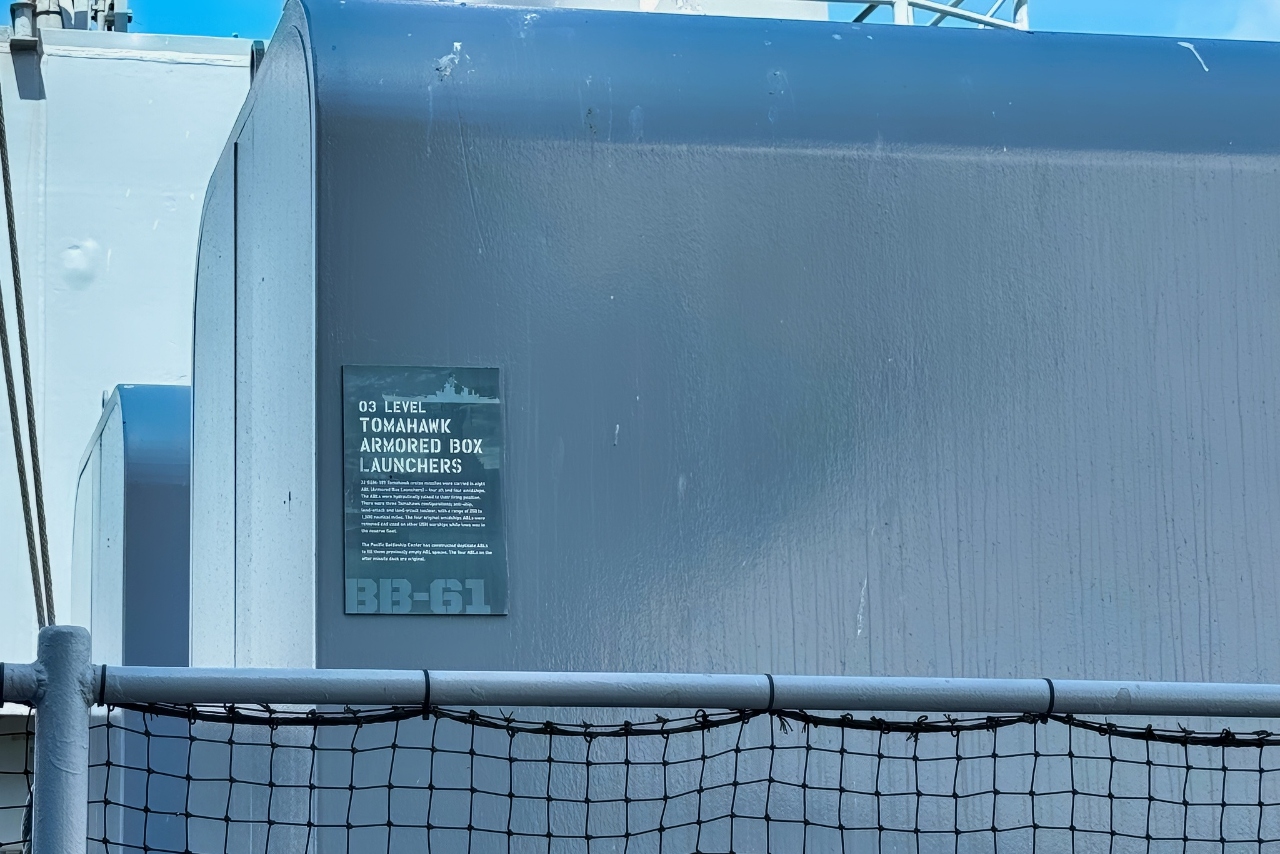
USS Iowa Tomahawk Box. National Security Journal Photo.
This has been true across many years of conflict. The Tomahawks can target enemy command and control nodes, critical infrastructure, and other high-value targets.
In many conflicts there will be a need to unleash massive amounts of firepower—or at least to position such firepower within striking distance of an enemy coastline. Submarines can fire Tomahawks from safe stand-off ranges to prepare an enemy coastline for closer-in attacks.
Modern Tomahawks
Tomahawk missiles can change course in flight to destroy moving targets at sea. Other munitions are on their way.
Hypersonic weapons fired from the decks of U.S. Navy destroyers, and weapons such as air- and-ship-launched Long Range Anti-Ship Missile, will soon be the key instruments of naval firepower.
Massing power and targeting with precision are the highest priorities for the Navy.
Indeed, the service may need to extend the service lives of its four Ohio-class guided-missile submarines (SSGNs), which are able to carry 154 Tomahawks per boat.
Drones, electronic warfare (EW) and AI-enabled multi-domain targeting are all the focus of innovation and modernization efforts as the Navy prepares for future warfare—yet none of these applications can achieve strong battlefield effects without simple, lethal firepower.
Ultimately, lethal effects must be brought upon a target with sufficient destructive power to achieve the intended result.
Even after the many breakthroughs in the realm of precision targeting, many large targets require a substantial amount of firepower to destroy.
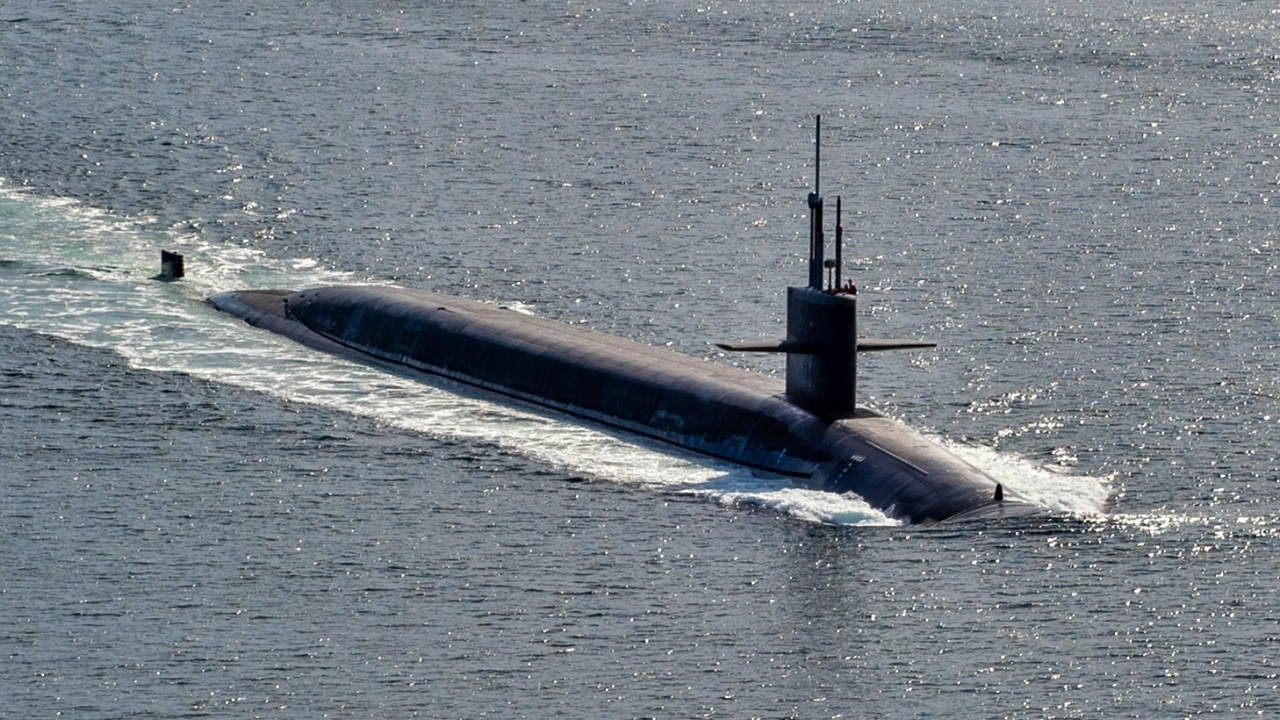
The Ohio-class ballistic-missile submarine USS Maine (SSBN 741) transits the Puget Sound during routine operations, March 18, 2025. Commander, Submarine Group (SUBGRU) 9, exercises administrative control authority for assigned submarine commands and units in the Pacific Northwest providing oversight for shipboard training, personnel, supply and material readiness of SSBNs and their crews. SUBGRU-9 is also responsible for nuclear submarines undergoing conversion or overhaul at Puget Sound Naval Shipyard in Bremerton. (U.S. Navy photo by Mass Communication Specialist 1st Class Ryan Riley)
Keep the SSGNs
This reality is not lost on weapons developers, who recognize the importance of maintaining undersea firepower in the form of torpedoes and Tomahawk missiles. SSGNs are responsible for much of this task.
Their Tomahawk capacity makes them a crucial source of undersea firepower, particularly given that Tomahawks can travel as far as 900 miles to a target. SSGNs have been used to fire weapons in several conflicts, including in Libya in 2011.
These submarines, much like the nuclear-armed Ohio-class ballistic missile submarines, have already outlived their intended lifespans. Therefore, in anticipation of their retirement, the U.S. Navy has been fast-tracking the Virginia Payload Modules for Block V Virginia-class submarines.
This module is an added 80-foot section on Virginia-class submarines that massively increases firepower from 12 Tomahawks to 40 Tomahawks per boat. This initiative, already progressing and under construction, is intended as a deliberate effort to help offset the loss of firepower expected when the four SSGNs retire.
Given the sheer mass, scope, and size of potential targets in rival nations, the Ohio-class SSGNs might deserve to see a further extension of their service lives. Wars involve striking a wide array of large, spread apart targets such as ships, buildings, armored vehicles, and other high-density, dispersed, objectives.
These all call for sea-launched firepower. It will take many more years for sufficient numbers of Block V Virginia-class boats to arrive—making the effort to keep the SSGNs operational might be worthwhile.

SOUDA BAY, Greece (March 27, 2022) The Ohio-class ballistic-missile submarine USS Georgia (SSGN 729) near Souda Bay, Greece, during training with U.S. Marines from Task Force 61/2 (TF-61/2), conducting launch and recovery training with their combat rubber raiding craft, March 27, 2022. TF-61/2 will temporarily provide command and control support to the commander of U.S. 6th Fleet, to synchronize Navy and Marine Corps units and capabilities already in theater, in support of regional Allies and Partners and U.S. national security interests. (U.S. Marine Corps photo by Sgt. Dylan Chagnon)

SILVERDALE, Wash. (Oct. 27, 2025) Ohio-class ballistic missile submarine USS Pennsylvania (SSBN 735) arrives at Naval Base Kitsap-Bangor following routine operations at sea, Oct. 27, 2025. Pennsylvania is assigned to Commander, Submarine Group (SUBGRU) 9, which exercises operational and administrative control authority for assigned submarine commands and units in the Pacific Northwest providing oversight for shipboard training, personnel, supply and material readiness of SSBNs and their crews. SUBGRU-9 is also responsible for nuclear submarines undergoing conversion or overhaul at Puget Sound Naval Shipyard in Bremerton. (U.S. Navy photo by Mass Communication Specialist 1st Class Ryan Riley).
Maintenance Challenges
This would not be easy to accomplish, however. The Ohio-class has already been in service for decades, and the boats are already past their expected service life.
The first of four SSGNs, the USS Ohio (SSGN-726), was commissioned as far back as 1981.
Extending its service life would require additional maintenance, upkeep, and sustainment of critical systems such as electronics, weapons systems, computing, and even the hull itself.
But if the Navy could get the job done, it could sustain overwhelming firepower for many more years, giving time for the Block V Virginia-class boats to arrive.
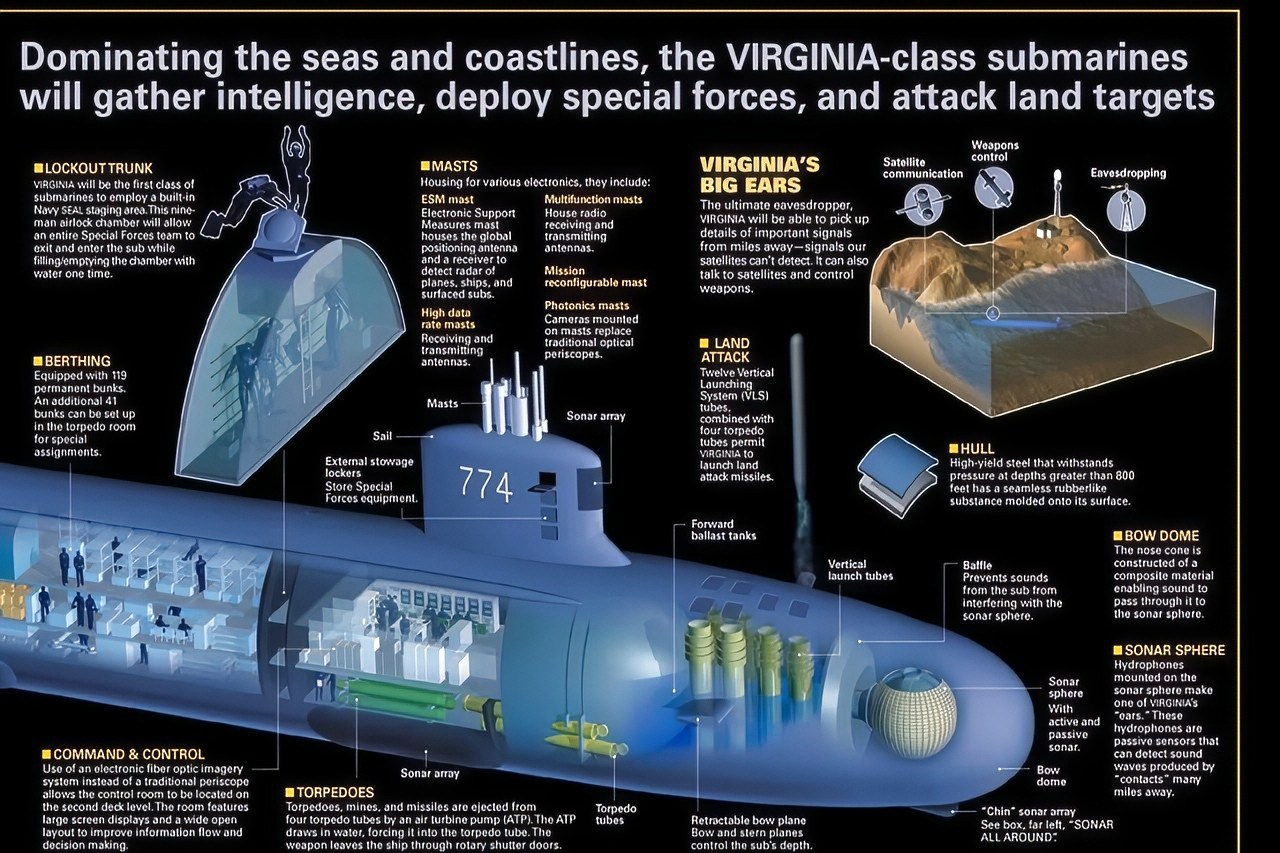
Virginia-Class Submarine Cut Out. Image Credit: Creative Commons.
A potential war against either Russia or China would likely require large amounts of firepower to attack air defenses, command and control structures, equipment, and force concentrations separated by hundreds of miles.
Any counterattack in response to a Russian or Chinese assault would need to overwhelm attacking forces with responsive sea-launched firepower.
About the Author: Kris Osborn
Kris Osborn is the President of Warrior Maven – Center for Military Modernization. Osborn previously served at the Pentagon as a highly qualified expert in the Office of the Assistant Secretary of the Army—Acquisition, Logistics & Technology. Osborn has also worked as an anchor and on-air military specialist at national TV networks. He has appeared as a guest military expert on Fox News, MSNBC, The Military Channel, and The History Channel. He also has a Masters Degree in Comparative Literature from Columbia University


