


On January 17, 1966, a U.S. Air Force B-52G strategic bomber from Seymour Johnson AFB in North Carolina — flying Operation Chrome Dome, a continuous airborne nuclear-alert mission — collided with a KC-135 tanker during aerial refueling over the Mediterranean coast of Spain, near the small fishing village of Palomares. All four KC-135 crewmen and three of the seven B-52 crewmen were killed; the bomber’s wing snapped off, and four Mk-28 hydrogen bombs fell from the aircraft. Two were recovered relatively quickly with their nuclear materials intact, but the conventional high explosives in the other two detonated on impact and dispersed plutonium and uranium across the village and surrounding fields — leading to the eventual excavation and shipment of 1,400 metric tons of contaminated soil back to the United States, 500+ settled health claims, a Spanish ban on U.S. nuclear flights in its airspace, and a two-month search for the fourth bomb that succeeded only when a Spanish fisherman, Francisco Simó Orts, reported seeing it fall into the sea.
The B-52 Bomber Was No Stranger to Accidents
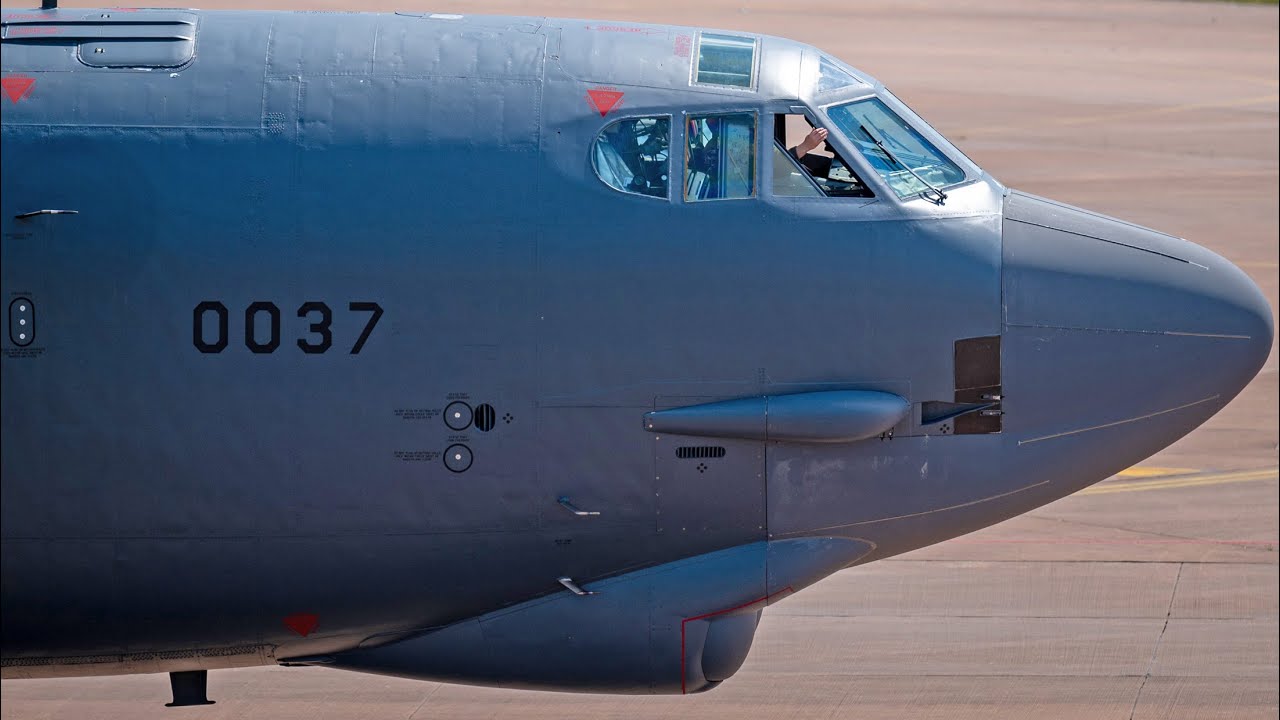
B-52 bomber. Image Credit: Creative Commons/USAF.
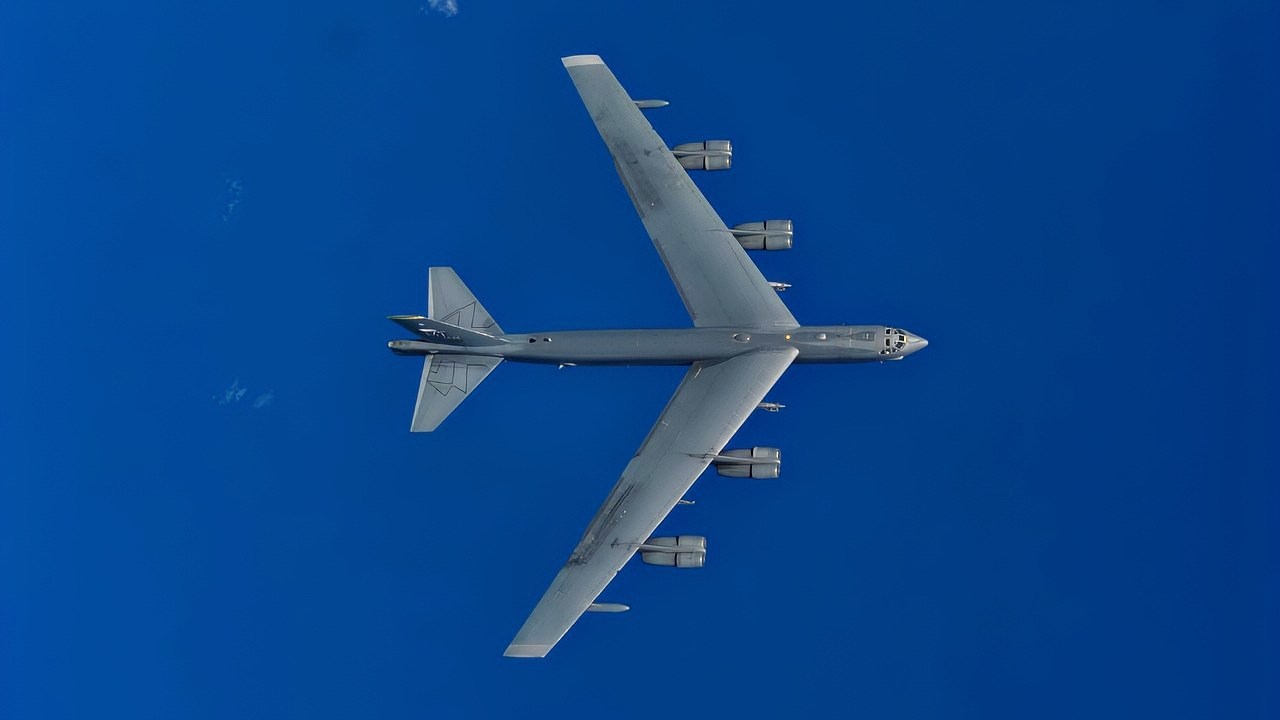
A B-52H Stratofortress from the 69th Bomb Squadron, Minot Air Force Base, N.D., flies over the Pacific Ocean during an international sinking exercise for Rim of the Pacific 2016 near Joint Base Pearl Harbor-Hickam, July 14, 2016. Twenty-six nations, more than 40 ships and submarines, more than 200 aircraft, and 25,000 personnel are participating in RIMPAC from June 30 to Aug. 4 in and around the Hawaiian Islands and Southern California. The world’s largest international maritime exercise, RIMPAC, provides a unique training opportunity that helps participants foster and sustain the cooperative relationships that are critical to ensuring the safety of sea lanes and security on the world’s oceans. RIMPAC 2016 is the 25th exercise in the series that began in 1971. (U.S. Air Force photo by Tech. Sgt. Aaron Oelrich/Released)
Accidents are an unfortunate fact of life, stemming from the imperfect nature of human beings, and therefore they afflict even the best manmade objects, including the mighty Boeing B-52 Stratofortress strategic bomber, aka the “BUFF” (“Big Ugly Fat F**k**/Fellow”), aka the “Stratosaurus.”
The BUFF is a septuagenarian, making it the longest-serving and most successful bomber in the prestigious history of the United States Air Force (or any other branch of the U.S. Armed Forces, for that matter), but during those seven decades, plenty of tragic accidents have plagued the plane (in addition to the combat losses that are to be expected in war).
This writer (an unabashed B-52 fanboy) now covers what he considers to be the 3 worst non-combat-related B-52 crashes in history.
B-52 Tragedy #1: The 1982 Mather AFB Incident
This one is ranked #1 due to the sheer number of lives lost, i.e., an entire 9-man crew.
On December 16, 1982, a BUFF bearing AF Serial No. 57-6482 embarked on a local training flight from (the now-closed) Mather Air Force Base (in the vicinity of Sacramento, California). The crew’s mission was to perform a Minimum Interval Takeoff and Landing (MITO).
They started the takeoff procedure 10 seconds after another BUFF that departed the same runway. After liftoff, during the initial climb, the warbird encountered turbulence.
The command pilot reduced engine power, but he overcompensated, causing all eight engines to flame out.
Due to a loss of speed, the aircraft stalled and struck the ground, exploding on impact and spreading debris across a 400-yard radius. The resultant casualty list consisted of the following:
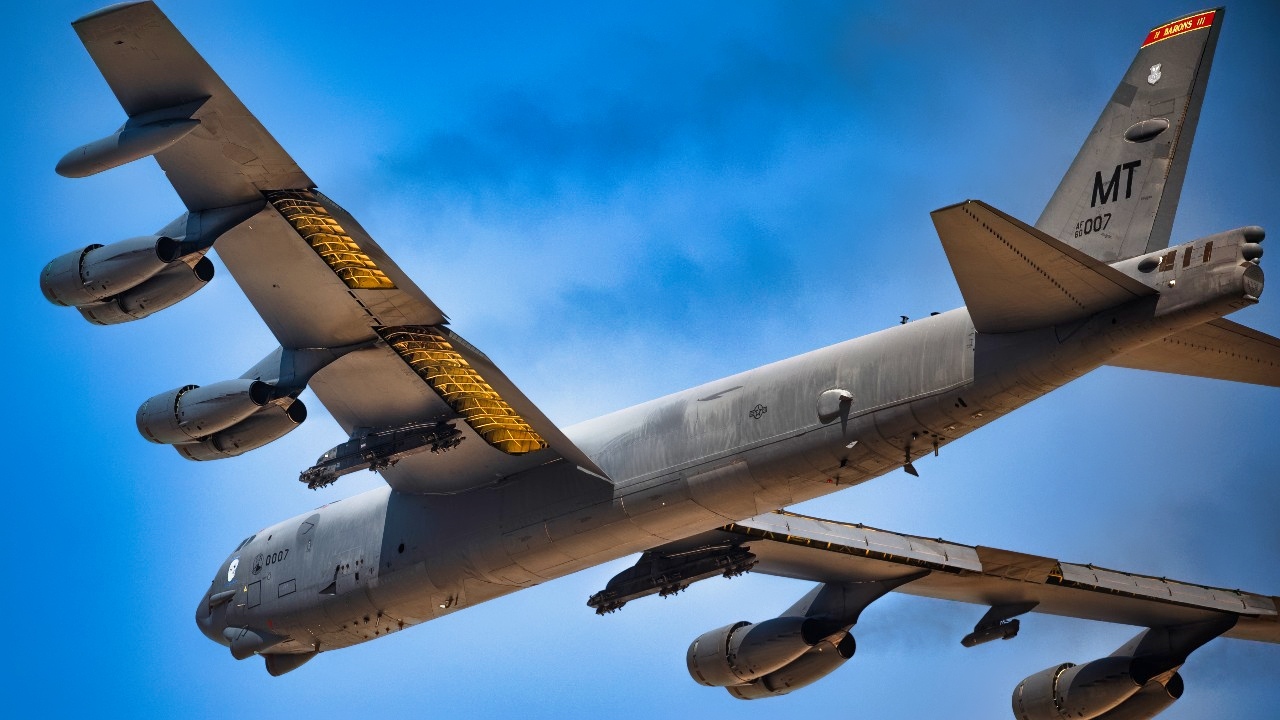
A U.S. Air Force B-52H Stratofortress strategic bomber assigned to the 69th Expeditionary Bomb Squadron flies within the U.S. Central Command area of responsibility, Nov. 15, 2024. The B-52H provides strategic options and flexibility to U.S. and coalition senior leaders with the aircraft’s ability to employ a wide range of weapons with precision and deliver a decisive response to adversaries who threaten peace and security across the region. (U.S. Air Force photo)
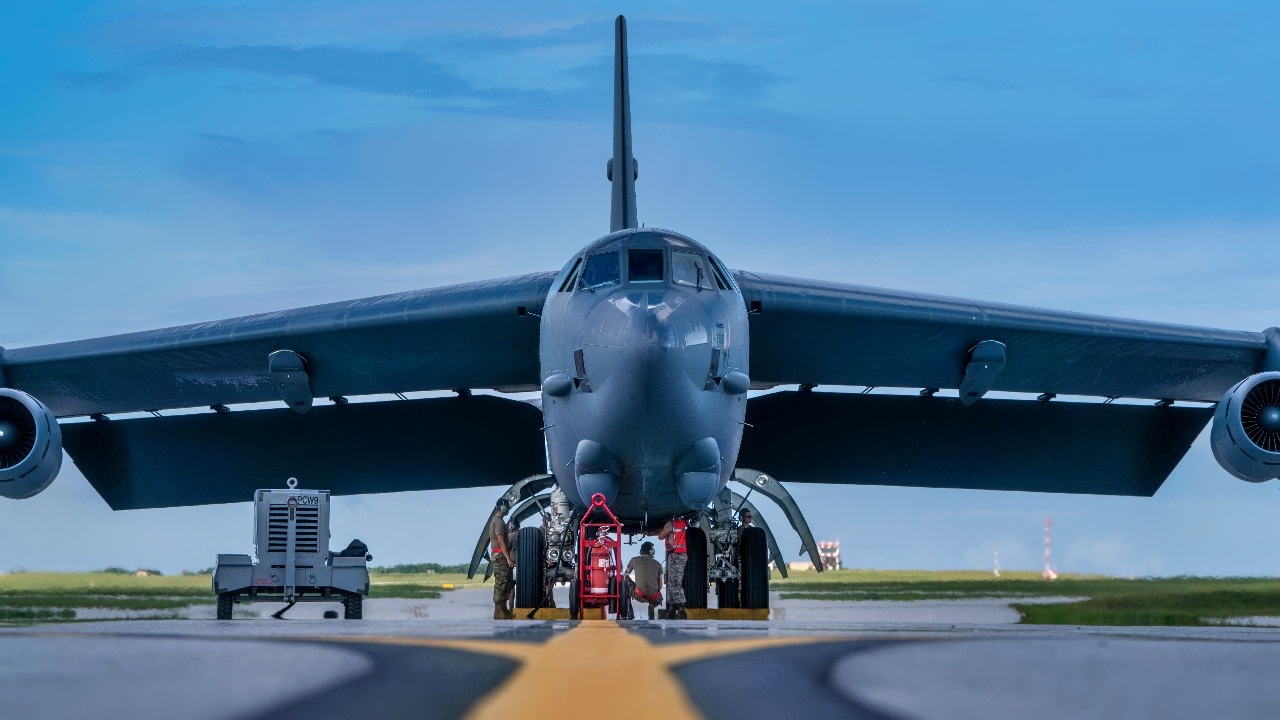
A U.S. Air Force B-52H Stratofortress bomber, deployed from Barksdale Air Force Base, La., lands at Andersen Air Force Base, Guam, July 4, 2020. The B-52 flew the 28-hour mission to demonstrate U.S. Indo-Pacific Command’s commitment to the security and stability of the Indo-Pacific region. (U.S. Air Force photo by Master Sgt. Richard P. Ebensberger)

B-52 Bomber. Image Credit: Creative Commons.
-Maj. James Henry York, pilot,
-Capt. Lyle Allen Brunner, instructor,
-Capt. Dennis Earl Davis, electronic warfare instructor,
-2nd Lt Scott A. Semmel, student copilot,
-2nd Lt Peter M. Riley, student copilot,
-2nd Lt Richard P. Robeson, student navigator,
-2nd Lt Benjamin C. Berndt, student navigator,
-2nd Lt Daniel N. Bader, student navigator,
-MSgt Jere E. LeFever, gunner
B-52 Tragedy #2: The 1968 Palomares Incident
Though this incident didn’t cost as many lives as the Mather incident, it still ranks among the Top 3 due to the environmental damage and geopolitical implications, including diplomatic discord.
That’s because it involved the loss of nukes in foreign sovereign territory (and a NATO ally to boot).
On January 17, 1966, a B-52G bearing AF Serial No. 58-0256 and callsign “Tea 16,” departed from Seymour Johnson AFB, North Carolina, carrying four Mk-28 nuclear bombs as part of the airborne alert mission Operation Chrome Dome.
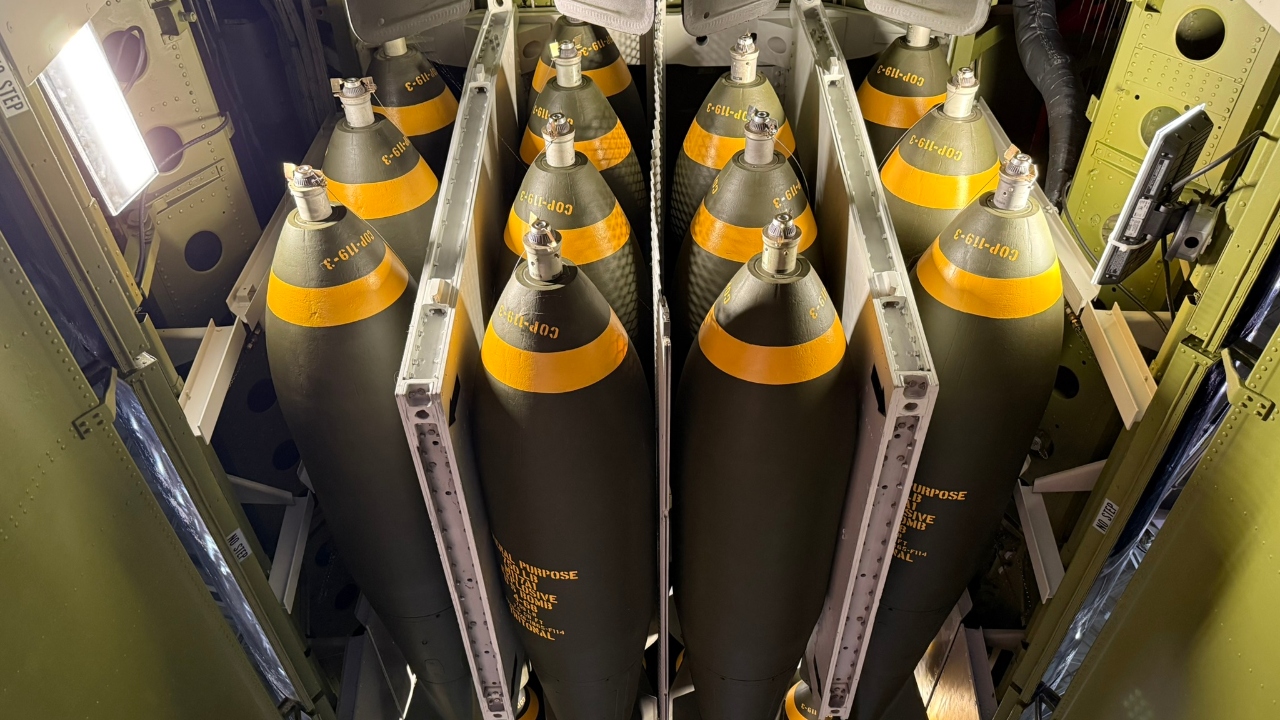
B-52 Bomber Bombs. Image Credit: National Security Journal.
At 10:20 a.m. and at an altitude of 31,000 feet, the bomber, flown by Maj. Larry G. Messinger linked up for aerial refueling with a KC-135 Stratotanker, AF Serial No. 61-0273, which had embarked from Spain’s Morón Air Base and was piloted by Major Emil J. Chapla.
Alas, Maj. Messinger’s warbird came in too fast, and the tanker’s refueling boom struck the Stratofortress’s longeron, causing the bomber’s left wing to snap off. In Messinger’s own words, “There was no call for a breakaway, so we didn’t see anything dangerous about the situation. But all of a sudden, all hell seemed to break loose.”
All four KC-135 crewmen died; besides the aforementioned Major Chapla, the star-crossed roster consisted of: copilot Captain Paul R. Lane, navigator Captain Leo E. Simmons, and boom operator Master Sergeant Lloyd Potolicchio. Three of Major Messinger’s B-52 crewmates also perished: Navigator First Lieutenant Steven G. Montanus, electronic warfare officer (EWO), George J. Glessner, and gunner TSgt Ronald P. Snyder.
As if the human tragedy weren’t bad enough, there was also the environmental impact and diplomatic fallout (no nuclear pun intended). Whilst two unexploded nukes were recovered in short order, the conventional explosives of the two remaining bombs detonated on impact, with serious dispersion of both plutonium and uranium, but luckily, they didn’t trigger a nuclear explosion.
After the crash, 1,400 metric tons (1,500 short tons) of contaminated soil was excavated and sent back to the United States. Three of them fell with the aircraft wreckage near the village of Palomares, on Spain’s Mediterranean coast.
The fourth bomb took two months to recover before an eyewitness account from a Spanish fisherman finally enabled the search team to find it.
The U.S. government eventually settled some 500 claims by residents whose health was adversely affected by the radiation dispersal, and the Spanish government banned U.S. flights carrying nuclear weapons in its airspace.
B-52 Tragedy #3: The 1994 Fairchild AFB Incident
This one rounds out my Top 3 not just because of the fatalities involved, but because it was entirely preventable had the chain of command had the moral courage to do so.
And the fact that it happened during practice for an air show added the insult of bad publicity to the injury of the tragic deaths.
As described in disturbing detail by former USAF Security Policeman Andy Brown in his 2016 book “Warnings Unheeded: Twin Tragedies at Fairchild Air Force Base” (foreword written by Massad F. Ayoob, one of the nation’s top firearms experts), the pilot of the ill-fated crew, Lt. Col. Arthur A. “Bud” Holland, had a reputation for recklessness and taking unnecessary risks.
Now, mind you, fighter pilots are expected to perform high-risk maneuvers (both the USAF Thunderbirds and the U.S. Navy Blue Angels are famous for it, after all), but even those hotshot fighter jocks have their safety limitations (cue Iceman admonishing Maverick accordingly in the original film in the “Top Gun” series).
Performing such risky maneuvers in a big, heavy, lumbering bomber that’s designed for neither speed nor agility is just asking for trouble. In Bud Holland’s case, that trouble proved to be fatal for himself and his three crew members.
Lt. Col. Holland was selected as the command pilot for the B-52 demonstration flight portion of the upcoming 1994 Fairchild Airshow (known nowadays as SkyFest) at Fairchild AFB, Washington.
On June 15, 1994, Holland briefed the “wing king,” Col. William Brooks, on the proposed flight plan. Holland’s demonstration profile violated numerous safety regulations, including steep bank angles, low-altitude passes, and steep pitch attitudes. Col. Brooks ordered Lt. Col. Holland not to exceed a 45-degree bank angle or a 25-degree pitch attitude during the demo.
During the first practice session two days later, Bud Holland repeatedly violated these orders. Brooks witnessed this, but took no action, despite the twin factors of (1) unsafe actions and (2) blatant disobedience of a direct order (a violation of Article 92 of the Uniform Code of Military Justice [UCMJ], Failure to Obey Order or Regulation). Inexplicably, the deputy commander for operations (DO), Col. William E. Pellerin, flew with Holland on that practice flight and reported to Brooks that, “the profile looks good to him; looks very safe, well within parameters.”
This combination of Bud Holland’s hot dogging and the inaction & complacency of Cols. Brooks and Pellerin created a proverbial perfect storm, coming to a tragic head on June 24, during the second practice flight for the air show. Holland’s demonstration profile included a 360-degree turn around Fairchild’s control tower, a maneuver which he had not attempted in previous air show demonstrations. During the final fatal flight, Holland performed a series of 60-degree bank turns and a 68-degree pitch climb in yet another flagrant violation of Brooks’ orders.
There is no evidence to suggest that either the co-pilot (and squadron commander), Lt. Col. Mark McGeehan, or the safety observer, Col. Robert Wolff, attempted to intervene as Holland carried out these dangerous maneuvers.
In a twist of fate, Col. Pellerin had originally been scheduled to fly in this ill-fated mission, as he had done on the 17 June flight, but he was unavailable for the 24 June flight, and Wolff was selected as the replacement aircrew member.
Due to the short notice of his replacement assignment, Wolff did not participate in the pre-flight briefing and boarded the aircraft after the engines were started, leaving him blissfully unaware of the planned mission profile and depriving him of the opportunity to raise any objections before take-off.
As the aircraft, bearing AF Serial No. 61-0026 and callsign “Czar 52,” was executing a “go-around”, three-quarters of the way through the turn, the bomber banked past 90 degrees, stalled, clipped a power line with the left wing, and crashed at 1416 Local Time. All four souls aboard perished: Holland, Wolff, McGeehan, and weapon systems officer (WSO or “Wizzo”)/radar navigator Lt. Col. Ken Huston.
B-52 Bomber Tragedy: A Parting Thought
NOTE: Regarding the other half of the “Twin Tragedies” referenced in that book title, the author himself was personally involved in it, though he wasn’t the one who caused the tragedy.
Just four days prior to the Czar 52 crash, then-Senior Airman (SrA; pay grade E-4) was the Security Policeman who, whilst on a bike patrol, responded to an active shooter incident at the Fairchild AFB base hospital, wherein a deranged, disgruntled, and recently discharged airman by the name of Dean Mellberg who was cutting loose with an AK-pattern MAK 90 rifle.
Mellberg killed four people and wounded 22 others before SrA Brown arrived on the scene.
Mellberg refused to comply with orders to drop the rifle and instead leveled it at the cop, so Andy (pumped with adrenaline and short of breath from pedaling furiously to the scene on his bike) dropped to a knee, aimed his Beretta M9 service pistol, and, at a distance of 70 yards, fired four rounds, scoring two hits, including the fatal head shot that finally ended Mellberg’s mad killing spree.
About the Author: Christian D. Orr
Christian D. Orr is a Senior Defense Editor. He is a former Air Force Security Forces officer, Federal law enforcement officer, and private military contractor (with assignments worked in Iraq, the United Arab Emirates, Kosovo, Japan, Germany, and the Pentagon). Chris holds a B.A. in International Relations from the University of Southern California (USC) and an M.A. in Intelligence Studies (with a concentration in Terrorism Studies) from American Military University (AMU). He is also the author of the book “Five Decades of a Fabulous Firearm: Celebrating the 50th Anniversary of the Beretta 92 Pistol Series,” the second edition of which was recently published.


