


Key Points and Summary – India’s purchase of a Russian aircraft carrier is detailed as a “monumental blunder.”
-In 2004, India acquired the mothballed Soviet-era carrier Admiral Gorshkov, with Russia charging nearly $1 billion for a refit.
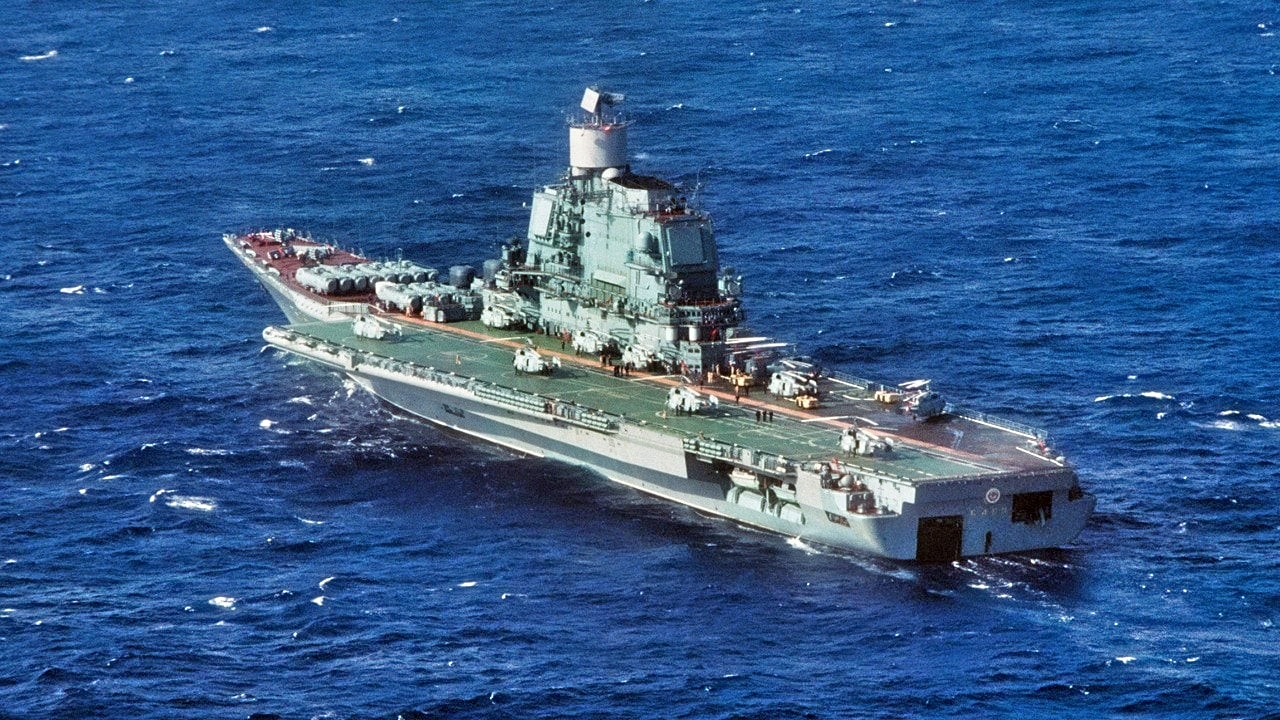
Kiev-Class. Image Credit: Creative Commons.
-The project, handled by an inexperienced submarine shipyard, was plagued by massive cost overruns that tripled the price, years of delays, and Russian extortion.
-When the carrier, renamed INS Vikramaditya, was finally delivered, it was a compromised vessel.
-All of its original self-defense weapons had been stripped to add a ski-jump, leaving it dangerously dependent on escorts for protection.
India’s Monumental Blunder…Buying An Aircraft Carrier From Russia
India has a fascination with buying weapons from Russia. The habit has lasted five decades, since the days of the Soviet Union.
Despite massive cost overruns, and weapons that never live up to their promise, India keeps writing new chapters in this head-scratching acquisitions history. Rumors of the Indian Air Force buying the Su-57 persist, even though India was part of the development program and dropped out of it when the aircraft failed to deliver on stealth properties, engine reliability, and cost.
India’s biggest blunder of all was probably the purchase of the Soviet-era aircraft carrier Admiral Gorshkov. If there is one weapon system that the Soviets and Russians have categorically, abjectly failed to produce, it is an aircraft carrier worthy of the name.
Why Buy A Russian Carrier?
India purchased the Soviet-built carrier INS Vikramaditya (originally Admiral Gorshkov) in 2004 for about $1 billion, but the total cost ballooned to nearly $2.94 billion due to extensive, complex, and delayed modernization in Russia.
In 1988 the Soviet Union commissioned the aircraft carrier Baku. She and her four sisters of the Kiev-class represented a unique Soviet design of cruiser-carriers.
The front third resembled a heavy cruiser, with 12 giant SS-N-12 anti-ship missiles, up to 192 surface-to-air missiles, and two 100-mm deck guns. The remaining two-thirds of the ship was basically an aircraft carrier, with an angled flight deck and a hangar.
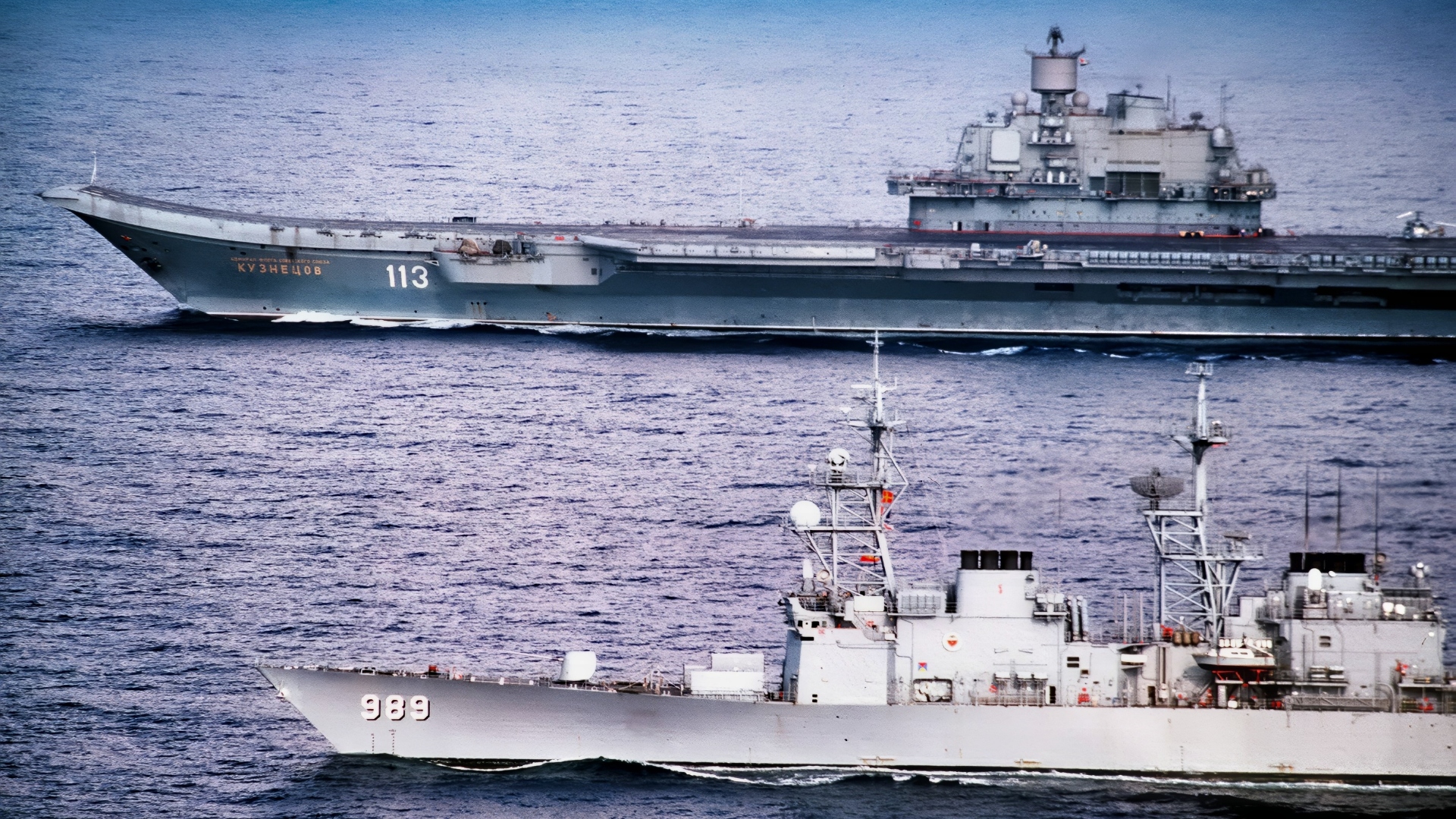
Admiral Kuznetsov. Image Credit: Creative Commons.

Admiral Kuznetsov Aircraft Carrier Russia. Image Credit: Creative Commons.
The Baku served in the Soviet Navy until the Soviet Union collapsed in 1991. Russia inherited the vessel, renamed her Admiral Gorshkov, and kept her on the rolls of the new Russian Navy until 1996. After a boiler room explosion, likely due to lack of maintenance, the Admiral Gorshkov went into mothballs.
India had one aging aircraft carrier, the INS Viraat, that needed replacing. So New Delhi went calling to Moscow, which essentially gave away the Gorshkov for free, while charging India $974 million to refurbish the carrier. That should have set off alarm bells in India. Russian carriers were junk, which is why they currently don’t have any.
Russia Increases The Cost, And Upgrades Turn Into a Nightmare… For India
The fact that Russia’s Sevmash shipyard couldn’t meet the deadline shouldn’t have been a surprise. The shipyard demanded that India pay an additional $2 billion to finish the upgrades.
As Kyle Mizokami wrote on Medium, “The cost of sea trials alone, originally $27 million, ballooned to a fantastic $550 million.”
The ship was extensively refitted to carry 24 MiG-29K fighter jets. It deployed with the Indian Navy in 2013 to provide an essential carrier battle group capability after the decommissioning of its previous carrier.
India Didn’t Do Their Homework:
India should have asked the most basic questions: How can a shipyard that has produced only submarines be expected to refurbish a carrier that had been in mothballs for a decade? They failed in this basic due diligence, and the results are not a surprise.
Although the Sevmash shipyard was not competent enough to deliver the ship under the contract, they insisted that India pay for that incompetence.
“If India does not pay up, we will keep the aircraft carrier,” is how one Russian Defense Ministry official put it at the time, in remarks to RIA-Novosti.
After two and a half years of stalling, Sevmash was read the riot act by then-Russian President Dmitri Medvedev, who told them to finish the project.
The shipyard then proceeded to finish the work, and about three and a half years later, the ship was finally commissioned into the Indian Navy. In a stunning move, India then inexplicably chose Sevmash to service the ship for the next 20 years.
After The Delays, The Carrier Lacks Anti-aircraft Defenses
Once the Vikramaditya was finally finished, she was larger than the original Baku, and 1,750 of the original 2,500 compartments had been refabricated. Extensive recabling supported new radars and sensors.
The aircraft elevators were upgraded, while two restraining stands were fitted. Major modifications were made to allow the aircraft carrier to support Short Take-Off But Arrested Recovery operations.
However, the carrier lacked anti-aircraft defenses after its refurbishing, which included the removal of armaments such as P-500 Bazalt cruise missile launchers and Kinzhal surface-to-air missiles to make room for a ski-jump. She doesn’t have any close-in weapon systems like the American Phalanx. The Vikramaditya must rely wholly on a new destroyer for its air defenses.
In a statement that reflects the absurdity of the entire situation, Sevmash said it wants to build more aircraft carriers, and added that Brazil is a potential customer.
If Brazil does its homework, it will learn never to buy an aircraft carrier from Russia.
About the Author: Steve Balestrieri
Steve Balestrieri is a National Security Columnist. He served as a US Army Special Forces NCO and Warrant Officer. In addition to writing on defense, he covers the NFL for PatsFans.com and is a member of the Pro Football Writers of America (PFWA). His work was regularly featured in other military publications.
More Military
USS America: The U.S. Navy Failed To Sink Its Own Aircraft Carrier
The Mach 3 SR-71 Blackbird Summed Up in 4 Words
The Russian Military: A Spent Force?
How China Would Decide to Invade Taiwan
Russia’s ‘New’ Su-75 Checkmate Stealth Fighter Looks Like a ‘Fake Out’


