

Summary and Key Points: This analysis evaluates the asymmetric threat posed by Iran’s Ghadir-class midget submarines as the USS Gerald R. Ford and USS Abraham Lincoln strike groups converge.
-Derived from North Korean Yono-class technology—responsible for the 2010 sinking of the ROKS Cheonan—these 120-ton diesel-electric vessels are optimized for the shallow, 50-meter depths of the Persian Gulf.

Kilo-Class Submarine. Image Credit: Creative Commons.
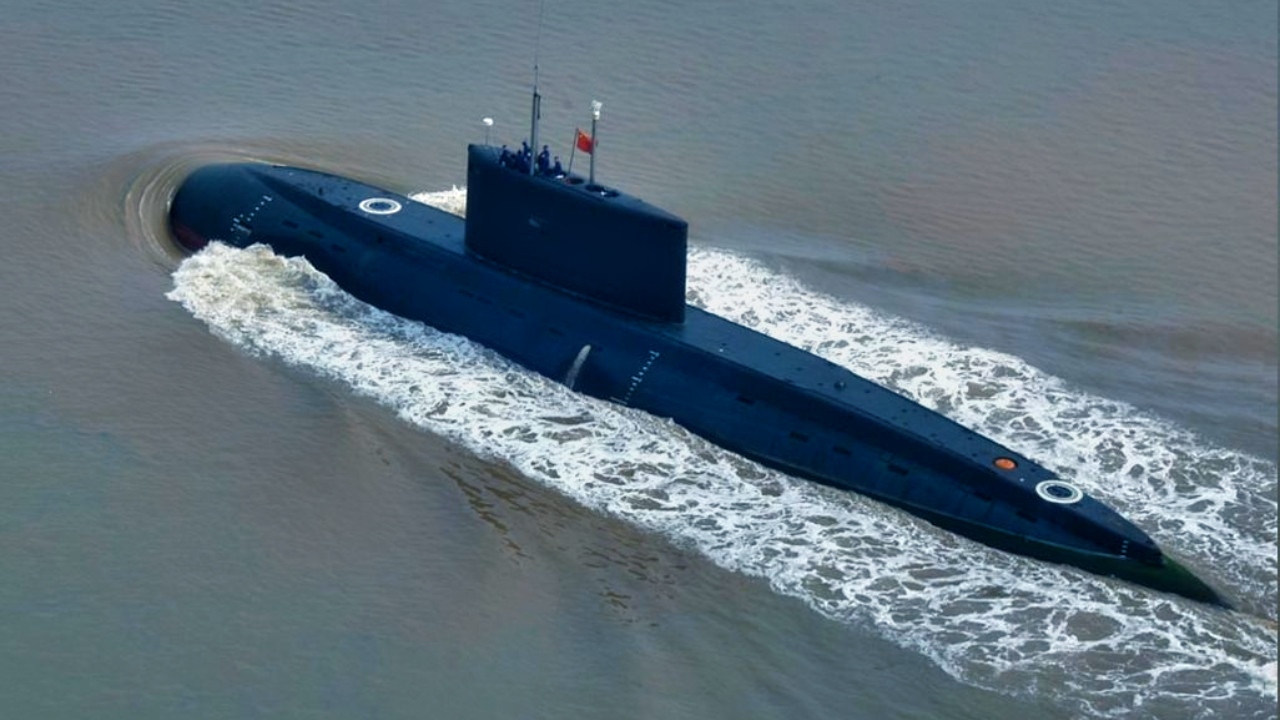
Kilo-Class Submarine. Image Credit: Creative Commons.
-This 19FortyFive report analyzes how their low acoustic signatures, torpedo capabilities, and mine-laying missions complicate U.S. Navy anti-submarine warfare (ASW) and threaten the Strait of Hormuz chokepoint during the current 2026 escalation.
The Ghadir-Class Threat: Why Iran’s Midget Submarines are the Ultimate Wild Card for U.S. Carriers
The United States has now deployed two carrier strike groups and additional naval forces into the Middle East as tensions with Iran escalate, with the USS Abraham Lincoln carrier strike group already operating in regional waters and the USS Gerald R. Ford, the Navy’s newest and most advanced aircraft carrier, ordered to deploy toward the region.
And, now, in fact, it seems as though war has begun in the Middle East.
Aircraft carriers represent the centerpiece of American military power projection, capable of launching sustained air operations against adversaries at far-off distances – and the presence of two of America’s carriers will surely be leveraged to destroy Iran’s warmaking capabilities.
But Iran – with its significantly smaller military and sweeping international sanctions – has spent decades developing asymmetric naval capabilities specifically designed to counter deployments like this. Among the most important are its Ghadir-class midget submarines – small, quiet vessels optimized for ambush operations in the shallow waters of the Persian Gulf.
These submarines cannot directly match U.S. naval forces, but they do represent one of the few Iranian platforms technically capable of causing damage through asymmetric tactics. The question is not, though, whether they pose a theoretical danger, but whether using them would be strategically wise for Tehran to begin with.

Kilo-Class Submarine. Image Credit: Creative Commons.

Kilo-Class Submarine. Image Credit: Creative Commons.
Ghadir-Class Subs Are Built for Ambush
Iran’s Ghadir-class submarines are specifically built for stealth and ambush rather than open naval combat.
Displacing roughly 120 tons submerged, they are far smaller than conventional military submarines and operate with small crews, allowing them to maneuver in confined coastal environments.
Unlike nuclear-powered submarines, the Ghadir-class relies on diesel-electric propulsion. When operating on battery power, diesel-electric submarines generate extremely low acoustic signatures, making them difficult to detect using sonar systems.
The submarines are armed with torpedoes capable of striking surface ships and can also deploy naval mines to disrupt maritime traffic or block naval transit routes. Iran has focused heavily on mine warfare as a key part of its naval doctrine, viewing it as an effective way to challenge superior naval forces.
Geography also makes the submarines more effective. The Persian Gulf is relatively shallow, with an average depth of about 50 meters, creating conditions where sonar detection is more difficult, and submarines can hide near the seabed.
Those characteristics make midget submarines perfectly suited to Iran’s defense strategy, allowing them to operate in coastal waters where larger submarines and surface ships face a greater risk of being detected.
A Sub With North Korean Roots
Iran’s midget submarine program originated from technology transfers and foreign designs, particularly North Korea’s Yono-class submarines. Those North Korean vessels served as the basis for Iran’s domestically produced Ghadir class, which Iran introduced in the mid-2000s.
Since then, Iran has significantly expanded production, with analysts now estimating that the country operates more than 20. That makes the submarine a central component of Iran’s naval force structure.
In 2010, North Korea proved that the platforms were lethal. On March 26 of that year, the South Korean warship ROKS Cheonan (PCC-772_ broke in two and sank in the Yellow Sea, killing 46 sailors. A multinational investigation determined that a North Korean Yeono-class miniature submarine was responsible, having fired a torpedo at the ship.
Iran’s investment in the submarines is part of a very deliberate strategy. Unable to compete directly with the United States and other larger forces in terms of carrier aviation or surface fleets, Iran has focused on survivable platforms that can threaten adversaries asymmetrically – so rather than matching American naval strength directly, Iran has effectively built a force designed to complicate U.S. operations and raise the risks of military intervention.
Why Iran’s Subs Matter Now
The deployment of multiple U.S. carrier strike groups near Iran significantly increases the strategic relevance of Iran’s submarine fleet. Aircraft carriers are among the most heavily defended vessels in the world, but they remain vulnerable in principle to submarine attack.
Submarines have historically posed one of the greatest threats to surface warships because of their stealth. Even modern naval forces must devote significant resources to anti-submarine warfare, including patrol aircraft, sonar, and the use of attack submarines.
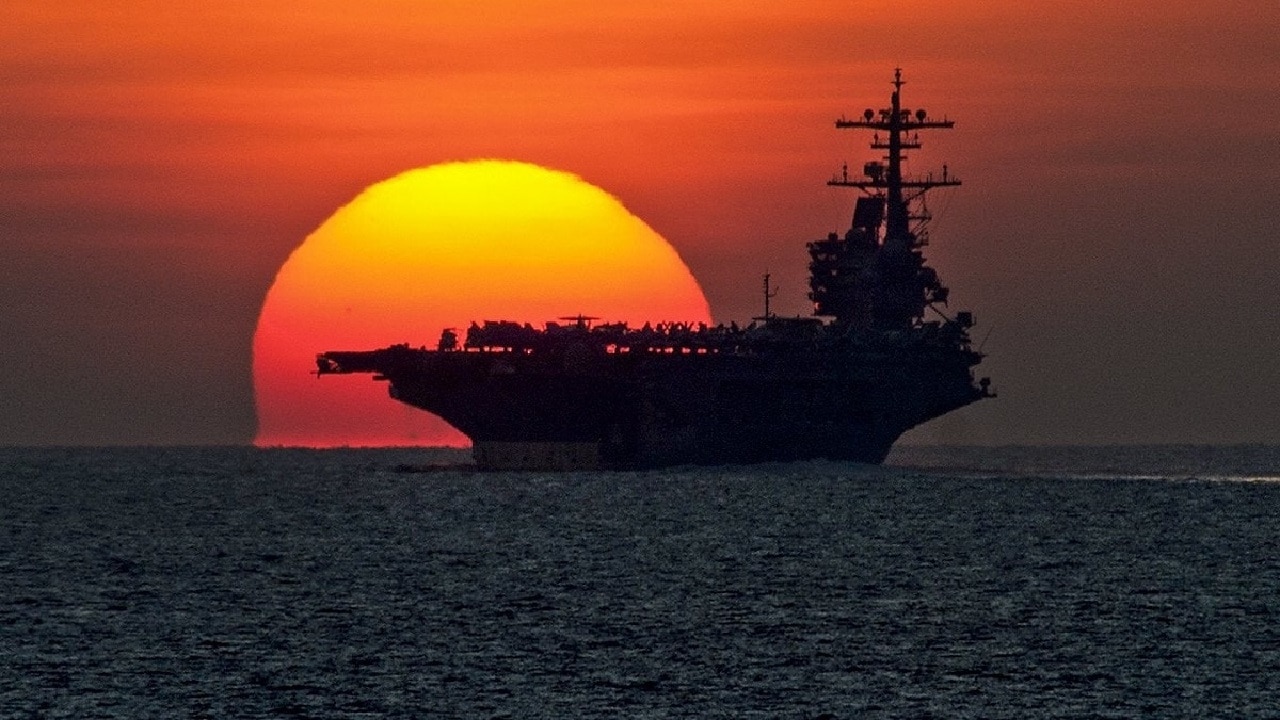
Aircraft Carrier in the Sunset. Image Credit: U.S. Navy.
In theory, Iranian submarines operating close to their own coastline could attempt ambush attacks or deploy mines in key maritime chokepoints like the Strait of Hormuz – but even the possibility of submarine activity like this forces naval planners to assume risk and thereby take defensive measures to prevent it.
And, in reality, the Iranian regime knows full well that even if it is capable of attacking American assets, the response could be far more brutal and impossible to defend against. Iranian subs could now complicate matters as the U.S. deploys what President Donald Trump has described as an “armada,” but doing so could effectively guarantee an even bigger military response as war has now broken out.
So, will Iran use these subs in a strike? We will see.
About the Author: Jack Buckby
Jack Buckby is a British researcher and analyst specialising in defence and national security, based in New York. His work focuses on military capability, procurement, and strategic competition, producing and editing analysis for policy and defence audiences. He brings extensive editorial experience, with a career output spanning over 1,000 articles at 19FortyFive and National Security Journal, and has previously authored books and papers on extremism and deradicalisation.


Swamplaw Yankee
March 3, 2026 at 9:03 am
So, in theory Jack, what did the world op-ed writers fully see during this huge US tax cash expenditure? That is good fodder for dozens of op-ed adventures.