


Many things that the U.S. has done throughout its war in Iran this year have not turned out exactly as hoped. But the war’s effects appear to have reduced the value of Iran’s currency, the rial. And more such pressure is coming.
According to Newsweek, the rial has fallen to an all-time low of 2.02 million to the dollar, ahead of a new sanctions regime that President Donald Trump is set to announce Monday as part of what he calls “Economic D-Day.”
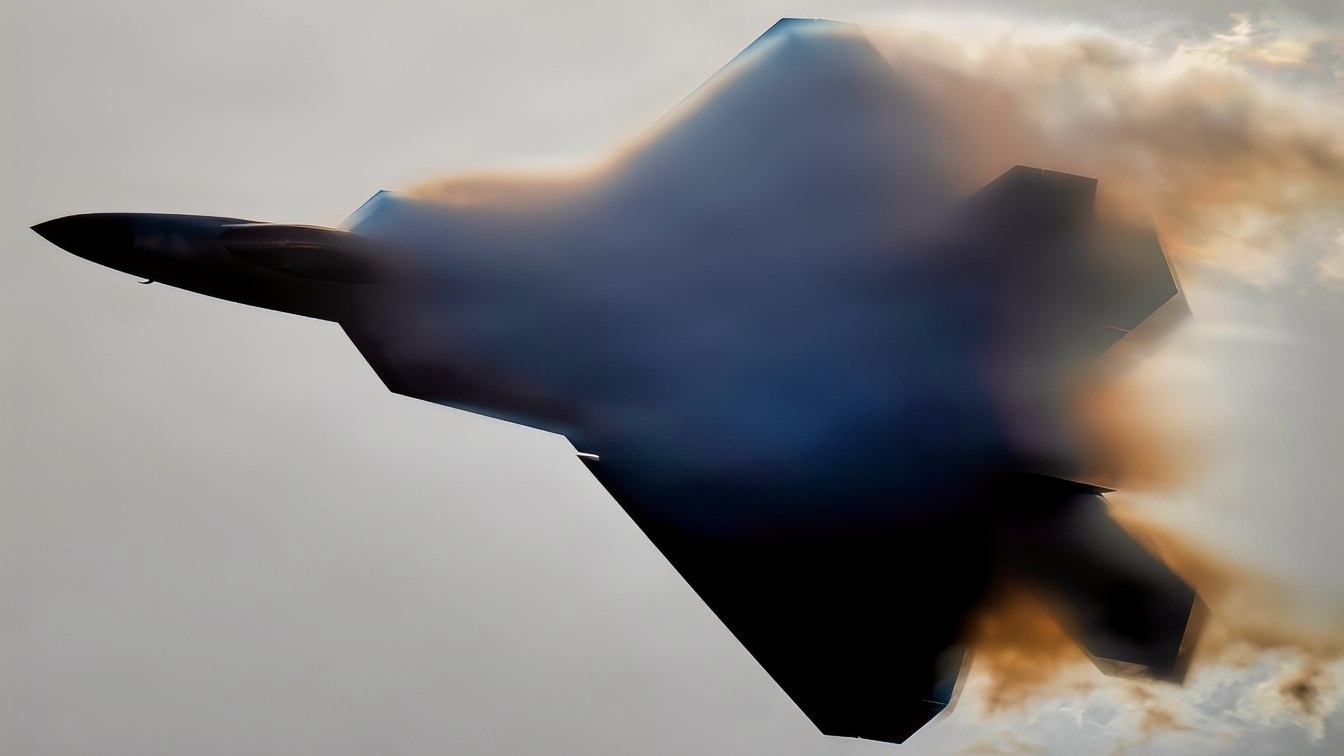
A U.S. Air Force F-22 Raptor emerges from a cloud of vapor during an aerial demonstration at Naval Air Station Meridian, Mississippi, March 27, 2026. The F-22 is designed to perform high-performance maneuvers that showcase its maneuverability and control in flight. The visible vapor forms when rapid changes in air pressure and humidity around the aircraft cause water vapor in the air to condense. (U.S. Air Force photo by Staff Sgt. Lauren Diaz)
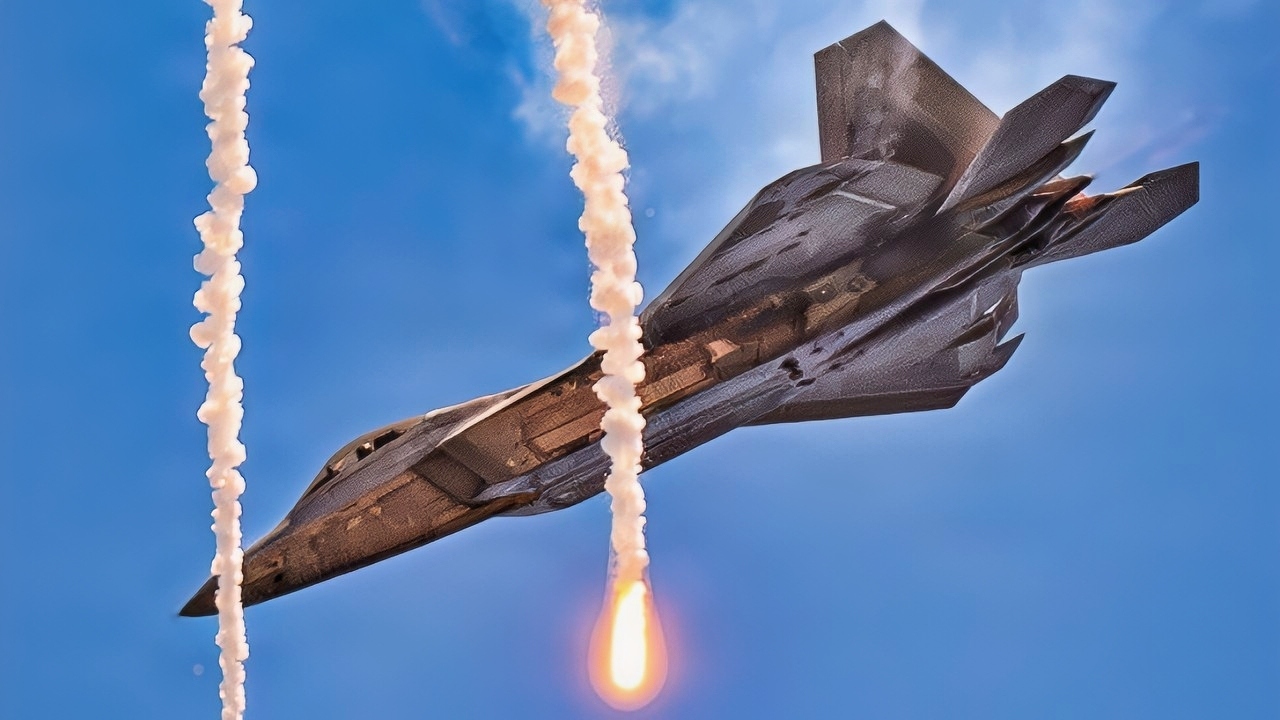
U.S. Air Force Capt. Nick “Laz” Le Tourneau, pilot and commander of the F-22 Raptor Aerial Demonstration Team, performs an aerial demonstration at Air Dot Show Tour Fort Lauderdale, Florida, May 9, 2026. Capt. Le Tourneau showcased the unmatched capabilities of the F-22 by performing a series of combat maneuvers. (U.S. Air Force photo by Staff Sgt. Mary Bowers)
The International Monetary Fund, Newsweek said, projects Iranian inflation to approach 70 percent this year, along with an economic contraction of around 5 percent.
Newsweek noted that inflationary spikes, in the past, have “triggered mass unrest” against the regime.
The Associated Press reported that while Iran’s Central Bank rate stands at 1.5 million rial to the dollar, most Iranians pay the market rate. The rates, the report said, were already under pressure before this year’s war began in February.
The AP also noted that, at least so far, “economic pressure has not yet translated into political pressure.”
What Will the Sanctions Look Like?
The New York Times reported that Treasury Secretary Scott Bessent is set to announce a new sanctions package this afternoon.
It represents a change in tactics, hinted at by the president’s pronouncements last week.
Bessent published an op-ed in the Financial Times over the weekend, promising the “Economic D-Day” and comparing it to the conditions of the actual D-Day during World War II.
“Now we are entering the endgame,” the Treasury Secretary wrote of the forthcoming sanctions. “At dawn begins an economic D-Day — the single greatest financial offensive ever marshaled against an adversary.”
Pointing at countries that buy Iran’s oil, welcome its flights, and “facilitate the flow of its finances through exchange houses and free trade zones,” Bessent vowed to cut off those lifelines, although the op-ed did not mention any countries other than Iran.
In a Truth Social post on August 19, Trump had announced plans to carry out the “MOST CRUSHING ECONOMIC OPERATION EVER TAKEN AGAINST ANY COUNTRY.” The new move would entail imposing “TREMENDOUS Economic Consequences” on any countries that help or do business with Iran.
He also called on U.S. allies to stand with him in those efforts.
“Oil smuggling, swap lines, cash transfers, exchange houses, ship registries, front companies — it all needs to stop NOW. You know who you are,” the president added.
The Times noted that while the Trump Administration has “billed the effort as the coming of an economic apocalypse for Iran,” it’s not clear what additional levers they can pull that haven’t been tried already.
They also, the analysis added, risk imposing higher energy prices or further antagonism with China.
Indeed, Russia and China are two of the main foreign powers that have remained willing to assist Iran. Turkey and the United Arab Emirates have also traded with Iran, although the UAE said last week that it was suspending such trading.
The idea is to pressure Iran into ending the war on favorable terms, including a reopening of the Strait of Hormuz. That outcome, however, has proved elusive for the U.S. throughout the war.
Iran Talks Tough
In response to the impending sanctions, members of Iran’s regime have talked tough this week.
Per the New York Times, Iran’s Foreign Ministry spokesman Esmaeil Baghaei accused the Trump Administration of “repeating methods that have proven unsuccessful.”
“Iran will certainly use all multilateral capacities to counter economic sanctions,” the spokesman said, per the Times.
Meanwhile, Mohsen Rezaei, a senior Iranian official and recently appointed head of the Supreme National Security Council, said this week that “not a single drop of oil will be exported” from the Middle East region, which implies that Iran would resume attacks on U.S. allies in retaliation for new sanctions.
“Iran will regard any country’s participation in or support for America’s economic war against the Iranian people as an act of war,” Rezaei said on social media this week.
“If (Trump) wants to do something, we will retaliate in a seismic manner,” Rezaei said this week in an interview with Iran’s state TV.
About the Author: Stephen Silver
Stephen Silver is an award-winning journalist, essayist, and film critic, and contributor to the Philadelphia Inquirer, the Jewish Telegraphic Agency, Broad Street Review, and Splice Today. The co-founder of the Philadelphia Film Critics Circle, Stephen lives in suburban Philadelphia with his wife and two sons. For over a decade, Stephen has authored thousands of articles that focus on politics, national security, technology, and the economy. Follow him on X (formerly Twitter) at @StephenSilver, and subscribe to his Substack newsletter.


