

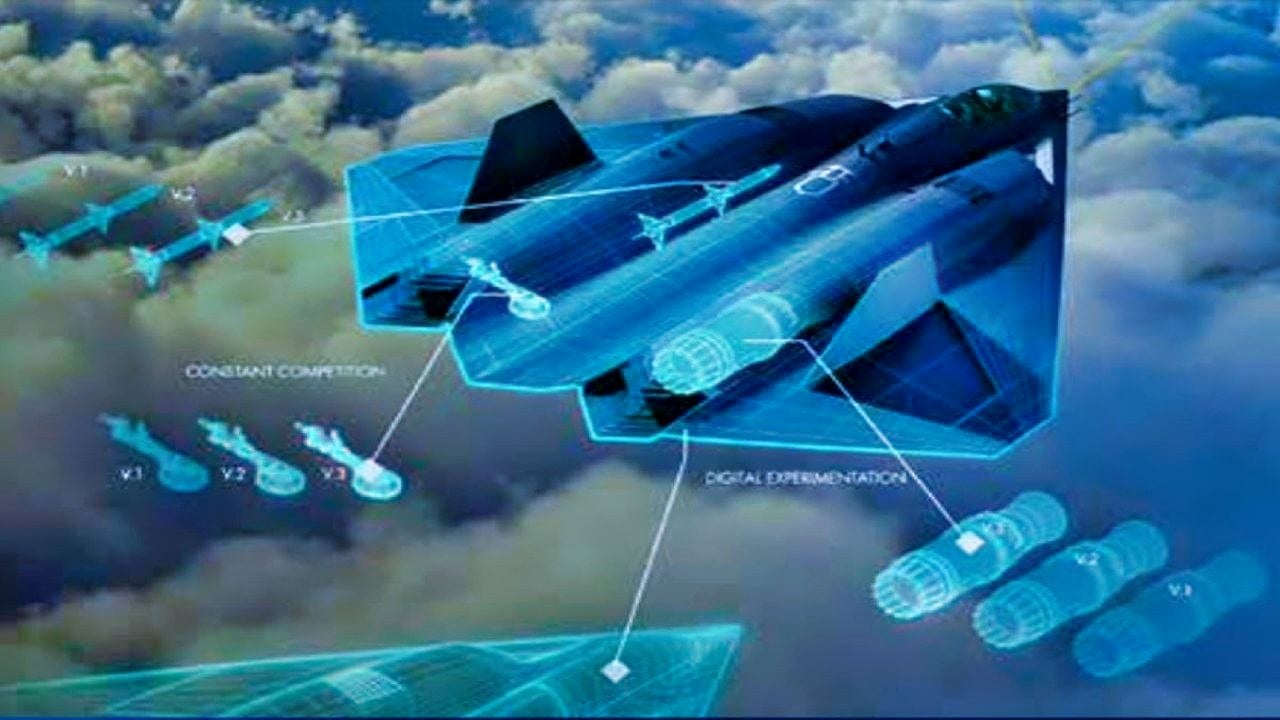
Key Points and Summary – Lockheed Martin’s Skunk Works is building Vectis, a Group 5 stealth drone aimed at the Collaborative Combat Aircraft role as a loyal wingman for F-22s/F-35s.
-Renderings show a tailless, delta/lambda planform with a dorsal intake—echoes of the X-44 MANTA concept—prioritizing survivability, modular payloads, and tri-service-aligned autonomy.

X-44 MANTA concept art.
-Although not selected for CCA Increment 1, Lockheed pitches Vectis for future increments and other missions, saying parts are ordered and a first flight is targeted for 2027.
-Speed will likely be sub-supersonic; the pivotal unknown is range. Lockheed promises “extended range” compatible with Indo-Pacific operations—critical for sparse basing and vast Pacific distances.
Lockheed’s Vectis Stealth Drone: Range for the Indo-Pacific Theater?
The aerospace firm’s secretive Skunk Works division wants to fly their stealthy unmanned aircraft concept in 2027. It hopes that the platform will be able to navigate the vast distances of the Pacific Ocean.
Lockheed Martin, the American aerospace firm with decades of experience building and designing many of the United States’ warplanes, has something new in the design pipeline. An unmanned aerial vehicle called Vectis is in development. It could ultimately be a good fit for the United States Air Force or Navy in the context of their collaborative combat aircraft program.
Speaking to reporters earlier this month, Vice President and General Manager of Lockheed Martin’s secretive Skunk Works division, OJ Sanchez, explained that “Skunk Works is charting a critical path with this Vectis program to unlock new, integrated capabilities at an ultra-competitive speed and price point.” Sanchez declined to outline potential price points for the aircraft.
The aircraft in question is known only from computer-generated artwork, which depicts a stealthily contoured aircraft featuring a delta-wing design, spine-mounted engine, and a lack of tail features—all characteristics consistent with fifth– and sixth-generation stealthy aircraft.
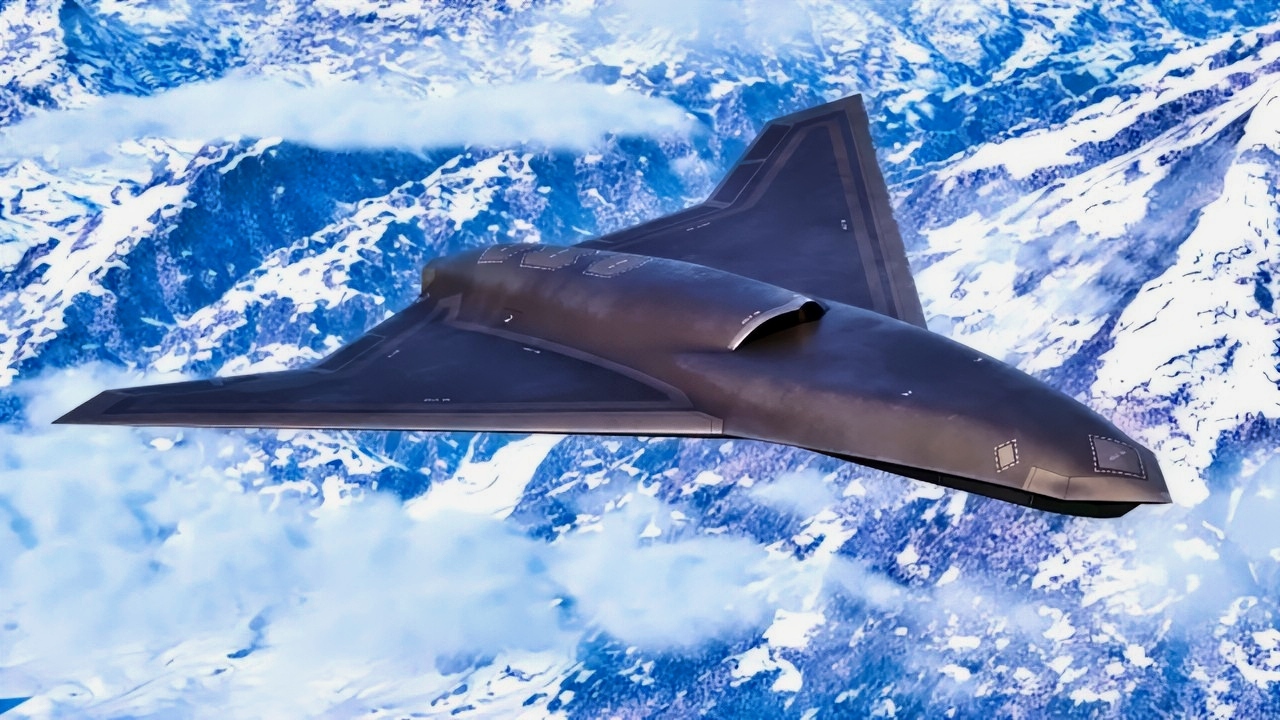
Vectis Drone Skunk Works Photo Handout
Other artwork released by Lockheed Martin appears to show what the company hopes the Vectis platform will be capable of achieving, filling the Collaborative Combat Aircraft role alongside an F-22 Raptor, which commands and controls the unmanned Vectis drones. Though Lockheed’s bid as part of the US Air Force’s CCA program was not selected for further development, Sanchez remained bullish about the Vectis’ potential application for other roles in the future. The competition for the Air Force’s Collaborative Combat Aircraft program is ongoing, with entries from General Atomics Aeronautical Systems and Anduril Industries still in the CCA running.
“We’ve conducted classified crewed/uncrewed teaming and operations analysis, pairing F-22s and F-35s with Vectis, and the results are impressive,” Sanchez told reporters, adding that the platform prioritizes modularity and customization.
“Our work is also in complete alignment with U.S. government reference architectures for both autonomy and mission systems,” Sanchez added. “Agreement on these approaches between the services means integration and interoperability can happen across all domains. Again, this isn’t about connecting Lockheed Martin systems with Lockheed Martin systems. We can connect back to any other platform.”
Vectis’ modularity is one of the platform’s strong selling points, although Lockheed declined to outline specific details about the unmanned platform, such as payload, range, and top speed. Company air work is, however, somewhat reminiscent of Lockheed’s X-44 MANTA, or Multi-Axis No-Tail Aircraft. That conceptual aircraft design was based on the F-22 Raptor, though extensively modified, featuring a large delta wing that lacked a tail. Maneuvering was achieved through the Raptor’s thrust-vectoring flight controls.
This aircraft concept does not answer the requirements of a specific program. Still, Sanchez did seem to indicate the concept aircraft could be a fit for other CCA-like programs, despite the Air Force declining to select Vectis for the Increment 1 stage of CCA. Though the exact specifications for Increment 2 platforms have not been made public, senior Air Force officials have explained that those platforms shouldn’t be “exquisite” aircraft — that is, armed and very stealthy — but said they should be more advanced than the CCA Increment 1 aircraft. In January, Air Force Secretary Frank Kendall told Air & Space Forces Magazine that a cost increase in the range of 20 to 30 percent for Increment 2 CCA aircraft would not be out of order.
Within the framework of the CCA, Lockheed Martin’s Vectis is classified as a Group 5 aircraft, and as such, tips the scales in excess of 1,320 pounds and flies above 18,000 feet. The aircraft is anticipated to keep pace with fifth- and sixth-generation aircraft, although it will likely not be capable of sustained supersonic speeds.
But questions about speed and payload aside, one of the most significant factors will be the range of both Vectis and the unmanned aircraft from the CCA program. Lockheed Martin simply states that Vectis has “extended range,” which it defines as “endurance ranges compatible with Indo-Pacific, European, and Central Command theaters.”
The question of range is a pressing one, raised when evaluating current and next-generation aircraft, including the F-35, F-22, the Air Force’s upcoming F-47 sixth-generation fighter, and the Navy’s yet-to-be-selected F/A-XX sixth-generation carrier-capable fighter, and most particularly those warplanes’ ability to navigate throughout the Indo-Pacific region. With just a smattering of small islands and atolls scattered throughout, and even fewer runways to land and take off from, range for the Vectis, CCA finalist, and upcoming aircraft will be hugely important.
What Happens Next on Vectis?
If Lockheed Martin is to be believed—and if their build schedule can be kept—then “with Vectis,” the aerospace firm explained, “Skunk Works is acting on a bold vision to deliver high-end survivability and mission systems capability at aggressive cost targets and design, build, and fly within two years.” But the company also explained its timeframe for the unmanned drone.
“Vectis’ development is underway. Parts are ordered, and a team is executing. Skunk Works is investing the funds and manpower necessary to build and test survivable systems to meet customers’ evolving needs while broadening alignment with new tri-service architectures and global requirements as they are defined.”
About the Author: Caleb Larson
Caleb Larson is an American multiformat journalist based in Berlin, Germany. His work covers the intersection of conflict and society, focusing on American foreign policy and European security. He has reported from Germany, Russia, and the United States. Most recently, he covered the war in Ukraine, reporting extensively on the war’s shifting battle lines from Donbas and writing on the war’s civilian and humanitarian toll. Previously, he worked as a Defense Reporter for POLITICO Europe. You can follow his latest work on X.
More Military
Russia Now Has a Death Star Battlecruiser
France’s Charles de Gaulle Aircraft Carrier Has a Message for Any Navy on Earth
Russia’s Last Aircraft Carrier Might Soon Be Headed to the Grave


