


Key Points and Summary – The B-21 Raider program cleared a key milestone as a second test aircraft made its first flight on Sept. 11, ferrying from Northrop Grumman’s Palmdale plant to Edwards AFB’s 420th Test Squadron.
-Unlike the inaugural “Cerberus,” the new jet carries a test boom and cone, signaling a shift from basic flight trials to weapons and mission-systems testing.

A second B-21 Raider, the nation’s sixth-generation stealth bomber, joins flight testing at Edwards Air Force Base, Calif., Sept. 11, 2025. The program is a cornerstone of the Department of the Air Force’s nuclear modernization strategy, designed to deliver both conventional and nuclear payloads. (Courtesy photo)
-The Raider is expected to employ conventional and nuclear options, including B61 bombs and the AGM-181 LRSO.
-Ellsworth AFB will field the first unit as simulators and training stand up. Congress added $4.5B to spur production; leaders now talk of needing up to 145 aircraft, with Beijing and Moscow watching closely.
New B-21 Raider Takes First Test Flight
The U.S. Air Force’s latest stealth bomber, the B-21 Raider, has taken another step toward becoming operational.
A second test aircraft completed its first flight on September 11, moving the program beyond basic flying trials and into the crucial stage of weapons and mission systems testing.
The aircraft jetted off from the Northrop Grumman facility in Palmdale, California, to join the service’s 420th Test Squadron at Edwards Air Force Base elsewhere in Southern California.
The so-called Cerberus, the inaugural B-21 model, did not have the much-needed protruding test boom and trailing cone that the new model has to scope out flight characteristics.
Naturally, this means the new bomber will have more advanced combat systems.
The Future of the U.S. Air Force
The Air Force is planning for the updated Raiders to use a combination of conventional and nuclear weapons. This could include the B61 nuclear bomb, the AGM-181 Long-Range Stand Off missile.
It is also expected to be capable of carrying whatever succeeds the current Massive Ordnance Penetrator, not to mention many pre-existing precision-guided munitions.
The second test version of the jet donned a Spartan-style helmet with crossed spears insignia on its landing gear door.
Northrop Grumman says that its slick digital design approach has sped up the program and reduced risk, with real-world results so far even outperforming modeling predictions.
The Air Force has not given a timeline for declaring the B-21 operational.
Ellsworth Air Force Base in South Dakota is set to become the first home of the new bomber.
Northrop is already building high-fidelity simulators and training systems to prepare pilots and maintainers.
Eventually, Ellsworth’s aging B-1B fleet will be reassigned to Dyess Air Force Base in Texas as the Raiders take their place.
145 B-21 Raider Stealth Bombers
Congress recently added $4.5 billion to ramp-up production, but the exact build rate still remains unclear. Air Force leaders have long said that “at least 100” Raiders are needed, but in recent months two top commanders, including the head of U.S. Strategic Command Gen. Anthony J. Cotton, have argued that 145 would be more realistic for the demands of a potential conflict in the Indo-Pacific.
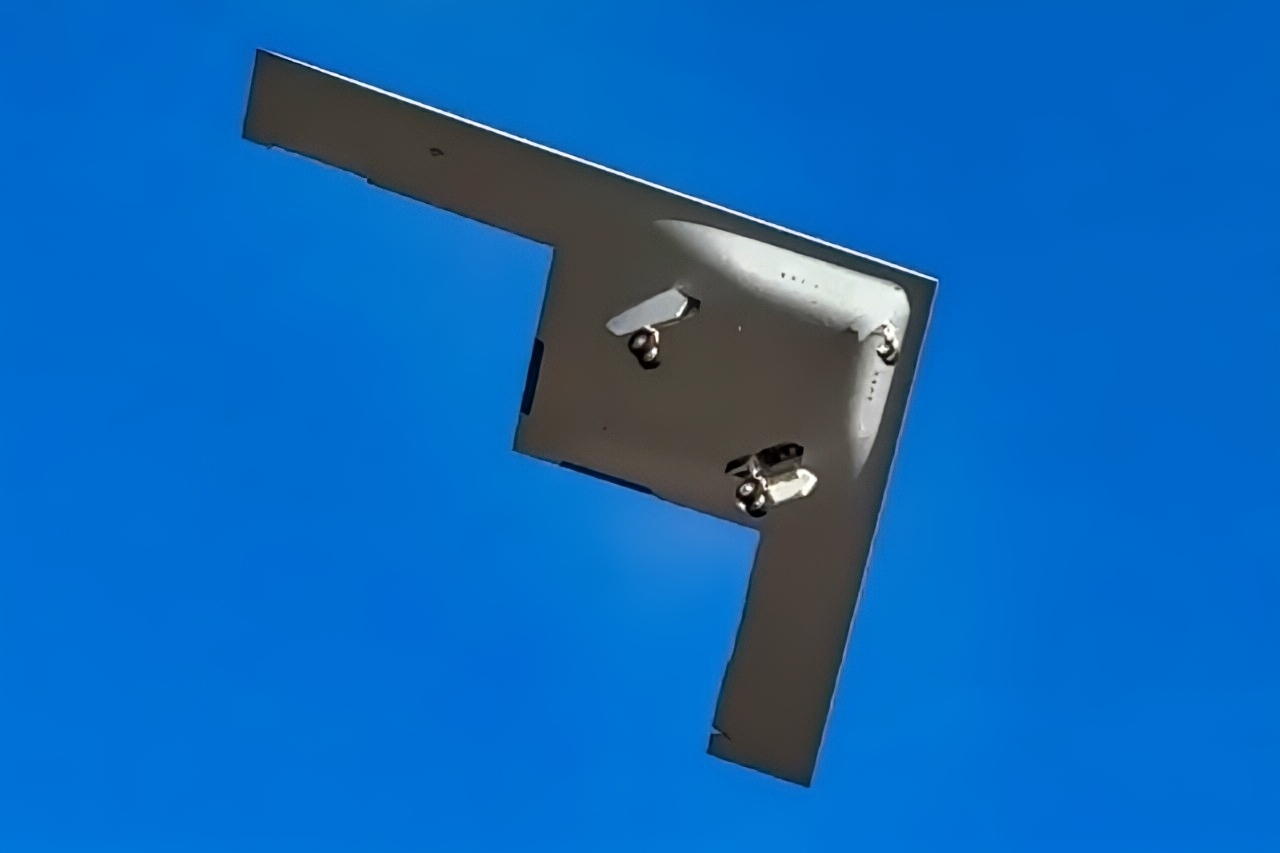
B-21 Raider New Flight of Second Bomber. Image X Screenshot from Video Posted.
For now, the focus remains on testing. With two B-21s flying and several more undergoing ground evaluations, the program is beginning to look less like a futuristic concept and more like the backbone of America’s next-generation bomber fleet.
After more than thirty years without a fresh strategic bomber, the Raider’s progress is being closely watched in Beijing and Moscow.
About the Author: Georgia Gilholy
Georgia Gilholy is a journalist based in the United Kingdom who has been published in Newsweek, The Times of Israel, and the Spectator. Gilholy writes about international politics, culture, and education. You can follow her on X: @llggeorgia.
More Military
The U.S. Army’s Big Strategic Long Range Cannon (1,150 Mile Range) Mistake Still Stings
The F-4 Phantom II Has a Message for the U.S. Military
The Iowa-Class Battleships Have a Message for the U.S. Navy
Russia’s Kirov-Class Battlecruisers Have a Message for the U.S. Navy
Russia’s PAK DA Stealth Bomber Has a Message for the U.S. Air Force


