

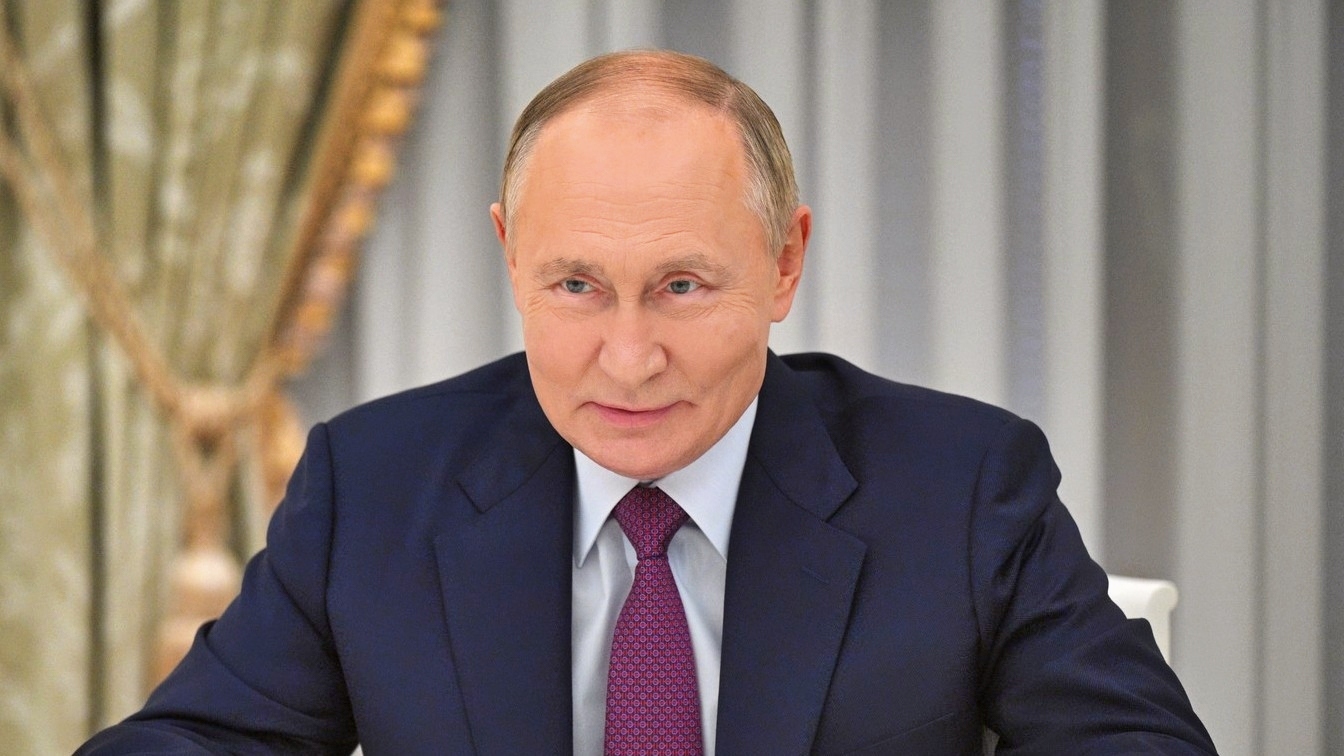
Summary and Key Points: Picture the war in Ukraine ending tomorrow on terms Putin can sell. The map might look like a draw. Russia’s place in the world would not. The country that invaded Ukraine to reassert itself as a great power wakes up as China’s junior partner, frozen out of the West, watching the empire it spent decades building — its bases, its clients, its own backyard — drift away. Putin went to war to make Russia feared. He’s made it smaller in every lasting way.
If The Ukraine War Ended Today, Russia Would Emerge As A Diminished, China-Dependent Power That Has Lost Its Own Backyard
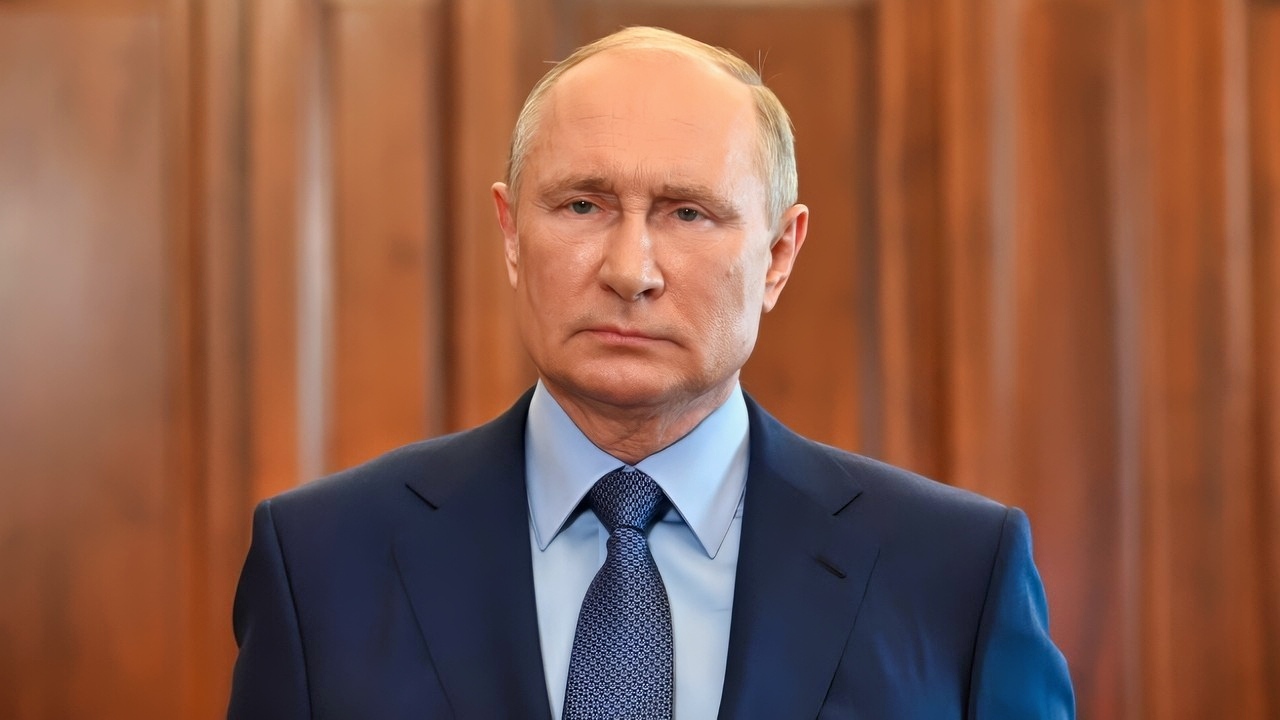
Putin Back in June 2021. Image Credit: Creative Commons.
Imagine the guns fall silent tomorrow along the line in eastern Ukraine. A ceasefire holds, the shooting stops, and Vladimir Putin can finally claim he ended the war on terms he can sell at home. The question that matters more than the map is the one almost no one in Moscow wants to answer honestly: what is Russia’s actual place in the world the morning after?
The answer is bleak.
The country that invaded Ukraine to reassert itself as a great power would emerge from the war as a junior partner to China, a patron that can no longer protect its clients, a former hegemon whose own neighborhood is slipping away, and a state frozen out of the West for a generation.
Putin set out to restore the Russian Empire. He has presided over its contraction.
The Vassal Of Beijing Thanks to the Ukraine War
The single defining feature of post-war Russia is its dependence on China, and the relationship is nothing like the partnership of equals the Kremlin pretends it is.
The “no-limits” partnership Putin and Xi Jinping announced weeks before the invasion has curdled into something closer to vassalage, with Russia supplying cheap energy and raw materials on terms Beijing dictates and buying the industrial components its sanctioned economy can no longer source elsewhere.
China holds the leverage, and it knows exactly how to use it.
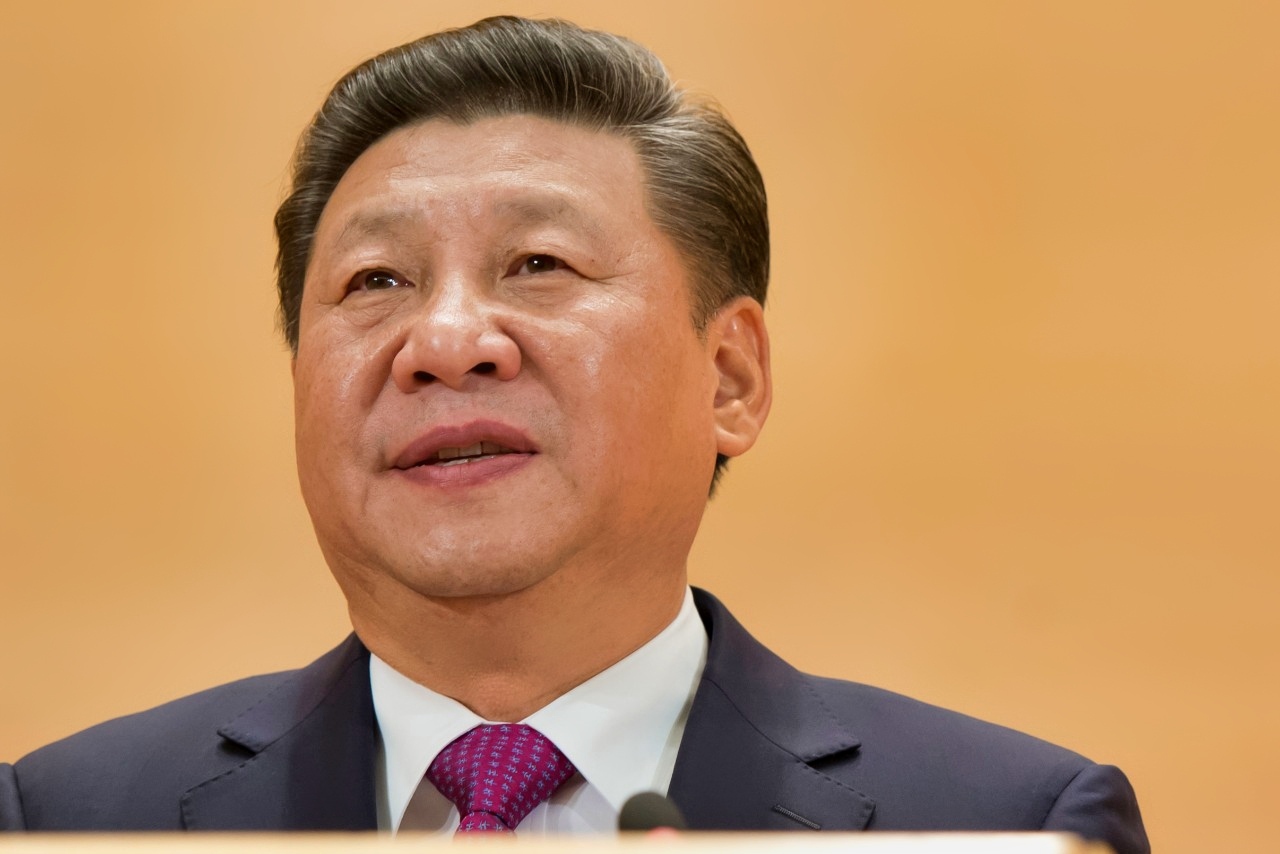
Xi Jinping President of the People’s Republic of China speak’s at a United Nations Office at Geneva. 18 january 2017. UN Photo / Jean-Marc Ferré
What is most telling is how carefully Beijing manages the relationship to serve its own interests rather than Moscow’s. China supports Russia politically only to a point, and it has been deliberate about preserving its own economic ties with Europe, maintaining access to global markets, and avoiding a full embrace that would trigger severe secondary sanctions. The relationship is one of calibrated strategic utility, in which Russia gains the appearance of a powerful friend while China gains a cheap, compliant, resource-rich neighbor and a geopolitical counterweight to the United States.
A Russia that ends the war and is dependent on a single patron is not a great power restored. It is a great power demoted, and the demotion is structural rather than temporary.
The Empire It Pawned To Fight In Ukraine
The most dramatic story of Russia’s diminished standing is the collapse of its position beyond its borders.
To feed a war of attrition in Ukraine, the Kremlin stripped resources from its overseas commitments, and the result has been what one analysis called a great liquidation of the Russian empire. The most profound blow came in Syria, where the fall of the Assad regime in December 2024 ended a decade of heavy Russian military investment.
Russia had spent years propping up Bashar al-Assad with airpower and ground forces in exchange for the Tartus naval base and the Hmeimim airbase, its only military footholds on the Mediterranean. When Syrian rebels launched their surprise offensive, the Russian military, stretched thin by the war in Ukraine, was unable to respond at scale, and the regime it had defended for nearly a decade fell in days.
The consequences cascaded far beyond Damascus. Russia has been reduced to paying rent for the survival of its remaining bases rather than dictating Syrian policy, and the loss of its Syrian airbases knocked out the indispensable transshipment points that supplied Russia’s mercenary operations across Africa. The Africa Corps model of trading regime protection for mineral access in Mali, Niger, and Burkina Faso is now failing for lack of a logistics tail. Syria’s new leadership has even pushed Russia to withdraw forces from Qamishli airport, and Moscow’s grip on its two remaining bases looks fragile.
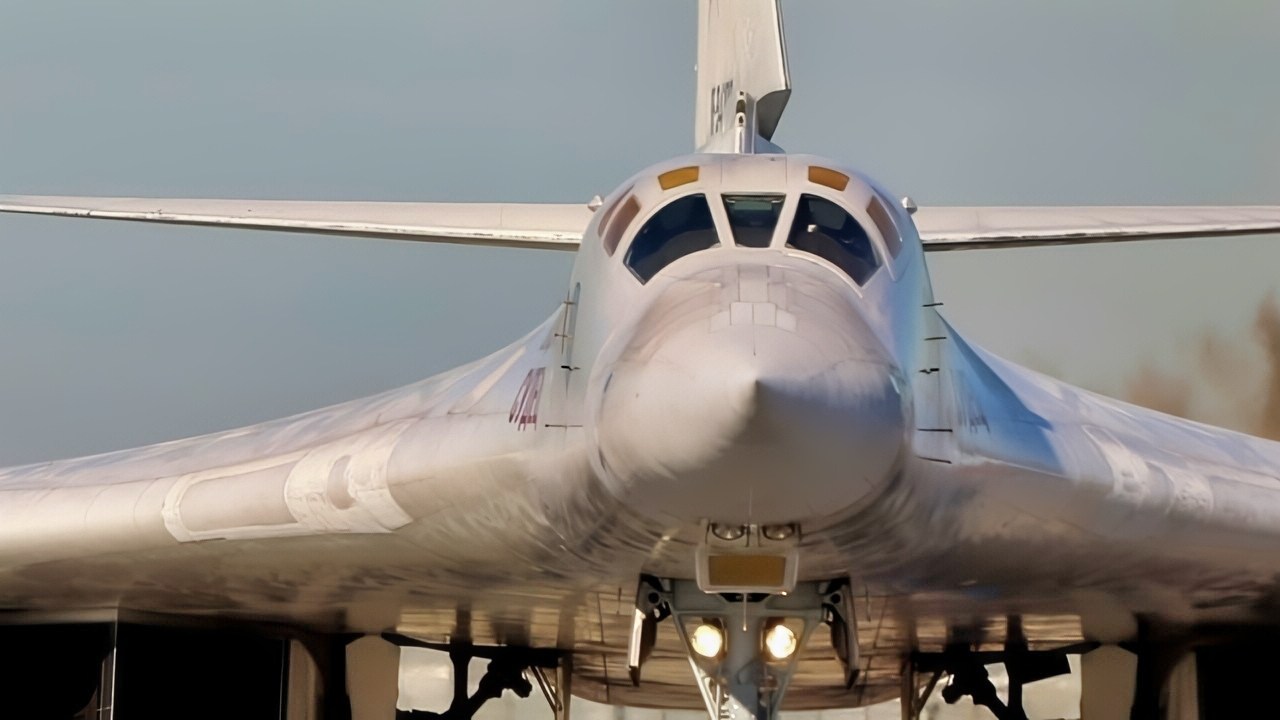
Tu-160 Up Close. Image Credit: Creative Commons.
The loss of Assad delivered what one study called a triple blow, strategic, reputational, and domestic, dismantling Russia’s foothold in the Middle East and damaging its image as a reliable partner capable of safeguarding the regimes that depend on it.
Losing The Near Abroad
Closer to home, in the post-Soviet space that Moscow has always treated as its rightful sphere of influence, Russia’s authority is eroding in real time. The clearest case is Armenia, a country that was, for decades, almost entirely dependent on Russian arms and security guarantees.
After Moscow failed to deliver contracted weapons and stood aside during the 2023 Nagorno-Karabakh collapse, Yerevan concluded that the Russian security guarantee was worthless. By early 2026, Armenia’s dependence on Russian weapons had fallen below ten percent, with France and India filling the gap, and the country froze its membership in the Russian-led Collective Security Treaty Organization while signing strategic-partnership declarations with the United Kingdom and France in May 2026.
The Armenian defection is the sharpest example of a broader pattern. The Armenian prime minister had already declared the CSTO a threat to national security, and polling showed Armenian support for the Russian-led bloc collapsing while backing for NATO climbed. Across Central Asia, states that once sat firmly inside Moscow’s orbit are charting independent courses, hedging toward China and Turkey.
A border dispute between two CSTO members, Tajikistan and Kyrgyzstan, was resolved through Turkish rather than Russian mediation, a direct consequence of Russia’s failure to intervene on Kyrgyzstan’s behalf earlier in the war.
The security architecture Moscow built to keep its neighbors in line is being quietly abandoned by the very states it was meant to bind, because Russia has shown it can no longer deliver the protection that was the arrangement’s whole point.

Russia Tu-160 Bomber. Image Credit: Creative Commons.
In a final irony, Putin has managed to alienate both sides of the conflict that the Kremlin once skillfully managed. From the czars through the Soviets, Moscow had for centuries navigated the tensions between Armenia and Azerbaijan to its own advantage.
Since starting the war in Ukraine, Putin has strained relations with both, squandering an instrument of regional leverage that predated the Soviet Union itself.
Frozen Out Of The West For A Generation
To Russia’s west, the war has produced a wall that will not come down when the shooting stops. NATO has enlarged with the addition of Finland and Sweden and rearmed in response to the invasion, more than doubling the alliance’s direct border with Russia. Europe has decoupled from Russian energy in a structural way that no ceasefire reverses, building out alternative supply and treating the return to Russian gas as politically unthinkable.
Roughly $300 billion in Russian sovereign assets sits frozen in Western institutions, a standing reservoir of leverage and a likely source of Ukrainian reconstruction funding that Moscow has no realistic prospect of recovering.
Putin himself carries a marker of his isolation that follows him everywhere. The International Criminal Court arrest warrant issued over the war means the Russian president cannot travel to any country bound by the court’s treaty without risking arrest. The constraint is not theoretical. It forced him to skip the 2023 BRICS summit in South Africa, and at the 2025 BRICS summit in Rio, he was reduced to delivering a brief video address rather than appearing in person. The leader who went to war to make Russia feared has become a head of state who cannot safely board a plane to half the world’s capitals.
The Caveat: Isolated From The West, Not From The World
A clear-eyed assessment has to acknowledge what Russia retains, because “diminished” is not the same as “finished,” and overstating the collapse would be its own kind of error. Russia still holds the world’s largest nuclear arsenal, a permanent seat and veto on the United Nations Security Council, and genuine leverage over global energy and grain markets. It has deepened its partnerships with Iran and North Korea, the suppliers of the drones and shells that have sustained its war. And crucially, it is not isolated from the world the way it is isolated from the West.

Iran’s Drones That Russia Is Using. Image Credit: Creative Commons.
The Global South never joined the Western sanctions campaign, and Russia has worked hard to exploit that. The Kremlin hosted a BRICS summit in 2024 attended by representatives of 36 countries, more than 20 of them by heads of state, in a deliberate demonstration that American efforts to isolate Russia had limits. India and China continue to buy Russian oil, and much of Africa, Asia, and Latin America have treated the war as a European affair rather than a reason to shun Moscow.
But even here, the picture is more constrained than Kremlin propaganda suggests. The BRICS bloc that Russia wants to forge into an anti-Western alliance has refused to become one. At the 2025 Rio summit, the agenda was dominated by Brazil and India, the bloc’s two largest democracies and the ones least interested in antagonizing the United States, and the meeting focused on global-governance reform and South-South cooperation rather than the anti-Western posturing Moscow craved.
Russia has friends in the Global South, but they are partners of convenience who buy its discounted oil and decline to confront the West on its behalf, not allies willing to subordinate their own interests to Russian grand strategy.
The Price of the Ukraine War For Putin’s Russia
The Russia that would emerge from a ceasefire signed today is a country that has traded its pretensions to superpower status for survival.
It is bound to China as the weaker partner, locked out of Europe and the broader West for the foreseeable future, unable to protect the clients and bases that once marked it as a global player, and watching its own historical sphere of influence drift toward Brussels, Beijing, Ankara, and Paris.
It retains the hard power to threaten and the nuclear arsenal to command respect, and it retains a Global South that will trade with it. What it has lost is the thing Putin actually went to war to secure: the standing of a great power whose neighbors fear it, whose word carries weight in distant capitals, and whose empire is expanding rather than contracting. The map in Ukraine will show whatever it shows.
Russia’s position in the world will show a power that spent its reach, its reputation, and its empire to hold a strip of someone else’s country, and emerged smaller in every lasting way.
About the Author: Harry J. Kazianis
Harry J. Kazianis (@Grecianformula) was the former Senior Director of National Security Affairs at the Center for the National Interest (CFTNI), a foreign policy think tank founded by Richard Nixon based in Washington, DC. Harry has over a decade of experience in think tanks and national security publishing. His ideas have been published in the NY Times, The Washington Post, The Wall Street Journal, CNN, and many other outlets worldwide. He has held positions at CSIS, the Heritage Foundation, the University of Nottingham, and several other institutions related to national security research and studies. He is the former Executive Editor of the National Interest and the Diplomat. He holds a Master’s degree focusing on international affairs from Harvard University.


