

Key Points and Summary – The Soviet-era VA-111 Shkval was a “near-unstoppable” torpedo that used supercavitation to “fly” through water at 200+ knots, enveloping itself in a gas bubble to eliminate drag.
-Designed as a nuclear-capable “carrier killer” to counter U.S. naval dominance, its existence “shocked” the West.

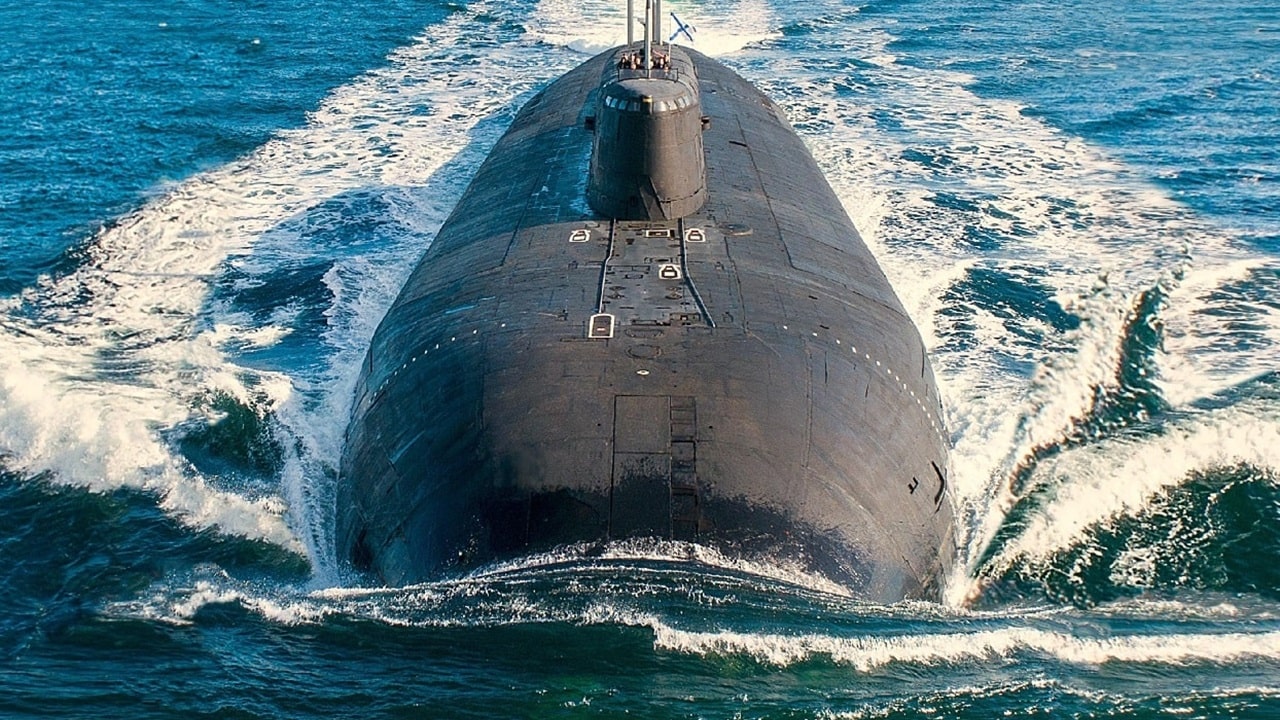
Russian Akula-Class Submarine X Screenshot Image.
-Despite its terrifying speed (covering 7km in under two minutes), the weapon was a “silver bullet” with “short range” and “guidance limitations.”
-The Russian Navy no longer appears to produce the Shkval, likely because the “too expensive” program “fell by the wayside” after the Soviet collapse.
Supercavitation Torpedoes: A History
The VA-111 Shkval is a supercavitation torpedo capable of tremendous speeds.
This torpedo was first developed in the Soviet Union and may have been exported to Iran. Able to be armed with conventional or nuclear payload, the VA-111 Shkval poses a significant threat to U.S. naval assets around the globe.
However, despite its terrifying capabilities, the Russian Navy does not appear to operate or produce supercavitation torpedoes anymore, focusing instead on other nuclear-tipped torpedoes.
Design and Development of the VA-111 Shkval
The origins of the Shkval trace back to the 1960s, when the Soviet Navy sought a weapon capable of neutralizing U.S. nuclear submarines and carrier strike groups.
At the time, the U.S. Navy had a clear advantage in anti-submarine warfare, prompting Soviet engineers to pursue a solution that would render existing countermeasures obsolete.
The NII-24 institute carried out the research, and after years of development, the Shkval entered service in 1977. Its introduction marked a technological leap that stunned Western analysts when its existence was revealed decades later.
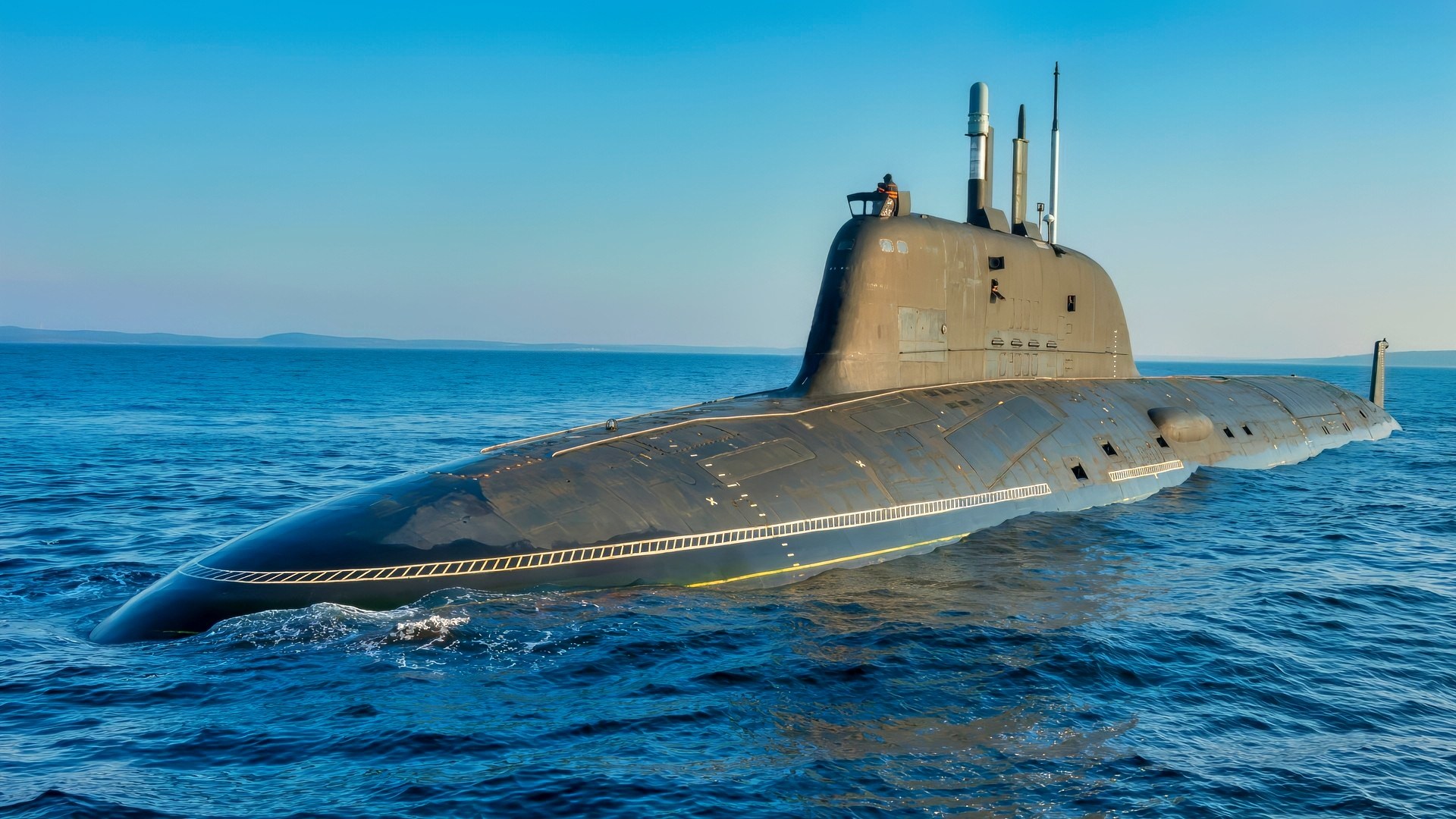
Yasen-Class Submarine. Image Credit: Russian Navy.

Russian Titanium Submarine. Image Credit: Creative Commons.
The Shkval is approximately 8.2 meters long, with a diameter of 533 millimeters and a weight of around 2,700 kilograms.
It carries a warhead of about 210 kilograms, which can be either conventional or nuclear. Its speed exceeds 200 knots, and some reports suggest it can reach up to 250 knots.
The original Shkval had a range of about 7 kilometers, while later variants such as the Shkval-2 extended this to 11–15 kilometers. It is launched from standard 533-millimeter submarine torpedo tubes, making it compatible with existing platforms.
How Supercavitating Torpedoes Work
The science behind the Shkval centers on supercavitation. Usually, water resistance severely limits underwater speed because water is about 800 times denser than air.
Supercavitation solves this problem by enveloping the torpedo in a bubble of gas, drastically reducing drag.
The Shkval achieves this by using a specially shaped nose cone called a cavitator, which deflects water outward, and by injecting hot gases from its rocket exhaust into the surrounding water, vaporizing it into steam.
This creates and maintains a gas bubble around the torpedo, allowing it to “fly” through water almost as if it were moving through air.
Unlike conventional torpedoes that rely on propellers or pumpjets, the Shkval uses a solid-fuel rocket engine for initial acceleration. After launch at about 50 knots, the rocket boosts the torpedo to supercavitation speed. Once inside the bubble, an underwater ramjet sustains velocity. This ramjet burns hydroreactive metals using seawater as an oxidizer, eliminating the need to carry large amounts of oxidizer onboard and making the system more efficient.
The Underwater Aircraft Carrier Killer
The Shkval’s existence was a closely guarded secret until the mid-1990s, when its revelation shocked Western analysts and spurred research into supercavitating weapons in the United States, Germany, and China. The VA-111 was designed to counter enemy submarines and surface ships, particularly U.S. carrier groups.
Its blistering speed gives targets almost no time to react. At 200 knots, the torpedo can cover 7 kilometers in under two minutes, far faster than any Western torpedo could intercept.
Early versions were intended for nuclear delivery, making them part of the Soviet Union’s tactical deterrent. A nuclear Shkval could devastate an entire carrier battle group, while a conventional one could cripple high-value ships.
The Soviet Union developed an export version of the Shkval under the name “Shkvall-E.” Officially, no torpedoes were ever exported, but according to some reports, some were sold to Iran at an unknown time.
Today, Iran claims to have developed its own supercavitation torpedoes based on the Shkval under the name “Hoot.”
It is unknown whether Iran truly does possess supercavitation torpedoes, but Iran has been and continues to use the Hoot as a propaganda weapon in case of a conflict with the U.S. or Israel.
Why Doesn’t Russia Make More Shkval Torpedoes?
From a tactical and strategic perspective, the Shkval is more of a “silver bullet” weapon. That is to say it is devastating under the right conditions but not universally applicable.
Its short range and guidance limitations make it unsuitable for long-range engagements or stealthy attacks. However, in scenarios where a submarine can close within 10 kilometers of a target undetected, the Shkval becomes a near-unstoppable threat. Its psychological impact on naval planning is significant, forcing adversaries to account for the possibility of ultra-fast torpedoes and complicating defense strategies.
Despite its perceived strength, the Russian navy is not interested in the Shkval project. After the fall of the Soviet Union, any mention of the Shkval or supercavitating torpedoes disappears seemingly without a trace.

Kilo-Class Submarine. Image Credit: Creative Commons.
According to some Russian sources, the Shkval isn’t even used in service anymore. One possibility is that the Russians keep a small stock of torpedoes secret, likely for tactical surprise and to guard the technology.
Another more probable reason is that the concept of supercavitating torpedoes is simply no longer attractive to the top naval high command.
With the economic depression in Russia following the dissolution of the USSR, the project likely became too expensive to produce in large numbers and ultimately fell by the wayside.
About the Author: Isaac Seitz
Isaac Seitz, a Defense Columnist, graduated from Patrick Henry College’s Strategic Intelligence and National Security program. He has also studied Russian at Middlebury Language Schools and has worked as an intelligence Analyst in the private sector.
More Military
China Has the Missiles to Sink U.S. Navy Aircraft Carriers, But Questions Remain
The P-51 Mustang Was the Best WWII Fighter
The U.S. Navy’s Great Aircraft Carrier Shortage of 2025 Won’t End
The Navy Isn’t Prepared For What’s Coming
Not Made in USA: The Vanguard-Class Missile Submarine Has Just 1 Mission


