

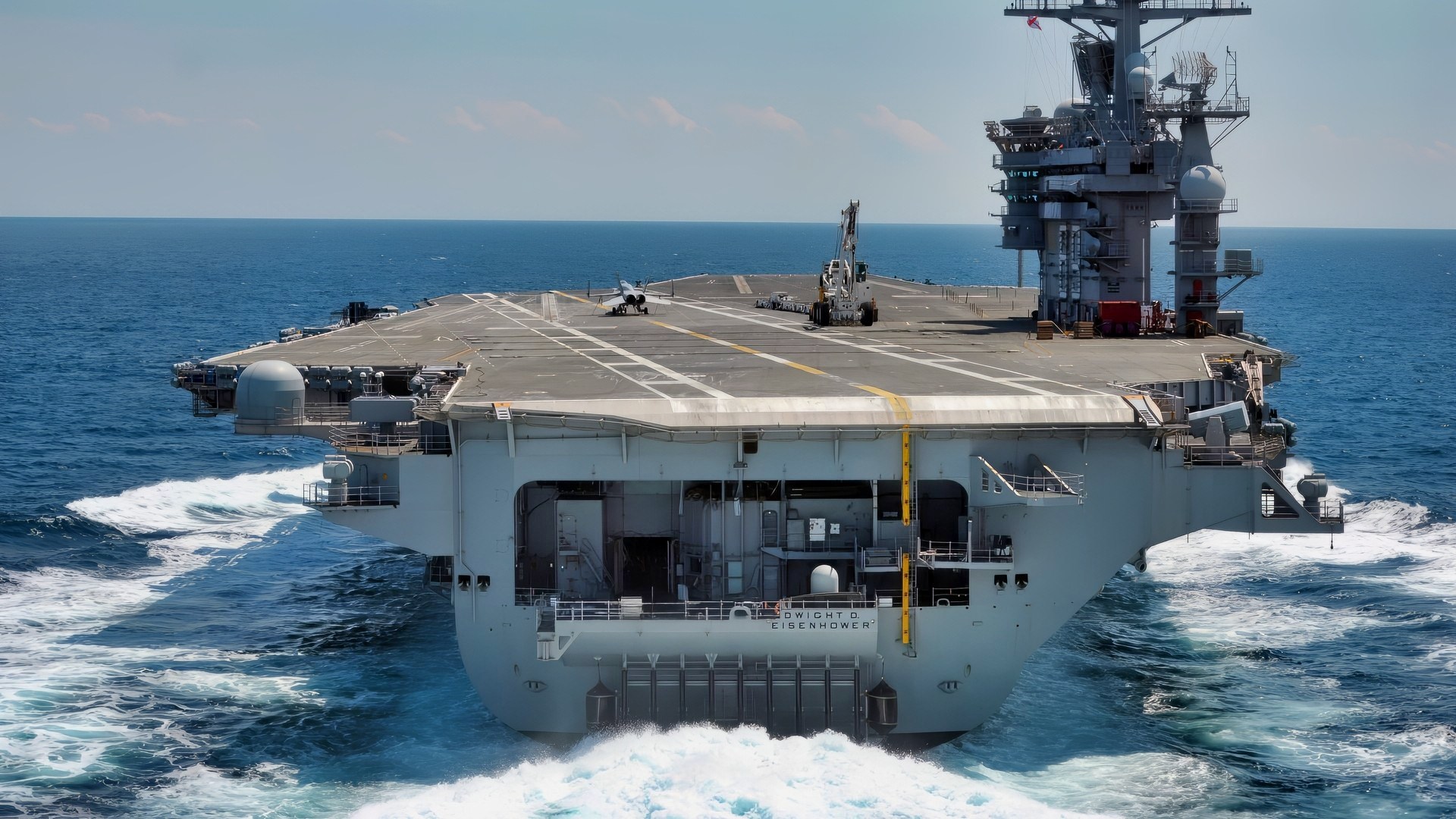
The Soviet Union began construction on the Project 1143.7 Ulyanovsk in late 1988. The Ulyanovsk was designed to be a nuclear-powered supercarrier matching the U.S. Navy’s Nimitz-class. The ship was being built at the Mykolaiv South Shipyard — now in Ukraine. The Ulyanovsk would have displaced 85,000 tons fully loaded. It would have carried 70 aircraft. Construction was halted in 1991, following the collapse of the Soviet Union. The hull was approximately 40 percent complete. Ukraine inherited the unfinished carrier. By 2015, Ukrainian workers had cut the hull apart for scrap. Russia has not built an aircraft carrier since. Russia’s only operational carrier, the Admiral Kuznetsov, has been in dry dock for 8 years. It is being sold for scrap. Approximately 1,500 of the Kuznetsov’s sailors have been redeployed as ground infantry — currently fighting in Ukraine near Kharkiv and Pokrovsk.
Whatever Happened to the Soviet Ulyanovsk (Project 1143.7) Nuclear Aircraft Carrier?

Admiral Kuznetsov Aircraft Carrier Russia. Image Credit: Creative Commons.
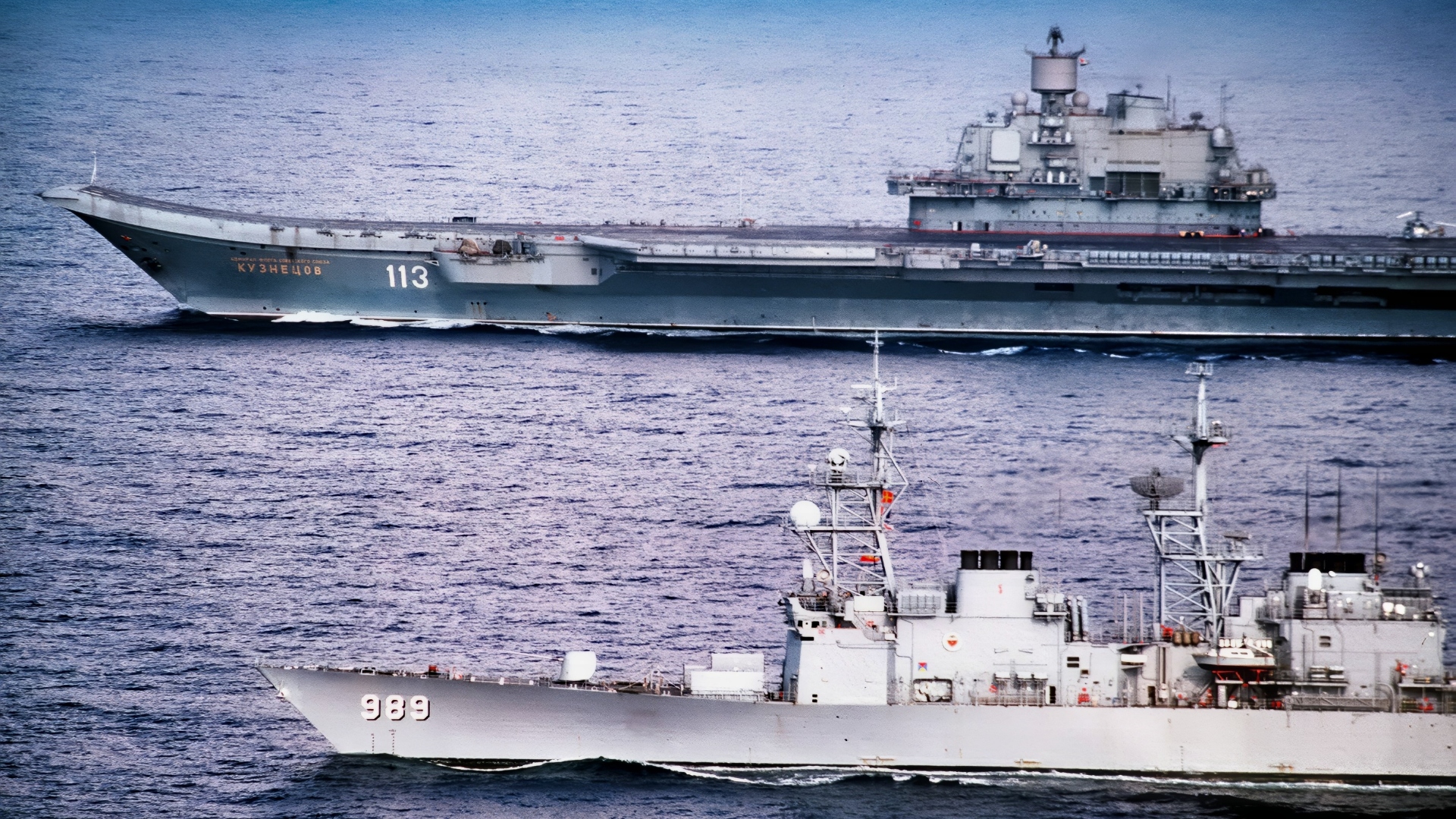
Admiral Kuznetsov. Image Credit: Creative Commons.

Admiral Kuznetsov Aircraft Carrier Russia. Image Credit: Creative Commons.
The Soviets tried to build a new aircraft carrier intended to rival the U.S. Navy’s Nimitz-class carriers. The Ulyanovsk (Project 1143.7) was a planned Soviet nuclear-powered supercarrier that was canceled and scrapped in early 1992 following the 1991 collapse of the Soviet Union.
Construction was halted at roughly 40 percent completion, and the unfinished hull was dismantled for scrap metal at the Mykolaiv South Shipyard in Ukraine.
Russia’s only “operational” carrier, the Admiral Kuznetsov, has been in dry dock for eight years and is to be scrapped. Following the conversion of a sizable portion of the Admiral Kuznetsov’s crew into ground troops to fight in Ukraine due to personnel shortages, some 1,500 sailors were redeployed to form a “frigate” battalion under the 1st Guards Tank Army, with reported combat activity near Kharkiv and Pokrovsk.
Experts express skepticism about Russia’s financial and logistical ability to build a new carrier in the near future.
Background On The Ambitious Ulyanovsk Supercarrier Project
The Soviets began construction on the carrier in 1988, after the death of Defense Minister Dmitri Ustinov in 1984. Ustinov was adamantly opposed to the construction of nuclear-powered aircraft carriers.
His death, along with changes to the Soviet General Staff, resulted in the idea of creating “floating airfields at sea,” beginning to take hold.
The original intent was for it to be the first ship to offer true blue water naval aviation capability for the Soviet Union. The plan was to build two of this class of carriers. The Soviets chose the name Ulyanovsk after the city in the Soviet Union. That is where Lenin was born, and Ulyanov was his original name.

Admiral Kuznetsov back in 2011. Image Credit: Royal Navy.

Admiral Kuznetsov. Image Credit: Creative Commons.
The Soviets had planned to equip the ship with two steam catapults that could launch heavier fixed-wing aircraft, representing a major advance over the comparatively smaller Kuznetsov class, which could only launch lighter/partially loaded aircraft via a bow ski-jump.
Meet The Ulyanovsk Aircraft Carrier
Construction began in the Black Sea Shipyard in late 1988.
The Ulyanovsk nuclear-powered aircraft carrier had a designed displacement of 79,758 tons and a full-load displacement of 85,000 tons, with a draft of 10.7 meters.
Its flight deck was 322.7 meters long and 75.3 meters wide. It was the first Soviet carrier to be powered by a nuclear propulsion system or a combined nuclear and conventional propulsion system, with pressurized water reactors generating a total power of 280,000 horsepower.
It featured four propeller shafts, achieving a top speed of over 30 knots. The hangar deck was designed to accommodate 70 aircraft.
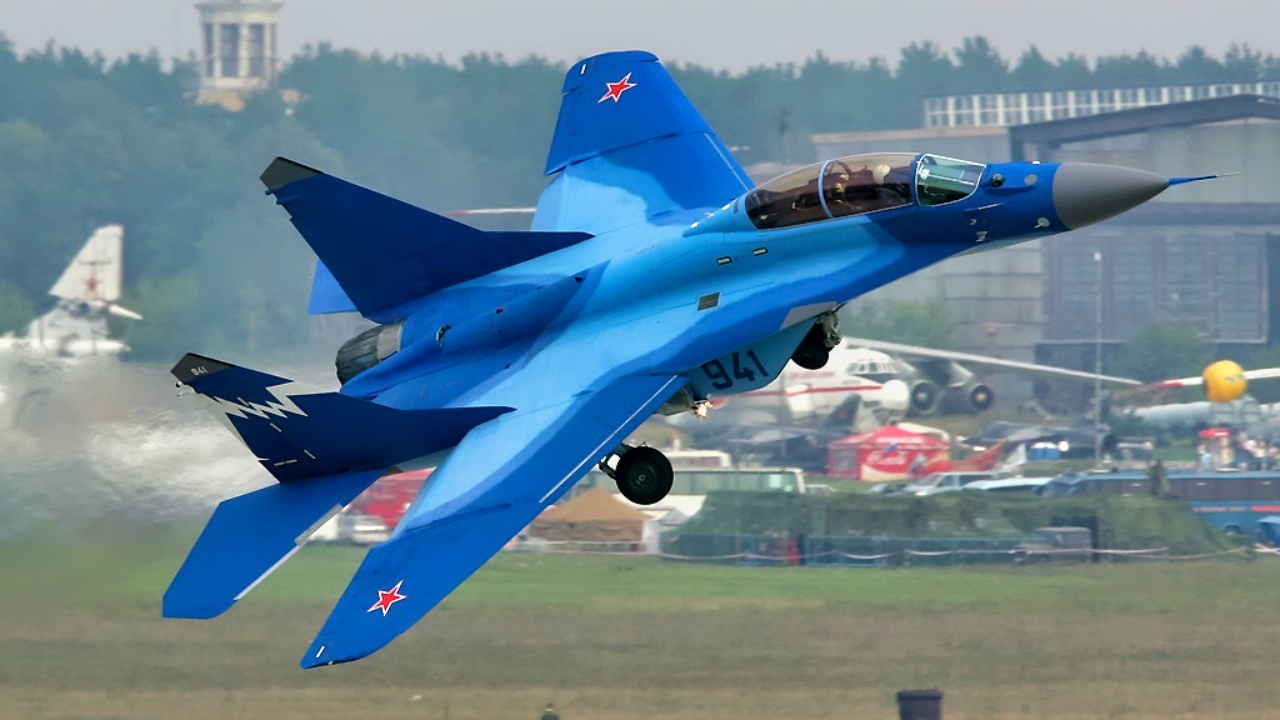
MiG-29K. Image Credit: Creative Commons.
Those consisted of 44 fighter aircraft, a mix of Sukhoi Su-33 (Su-27K) and Mikoyan MiG-29 K.
6 Yakovlev Yak-44 RLD airborne early warning aircraft
16 Kamov Ka-27 anti-submarine warfare helicopters
2 Ka-27PS air-sea rescue helicopters
The carrier would have been equipped with two “Mayak” steam catapults manufactured by the Proletarian Factory in Leningrad, a ski-jump, and four arresting gear systems.
Russia’s Carrier Shipbuilding Wasn’t Done In Russia
Limited Infrastructure is a significant issue. Russia lacks a single shipyard large enough to construct a supercarrier-sized vessel, posing a significant logistical hurdle.
More importantly, the Soviet Union’s only carrier-building facility was the Mykolaiv shipyard on the Black Sea, now in Ukraine. Given Russia’s invasion, Ukraine is not likely to ever make these yards available to Russia again.
The poor state of Russia’s shipyards is highlighted by the sorry condition of the Admiral Kuznetsov, which has been in dry dock since 2017, with no discernible work having been done on it.
It now appears that the Russian government has given up the ghost and is going to scrap it.
The shipyards where the Admiral Kuznetsov is currently stationed are not fully capable of overhauling this vessel, let alone building a larger, more modern, nuclear-powered aircraft carrier from scratch.
The Soviet Union’s Collapse Dooms The Ulyanovsk
After just three years of construction in the Ukrainian shipyard, the Soviet Union collapsed. The Russian economy was (and still is) in dire straits, with funding cut off and construction ceasing.
The shipyard had already processed 29,000 tons of steel for the carrier. But the Ukrainians were stuck with it. An American steel company had offered to buy it all, but after the shipyard dismantled the Ulyanovsk, the company backed out of the sale.
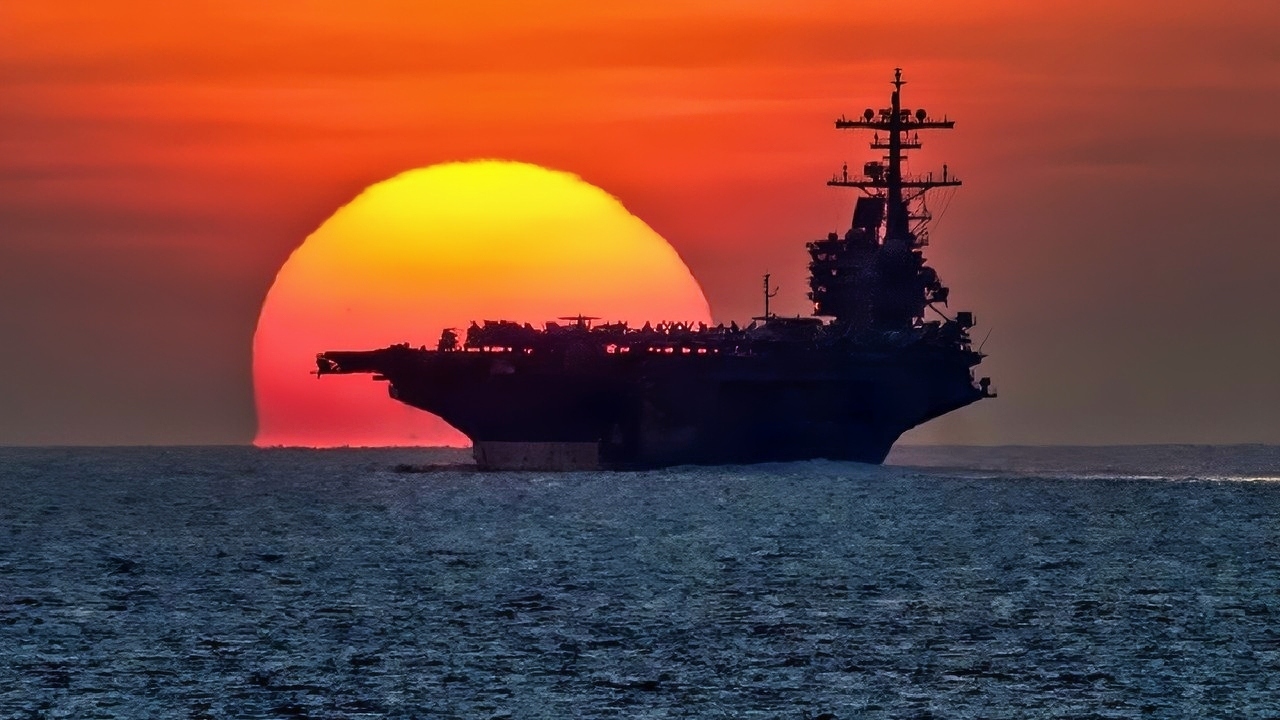
Nimitz-Class Aircraft Carrier in the Sunset. Image Credit: Creative Commons.
The scrapping of the Ulyanovsk was not completed until 2015, and the Ukrainians then sold the steel at a much lower price than the original offer.
The Russians have not built an aircraft carrier since, although they announced grandiose plans in 2020 to build the world’s largest aircraft carrier, based on the original Ulyanovsk design.
About the Author: Steve Balestrieri
Steve Balestrieri is a National Security Columnist. He served as a US Army Special Forces NCO and Warrant Officer. In addition to writing on defense, he covers the NFL for PatsFans.com and is a member of the Pro Football Writers of America (PFWA). His work was regularly featured in many military publications.


