

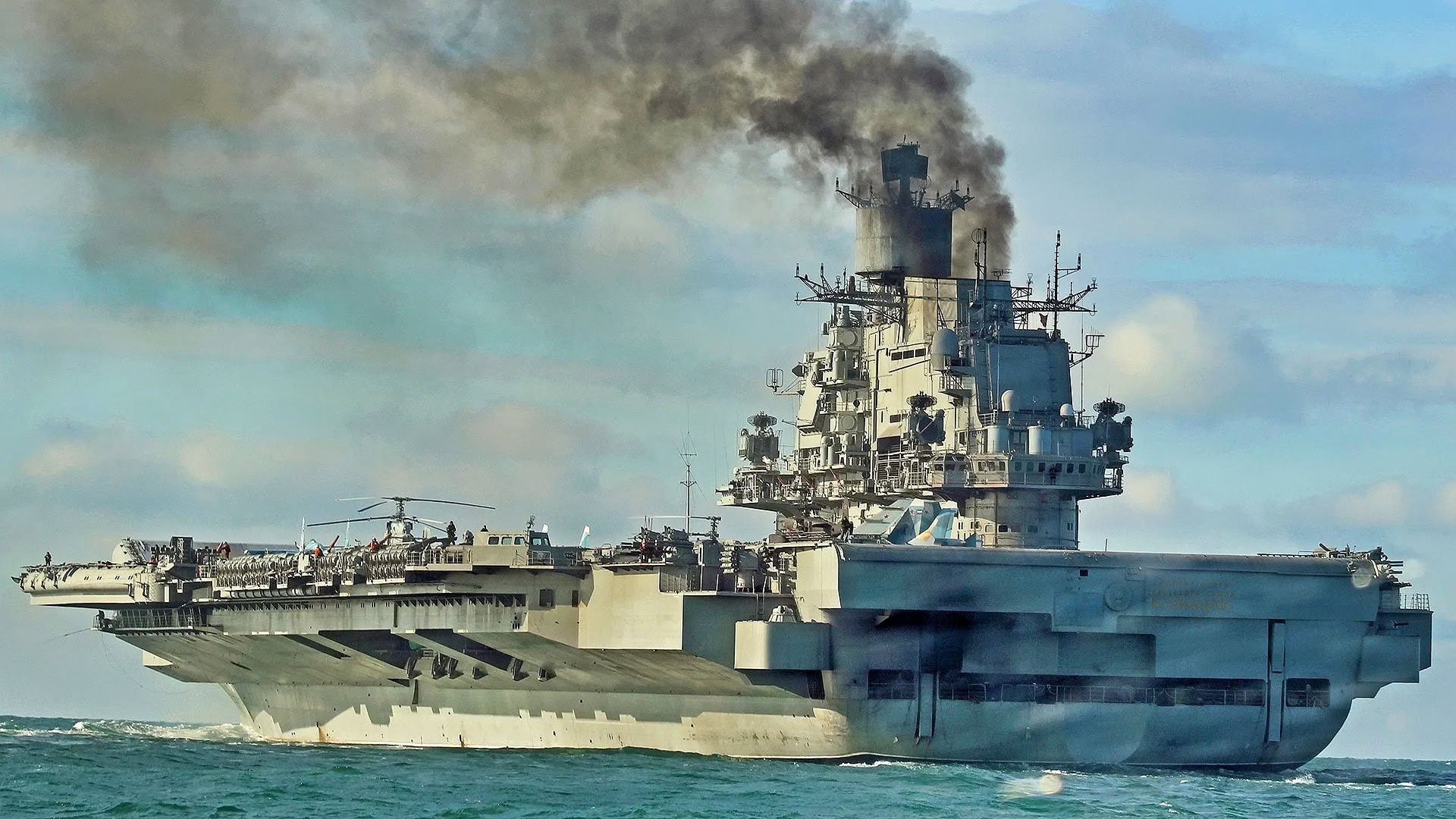
Key Points and Summary – Admiral Kuznetsov was supposed to be Russia’s blue-water calling card; instead, she became a case study in what happens when design compromises meet chronic underfunding.
-Built with a ski-jump instead of catapults, powered by smoky, maintenance-hungry boilers, and fielding an air wing that never reached true potential, Kuznetsov stumbled from mishap to mishap—black smoke, tug escorts, botched deck ops, a sunken dry dock, a lethal refit fire, and endless delays.

Admiral Kuznetsov Russian Aircraft Carrier. Image Credit: Twitter/Screenshot.
-In a navy built for coastal denial and submarines, an aging carrier no longer fits the mission or the budget.
-The honest, humane choice now: cut losses, scrap the ship, and move on.
Admiral Kuznetsov Aircraft Carrier: Russia’s Giant Navy Failure
Every navy tells stories about its ships. Unfortunately for Admiral Kuznetsov, the most enduring image isn’t a triumphant deck-load launch; it’s a sooty plume trailing a weary hull as a tug steams close by “just in case.” The smoke is not merely cosmetic.
It’s a symptom of a propulsion choice—mazut-burning boilers—that demanded relentless care Kuznetsov rarely received. The tug isn’t a punchline either; it’s an admission that the flagship was never fully trusted to get home under her own power. In a platform meant to project confidence, those visuals whispered the opposite.
Built For A Different Era—And A Different Navy
Kuznetsov’s problems began at the drawing board. She was conceived in the late Soviet period as a compromise: a “heavy aircraft-carrying cruiser,” not a true catapult carrier.
Instead of steam catapults to launch heavy, fuel-laden jets, designers opted for a ski-jump ramp—what navies call STOBAR (short take-off but arrested recovery). That saved weight and complexity. It also cut performance.
Without catapults, aircraft launch lighter than ideal, limiting fuel or weapons, and the ship cannot operate fixed-wing airborne early-warning aircraft that give U.S. carriers their long radar reach. From day one, Kuznetsov was capped at “good enough,” when carriers must be great.
Then history intervened. The Soviet Union collapsed. The ship was finished in Ukraine’s Mykolaiv yard but delivered into a Russian Navy that suddenly had less money, fewer escorts, and greater priorities nearer home.
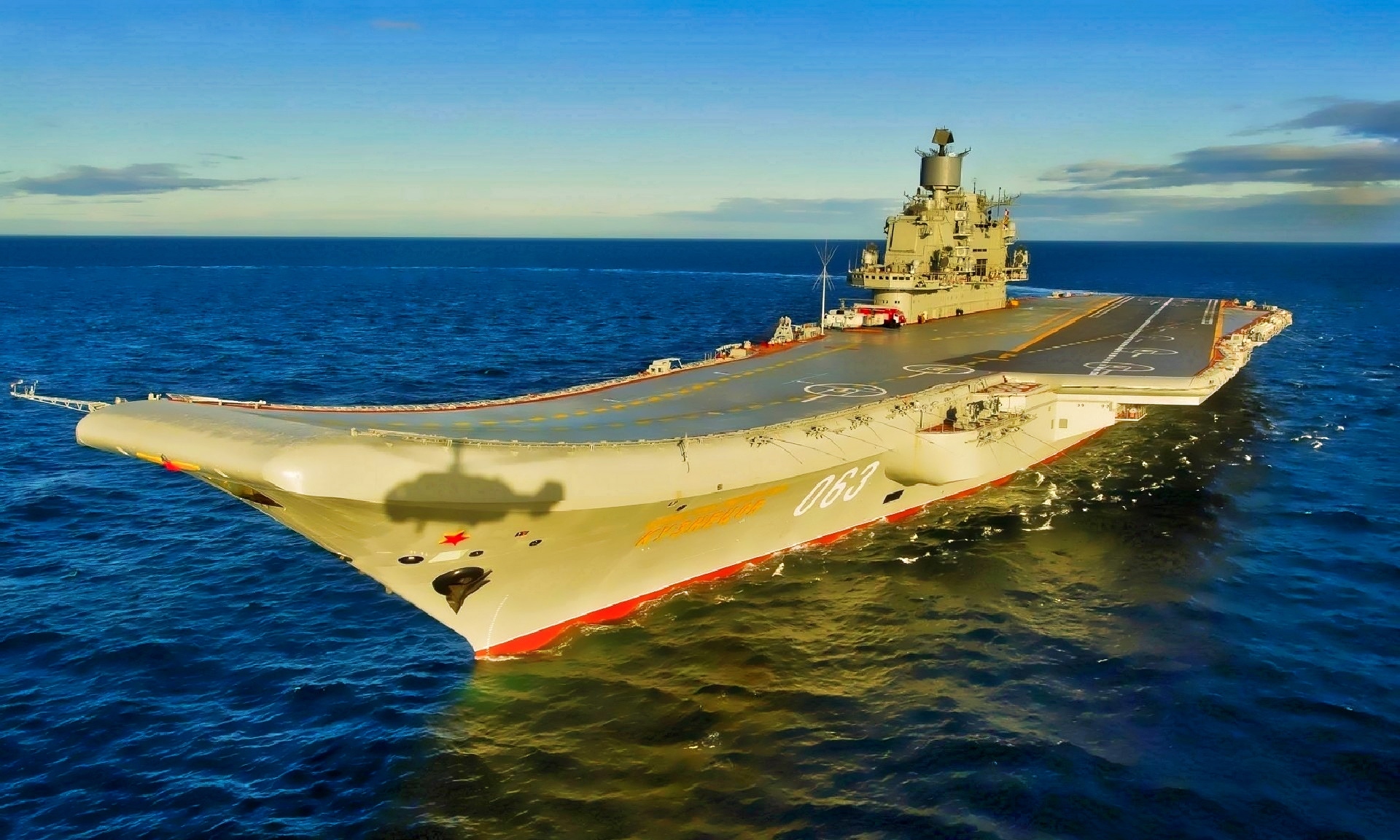
Admiral Kuznetsov Aircraft Carrier. Image Credit: Creative Commons.
A capital ship that needs steady budgets and constant practice instead got austerity and long pier-side stretches. Flight-deck proficiency—the fragile art that turns a flat top into a fighting ship—atrophied.
Propulsion: A Maintenance Plan Masquerading As A Powerplant
Carrier propulsion should be boring. Kuznetsov’s isn’t. Her mazut-fueled boilers demand disciplined upkeep and high-skill crews; both are hard to sustain across decades of lean spending. Underway reliability suffered. Ports and pilots complained about the soot. Every sail-away became a gamble that another leak, flashback, or feedwater problem wouldn’t force yet another “temporary” fix.
In contrast, the U.S. Navy’s nuclear carriers traded complexity up front for astonishing endurance and electrical power for sensors and catapults; even France’s smaller Charles de Gaulle went nuclear. Admiral Kuznetsov’s boiler choice was understandable in the 1980s Soviet industrial context. It was misaligned with the fleet Russia actually fielded in the 2000s and 2010s.
An Air Wing That Never Grew Up
Paper plans promised a potent mix: Su-33 fighters for fleet defense, later joined by MiG-29K multirole jets, plus helicopters for anti-submarine warfare and limited airborne early warning. Reality proved thinner.

Sukhoi Su-33 launching from the Admiral Kuznetsov.
Su-33s were big and specialized; the MiG-29K fleet never reached the critical mass or readiness tempo to sustain the hard daily grind of carrier aviation. Without catapults, no fixed-wing AEW aircraft could fly; helicopters tried to fill the gap but lacked height, speed, and endurance. A carrier air wing without robust early warning is a fighter squadron perched on a vulnerable barge.
Worse, without continuous deck operations in peacetime, muscle memory fades. Arresting gear needs constant tuning; pilots need traps and launches week after week. Kuznetsov’s long pier time hurt the ship, but it may have hurt her aviators more.
Syria: A Showcase That Showed Too Much
When Admiral Kuznetsov deployed to the Eastern Mediterranean to support operations in Syria, Moscow saw it as a proof-of-concept: Russia could send its carrier, launch combat sorties, and fly the flag like any great power.
The world saw something else. That infamous black smoke billowed across the sea. A tug escorted the ship. Shortcomings on deck turned into tragedy when a MiG-29K ditched after a malfunction and a Su-33 was lost after arresting gear failed. Within days, most fixed-wing combat sorties shifted ashore to Russia’s airbase at Hmeymim, which offered longer, safer runways and none of the ship’s constraints.
There were brave and competent crews on that deck. But the public lesson was cruel: Admiral Kuznetsov could go to war zones; she struggled to be useful once there.
The Repair Odyssey: Sunk Dock, Scorched Deck, Slipping Deadlines
Every old ship needs mid-life renewal. Kuznetsov’s refit became a saga. In 2018, the massive PD-50 floating dry dock used to lift her sank suddenly, sending a crane crashing onto the carrier’s deck and punching a gash. In 2019, a serious fire during refit killed shipyard workers and scorched interior spaces.
Each incident pushed schedules to the right and added costs to an already stretched budget. Announced return-to-service dates slipped repeatedly. Sanctions and supply-chain shocks complicated access to parts and skilled labor. Incremental modernization plans ballooned into a game of “replace one more thing,” because once you start opening up an old ship, you find what time has quietly ruined.

Admiral Kuznetsov back in 2011. Image Credit: Royal Navy.
A refit is supposed to reset the clock. Kuznetsov’s refit stopped it, then started it, then stopped it again—until the clock became the story.
Strategic Drift: The Wrong Flagship For The Wrong Fleet
Even if Admiral Kuznetsov emerged gleaming tomorrow, she would still be a misfit. Modern Russian naval power doesn’t hinge on far-sea carrier battlegroups; it rests on submarines, coastal defense, land-based aviation, and anti-ship missiles designed to keep others at arm’s length.
That’s a strategy of “access denial”—the exact opposite of what a carrier is built to do, which is to push power into someone else’s neighborhood and stay there. Carriers are ravenous for escorts, oilers, and specialized aircraft; Russia’s surface fleet has struggled to field enough modern frigates and destroyers, let alone spare them for long deployments.
For a navy playing mostly on home ice—the Barents, the Baltic, the Black Sea—a single, aging carrier imposes a tax without paying a dividend. In the Pacific, where reach really matters, the ship’s limitations are even harsher and the logistics thinner.
Training, Culture, And The Cost Of Sporadic Use
Carrier aviation is not just technology; it’s a culture. The United States sustains it with multiple decks underway, thousands of traps per year, nuclear-powered hulls that sprint to warm-water training grounds, and a massive shore-based infrastructure that replicates the flight deck on land.
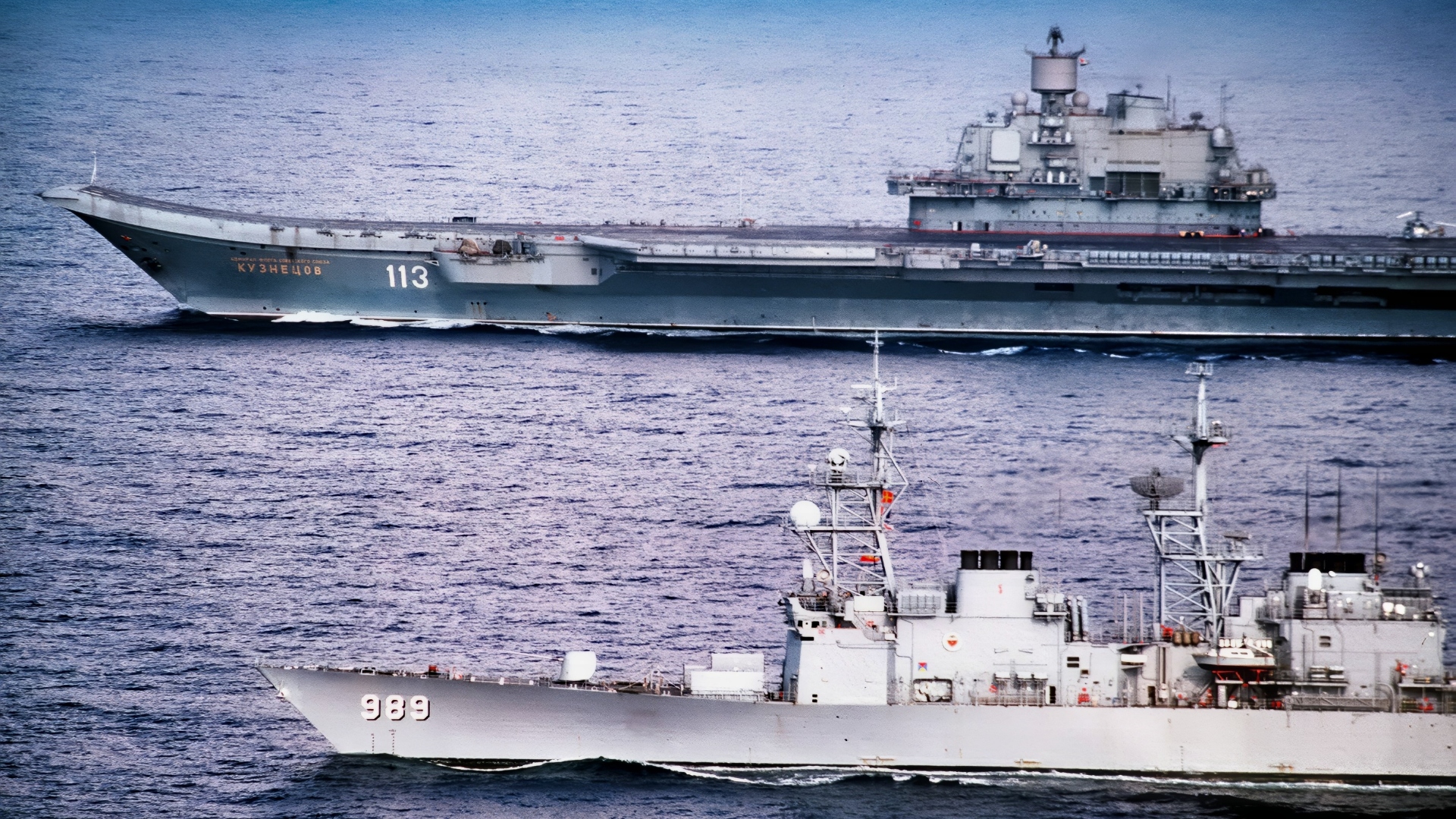
Admiral Kuznetsov. Image Credit: Creative Commons.
Russia has had, in practice, one ship with sporadic availability, limited sailing days, and an inconsistent pipeline for naval aviators. That reality writes itself into habits, maintenance checklists, and decision-making. It also explains why mishaps that a mature carrier culture might catch early can metastasize onboard a ship that doesn’t go to sea enough.
People are the last, best form of redundancy; Kuznetsov never had enough reps to build the deep bench such a ship requires.
The Budget Math Never Balanced
Admirals rarely get everything they want—so they choose. For more than a decade, Russian naval spending has favored submarine fleets, anti-ship and land-attack missiles, and air defenses over surface prestige. That’s rational: submarines are survivable and relevant; coastal missile regiments complicate any adversary’s plans; modern frigates and corvettes carry real firepower for sensible money. Kuznetsov devoured cash, yard space, and time.
Even supporters of “keep a carrier” struggled to articulate a mission that justified the bill. Presence? A cruiser with Kalibr missiles does presence. Training? You can’t train carrier aviators without a carrier that actually sails—and Kuznetsov mostly didn’t. Deterrence? Deterrence is a product of credible capability, not headlines from a refit yard.
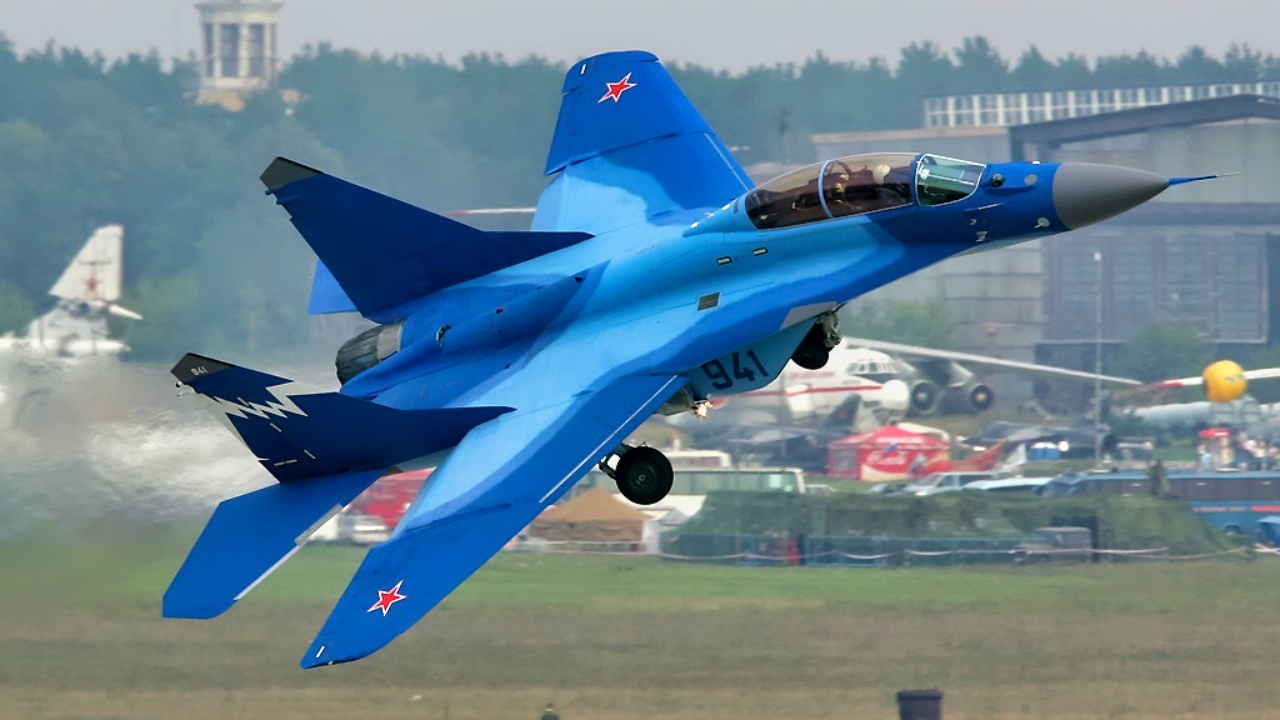
MiG-29K. Image Credit: Creative Commons.
The Human Cost Of Keeping A Legend On Life Support
Some arguments against scrapping are emotional, and that’s understandable. Thousands of sailors, engineers, and yard workers poured parts of their lives into Kuznetsov. She is a repository of service, not just steel. But loyalty to crews can point toward scrapping, not away from it. A ship that won’t reliably steam is a ship that puts people at risk in peacetime; a ship that cannot perform her wartime mission is a ship that would ask crews to take risks for little tactical return.
The 2019 fire was a reminder that keeping an old, complex combatant alive isn’t just expensive; it’s dangerous. Honoring the workforce means not trapping them in an endless cycle of rework on a platform past its design prime.
Why The Punchlines Landed—And Why They Won’t Stop
“Black smoke” became a meme because it condensed technical debt into one bruise-colored cloud. “Carrier with a tug” stuck because it captured an intuitive mismatch between role and reality. The mishaps—lost jets, broken arresting gear, a fallen dock crane, a spiraling refit—felt like episodes in a tragicomedy no crew deserved.
It’s tempting to blame jeering on Western bias. Resist that. The jokes sting because they’re shorthand for deeper, structural failures: design compromises locked in long ago; a defense economy that couldn’t support the ship’s needs; a strategy that never truly required a carrier at all. You can silence the jokes by fixing causes, not symptoms. Kuznetsov’s causes aren’t fixable at acceptable cost.

Admiral Kuznetsov Aircraft Carrier Russia. Image Credit: Creative Commons.
What The Money Could Buy Instead
Scrapping a carrier isn’t defeat; it’s honest triage. The same rubles could accelerate frigate and submarine production, refresh naval aviation ashore, and harden logistics that actually matter in a fight. They could fund active protection for ground forces, counter-drone suites for ships in confined seas, or better training and pay—the unglamorous foundations of real capability.
There is also an opportunity to invest in things that look nothing like Kuznetsov but change an adversary’s calculus: seabed sensors, autonomous undersea vehicles, and long-range anti-ship fires cued by space-based targeting. Sunk costs are a trap; future leverage is the goal.
The Plea: End The Illusion, Spare The People, Scrap The Ship
Keeping Admiral Kuznetsov alive has become a ritual sacrifice to the idea of being a “carrier navy.” It is a costly illusion. The ship’s design was a compromise, its upkeep a saga, its combat value thin, and its symbolism—unfairly to those who served—now inseparable from smoke and mishap.
Russia’s sailors, its shipyard workers, and yes, its taxpayers deserve better than a prestige project that drains resources while generating headlines for all the wrong reasons.
Scrapping Admiral Kuznetsov would not be an admission that carriers are obsolete; it would be an admission that this carrier is. It would signal a willingness to align strategy with means, and to stop asking crews to shoulder risks for little return. There is dignity in letting go. There is wisdom in cutting losses. And there is nothing patriotic about pretending a hulk is a flagship.
End the refit. Tow her to the breakers. Thank the people who tried. Spend the money where it will matter.
That would be the first truly successful chapter in Admiral Kuznetsov’s long, difficult story.
About the Author: Harry J. Kazianis
Harry J. Kazianis (@Grecianformula) is Editor-In-Chief and President of National Security Journal. He was the former Senior Director of National Security Affairs at the Center for the National Interest (CFTNI), a foreign policy think tank founded by Richard Nixon based in Washington, DC. Harry has over a decade of experience in think tanks and national security publishing. His ideas have been published in the NY Times, The Washington Post, The Wall Street Journal, CNN, and many other outlets worldwide. He has held positions at CSIS, the Heritage Foundation, the University of Nottingham, and several other institutions related to national security research and studies. He is the former Executive Editor of the National Interest and the Diplomat. He holds a Master’s degree focusing on international affairs from Harvard University.
More Military
Why the U.S. Navy Finally Said No to the F-14 Tomcat
China’s ‘New’ J-35A Air Force Stealth Fighter Suffers From 1 Big Disadvantage
China’s Stealth Submarine Fleet Has a Message for the U.S. Navy
The U.S. Army’s Drone Nightmare Is Coming True
Mach 6 ‘Miracle’ SR-72 Darkstar Has a Message for Russia or China


