

Key Points and Summary – Russia’s Kirov-class nuclear battlecruiser Admiral Nakhimov has finally returned to sea after a massive, two-decade-long refit costing roughly $2.5 billion.
-Upgraded with hypersonic Zircon missiles and modern air defenses, it’s one of the most heavily armed warships afloat.

Russian Navy Kirov-class Battlecruiser. Image Credit: Creative Commons.
However, the project suffered extreme delays and cost overruns, highlighting Russia’s industrial struggles.
-While a powerful symbol, critics argue the immense resources consumed represent a monumental miscalculation—money that could have built several smaller, modern ships better suited to contemporary naval warfare, especially given the vulnerability of large surface combatants to drones.
Admiral Nakhimov Kirov-Class Battlecruiser: The Comeback Mistake?
After more than two decades in limbo, Russia’s massive nuclear-powered battlecruiser Admiral Nakhimov has finally returned to sea.
The refitted Kirov-class battlecruiser, which has long been seen as the apex of Russia’s naval ambitions, now features hypersonic-capable missile cells, modern air defenses, and a nuclear power plant.
But as the ship undergoes trials in the White Sea, one question remains: is resurrecting this Cold War behemoth a genius move, or a monumental miscalculation?

Kirov-Class Russian Navy. Image Credit: Creative Commons.
The Refit Explained
The Admiral Nakhimov has been undergoing one of the longest naval refits in modern history.
Initially commissioned in 1988, it was laid up in the 1990s before work began in earnest in 2013 at Sevmash in Severodvinsk.
The overhaul saw both nuclear reactors reactivated this year, following years of internal restructuring and retrofitting. In August, the cruiser officially departed the yard for factory and sea trials in the White Sea. It is the first time the vessel has sailed since 1997.
The scale of the refit is utterly staggering.
The ship’s old P-700 Granit missile tubes have been replaced with 80 UKSK 3S14 vertical launch cells that are capable of firing Kalibr, Oniks, and 3M22 Zircon hypersonic missiles, as well as anti-submarine payloads.
Additionally, approximately 96 air-defense cells can support a Fort-M/S-300F or a naval S-400 system.
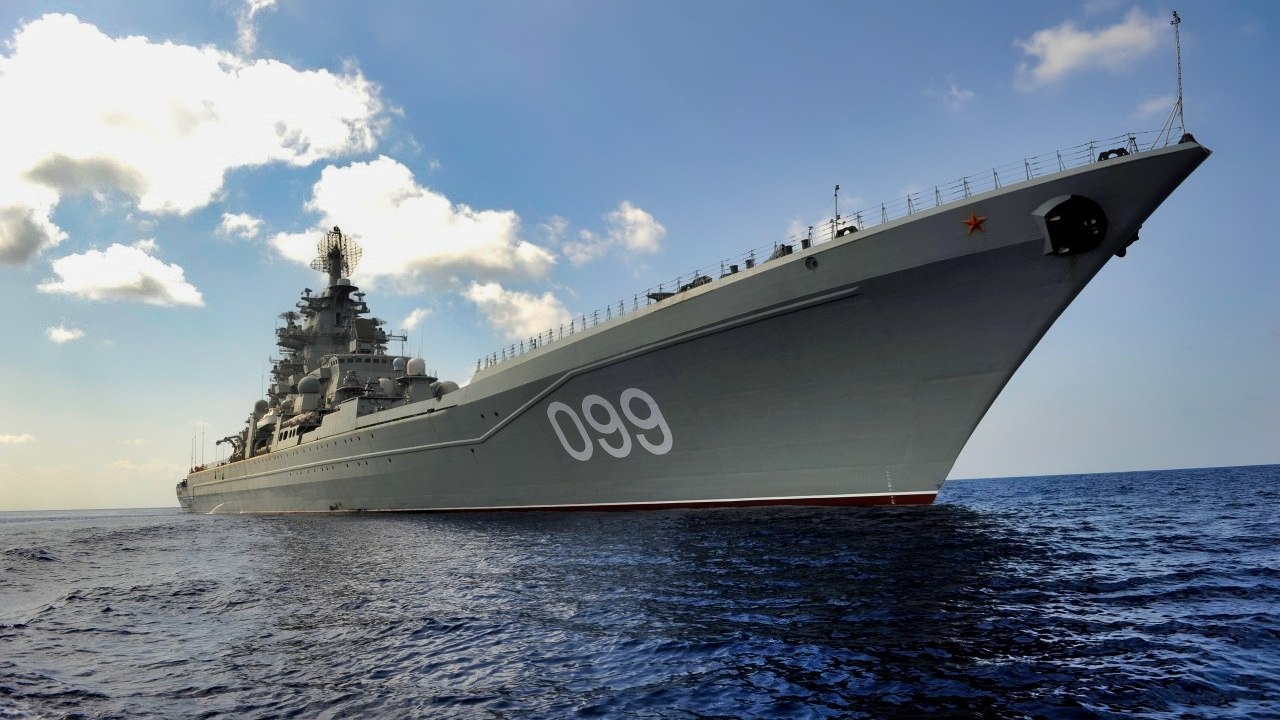
Kirov-Class Battlecruiser Russian Navy. Image Credit: Creative Commons.
At the same time, Pantsir-M short-range missile-gun batteries and Paket-NK anti-torpedo launchers provide a final line of defense for the ship.
Together, the upgrades give Nakhimov one of the largest missile magazines ever fitted to a warship – making it a formidable naval asset and, in theory, one worth saving. But the project hasn’t been without its problems.
Rising Costs and Long Delays for This Kir0v-Class Battlecruiser
The journey to bringing the Nakhimov back to life has by no means been simple.
The refit has cost more than initially anticipated and taken years longer than originally planned.
The program was initially anticipated to be completed by 2018, and while the ship is now undergoing sea trials, it’s too early to say whether repair work is finally complete.
Cost estimates for the project now hover around the 200 billion ruble mark – roughly $ 2.5 billion – for a single hull.

Kirov-Class Russian Navy. Image Credit: Creative Commons.
Unsurprisingly, then, Moscow seems unwilling to repeat the exercise.
The Pyotr Velikiy, currently the Northern Fleet’s flagship, is expected to be retired rather than similarly refitted, with sources citing cost, yard capacity, and manpower constraints.
That decision effectively means that the Admiral Nakhimov was a one-off experiment, leaving it as a one-off flagship without any peers.
What Russia Gets for the Money
From Moscow’s perspective, the payoff is still formidable – despite the problems.
A nuclear-powered strike battlecruiser with 176 missile cells, modern sensors, and long-range weapons is a significant symbol of capability and strength at a time when Russia’s defense industry is mainly focused on supporting the ongoing war in Ukraine.
The ship’s versatility allows it to conduct land-attack missions using its Kalibr missiles or engage surface targets with Zircon or Oniks.
It can provide regional air cover thanks to its long-range SAMs. In fleet exercises or even Arctic operations, Nakhimov could effectively serve as a command hub or arsenal for the Northern Fleet.
Beyond its firepower, the cruiser’s sheer presence and size make it a prized asset and symbol of prestige.
Reviving a 28,000-ton nuclear battlecruiser from the Cold War reinforces the Kremlin’s message to the world that Russia remains a blue-water power despite ongoing sanctions and industrial setbacks.
Is It A Bad Idea?
Russia certainly gets a lot from the Nakhimov refit, but there are plenty of arguments why it may not have been the most cost-effective decision. First, there’s the opportunity cost: the refit consumed resources that could have been used to build several new warships, such as Gorshkov-class frigates or Karakurt-class corvettes, smaller vessels that align with Russia’s modern “sea-denial” strategy.
In simple terms, it means Russia spent money and time on an old giant when it could have built more nimble ships designed to keep enemy forces out of its surrounding waters. In a sanctions-constrained economy, it’s hard to argue that one larger ship was worth all the time and resources when multiple smaller and more modern ships could have been built instead.
The ongoing war in Ukraine has also shown just how effective cheaper options can be, including inexpensive drones and precision weapons.
Drones have proven more than capable of devastating expensive hardware – and even with its advanced air defenses, a massive, high-signature ship like Nakhimov could be a tempting target for adversaries using unmanned aerial vehicles (UAVs). A single attack could take out billions of dollars’ worth of work.
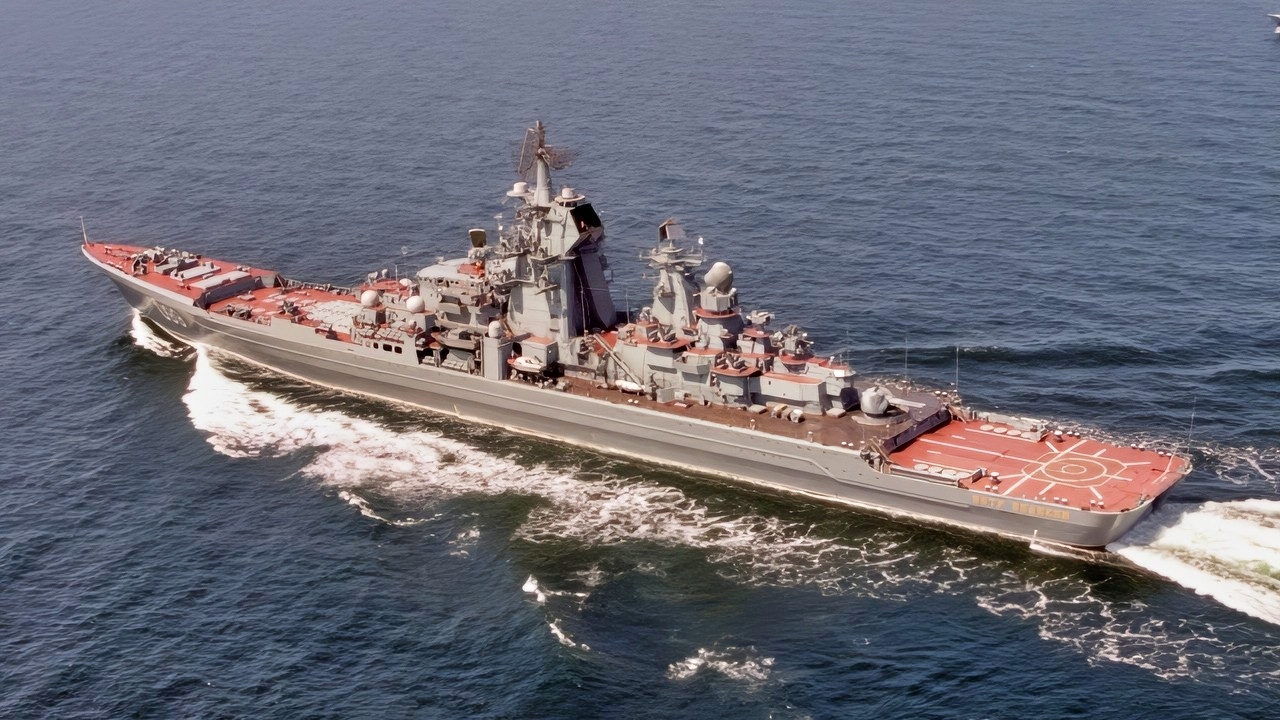
Russian Navy Kirov-Class. Image Credit: Creative Commons.
And then there’s the matter of industrial strain. The refit’s two-decade timeline is a result of systemic bottlenecks in Russia’s shipyards, including aging infrastructure, sanctions on components, and skilled labor shortages. The refit has been repeatedly described as a major “setback” for Russia, plagued by technical faults and overspending.
These same issues could cripple long-term maintenance for the vessel now that it’s back out at sea, and cause further delays on future shipbuilding or maintenance projects.
Supporters, however, say the Nakhimov was worth every ruble. It provides a single platform for delivering massive salvos from a defended, nuclear-powered base. It can outgun virtually any other vessel, it’s a significant symbol of Russian strength, and it serves as a psychological deterrent.
But would Moscow have chosen the same path had it known what economic, military, and geopolitical conditions were coming, some twenty years ago?
Possibly not.
About the Author:
Jack Buckby is a British author, counter-extremism researcher, and journalist based in New York. Reporting on the U.K., Europe, and the U.S., he works to analyze and understand left-wing and right-wing radicalization, and reports on Western governments’ approaches to the pressing issues of today. His books and research papers explore these themes and propose pragmatic solutions to our increasingly polarized society. His latest book is The Truth Teller: RFK Jr. and the Case for a Post-Partisan Presidency.
More Military
No Fix’: China’s J-20 Stealth Fighter Has 1 Problem With No Solution
The Army’s ‘Super’ MBT-70 Tank Summed Up in 1 Word
Shinano: Japan’s ‘Super’ Aircraft Carrier Was the Biggest Warship Ever Sunk by A Submarine
Russia’s ‘New’ Tu-160M Blackjack Bomber Has A Mach 2 Message for the U.S. Air Force


