

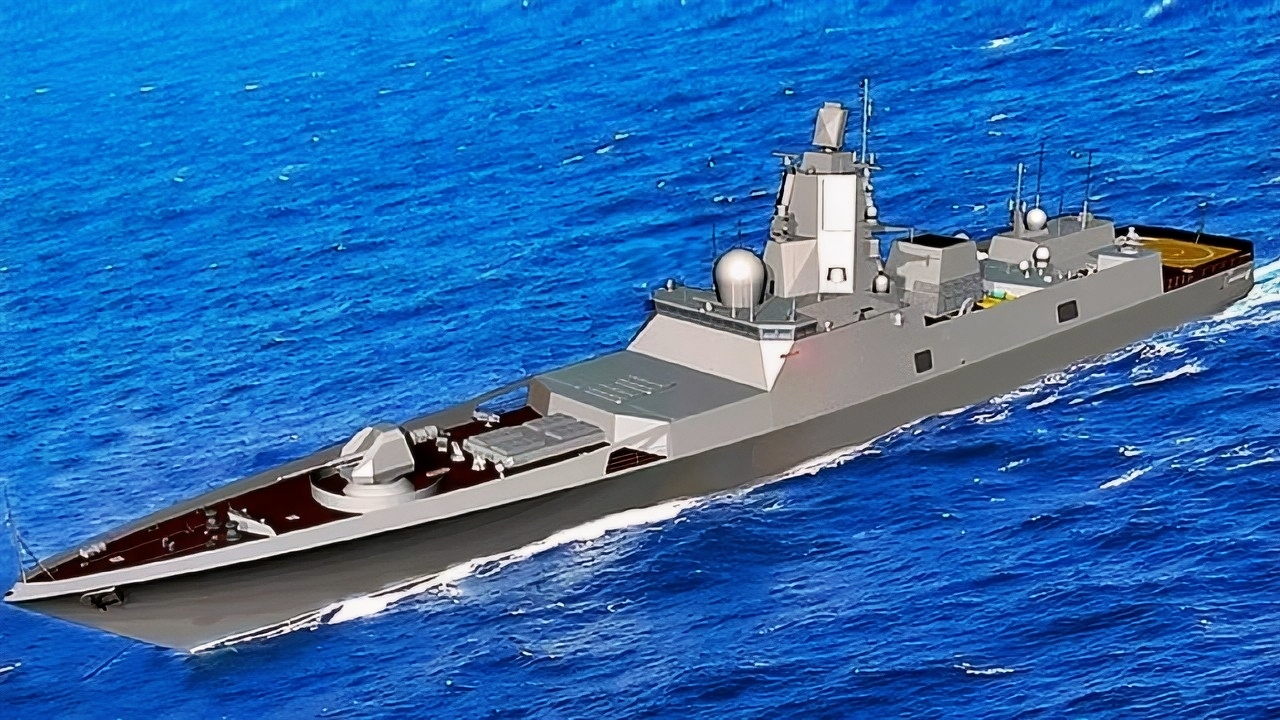
Russia’s Project 23560 Lider-class destroyer was Moscow’s bid to rebuild a blue-water navy with one ship that did everything: a nuclear-powered surface combatant displacing up to 19,000 tons, carrying roughly 200 missiles, and successor to the Kirov-class battlecruisers. Russian planners initially called for twelve hulls. Sanctions following the 2014 annexation of Crimea hit the defense-industrial base hard, and the projected cost — around 100 billion rubles per ship by Russia’s own optimistic estimate — kept climbing. The hull count fell to eight, then two. In 2020, Interfax reported the program was suspended due to a lack of a Defense Ministry decision. Some say there could be vital lessons here for the Trump-class battleship.
Russia’s Lider-Class Failed for Clear Reasons
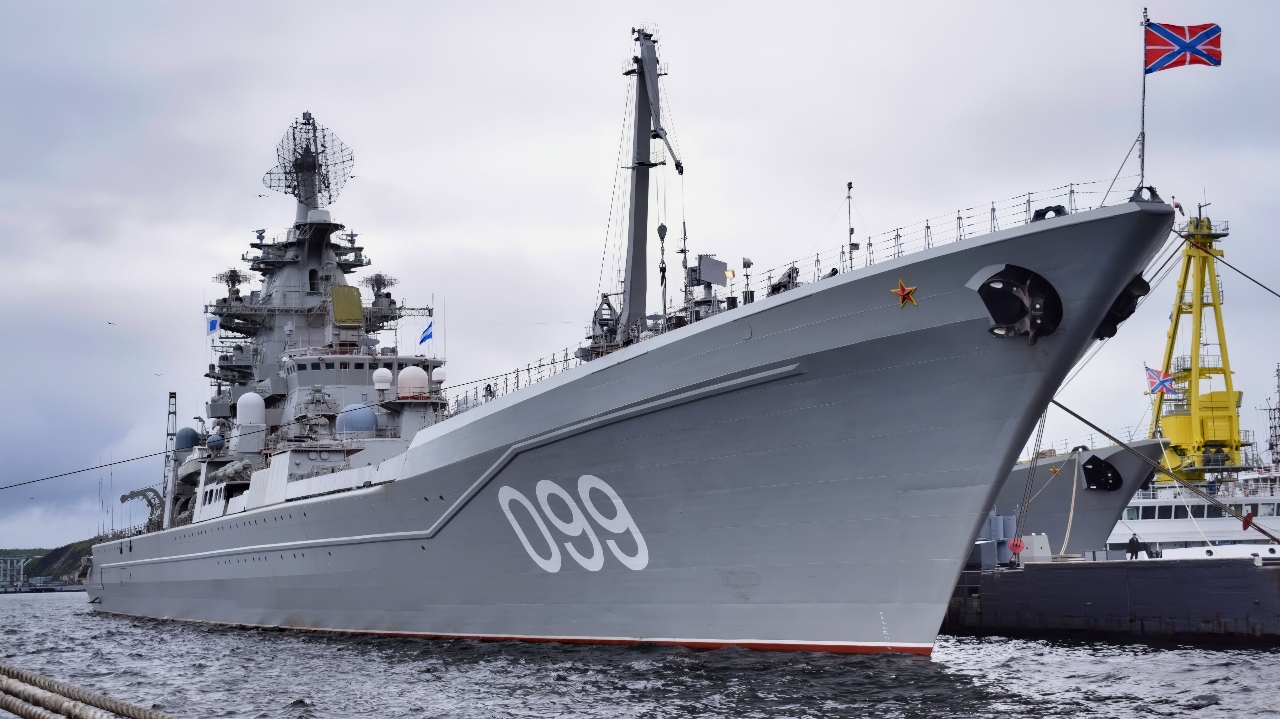
Kirov-Class Russian Navy Cleaned Up. Image Credit: Creative Commons.
Russia’s Project 23560 destroyer, also called the Lider-class, was pitched as the centerpiece of a post-Soviet blue-water naval revival – you could even call it a mini version of the Trump-class battleship, in some respects.
On paper, the ship was an enormous, nuclear-powered surface combatant that blurred the distinction between a destroyer and a cruiser.
Depending on which of the multiple versions of the ship proposal are looked at, the ship would have displaced somewhere between 18,000 and 19,000 tons, carry about 200 missiles, and combine the qualities of a cruiser’s air defenses with anti-submarine warfare capabilities as well as long-range strike capabilities.
The ship was, in essence, not equivalent to the United States Navy’s Arleigh Burke-class destroyers but rather the successor to the giant nuclear cruisers like the Kirov-class battlecruisers that served in the Soviet Navy. Russian naval officials openly talked about the new ship replacing multiple aging Soviet classes simultaneously.
And yet, it never happened, and could offer lessons to the U.S. Navy as it also has big dreams for bigger warships.
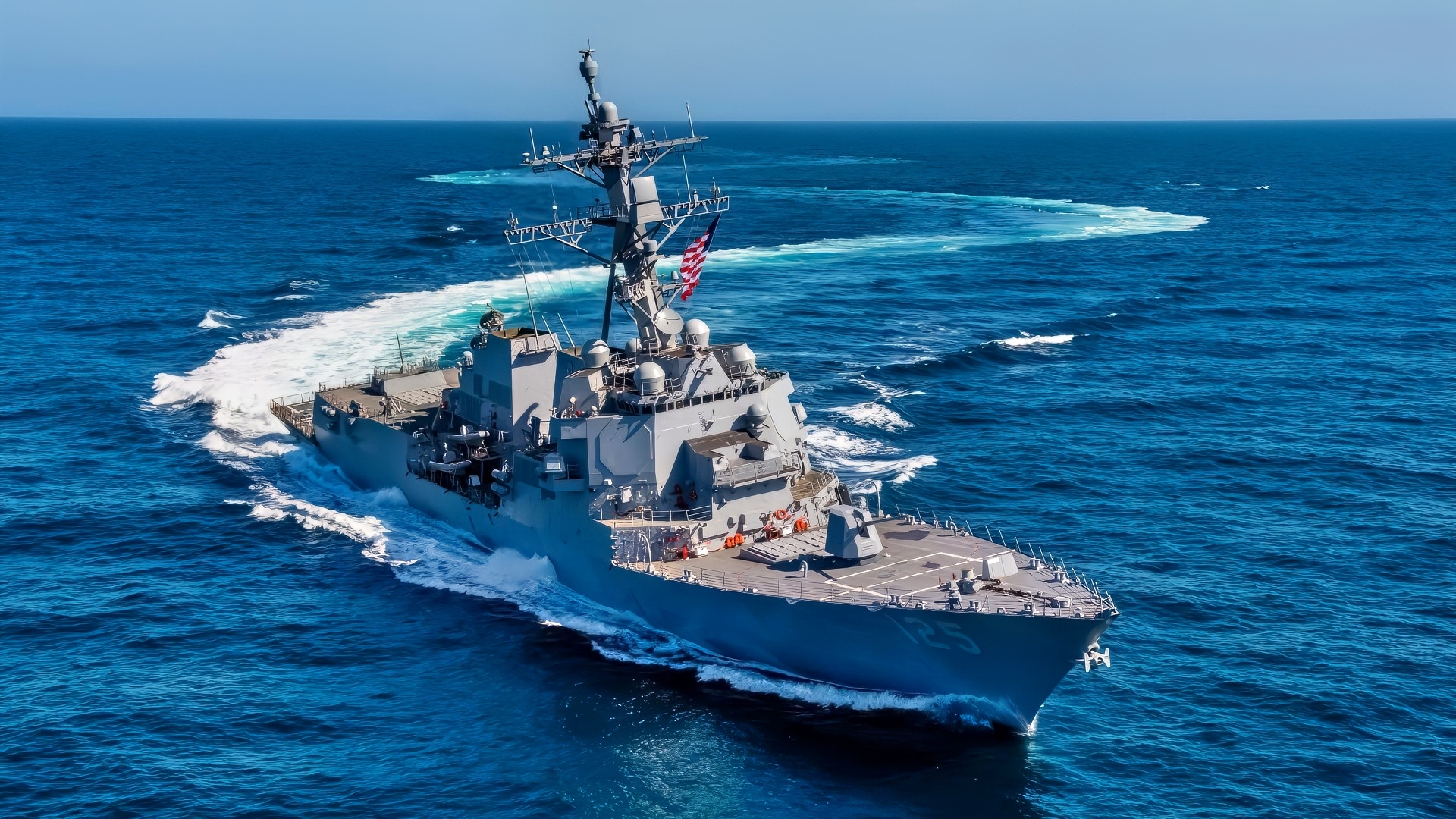
Pascagoula, MS – The future USS Jack H. Lucas (DDG 125) completed acceptance trials, May 18. DDG 125 is the first Arleigh Burke-class guided-missile destroyer built in the Flight III configuration. Photo courtesy of Huntington Ingalls Industries’ Ingalls Shipbuilding division
The Origin Story of the Lider-Class
The Project 23560 destroyer originated in the early 2010s.
Russia was emerging from several decades of economic stagnation that followed the collapse of the Soviet Union. Buoyed by relatively high oil prices, the Kremlin sought to push an enormous rearmament program across the Russian military.
The Russian Navy, in particular, sought to regain some of the prestige that it had lost after the 1991 collapse, and an ambitious destroyer program fit well within that vision.
But there was also a measure of strategic logic to the decision.
By the late 2000s and early 2010s, much of Russia’s surface fleet was aged.
Soviet-built platforms were becoming expensive to maintain, and their service lives were rapidly approaching the end.
Russia could still build advanced submarines, but its surface fleet and the infrastructure needed to sustain it were falling into disrepair.
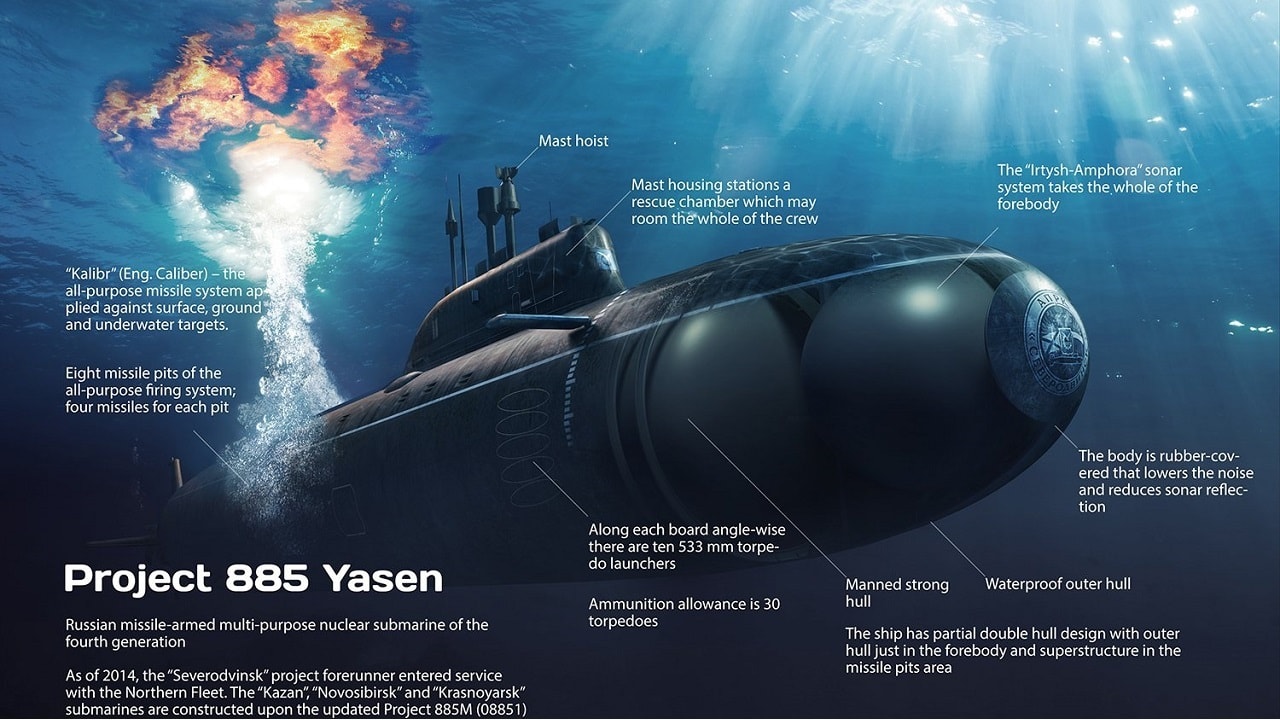
Yasen-Class submarine. Image Credit: Russian Government.
The Project 23560 destroyer was touted as the answer—a single advanced class of ship that could anchor task groups, escort ballistic missile submarines, provide air defense, and launch long-range cruise missile strikes against distant targets.
The Design
To those ends, the ship was to carry Kalibr cruise missiles, Oniks anti-ship missiles, potentially the future Zircon hypersonic missile, and a robust air-defense suite. Some versions of the Project 23560 destroyer proposed nuclear propulsion, which would have afforded the ship unlimited range.
Ultimately, however, it is not immediately clear if the Project 23560 destroyer was a serious proposal or hot air.
One massive issue was cost.
Even Russian estimates placed the ship’s costs at around 100 billion rubles, a figure that was perhaps too low.
Timing was also not in the Project 23560 destroyer’s favor. Following the 2014 annexation of Ukraine’s Crimean Peninsula, sanctions imposed on Russia hit parts of the Russian defense-industrial base quite hard, and complications to procurement, financing, and access to some technologies became more complicated.
In tandem, the Russian Navy began moving away from large, expensive surface ships toward a more affordable and sustainable force composed of submarines, total defense vessels, and smaller missile ships, rather than massive carrier groups or a true blue-water fleet.
In that context, the Project 23560 destroyer was more an aspirational dream — a ship Russia would like to have — rather than a serious proposal that could be afforded, let alone sustained.
In the end, the Project 23560 destroyer faced problems that other high-profile Russian weapons programs also encountered, and the gap between designing a sophisticated ship and mass-producing it was significant.
Russia could make impressive renderings and models with technically ambitious specifications, and perhaps a prototype. But building and maintaining a class of incredibly advanced and expensive warships like the Project 23560 destroyer was something else entirely.
A Message for the Trump-Class?
Though initial plans for the Project 23560 destroyer mentioned a twelve-hull build, that number steadily decreased to eight, then perhaps to just two.
In 2020, Interfax, a Russian wire service, announced that development of the Project 23560 destroyer had been suspended “due to the lack of a decision from the Russian Ministry of Defense,” as the design didn’t “allow for expectations of a stable financial and economic position.”

Trump-Class Battleship. Image Credit: White House.
Perhaps best seen as an optimistic aspiration of what Russia hoped its post-Soviet Navy would look like, the Project 23560 destroyer ultimately never made it off the drawing board, let alone into the ocean.
Could this be the fate of the Trump-class battleship? Only time will tell.
About the Author: Caleb Larson
Caleb Larson is an American multiformat journalist based in Berlin, Germany. His work covers the intersection of conflict and society, focusing on American foreign policy and European security. He has reported from Germany, Russia, and the United States. Most recently, he covered the war in Ukraine, reporting extensively on the shifting battle lines in Donbas and writing about the war’s civilian and humanitarian toll. Previously, he worked as a Defense Reporter for POLITICO Europe. You can follow his latest work on X.


