


Key Points and Summary – Russia’s Su-57 will make its Gulf debut at the Dubai Airshow, one of the few venues open to Moscow’s defense industry since European bans.
-Rostec is already talking down the F-35 and touting the Su-57’s “real-world” use—largely Syria and standoff shots into Ukraine.
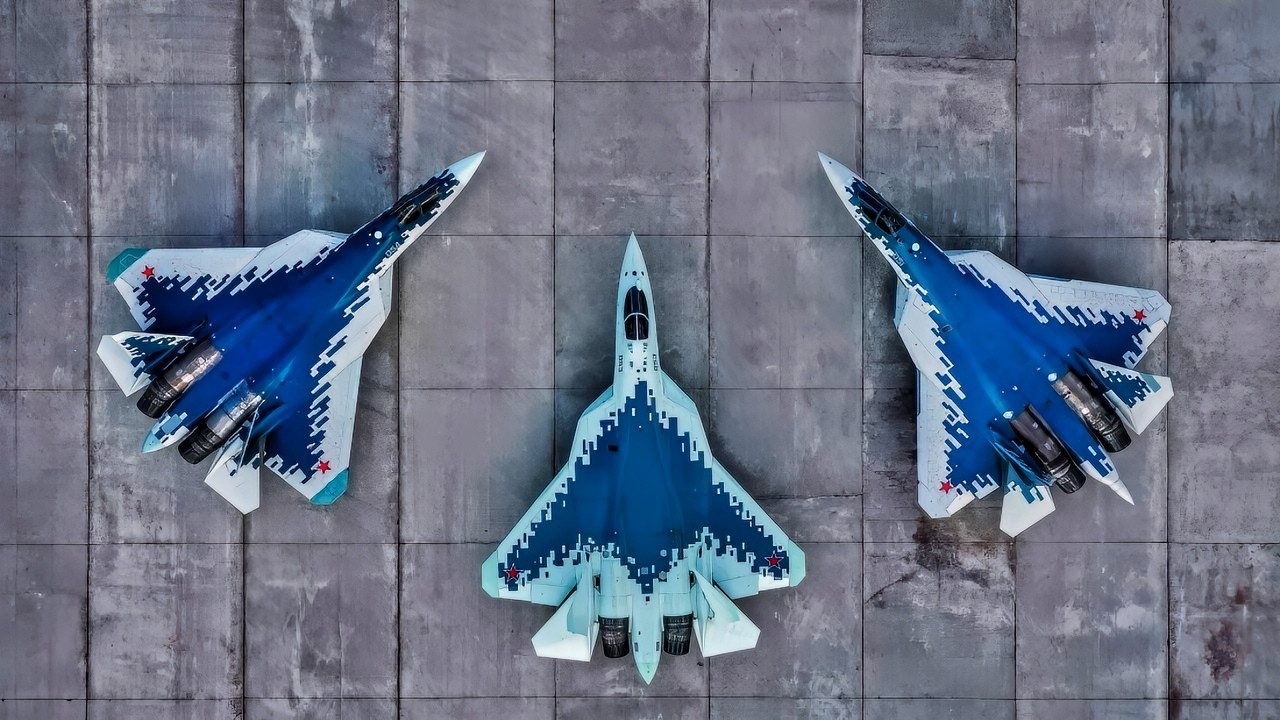
Su-57 Felon Screengrab from Russia. Image Credit: X Screengrab.

Su-57 Felon Stealth Fighter Taking Off. Image Credit: Creative Commons.
-The export-focused Su-57E targets new buyers, with Algeria reportedly first in line via sanction-bypassing payments.
-Analysts remain unconvinced: round engine nozzles, limited composites, and uncertain RAM coverage undercut stealth; production is low and combat validation thin.
-Comparisons with Rafale highlight maturity and reliability gaps. Dubai offers spectacle—less so proof the Su-57 meets true fifth-gen benchmarks.
Russia’s Sukhoi Su-57 To Make Dubai Air Show Debut: But Is She Really Stealth?
WARSAW, POLAND – From 17-21 November, most of the world’s aerospace industry will be congregating in Dubai for that city’s high-profile international airshow.
This expo always attracts large numbers of exhibitors and visitors alike.
This is not least because the United Arab Emirates (UAE) has always been a major buyer of military hardware.
By way of example, the UAE is the second-largest buyer of the Dassault Rafale fighter aircraft.
This year, however, there is another added feature to the air show.
Russia has announced that its most advanced fighter and supposedly stealthy fighter aircraft, the Sukhoi Su-57, will be making its first-ever appearance at any expo in the region and will also participate in the Dubai flying display.
Since the February 2022 invasion of Ukraine, Russian defense firms have been banned from participating in the major international expositions at Le Bourget and Farnborough in Europe.
This makes Dubai one of the few places in the world, aside from the appearance of the Su-57 at the Aero India expo earlier this year, where Western nations can see this 5th-generation combat aircraft demonstrate its aerodynamic performance.
At the February Aero India event in Bengaluru, attendees could see the Su-57 in flight.
They can also take advantage of the photo op of the Russian aircraft parked in a static display on the ground, with the US stealthy F-35 aircraft in the background.
Russian Posturing
The show does not open for almost a week, but the PR game the Russians like to play—“my fighter is better than yours” — has already begun.
The country’s state-owned Rostec defense industrial conglomerate has gone public with its denigration of the US F-35.
It then claims that the Su-57, the most modern aircraft in Moscow’s inventory, has demonstrated superior performance in what the company calls “real-world combat conditions.”
Since Moscow has been loath to commit the aircraft over Ukraine for fear that it would be shot down, this official Russian line about the aircraft having been engaged in “real-world combat” is most probably referring to the engagements it participated in over Syria.
The aircraft has fired weapons into Ukraine since the war began, but by all accounts, it has never left the haven of Russian airspace.
Both the US Air Force (USAF) and the Israel Air Force (IAF) argue that their F-35s have seen far more combat use than the Su-57.
Specifically, these were the Operational Midnight Hammer strikes on Iran’s nuclear weapons research centers earlier this year, and the engagements by the IAF against Iran in which Tehran’s Russian-design and supposedly advanced air defense systems failed to lay a glove on the US stealth fighter.
Moreover, comparisons between the aircraft and the UAE’s Rafale indicate that there has been no tangible evidence of how the Su-57 performs in actual combat.
This assessment from May of this year concludes:
“Comparing the Rafale and the Su-57 in a real-world engagement highlights significant differences in terms of technological maturity, operational experience, and reliability. The Rafale, with its proven performance and versatility, offers a reliable solution for a variety of missions. The Su-57, while promising on paper, still requires validation in real-world conditions to confirm its capabilities.”
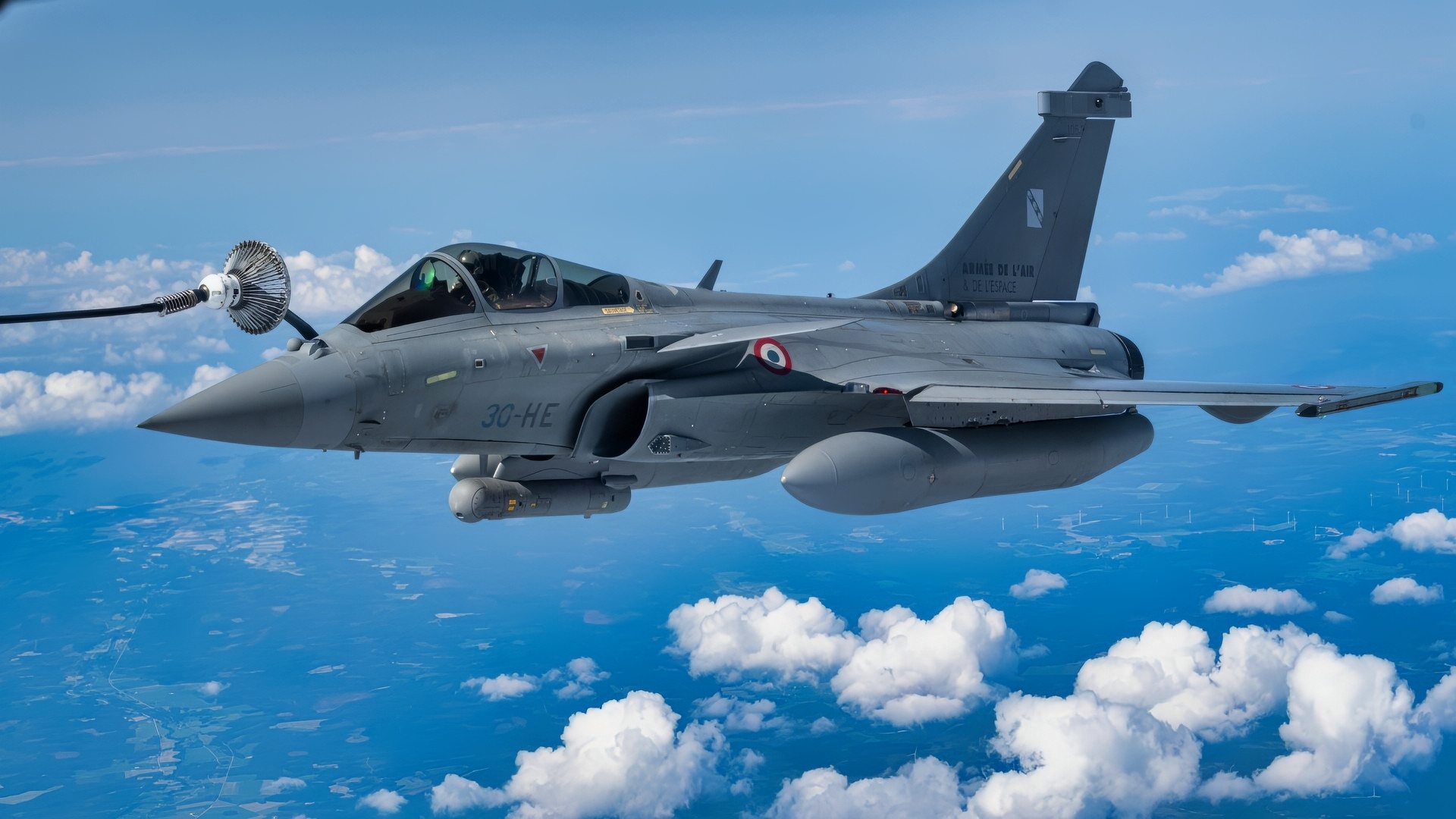
A French Air and Space Force Rafale C from Mont-de-Marsan, Fighter Regiment 2/30, Normandie-Niémen, receives fuel from a U.S. Air Force KC-135 Stratotanker from the 100th Air Refueling Wing, RAF Mildenhall, England, during exercise Atlantic Trident 25 over Finland, June 26, 2025. Atlantic Trident 25 is a recurring multinational training exercise between the U.S., U.K. and France to train in an interoperable environment, refining operational integration and ensuring Allied forces can seamlessly secure the Euro-Atlantic region. Finland hosted this iteration of the training series for the first time. (U.S. Air Force photo by Senior Airman Christopher Campbell)
The Su-57’s Shortcomings: Not-S0-Stealth
At Dubai, Russia will be hawking the Su-57E export version of the aircraft, for which the single buyer to date has been Algeria.
The Algerians currently operate an earlier-generation Sukhoi fighter, the Su-30. Under this contract for the Su-57, the country will acquire 14 export variants, in accordance with an agreement which was announced in February.
Other reports indicate that the actual deal is for only 12 Su-57E models and 14 Su-34 bomber aircraft.
Equally significant is that Moscow has been able to conclude the contract and arrange payment for these aircraft through alternative payment schemes that bypass the normal financial mechanisms now denied to the Russians by sanctions.
But an analysis of the aircraft published in Kyiv earlier this year points out what others have stated before: the Su-57 still leaves much to be desired if used in combat against a peer competitor.
One of the main drawbacks of the aircraft is its exhaust nozzle, which is a poor example of signature management.
An analysis of the aircraft published in Kyiv earlier this year points out what others have stated before: the Su-57 still leaves much to be desired if entrusted by the Russian design team.
The Su-57’s round engine nozzles, as an analysis of the aircraft published in Kyiv earlier this year noted, point out what others have stated before: the Su-57 still leaves much to be desired when incorporated into the airframe and negatively impacts its stealth characteristics and infrared signature. “The Russians simply do not have sufficient knowledge and technology to manufacture a new and better nozzle,” reads the Ukrainian reporting.
The analysis also takes note that “according to the chief designer of the Su-57, the mass of composite materials is 25 per cent of the aircraft weight without fuel and ammunition, and radio-absorbing materials account for 70 per cent of the area of the aircraft itself.”
“This situation raises serious doubts about the real capabilities of the Su-57. Ambitious claims about its exceptional performance and fifth-generation status pale in the face of incompleteness and failure to meet the key benchmarks.”
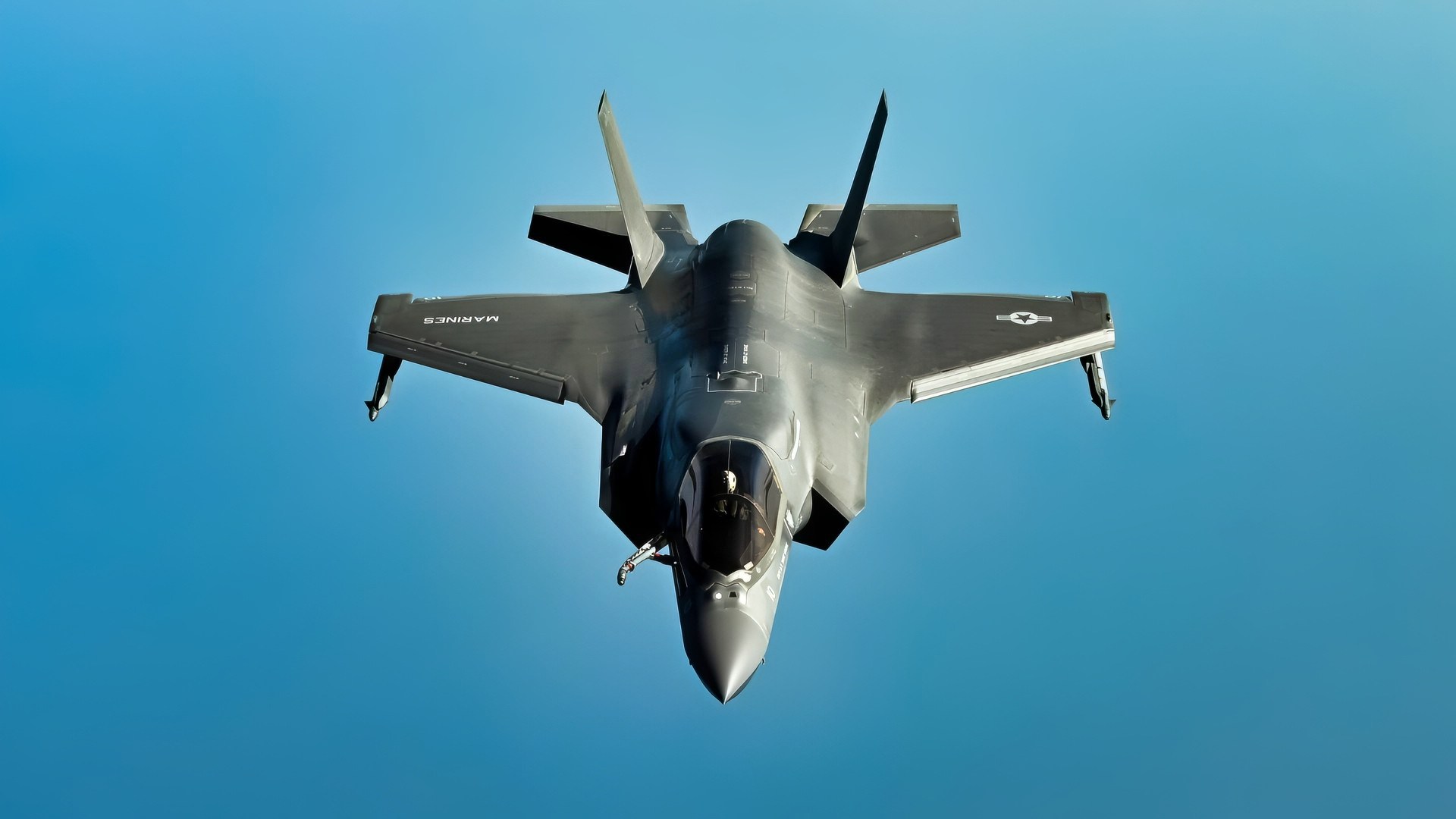
A U.S. Marine Corps F-35B Lightning II resumes a combat air patrol after aerial refueling with a U.S. Air Force KC-135 Stratotanker over the U.S. Central Command area of responsibility, Sept. 19, 2025. More than a fighter jet, the F-35’s ability to collect, analyze and share data, is a powerful force multiplier that enhances all airborne, surface and ground-based assets in the battlespace. (U.S. Air Force photo by Senior Airman Keegan Putman)
These facts lay bare Russia’s claim that the Su-57 is “the best aircraft in the world.” It lends a new meaning to the phrase “marketing hype.”
It might not even be a stealth fighter as we know it, like the F-22 or F-35.
About the Author: Reuben F. Johnson
Reuben F. Johnson has thirty-six years of experience analyzing and reporting on foreign weapons systems, defense technologies, and international arms export policy. Johnson is the Director of the Asia Research Centre at the Casimir Pulaski Foundation. He is also a survivor of the Russian invasion of Ukraine in February 2022. He worked for years in the American defense industry as a foreign technology analyst and later as a consultant for the U.S. Department of Defense, the Departments of the Navy and Air Force, and the governments of the United Kingdom and Australia. In 2022-2023, he won two awards in a row for his defense reporting. He holds a bachelor’s degree from DePauw University and a master’s degree from Miami University in Ohio, specializing in Soviet and Russian studies. He lives in Warsaw.
More Military
‘Skipper, We Have Been Hit’: Tiny Nuclear Sub ‘Sank’ $4.5 Billion U.S. Navy Aircraft Carrier
China’s Military ‘Quantum Leap’ Doesn’t Add Up
Russia’s Air Defenses Are Springing Leaks—and Ukraine Is Exploiting Them
Japan Might Be Ready to Fight for Taiwan. Would America Do the Same?


