

According to the director of the CIA, the average lifespan of a Russian soldier on the battlefield in Ukraine is somewhere between 20 and 30 minutes.
This claim is consistent with other statements from official Ukrainian sources. The Russians have reportedly taken very high casualties during 2026, with Zelensky suggesting that Ukraine is killing around 30,000 Russian soldiers per month.

NLAW Missile. Image Credit: Creative Commons.
If true, this would make Ukraine the deadliest conflict in all of Russian history, more so than WWI and WWII. However, something about these claims doesn’t seem to add up under close scrutiny.
The available evidence does not seem to align with the purported claims of staggeringly high losses on the Russian side.
30,000 Russian Casualties Per Month
At the Defense and Innovation Summit on Wednesday, CIA Director John Ratcliffe said on Wednesday that the average Russian soldier only lives for about 20 to 30 minutes once arriving on the battlefield.
“Our intelligence is consistent with some of the open-source reporting you may have seen in Ukraine: the average life expectancy of a Russian recruit right now, arriving on the battlefield in Ukraine, is estimated to be between 20 and 30 minutes.”
In April, Ukraine’s Defense Minister, Mykhailo Fedorov, reported that Russian casualties had reached their highest in March, with around 35,351 casualties reported in that month alone.

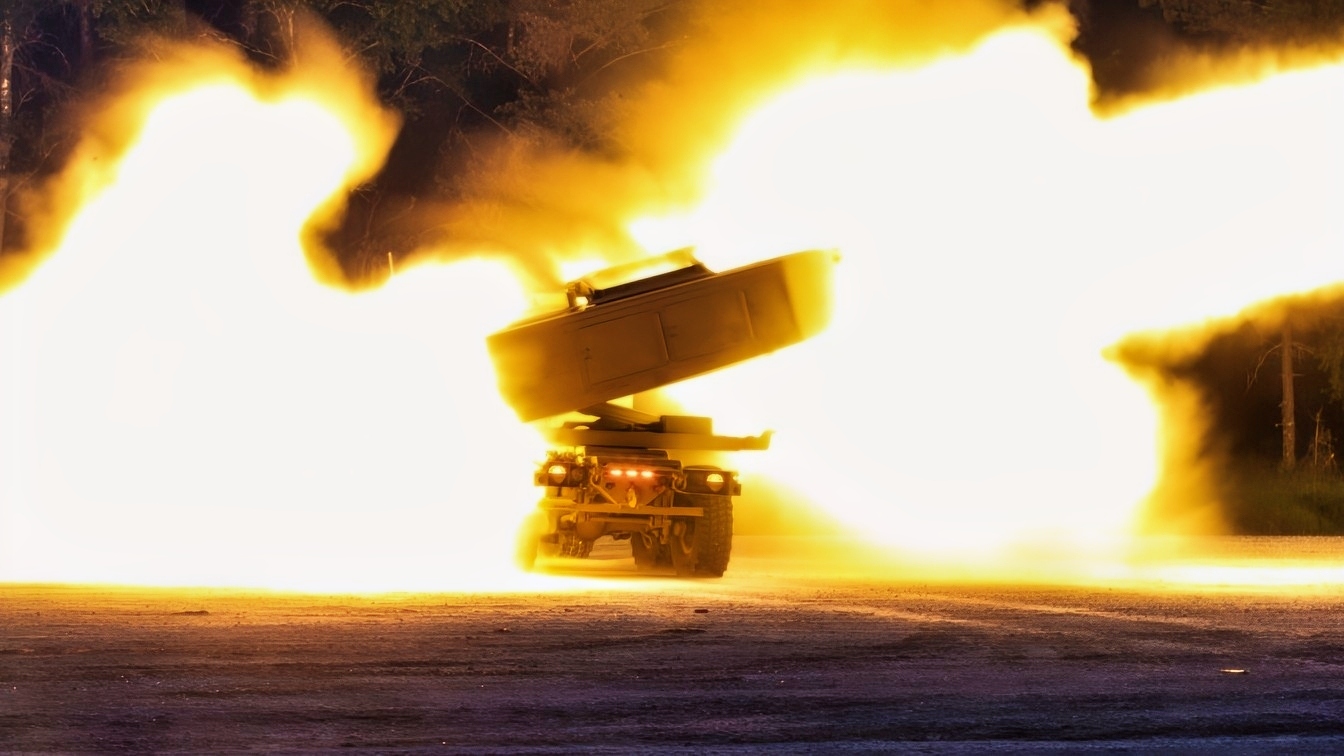
A member of 2nd Battalion, The Parachute Regiment fires a Next-generation Light Anti-tank Weapon (NLAW)…Paratroopers have demonstrated the firepower that they could bring to bear during combat missions as the British Army’s global response force. ..As the culmination of a course in support weapons skills, paratroopers staged a firepower demonstration on Salisbury Plain. ..The Next-generation Light Anti-tank Weapon (NLAW) is the first, non-expert, short-range, anti-tank missile that rapidly knocks out any main battle tank in just one shot by striking it from above…NLAW utilises predicted line of sight guidance and has overfly top and direct attack modes, and it is easy to use, making it a valuable tank destroyer for light forces that operate dismounted in all environments, including built up areas…It also has night vision capability and is designed for all climate conditions and environments..
The main cause of this uptick in casualties, according to Ratcliffe, is an increase in drone production by the Ukrainians.
These drones are now powered by AI-automated guidance systems, enabling Ukrainians to hit targets with greater precision and requiring less input from human pilots.
“That’s because AI-powered drones have gotten to be such specialized, low-cost killing machines,” Ratcliffe said.
According to President Zelenskyy, 80% of Russian casualties were caused by Ukrainian drones. “Last year alone, 819,737 Russian targets were hit by drones. In December 2025, our units neutralized 35,000 occupiers – killed and badly wounded,” he wrote on social media.
The Bloodiest War in Russian History?
However, something about these claims does not make sense.
If these claims are to be believed, the Russian Army is currently suffering an attrition rate equal to, if not higher than, the Red Army at the Battle of Stalingrad, during which Red Army soldiers had a lifespan of around 24 hours, according to some estimations.
Stalingrad was one of the bloodiest battles of the Second World War and probably one of the bloodiest battles in all of Soviet/Russian history (only the Battle of Borodino in 1812 remains the single bloodiest day for the Russians).
And yet, official sources and media outlets will claim with a straight face that the war in Ukraine is seeing higher attrition rates than WWII at its worst.
Let us start off with some facts. The Russian Army is currently firing more artillery shells, launching more airstrikes, and launching as many, if not more, drones than Ukraine.
According to some official estimates, the Russians are dropping around 200-250 glide bombs per day, which can range anywhere in size from 500 to 3,000 kilograms.
Since 2022, Russia has massively restructured its Armed Forces at the tactical level to reduce the size and density of offensive units amid battlefield saturation by drones.
Rather than storming enemy positions with a battalion tactical group, a typical Russian offensive unit consists of no more than 10 soldiers, often with only 2 or 3 in a single recon unit. The Russians have been fighting this way since 2023.
Russian Casualties: High but Overblown
The number of confirmed casualties from the Russian side seems to have taken a dive in 2026. According to independent analysis, as of July 2026, around 3,577 deaths have been confirmed.
Granted, this does not account for the wounded and deserters, but this is a far cry from the “30-minute lifespan” that officials claim.
Body transfers between Russia and Ukraine paint a less optimistic picture. Every month, both sides exchange bodies of fallen soldiers.
Just a day ago, Ukraine received 501 bodies of fallen servicemen, while the Russians received only 31. Over the last two years, Ukraine has received 18,325 fallen soldiers, while Russia has received 588.
Obviously, this does not reveal the full picture, but if the Russians were receiving anywhere near the casualty rate that official sources claim, they would be receiving a lot more bodies from Ukraine.
Regarding equipment losses, the Russians are also seeing a downward trend. In the month of June, Russia is visually confirmed to have lost 42 ground vehicles of all types, including tanks, IFVs, APCs, and more.
Ukraine, on the other hand, lost 232 vehicles. During March, supposedly the most costly month of the war for the Russians, Russia lost 73 vehicles, while Ukraine lost 275. Despite possessing an overwhelming material advantage, the Russians seem to be losing fewer vehicles, even though Ukraine supposedly has the advantage in drones.
Granted, these are only visually confirmed losses and do not reflect personnel casualties, but if the Russians were sustaining Stalingrad-level attrition, the material losses would reflect that. They do not.
All of this to say, with all due respect to Director Ratcliffe and all the officials in the Ukrainian government and military, their claims on Russian attrition rates do not seem to match reality.
This is not to say that the Russians have not suffered high losses; they certainly have. But Russia’s losses are obviously being overblown. Russia is still recruiting a steady number of soldiers to offset its battlefield losses, according to NATO estimates.
Meanwhile, Ukraine is dragging civilians off the streets to fill an already thinly manned front line. Despite high losses after four years of fighting, the manpower advantage remains overwhelmingly on the Russian side.
About the Author: Isaac Seitz
Isaac Seitz, a Defense Columnist, graduated from Patrick Henry College’s Strategic Intelligence and National Security program. He has also studied Russian at Middlebury Language Schools and has worked as an intelligence Analyst in the private sector.


Swamplaw Yankee
July 18, 2026 at 2:00 pm
The category of op-ed international war criminals is developing. Remember the famous objective Journalist, Baghdad Bob! So often heard both in China + the USA.
So, international law is not USA Constitution protected law. Only the USA has the branches laid out as the original 1710 World’s First written Constitution of Ukraine. While nicely cribbed 250 years ago, the Baghdad Bobs of 2026 Op-ed are not protected elsewhere when their Kremlin Muscovy ethnic narratives pour out on USA based servers – MSM!