


Key Takeaways – The B-1B Lancer was born as a low-level nuclear penetrator aimed at the Soviet Union, then reinvented as America’s high-capacity precision bomber.
-From late-1990s Iraq to Kosovo, Afghanistan, Iraq again, Libya and the ISIS fight, the “Bone” became a flying magazine—hauling huge JDAM loads, orbiting for hours, and acting as on-call artillery for troops in contact. Its range, payload, and four-person crew made it a favorite of joint commanders.

B-1B Lancer. Image Credit: Creative Commons.
-But decades of hard use, aging systems, and the rise of modern integrated air defenses now expose its limits, underscoring why the Air Force must transition to stealthier bombers like the B-21.
B-1B Lancer Has a Message for America’s Next Air War
The B-1 story begins as a Cold War sprint. The United States wanted a low-level, high-speed penetrator that could slip beneath Soviet radars, race through defenses, and deliver nuclear gravity bombs when the worst day arrived.
The original B-1A was canceled in the late 1970s; the program rebounded in the early 1980s as the B-1B, optimized for lower altitude, reduced radar signature compared to its predecessor, and brute payload.
By the mid-1990s, arms-control decisions and new realities pushed the Lancer into a conventional-only role. The airframe that once trained to dash through the USSR instead became America’s long-range, high-capacity precision bomber, carrying guided munitions in bulk and staying overhead for hours as a flying magazine for joint commanders.
First Shots: Iraq And The Late 1990s
The Lancer’s combat debut came late for a Cold War design—the late 1990s over Iraq. Precision weapons had finally caught up with bomber capacity, and the B-1B’s huge internal bays meant it could hit dozens of aim points in a single sortie. Its first missions focused on air-defense sites, command nodes, and key infrastructure. What stood out was not the airplane’s speed or low-level profile—those were Cold War tricks—but sortie efficiency: one bomber could do the work of many tactical aircraft, with fewer tankers and fewer moving parts.

A U.S. Air Force B-1B Lancer assigned to the 345th Expeditionary Bomb Squadron, decends for landing at Ørland Air Base, Norway, during a Bomber Task Force Europe deployment, Aug. 9, 2025. The BTF mission highlights how we deliver effects rapidly across dynamic and contested environments through integrated training. (U.S. Air Force photo by Staff Sgt. Tambri Cason)
Kosovo: Massed Precision From A Single Jet
In 1999 over Kosovo, the B-1B’s model matured. Lancers flew long missions from outside the theater and from European bases, dropping large loads of JDAM against fixed targets and striking relocatable sites when weather and ISR allowed.
The airplane’s stability as a weapons truck—paired with a crew that could reattack quickly from altitude—earned trust with joint planners. The lesson for commanders was simple: give a B-1B a target set, and you could close a lot of problems fast, even under cloud decks that frustrated older tactics.
Afghanistan: The Bomber As On-Call Artillery
No campaign defined the B-1B’s reputation more than Afghanistan after 2001. A jet that had spent its youth training for nuclear dash now became the most responsive close air support platform of the war. With a Sniper or LITENING targeting pod and a belly full of JDAMs and later Small Diameter Bombs, a Lancer could orbit for hours and back multiple firefights across a broad area. Ground units learned that saying “Bone on station” (the community’s nickname) meant persistence—the bomber could service a compound, swing to a valley wall, and then pivot to a convoy ambush without returning to base.
The airframe’s combination of endurance, sensors, and magazines turned it into a roving artillery battery that didn’t care about Afghan roads, passes, or weather. When troops in contact needed effects in minutes—not hours—the B-1B was often the first heavy hammer to answer.
Iraq: Shock, Sustainment, And Urban Breaching
In 2003 over Iraq, the B-1B paired with other bombers and strike jets to deliver opening-night salvos and then settle into the grind of urban and infrastructure targets. Its ability to sequence dozens of JDAMs across dispersed aim points—bridges, headquarters, depots—meant fewer sorties to achieve desired effects.

A U.S. Air Force B-1B Lancer flies in the U.S. Central Command area of operations, Oct. 25, 2019. The bomber flew directly from its home station of Ellsworth Air Force Base, S.D., demonstrating the U.S. Air Force’s ability to rapidly deploy strategic bombers anywhere in the world. U.S. Strategic Command regularly tests and evaluates the readiness of strategic assets to ensure we are able to honor our security commitments. (U.S. Air Force photo by Master Sgt. Joshua L. DeMotts)
As the war shifted into counterinsurgency, the Lancer’s CAS role looked more like Afghanistan: overwatch, dynamic tasking, and precise danger-close work under a stack of controllers and JTACs. Crews refined the art of retasking in the same pass, rolling from one GPS coordinate to another with minimal latency. The bomber earned a reputation for consistency: it showed up on time, stayed, and hit what it was told to hit.
Libya And Beyond: The Bomber As Global Fire Brigade
When a coalition moved to halt regime forces in Libya (2011), B-1Bs joined strikes on air-defense radars, C2 nodes, and hardened sites.
The airplane’s DNA—range and payload—meant it could stage from well outside the fight, penetrate only as necessary, and still deliver heavy precision in the first days when deconfliction is toughest and target sets are dense. In the years that followed, Lancers rotated through Pacific and European bomber task forces, flying long presence missions with allies, running maritime targeting profiles, and reminding adversaries that American bombers could appear quickly and in numbers.
Against ISIS: A Flying Magazine For A Long War
The fight against ISIS showcased the Lancer at its industrial best. From 2014 onward, B-1Bs became staples of Operation Inherent Resolve, prosecuting dynamic targets in cities and deserts, interdicting oil infrastructure, and supporting surrounded ground units under time pressure.
The bomber’s turnaround tempo—load, launch, endurance, reattack—reduced the strain on fighters and tankers. Months of high-tempo operations produced eye-watering statistics: individual aircraft dropping hundreds of weapons in a deployment, day after day, with high reliability once in the air.

A U.S. Air Force B-1B Lancer assigned to the 37th Bomb Squadron receives maintenance during Red Flag 24-3 at Nellis Air Force Base, Nev., July 24, 2024. Red Flag is an exercise that provides Airmen and Guardians with the opportunity to work alongside allied air forces in a realistic combat training environment. (U.S. Air Force Photo by Senior Airman Yendi Borjas)
Just as important was the Lancer’s communications and sensors integration. Crews honed the rhythm of talking to multiple controllers, watching multiple feeds, and managing weapons allocation so a single pass took down several targets with surgical spacing. The airplane’s cockpit and mission systems matured to support that pace; tactics evolved around what the jet could deliver predictably.
Syria 2018: Standoff Messaging With JASSM
In April 2018, the B-1B made another kind of news—the combat debut of the JASSM family of stealthy cruise missiles. Launching from outside dense defenses, Lancers struck Syrian regime targets with long-range precision, demonstrating the platform’s value as a standoff shooter. That mission foreshadowed the “bomber-as-missile-truck” concept that underpins many current plans: the bomber doesn’t have to enter the most dangerous rings of an integrated air-defense system (IADS) if it can disgorge long-range weapons from outside.
Maritime Strike: A Quiet Side Hustle
While not its primary brand, the B-1B also evolved as a maritime strike platform—testing and fielding anti-ship profiles with long-range weapons that let it threaten enemy surface groups from far outside their SAM umbrellas. The same virtues that serve the land fight—payload, range, and sensor fusion—translate well at sea. The bomber can bring a large salvo to complicate shipboard defenses, either alone or cued by other platforms.
What Made The B-1B Good In Combat
Three attributes explain the Lancer’s long run as a conventional star:
Capacity: With three internal bays and smart carriage options, a B-1B can solve many problems at once—fixed targets, emergent threats, armed overwatch—without returning to base.
Persistence: Endurance and tanker support let it stay on station long enough to matter in real fights, where targets don’t appear in neat time blocks.
Crewed Flexibility: A four-person crew—two pilots, two weapons systems officers—gives the jet the bandwidth to handle dynamic targeting, multiple radios, and rapid sequencing under stress.
That mix turned a Cold War penetrator into a post-9/11 utility player—the bomber the joint force called when it wanted reliable precision at scale.
The Bill For Two Decades Of War
All that performance came at a price. The B-1B’s variable-geometry wings, complex hydraulics, and tight systems routing were never maintenance-light. Add hyper-tempo deployments and heat cycles from deserts to arctic, and the result was fatigue in places designers didn’t expect to see so soon. Stand-downs for ejection-seat anomalies, fuel-system valves, and structural inspections punctuated the last decade. Mission-capable rates slumped; hours-per-flight-hour soared.
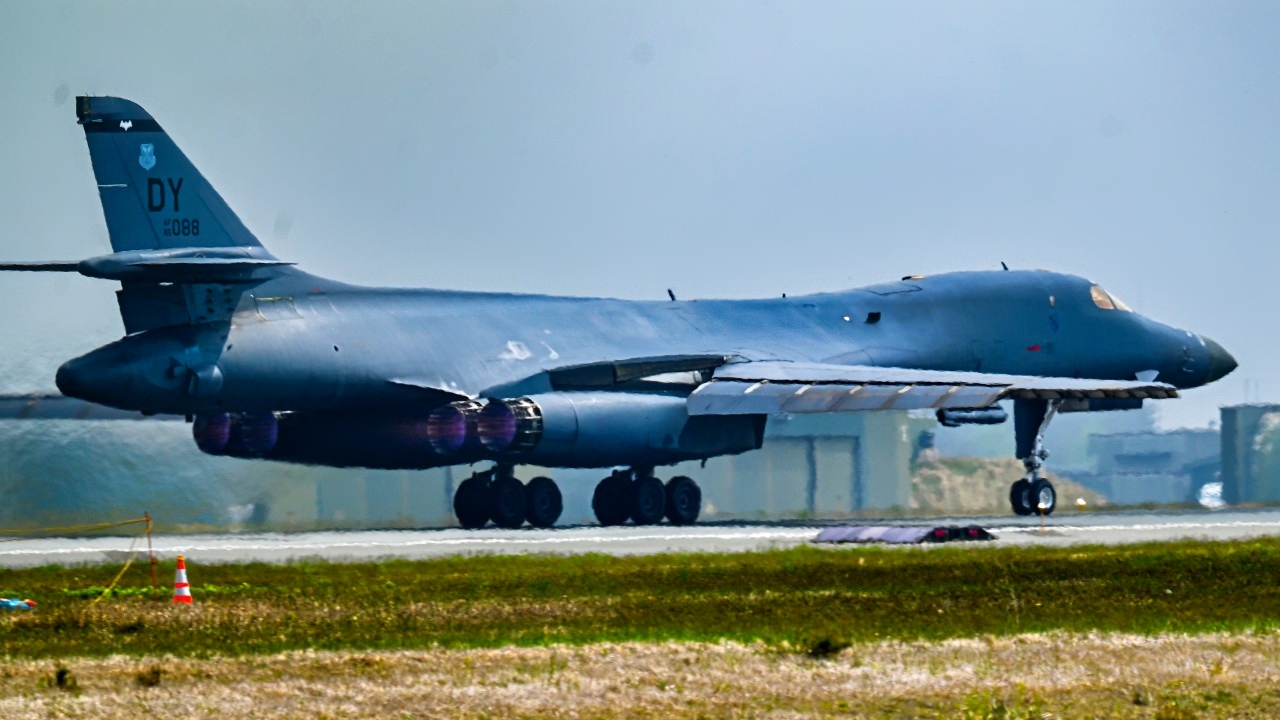
A B-1B Lancer prepares to return to Dyess Air Force Base, Texas, during Bomber Task Force 25-2 at Misawa Air Base, Japan, May 15, 2025. BTF missions provide opportunities to train and work with our allies and partners in joint and combined operations and exercises. (U.S. Air Force photo by Airman 1st Class Mattison Cole)
The Air Force retired a chunk of the fleet to harvest parts and reduce the maintenance burden, keeping a smaller number healthy enough to bridge to the next generation. None of this changes what the airplane did in combat—but it sets the table for what must happen next.
Why A Great Bomber Still Has To Retire
The Lancer’s retirement case rests on survivability, sustainability, and strategy—not on nostalgia.
Survivability In The Age Of Modern IADS. The B-1B has no stealth shaping by today’s standards. Its Cold War trick—low-level dash—doesn’t beat a modern, sensor-fused network of over-the-horizon radars, high-frequency arrays, passive RF/IR sensors, and long-range missiles that trade notes across data links. Against Chinese or Russian layered air defenses, a non-stealth bomber entering a contested envelope will be detected, tracked, and engaged at standoff ranges. You can fly lower, faster, and smarter; physics and search volumes still catch up.
Standoff Weapons Help—But Don’t Fix Everything. Give the B-1B long-range cruise missiles and it can stand outside the worst threat rings and still deliver effects. That works until the problem is volume and targeting: how many missiles can you afford to fire, how do you update tracks in flight, and how do you cycle the bomber back quickly for the next salvo? In the Western Pacific, holding the right launch baskets against moving targets while managing tanker risk is its own campaign. A stealthier platform with equal or greater standoff options—and survivability to reposition—simply does more.
Aging Airframes Cost Opportunity. Every hour of maintenance to keep a Lancer at 1990s performance is an hour not spent bringing on the B-21 Raider and modernizing the B-52 with new engines, sensors, and weapons. Budgets are finite. At some point the smartest move is to cash out a platform that has given you decades of value and reinvest in aircraft that can survive the next air war, not the last counterinsurgency.
The Role It Can Play On The Way Out
Retirement isn’t a light switch. As the B-21 ramps, the remaining Lancers still offer useful capability: training with allies on maritime strike tactics, presence missions where survivability demands are modest, and standoff shooters for crises that don’t require deep penetration. Used prudently, the remaining jets can transfer hard-won tactics—especially the art of dynamic targeting at scale—to crews who will fly the aircraft that replace them.
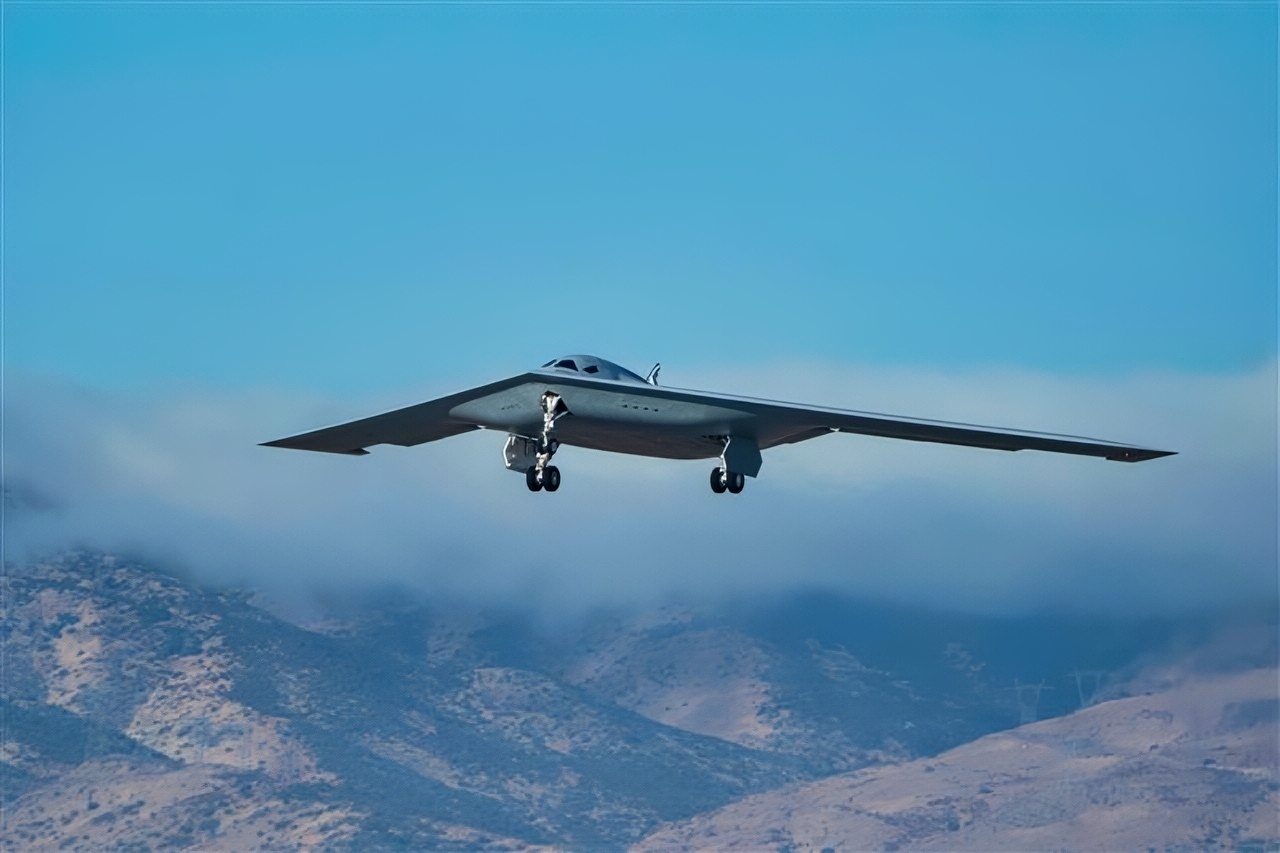
A second B-21 Raider, the nation’s sixth-generation stealth bomber, joins flight testing at Edwards Air Force Base, Calif., Sept. 11. The program is a cornerstone of the Department of the Air Force’s nuclear modernization strategy, designed to deliver both conventional and nuclear payloads. (Courtesy photo)
What The B-1B Proved—And Why It Still Matters
The Lancer proved that a bomber with magazine depth, sensors, and people can be the most flexible strike tool in the inventory. It showed that close air support is a mission for discipline and persistence, not just for airplanes with cannons. It validated the idea that a large jet can be a precision instrument in urban fights without flattening blocks. And it made clear that in modern warfare, availability and repeatability matter as much as brochure performance. Those are the lessons the next bomber fleet must carry forward.
Verdict on the B-1B Lancer
The B-1B Lancer earned its reputation the hard way: long sorties, crowded radios, and bombs that landed where ground units needed them. From Iraq to Kosovo, Afghanistan to ISIS, and one-off standoff strikes that sent strategic messages, the “Bone” delivered.
But air defenses evolved, the airframes aged, and the future fight demands stealthier shapes with equal or better reach. You can keep the Lancer in the mix as a standoff truck; you can’t make it young or make it invisible. The right move is to honor what it did—then replace it with aircraft built to survive, sense, and shoot in the hardest airspace on earth.
About the Author: Harry J. Kazianis
Harry J. Kazianis (@Grecianformula) is Editor-In-Chief and President of National Security Journal. He was the former Senior Director of National Security Affairs at the Center for the National Interest (CFTNI), a foreign policy think tank founded by Richard Nixon based in Washington, DC. Harry has over a decade of experience in think tanks and national security publishing. His ideas have been published in the NY Times, The Washington Post, The Wall Street Journal, CNN, and many other outlets worldwide. He has held positions at CSIS, the Heritage Foundation, the University of Nottingham, and several other institutions related to national security research and studies. He is the former Executive Editor of the National Interest and the Diplomat. He holds a Master’s degree focusing on international affairs from Harvard University.


Marlon
September 16, 2025 at 12:58 pm
It’s crazy, to think that I’ve been watching that plane fly since I was a kid in the ’80s. And it’s still so damn cool looking and effective. It certainly used to leave behind quite a plume of smoke during take off back then though. I don’t see that anymore. They must have updated the engines quite a bit since then.
William Jordan
September 17, 2025 at 12:51 am
The arguments for retiring it also fit the B-52, yet it isn’t being retired. Why?
Matthew Wilson
September 17, 2025 at 9:40 am
B_1 is Best Bomber Weve Got ,Stealth ; Hasent proven itself ,exept against 3rd World Defences! ;wanna Argue ? We Will be ,In Trouble ;